
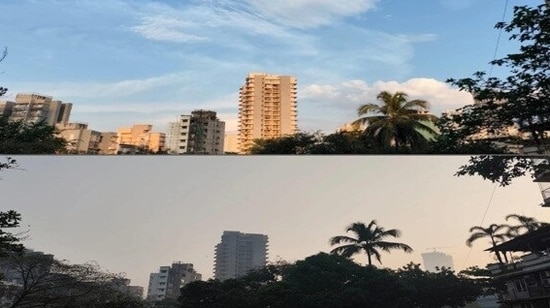
Mumbai’s real estate market made headlines in 2025 when a sea-facing luxury apartment sold for nearly ₹700 crore, or about ₹3 lakh per sq ft. However, even as post-pandemic real estate prices have surged, the city’s air quality has deteriorated, turning pollution into a growing civic concern that is beginning to influence home-buying decisions, experts said.
 BMC Elections 2026: Air quality has emerged as a key issue across party lines, with all major political groupings including pollution-control measures in their civic agendas. (Photo for representational purposes only) (Mehul R Thakkar/HT)
According to Mumbai-based NGO Praja Foundation, which researches civic issues, the city’s Air Quality Index (AQI) worsened steadily between 2019 and 2022, rising from 92 in 2019 to 125 in 2022.
Over the last two years, AQI has also gone above 300 and 400 on several occasions. To address this, the Brihanmumbai Municipal Corporation (BMC), India’s largest civic body, has implemented several measures to mitigate dust; however, experts have noted that these measures are insufficient.
What steps has BMC taken to improve Mumbai’s AQI?
Over the past three years, the BMC has implemented several measures to mitigate worsening air quality in Mumbai. It has mandated AQI monitoring at construction sites, requiring real-time sensors and imposing compliance notices on errant builders. The civic body has issued 28-point guidelines for dust and pollution control, deployed ward-level flying squads to enforce the norms, and threatened to close construction and industrial activities if the AQI remains above 200.
Also Read: BMC elections 2026: Mumbai real estate launches may pick up after the civic polls, say experts
The BMC is also collaborating on an AI-driven hyperlocal air-quality monitoring system and reinforcing pollution mitigation efforts in response to court scrutiny and public concerns.
Does AQI impact home-buying decisions in the Mumbai real estate market?
According to real estate developers, air quality does influence home-buying decisions, particularly when a project is located near factories, industrial areas or power plants. However, they note that seasonal deterioration in AQI during winter has a limited impact on demand in specific neighbourhoods, as it is seen as a broader, country-wide phenomenon rather than a location-specific issue.
“I agree that selling homes in areas such as Chembur, Mahul, and Mankhurd has historically been difficult due to issues linked to the dump yard, oil refinery, and chemical and fertiliser plants. However, the entry of several branded developers has changed the dynamics of the Chembur real estate market,” said a Mumbai-based developer who did not wish to be named.
“If a person or family shifting from outside can avoid areas with poor AQI, he or she will do that. But for homebuyers planning to upgrade, AQI might or might not be a factor always,” the developer said.
According to real estate consultants, while the AQI in Mumbai has been deteriorating over the years, the craze for paying a premium for a better view persists.
“Homebuyers pay a premium for sea view, sea facing, forest or mangrove view. The premium paid by homebuyers is high if the view comes with a balcony. For example, a developer is charging a premium of ₹30 lakh for a mangrove-view apartment. The premium ratio is anywhere between 10% to 30% depending on a case-by-case basis,” said Jay Dedhia, a real estate consultant based in Mumbai’s Western Suburbs.
What do the BMC election manifestos say?
Air quality has emerged as a key issue across party lines, with all major political groupings including pollution-control measures in their civic agendas. The BJP–Shiv Sena–RPI (Mahayuti) manifesto promises a ₹17,000 crore environment and climate action plan, including doubling the number of AQI monitoring stations and investing in pollution-reduction initiatives alongside broader urban development measures.
The Shiv Sena (UBT)–MNS–NCP (SP) joint manifesto proposes improving air quality through a Mumbai Construction Environment Management Plan and enhanced protection of green spaces. Meanwhile, the Congress manifesto commits to a Clean Air Action Plan aimed at scientifically improving air quality and safeguarding open spaces across the city.