
 © The Municipality of Lima
Share
Or
https://www.archdaily.com/1037748/designing-streets-through-the-lens-of-care
Reflecting on the modern city, Walter Benjamin described the flâneur, a figure who walks without a defined destination, attentive to details, chance encounters, and the narratives that emerge from urban space. This way of being in the city, shaped by observation and openness to the unexpected, has long been in tension with the rationalist and functionalist ideals that came to guide urban planning throughout the twentieth century. Streets designed primarily for efficiency and flow rarely leave room for detours, pauses, or the coexistence of different rhythms of life.
Jane Jacobs was also one of the voices that challenged this predominantly rationalist logic, arguing that truly vibrant streets are those capable of sustaining the diversity of everyday life, its informal exchanges, and the forms of care and natural surveillance that emerge from them. What these authors share is a fundamental insight: streets are not merely infrastructures for circulation, but social ecosystems, shaped by the relationships, uses, and encounters that take place within them.
 © Pınar Gediközer/Superpool
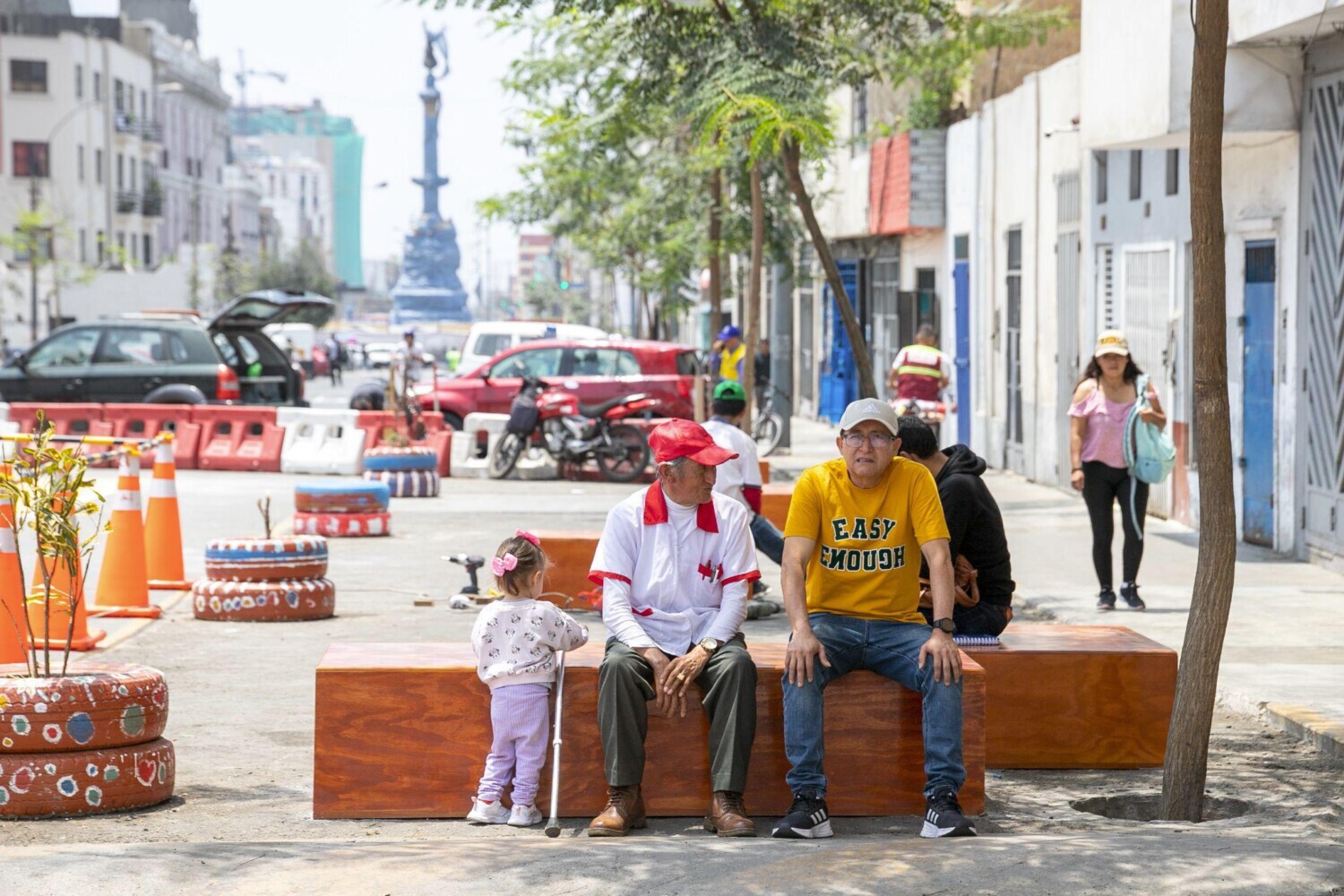
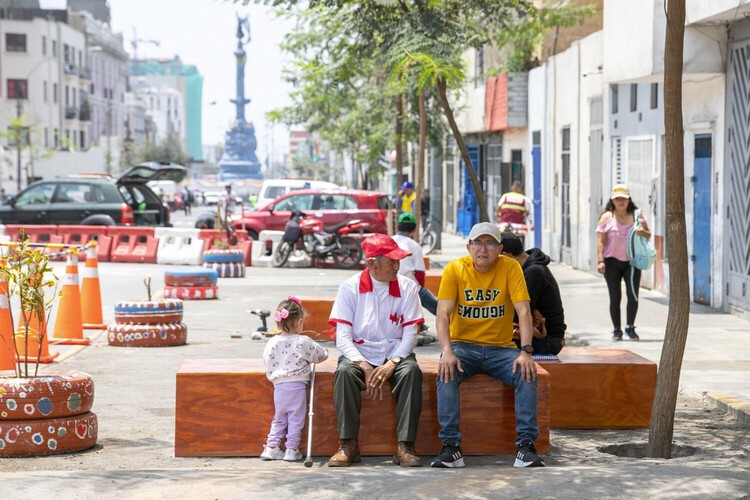
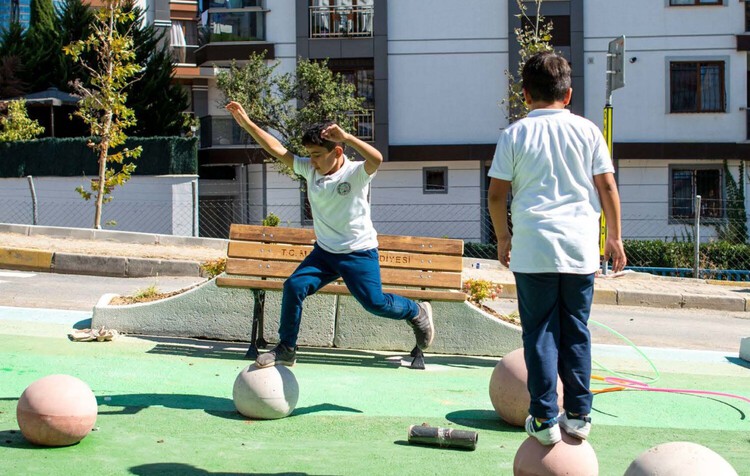
Bringing childhood to the center of this debate further expands this reading. If the flâneur represents the freedom to wander, the child embodies the right to unproductive time, to detours, and to play—practices that rarely find space in streets designed exclusively around traffic and productivity. Designing from a child’s perspective does not mean romanticizing or infantilizing the city, but rather recognizing that the quality of public space is measured by its capacity to accommodate different bodies, ages, abilities, and ways of being together. Streets, in this sense, also become environments for everyday learning, where intergenerational coexistence and shared experience help build meaning and belonging.
Related Article Building Cities for Children: Streets That Slow Down, Play, and Teach
Initiatives such as the Designing Streets for Kids guide work precisely to reorient street design. Rather than treating safety, health, and well-being as additional layers, the guide argues that these conditions should be structural to urban design. For Eduarda Aun, Streets for Kids Program Lead at the Global Designing Cities Initiative (GDCI), this shift begins by recognizing those who experience the city in the most intense and vulnerable ways. “By looking at the needs of children and their caregivers—mostly women—I began to see the city differently,” she explains. “I realized how child development, especially in the early years, is deeply influenced by the external environment, and how streets need to be not only safe and clean, but also convenient and inspiring.”
This change in perspective shifts the focus of urban planning from idealized routes to everyday realities. “While conventional mobility tends to focus on the home–work–home commute, caregivers usually make multiple stops throughout the day,” Aun explains. This pattern exposes the limitations of streets designed solely for fast movement, often overlooking the fragmented rhythms of care, staying, and social interaction. In this context, play ceases to be a residual use of public space and becomes an indicator of urban quality.
Play needs to be convenient for caregivers. Long distances, lack of time, or inadequate infrastructure make it difficult to accompany children in public spaces. Everyday routes could become great opportunities for spontaneous play and the development of children’s autonomy—provided that we design safer, more diverse, and more inspiring streets. — Eduarda Aun
 © The Municipality of Lima
This lens makes visible how seemingly technical decisions—such as sidewalk width, vehicle speed, or the presence of trees and urban furniture—have profound impacts on child development, public health, and social relationships. Streets with heavy traffic, low spatial diversity, and poor environmental quality reduce opportunities to play, walk, and interact. “Streets where children cannot play with their neighbors contribute to more sedentary lifestyles, socially isolated children, and lower levels of autonomy,” Aun notes.
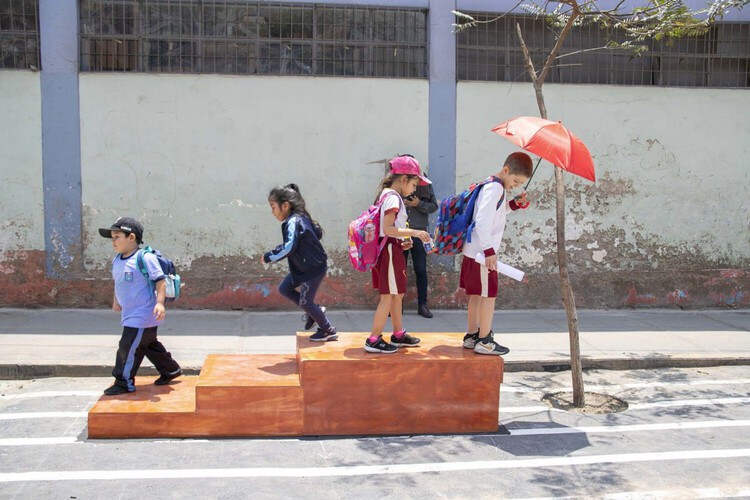
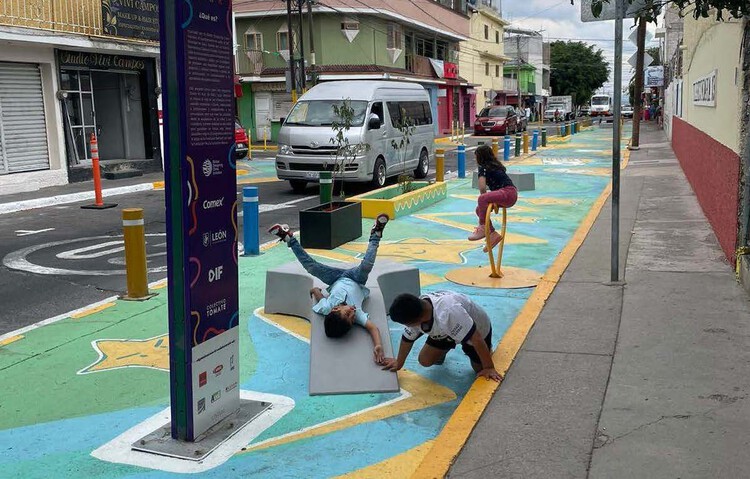
In practice, this approach translates into interventions that are often simple, yet highly effective. The closure of streets in front of schools, for example, has proven to be a powerful strategy for reactivating public space in cities around the world, including Paris, Barcelona, and Lima. By restricting car access, unsafe intersections can be transformed into spaces for social interaction, learning, and collective use, benefiting not only school communities, but entire neighborhoods.
Experience shows that when space is designed starting from the most vulnerable, it becomes more inclusive overall. By prioritizing children, cities create conditions for intergenerational encounters, strengthen community ties, and expand the sense of belonging. Not surprisingly, many of these projects achieve high levels of public approval and help align different sectors of local government around shared goals.
At an institutional level, this approach also guides GDCI’s work. “Our mission is to inspire leaders, inform professionals, and invite communities to reimagine their streets by putting people first,” says Aun. In addition to providing technical assistance to local governments, the organization develops guides, tools, and a series of webinars that expand the reach of these experiences, highlight successful examples, and strengthen a global movement for more humane streets.
 © Colectivo Tomate
Childhood has also emerged as a strategic entry point for broader discussions around climate and urban resilience. Redesigning streets to reduce speeds, encourage active mobility, and expand green areas simultaneously contributes to lowering emissions, adapting to heat waves, and improving air quality. At the same time, involving children in listening and implementation processes strengthens public acceptance of change and reinforces public space as a collective asset. At its core, designing streets through the lens of care is an exercise in shared urban imagination.
Public discourse has focused too much on the “I” and the “now,” and children force us to think about the “we” and the “future.” When we prioritize the most vulnerable, the benefits extend to everyone. — Eduarda Aun
By rethinking streets around the needs of the most vulnerable and shifting their role from mere infrastructures of circulation to places of encounter, learning, and coexistence, they become more accessible, more diverse, and more capable of sustaining everyday life. Seeing the street through the lens of care becomes a way of rebuilding public space as a collective good: a territory where different generations can move, stay, and recognize one another, and where the city is shaped by the diversity of those who inhabit it.
This article is part of the ArchDaily Topic: Coming Together and the Making of Place. Every month we explore a topic in-depth through articles, interviews, news, and architecture projects. We invite you to learn more about our ArchDaily Topics. And, as always, at ArchDaily we welcome the contributions of our readers; if you want to submit an article or project, contact us.