
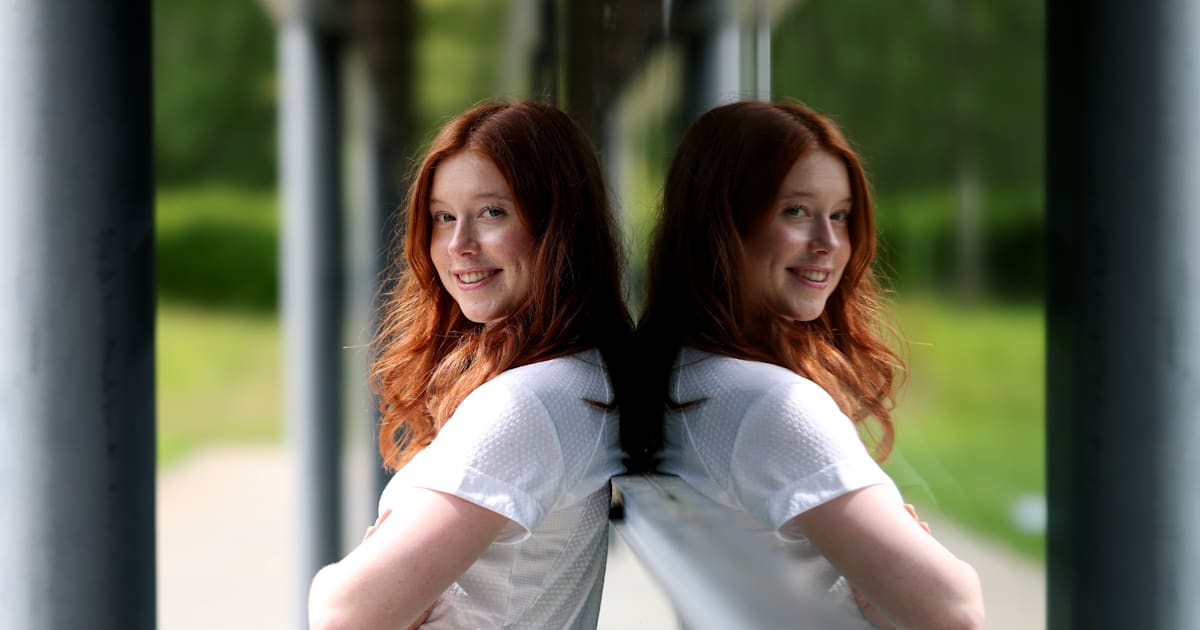
Kirsty Muir on freediving experience
The purpose of the performance mindset camp in Cornwall during the English summer, which included fellow freeskiers Chris McCormick and Tom Greenway, was to understand the athletes’ psychological responses to fear, stress, and uncertainty.
The three touchpoints are especially acute heading into an Olympic Games, but perhaps more so for those who compete in extreme sports, and especially for those whose expectations of an Olympic medal in Italy have increased.
Muir is one such athlete following regular World Cup and X Games podiums leading into Olympic season, including four top-eight World Cup finishes in the 2024-25 edition, with a top spot in slopestyle in March 2025 in Tignes the best of those.
“The aim of the freediving was really just to learn a bit more about ourselves and learn different techniques that can help us relax in those situations,” said Muir.
“We started off doing breathing techniques just in a room, lying on the floor, and doing breath holds. Then we went into a tub [of water] and did static breath holds there. You’d do two minutes breathing to centre yourself, and then you’d take your big breath, take the [breathing] tube out and then hold your breath for as long as you could underwater.”
The next step was heading to a local quarry and doing the same thing in water at a depth of around 20 metres, which is where Muir managed her three-minute breath hold.
“Freediving forces athletes to meet stress in its rawest form,” is how the social media account of Cornwall’s Freediving and Spearfishing Centre, Delphy Pool, described the session. “When oxygen runs low, your body panics. Learning to stay calm here is the same skill they need at the top of an Olympic course.”
So, what did all this ultimately reveal for Muir?
“I think for me, what I found out during the course was that I actually performed better when I was completely relaxed, and that’s super interesting to try and bring into skiing now. So, every time I do a run now, I really have to bring myself back and relax and then I usually do better. So yeah, it was a really interesting experience, I really enjoyed it.”
And how does it actually work in practice?
“I do a sort of non-sleep deep breath meditation in the morning before comps, and then in the present, like at the comp, I try and take my mind slightly away. For example, for me, it’s [my] dogs because they just bring me so much joy… and then I bring it back to the skiing and then focus in on that.”
And the ultimate question – has it worked?