
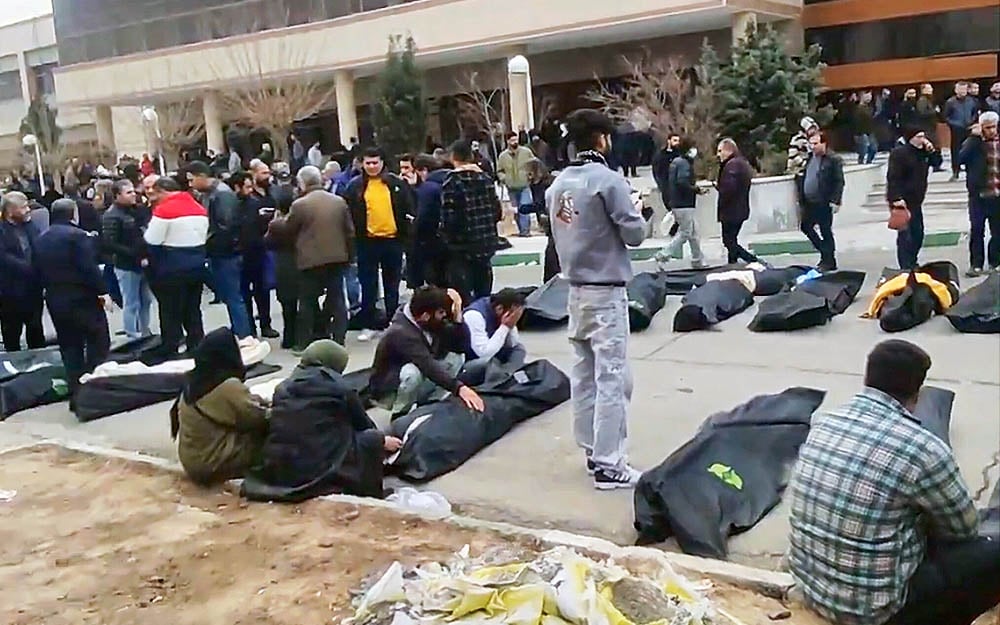
This Editor’s Note was sent out earlier Wednesday in ToI’s weekly update email to members of the Times of Israel Community. To receive these Editor’s Notes as they’re released, join the ToI Community here.
The current protests against the regime in Iran are seen as the biggest since 2009, when masses took to the streets in outrage over the faked reelection of president Mahmoud Ahmadinejad at the expense of his challenger, the former prime minister and relative reformist Mir-Hossain Mousavi, who remains under house arrest to this day. And they are being suppressed with a brutality that may be unprecedented since the ayatollahs seized power in 1979, with anything from 2,500, to 5,000, to 12,000 people reported gunned down by regime forces, and tens of thousands injured.
Initially fueled by economic dissent, they have swelled to become what the regime recognizes as a threat to its rule. Doing its best to conceal the horrors it is unleashing by closing down the internet, it has moved to ruthlessly massacre its own protesting people.
As they did in 2009, the protesters are looking to the international community for support, and especially to the United States. Then-president Barack Obama declared gravely in June 2009 that “when I see violence directed at peaceful protesters, when I see peaceful dissent being suppressed… it is of concern to me and it is of concern to the American people.” But he provided no practical assistance.
Current President Donald Trump has been warning the regime for days that if it starts shooting its citizenry, “we will start shooting,” and on Tuesday threatened “very strong action” if the regime starts executing people. As of this writing, the ayatollahs and their security forces are doing precisely what the president warned them not to do, blithely ignoring his threats, and Trump has yet to act on them.
Get The Times of Israel’s Daily Edition
by email and never miss our top stories
By signing up, you agree to the terms
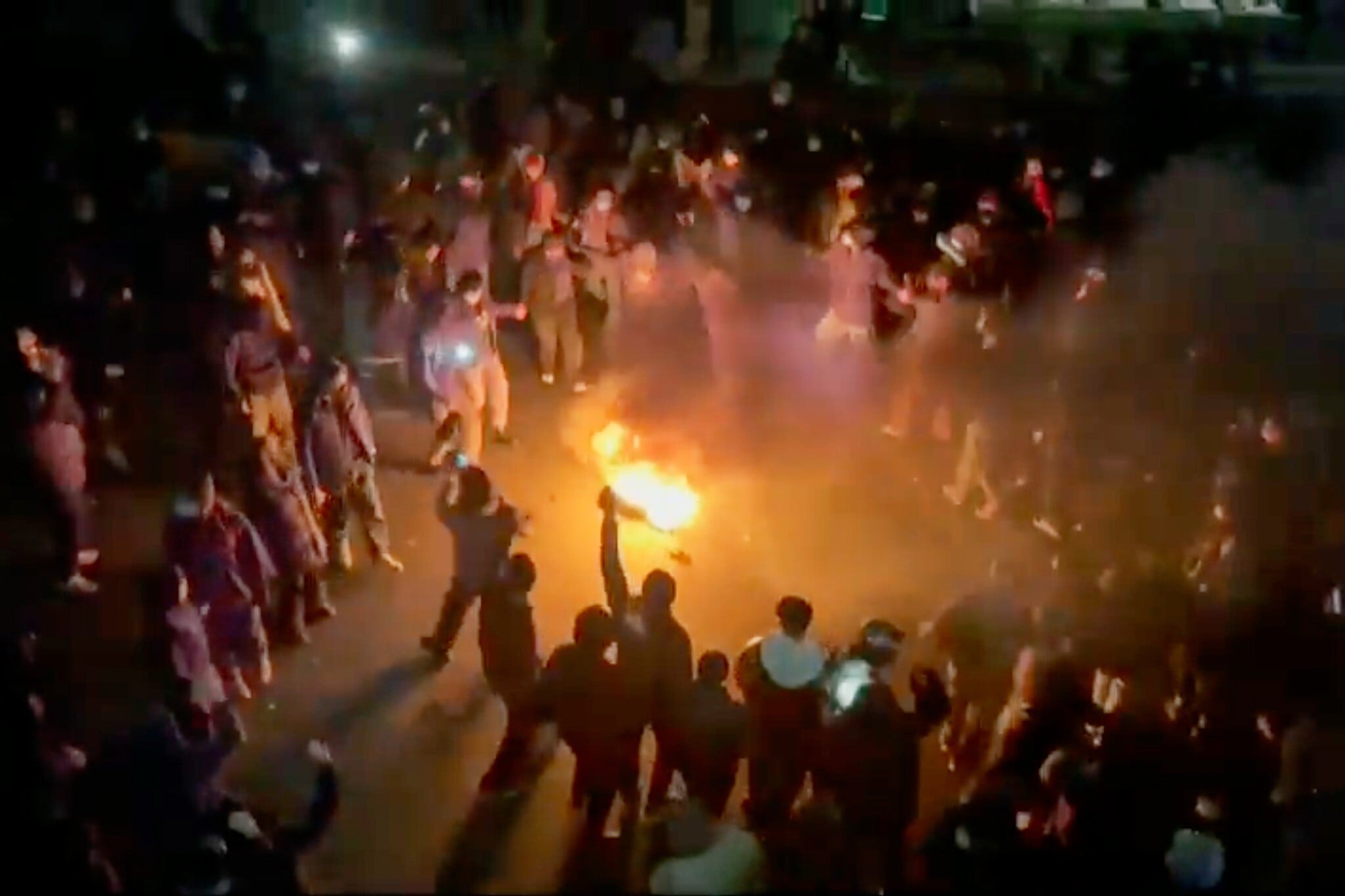
This frame grab from footage circulating on social media shows protesters dancing and cheering around a bonfire as they take to the streets despite an intensifying crackdown as the Islamic Republic remains cut off from the rest of the world, in Tehran, Iran, January 9, 2026.(UGC via AP)
There can be no doubt that the murderous regime in Iran should go. It is ideologically and territorially rapacious, in the cause of a death cult iteration of radical Islam.
It incites and funds terror worldwide. It created Hezbollah to try and destroy Israel from the north. It armed and funded Hamas with its shared goal of destroying Israel from the south. It has journeyed most of the way to a nuclear weapons capability. Its ballistic missile arsenal had become an existential threat to Israel before the 12-day war set it back in the summer, and it promptly resumed manufacture afterward. It has constantly sought to expand its missile range to bring Europe and, eventually, it hopes, North America within reach. It is the prime fomenter of global instability. And right now, it is turning its guns on its own repressed, impoverished and captive people.
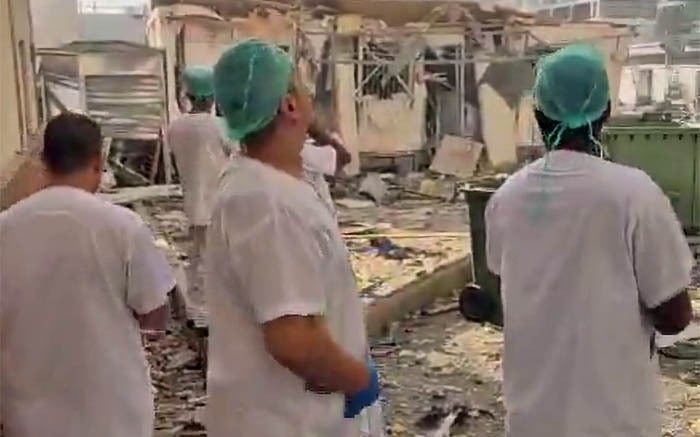
Staff at Beersheba’s Soroka Hospital look at the damage in the aftermath of an Iranian missile strike, June 19, 2025 (X screenshot; used in accordance with clause 27a of the copyright law)
It may never have been as vulnerable to defeat as it is today, in a Middle East that has seen an acceleration of immense and sudden shifts since Hamas invaded Israel 27 months ago: Israel was caught woefully unprepared on October 7, 2023, and still lives in a humbled, traumatized new reality, albeit reviving and insistently resilient; Hezbollah was radically degraded at the press of a button; Bashar Assad was ousted almost overnight… But getting rid of the ayatollahs, even in this roiling region and with Iranians risking their lives to challenge their rulers, is not straightforward or guaranteed.
Markedly upbeat in his most recent address in Detroit on Tuesday evening, Trump devoted just a few sentences in a very lengthy speech to the fate of Iran and his capacity to impact it.
Rattling through a list of foreign military interventions, he highlighted that each of them had been carried out precisely as planned:
“We did [Islamic State chief Abu Bakr] al-Baghdadi [who killed himself during a US raid in 2019]: Flawless.
“We did [Iran’s Islamic Revolutionary Guard Corps Al-Quds chief Qasam] Soleimani [killed in a US drone strike in 2020]: Flawless.
“We did the Iran nuclear attack (striking three Iranian nuclear facilities on June 22, 2025, the final day of the Israel-Iran war), where we wiped out their nuclear capacity, which would have been very bad. You wouldn’t have peace in the Middle East: Flawless.
“We did them all: Flawless,” he repeated, and then added, “I want to keep it going that way too.”
And therein lies the challenge.
As of this writing, Trump has not indicated how he intends to provide the help that he has repeatedly promised the protesters “is on its way.” He seems to have set aside initial talk of diplomacy — apparently recognizing that even a professed readiness by the regime to now give up its demand to maintain the right to enrich uranium is just a case of playing for time.
Is he about to wage war against the IRGC and the Basij, in their hundreds of thousands? By definition, that would not be flawless.
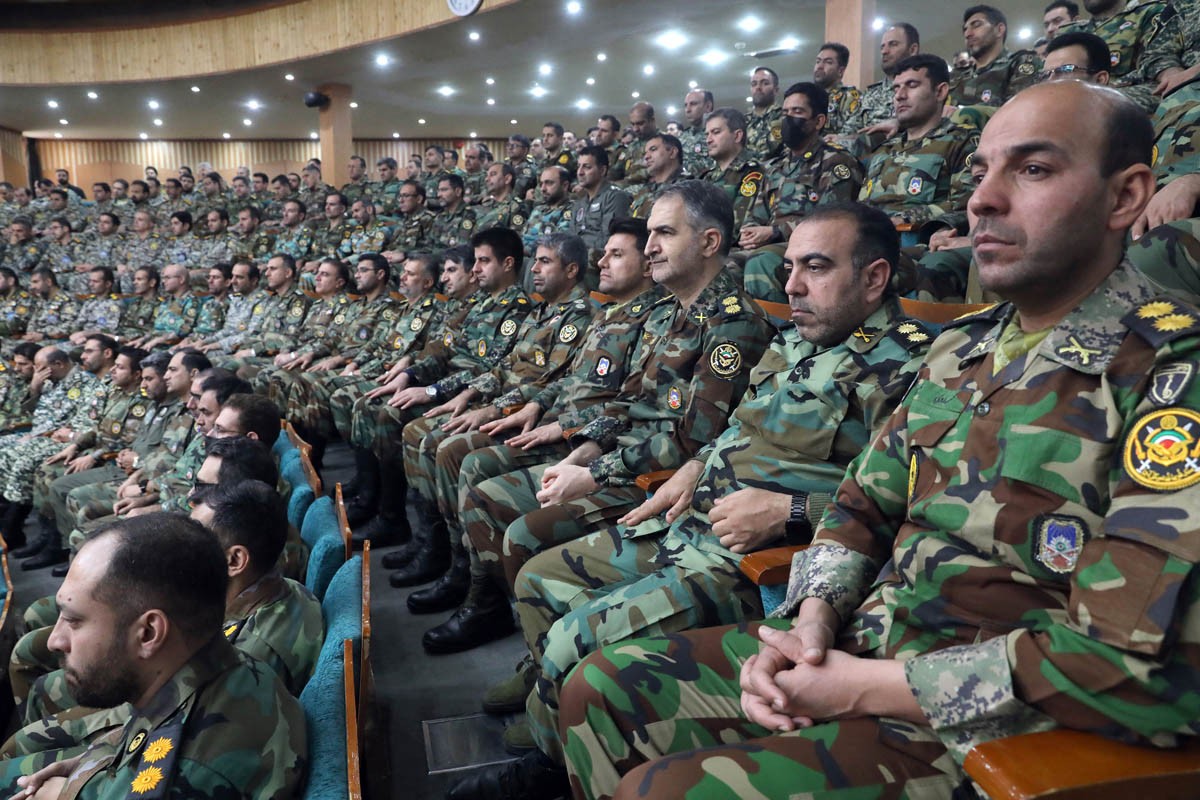
This photo released on January 7, 2026, by the Iranian Army media office shows military academy students listening to Iran’s army chief Amir Hatami (unseen) speaking in Tehran. (Iranian Army Media Office / AFP)
Will he target symbols of the regime, to underline its helplessness? Might he seek to eliminate members of the leadership? Could he choose to strike energy infrastructure, which is unlikely to be a game-changer? Might he focus on that renewed missile program, though this, too, might not be sufficient to deter the regime from its ongoing massacre?
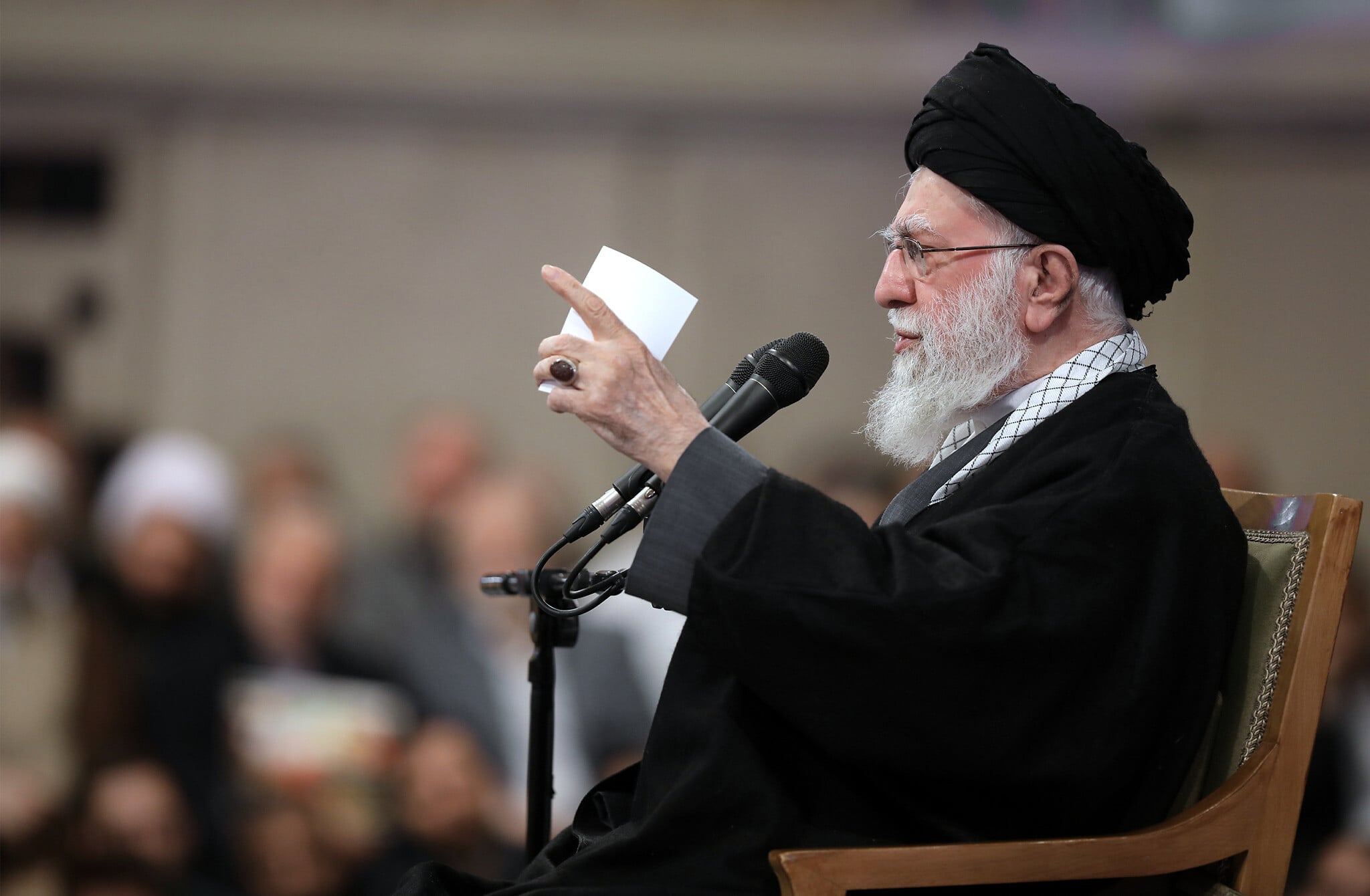
In this photo released by an official website of the office of the Iranian supreme leader, Supreme Leader Ayatollah Ali Khamenei speaks in a meeting, in Tehran, Iran, Saturday, Jan. 3, 2026. (Office of the Iranian Supreme Leader via AP)
How will he balance intervention with concerns that this could spark a lengthy conflict, potentially drawing in Israel, which is currently braced for a potential, if currently deemed unlikely, Iranian attack?
Is there more that can be done to counter the ayatollahs’ ongoing internet blackout — and bring the awful reality of what the killers sent by Ayatollah Ali Khamenei are doing to the Iranian people more clearly into the global public domain? The relative paucity of massacre footage contributes to the relative indifference of much of the international community, and by extension the world’s political leadership.
The indifference is widened, of course, because this is a case of Muslims killing Muslims — no ostensible colonialism, no alleged Jewish oppressors. And so a vicious regime mass-murdering its own people sparks no vast campus protests, only minor demonstrations in city centers, no impassioned pleas by Hollywood actors, little urgency at the UN, and of course no belated recognition that maybe Iran and the proxies who are trying to wipe out Israel might be on the wrong side of history and humanity.
This is not Israel’s war, but Israel has an existential interest in its outcome. It also has a fervent desire for a relationship with a different Iran, much of whose public may not have fallen for the regime’s decades of anti-Israel indoctrination.
This Iranian regime, its military proxies and its second battlefield demonization corps have worked relentlessly with every ounce of their perverted ingenuity to destroy the Jewish state — to mobilize global opinion against our legitimacy; to misrepresent the events of October 7, 2023, and their fallout, and seek to deny Israel the right to defend itself; to target Jews; to redefine Zionism not as movement to revive and maintain the historic homeland of the Jewish nation but as an illegitimate, terrorist cause.
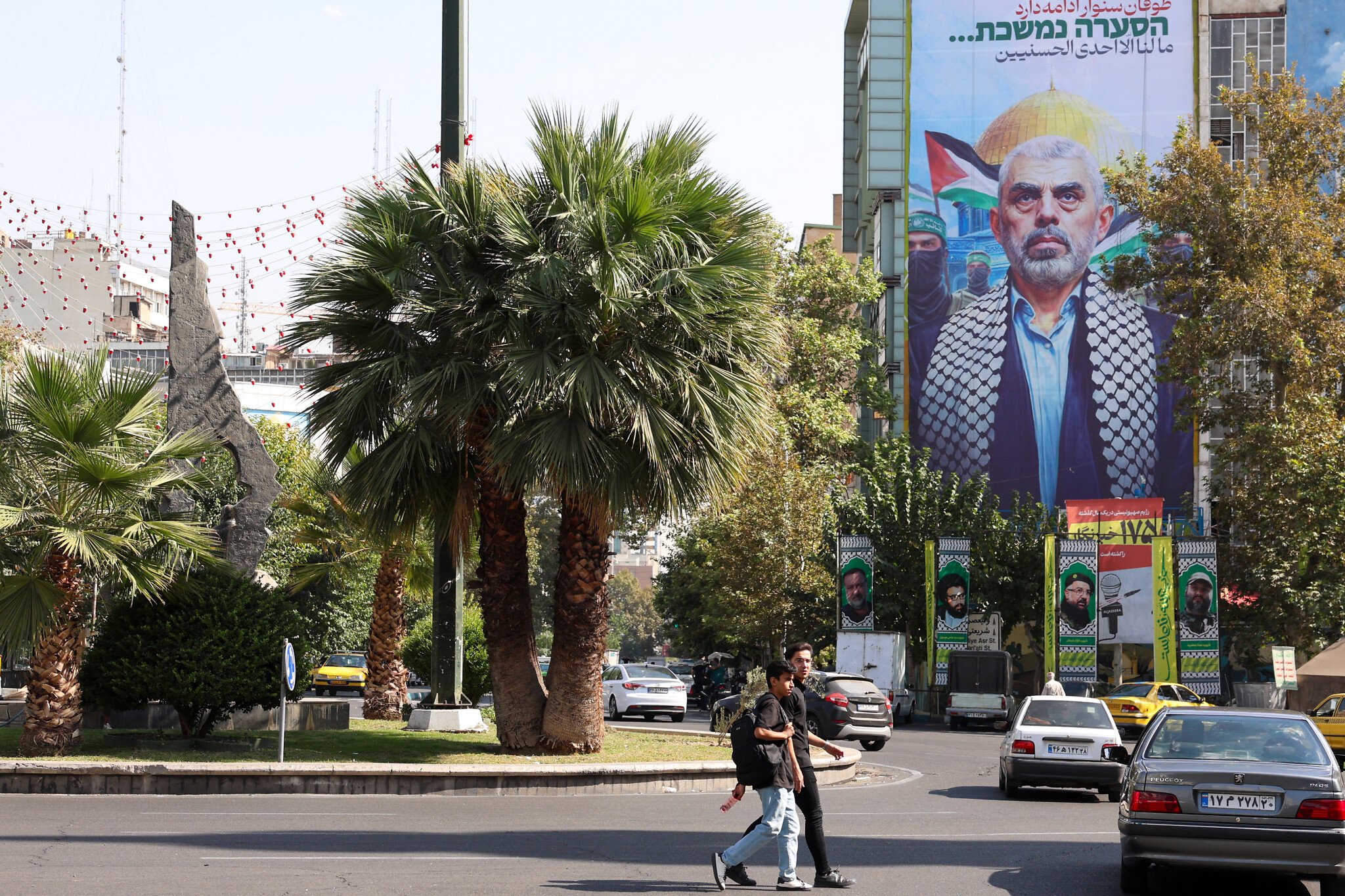
Iranians walk past a huge billboard bearing a portrait of slain Hamas leader Yahya Sinwar at Palestine Square in Tehran, on October 19, 2024. (AFP)
It would be bittersweet poetic justice were the cycle of events introduced by Yahya Sinwar’s invasion of southern Israel — the worst massacre and abduction of our people in our modern history, cheered and enabled in considerable part by the ayatollahs and their allies — to close not with the intended elimination of Israel but, rather, with the collapse of the malevolent Islamic Republic. (Bitter, of course, because of all the lives lost and ruined, all the pain, heartbreak and devastation.)
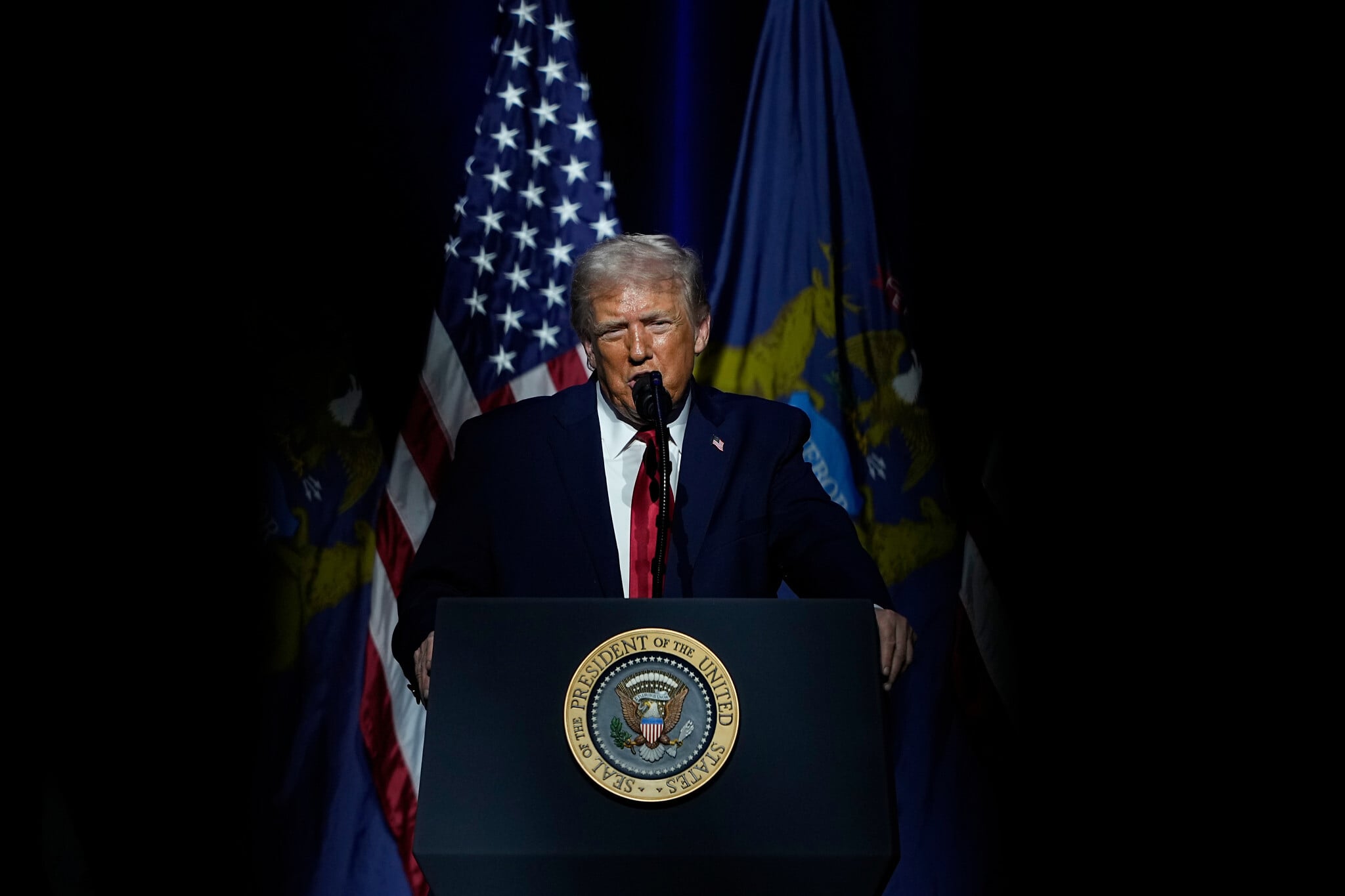
US President Donald Trump speaks at the Detroit Economic Club, January 13, 2026, in Detroit. (AP/Ryan Sun)
The Iranian people are, one more time, spearheading an effort to break out of a decades-long nightmare. The US president is avowedly committed to their freedom, and promising assistance. And the world waits, knowing that the last thing he would want is to be perceived, Obama-style, as a president who missed the moment to help liberate Iran.