
Modern smartphones are densely packed with technologies designed to operate quietly, automatically, and often invisibly. Their sensors perform countless tasks: adjusting brightness, guiding digital maps, measuring orientation. Most of these functions happen in the background, rarely prompting user attention. Yet buried within this architecture is one component whose capacity is increasingly being reexamined.
That component, the magnetometer, was not designed with novelty in mind. It exists to enable a digital compass, helping users and applications determine directional heading. Its role is structural, foundational, and rarely questioned. But it performs one additional function that was neither advertised nor widely understood.
It can detect metal.
Magnetometers Are Standard Hardware in Smartphones
The magnetometer is a passive sensor embedded in nearly all modern smartphones. It measures the strength and direction of the Earth’s magnetic field across three spatial axes. When a magnetic object enters proximity, the sensor’s readings fluctuate. These fluctuations, though often dismissed as interference by navigation software, are increasingly being harnessed to indicate the presence of nearby metal.
Unlike dedicated metal detectors, which emit electromagnetic pulses and analyse returning signals, smartphone magnetometers do not transmit energy. They record only ambient changes. This limitation means they are ineffective at detecting non-magnetic metals such as aluminium and cannot detect objects at significant depth.
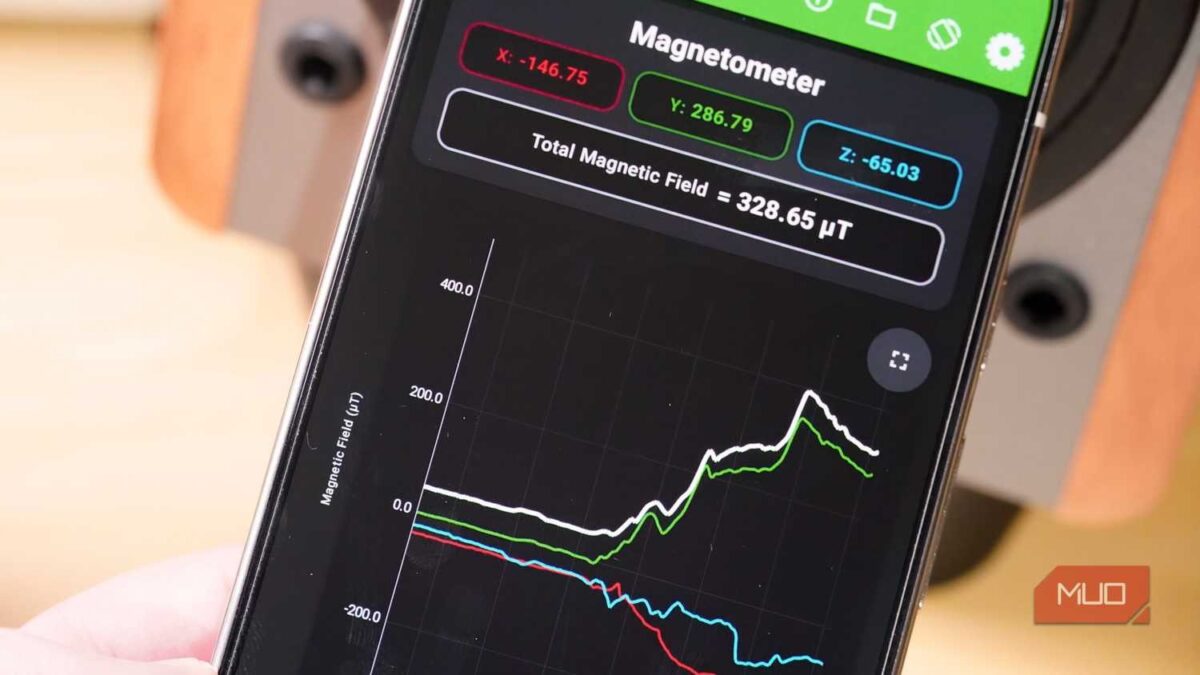 Detection Of Nearby Ferrous Objects Using Smartphone Magnetometer Data. Credit: Brady Snyder / MakeUseOf
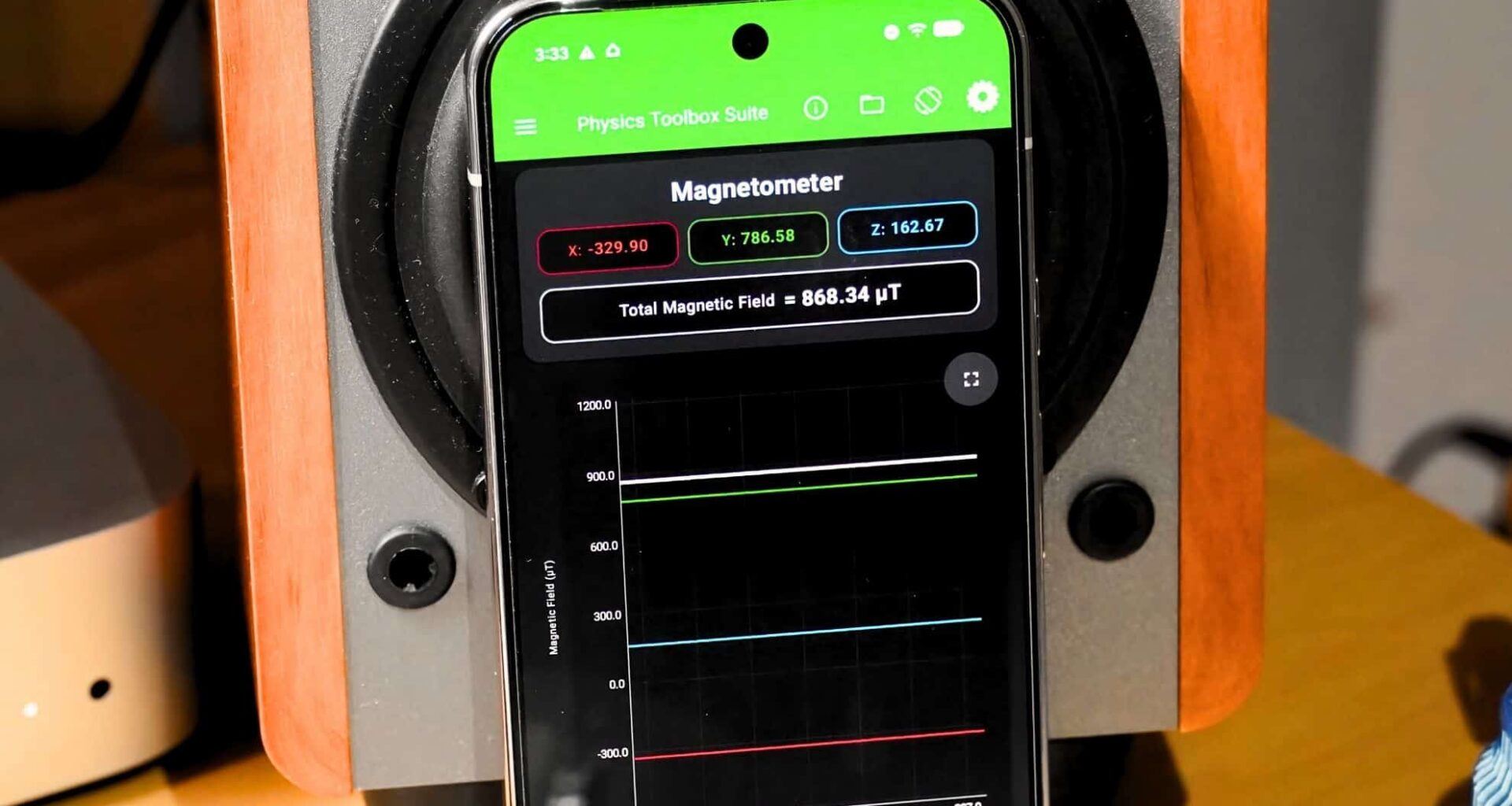
Data from mobile applications support this constraint. In tests reviewed by MakeUseOf, only objects with a strong magnetic signature and close physical proximity were reliably detected. Large electronic devices, particularly speakers and power supplies, caused measurable spikes. Smaller items such as pens or coins often failed to register, illustrating the hardware’s sensitivity threshold.
This method of detection is based on the magnetometer’s original purpose: powering digital compasses used in mapping and navigation. As explained by MakeUseOf, these sensors play a crucial role in determining device orientation relative to Earth’s magnetic field. Any nearby metal object interferes with that baseline, producing measurable anomalies that apps can visualise.
App-Based Detection Tools Offer Limited Precision
Several apps available on the Apple App Store and Google Play Store have sought to leverage the magnetometer for consumer-level metal detection. Tools like Metal Detector, Smart Metal Detector, and Metal Detector – Metal Finder offer simple interfaces that display the current magnetic field strength as a single numerical value. They alert users with vibrations or visual signals when that value crosses a certain threshold.
The design of these apps prioritises accessibility over precision. According to MakeUseOf’s review, their detection performance is generally inconsistent, particularly when identifying smaller or weakly magnetic objects. In contrast, the Physics Toolbox app provides a more granular view of magnetic activity, charting the field’s behaviour over time across all three axes. This approach offers users a clearer picture of what their device is sensing and when.
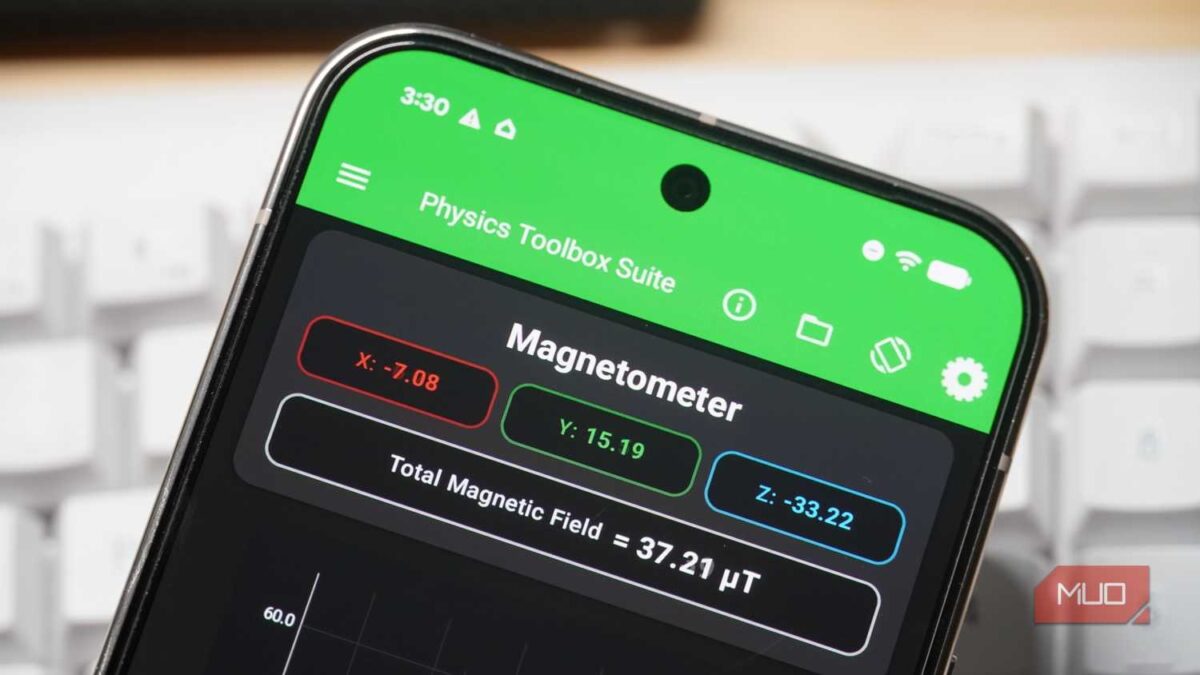 Mobile Apps Graphing Real Time Magnetic Field Variations On Smartphone Interfaces. Credit: Brady Snyder / MakeUseOf
The app also supports data logging and export in CSV format, enabling its use beyond novelty contexts. Its graph-based interface allows users to observe subtle variations in magnetic intensity, which can be interpreted more easily than raw numerical output. While still limited by the quality and sensitivity of smartphone hardware, the app offers a more transparent window into how mobile sensors function.
Broader applications of mobile magnetometers have been the subject of academic interest. A 2022 study in Sensors (MDPI) discussed their role in indoor navigation systems, while the IEEE Sensors Journal has explored their use in low-power field detection and orientation tasks. These studies confirm the sensor’s reliability in controlled environments, though their findings do not extend to metal detection in unstructured settings.
Sensor Interference Reveals Design Compromises
While the magnetometer’s secondary use as a metal detection tool is gaining visibility, its primary function introduces complications. Magnetic interference from nearby metal objects can significantly affect compass accuracy, especially in urban or indoor environments with high levels of electromagnetic noise.
Manufacturers attempt to compensate using sensor fusion, combining magnetometer data with input from accelerometers, gyroscopes and GPS to correct orientation. These corrections, while effective in many cases, cannot always resolve errors introduced by strong local magnetic fields. This has implications for navigation reliability, particularly in dense infrastructure zones or when users operate devices near industrial equipment.
This interference is not simply a theoretical issue. Consumer-facing examples like the iBeer app—which used the accelerometer and gyroscope to simulate beer drinking—show how mobile sensors can be used in unintended ways. In the case of the magnetometer, apps are now embracing a similar repurposing, though with less entertainment value and more practical curiosity.
There is no indication that hardware vendors are redesigning magnetometers to support metal detection explicitly. Their inclusion remains justified by their original role in location and orientation services. The growing ecosystem of applications that visualise and experiment with sensor data reflects consumer curiosity rather than a strategic shift in hardware development.