
1. A House for Collective Reflection
In the Austronesian part of the world, they are called “rumah adat”: traditional community houses where ritual objects symbolizing communal memory and value are preserved. The rumah adat, literally the “house of customary law,” is both an archive and a mirror. It is a place where a community recognizes, reinterprets, and reinvents itself. The objects that reside there are never dead relics but living interlocutors continuously redefining what it might mean to live together.
In a Western context, one way of understanding the role and social relations of the contemporary art museum might be in terms of the rumah adat. Such museums are places in society where values, tensions, and imagination are made visible. Besides their role as depositories of art, they also record what Jacques Rancière calls the “distribution of the sensible,” or the way in which societies negotiate what is allowed to become visible, audible, and thinkable. In these terms, museums can never be neutral infrastructures. They are necessarily politically charged perceptual machines and places where, more fundamentally, a democratic society can also exercise dissent.
The contemporary art collection plays a crucial role here. The artworks gathered by the museum build stories that (should) return us again and again to the places and communities that give them life and meaning. The artworks are literally “ballast.” They provide a counterweight to our turbulent relationship with reality. In that sense, the ongoing “incompleteness” of the collection is precisely its added value. Its gaps fuel the conversations that resonate in this Western rumah adat. These gaps are precisely the reason to continually rewrite and supplement the stories of the collection with new works of art: to constantly reimagine the world from within the heart of the museum.
It is this function of the museum that is becoming increasingly difficult to sustain, and not only in Belgium. The social relationship with art and heritage is increasingly transactional. As Belgian citizens, we pay for our museums threefold (similar to some other cultural systems): through the art we generate as a society and often entrust to our institutions as donations; through the taxes we pay to finance these institutions (or through the exempted taxes they receive in donations elsewhere); and through an entrance ticket that grants us access to what is actually already ours. Free museum visits, once commonplace for public collections, are increasingly dismissed as an idealistic anachronism, even by so-called progressive politicians. The fact that free access is no longer a given says a lot about how the ideological self-image of our society has shifted. What was once an interest in participatory, public meaning-making through dynamic engagement with collections has become an internalized obsession with market logic. Elsewhere, things can, apparently, be done differently: access to most public collections in the United Kingdom, for example, is free of charge, as are some private foundations.
At the same time, in a globalized world, a trend has emerged in which private collections or large franchises, such as Tempora (based in Belgium) and Nomad (based in Scotland), provide public museums and institutions with perfectly packaged “exhibition goods.” These travelling spectacles stop locally anchored collections from playing their role as “conversation pieces” for building and rebuilding stories and imaginations in specific communities. The same market-driven mindset has increasingly forced museums to prove their value in terms of visitor numbers and spectacular forms of attention. The focus is no longer artistic, educational, or community oriented, but on the “Key Performance Indicators” or “KPIs” that convince policymakers of the economic relevance of institutions. Museums thus become deliverers of commercial “targets” rather than sites where meaning is built. The public becomes the consumer; the space for wonder is a paid experience provided within a fixed time slot. In this process, it is hardly surprising that long-established museums can be thoughtlessly sold off or dismantled, often without any real ideological pushback.
2. The Crisis of Governance
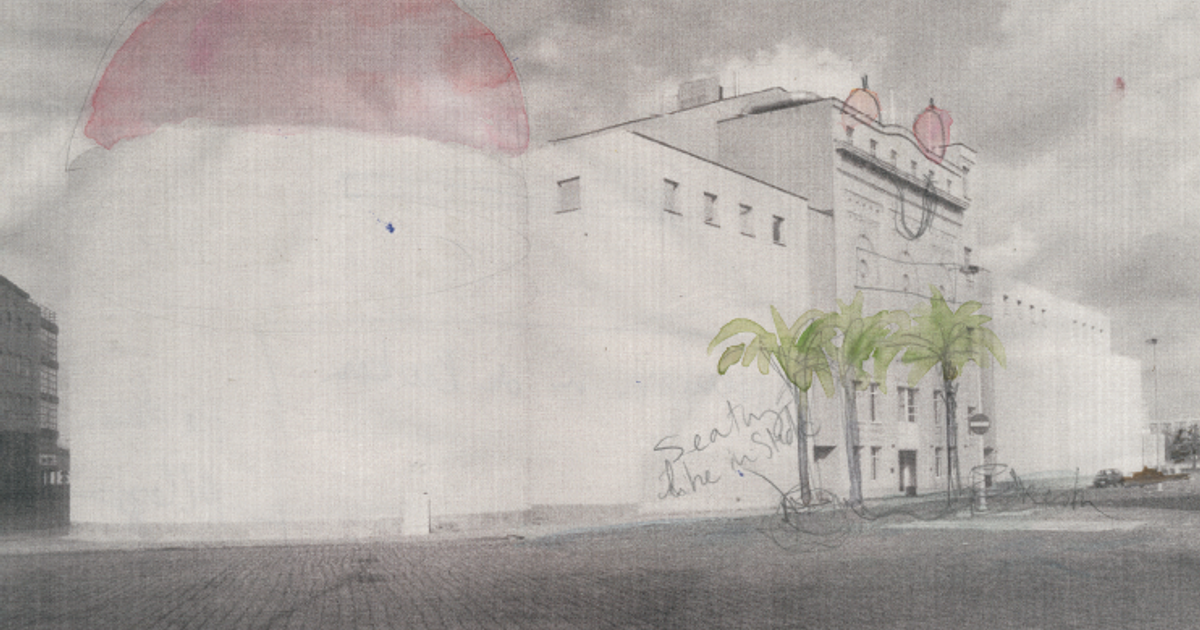
The Flemish government’s recent announcement that it would redraw the Flemish museum landscape fits seamlessly with its appetite for managerialism and efficiency. It plans to scrap the construction of a long-promised new building for the Museum of Contemporary Art in Antwerp (M HKA), turn the museum into an arts center, and transfer its collection to the City Museum for Contemporary Art (S.M.A.K.) in Ghent. Behind terms such as “optimization” lies an ideological reduction of art to a luxury object, through which the agonistic and situated dimensions of contemporary art are exchanged for a politically safe aesthetic or performative pseudo-criticism, making the museum vulnerable to being instrumentalized by a nationalist agenda. The potential for dissensus is thus detached from the collection and its acquisition policy, and cast off to the so-called arts center, a place in which art can, in the words of the minister, “spark clashes.”
This strained metaphor reveals the strategies of both the minister and the authorities more generally: they want to shape the possible forms of oppositional cultural activity and ensure that any resistance is rendered ineffective from the outset, just as the minister’s comment reduces art’s potential to little more than a mildly entertaining annoyance. This decoupling of art from heritage, which the proposed move to an arts center entails, substantially diminishes its capacity to historicize or canonize, meaning programs end up in the structural amnesia of repetitious project cycles from which they are pushed into oblivion. This is happening even though we know that the public museum must assume its corrective responsibility through the archive and the collection—especially for art practices and ephemeral art forms that have not been absorbed by the art market or entered the circuit of galleries and private collectors.
Sadly, in recent decades museums have felt the government breathing down their necks to keep the entertainment circus running, with little support to maintain and develop the museum’s historical function. The proposed cancellation is not simply of a building but of an archiving, urban laboratory that has collection-building as its strategic goal. M HKA was built on the foundation of the International Cultural Center, which attracted both local artists such as Panamarenko and international artists such as James Lee Byars and Gordon Matta-Clark, and was itself the continuation of a spirit of urban experimentation initiated by G58 in the Hessenhuis. Once M HKA was established, new generations of artists, including Anne-Mie Van Kerckhoven, Luc Tuymans, Otobong Nkanga, and many others, made Antwerp a center for artistic friction, and the museum documented and collected all of this activity in a living archive of artistic experimentation and urban imagination that is of lasting local and international consequence.
The fact that there is no political support for housing this heritage in Antwerp, even though doing so adheres to the Flemish government’s own so-called “return on investment” logic, is incomprehensible, especially in a place like Flanders, which is so self-consciously proud of its cultural achievements. Invoking budgetary problems in one of the richest regions of Europe is treacherous, especially at a moment when our northern neighbors in the Netherlands have just approved a €359 million renovation project for the Museum Boijmans Van Beuningen in Rotterdam. It is also symptomatic of a policy that regards museum directors as business CEOs and views museums merely as marketing vehicles in need of restructuring. The fact that the director of the other major art museum in Antwerp, the Royal Museum for Fine Arts (KMSKA), has no background in art history is not a coincidence, nor is the fact that the museum’s controversial scenography is little more than a grotesque form of populist branding. The appointment of the consultant and former city councilor Kristl Strubbe to the new museum conglomeration in Bruges illustrates the same ideological shift. In short, management and political affiliation take precedence over artistic expertise, and, while this phenomenon is more widespread elsewhere in Europe, Flanders seems to be embracing it with relish.
In the process, artists, curators, and researchers are reduced to “content providers” who are expressly excluded from shaping the system itself. The authorities fail to guide or evaluate these institutions according to good governance and fair practice, even when the field itself has asked for experiments in this direction. It is true that there is now an official decree on good governance in the Flemish public sector, but this is only binding on governmental institutions, and not all our museums fall into this category. Certainly, after reports of disturbing incidents about mismanagement at S.M.A.K. and elsewhere, it would be wiser to follow the example of the Netherlands, where compliance with the Fair Practice Code has effectively been made a condition of retaining state subsidy.
Behind all this lies a fundamental lack of interest within Flemish politics and policy—sometimes it amounts to active hostility—in the potential of museums as places where the community can archive its imagination, cultivate doubts about itself, and keep its history open and incomplete. Equally abandoned is the idea that museums have a responsibility to serve as role models for fair pay, good working conditions, and healthy financial procedures built on the core values of solidarity, diversity, trust, sustainability, and transparency.
3. The Conquest of the Collection
The decision to put M HKA’s collection under S.M.A.K.’s supervision is more than merely an operational adjustment. It is a symbolic power grab that seeks to recode the regime of visibility. While M HKA has had long-standing structural problems and arguably sloppy governance, it nevertheless established a progressive, internationally recognized exhibition practice. It was connected beyond Flanders through its active participation in L’Internationale, a European confederation of museums including MACBA Barcelona, SALT Istanbul, and Van Abbemuseum Eindhoven. By abolishing M HKA as a museum and designating S.M.A.K. as the only contemporary art-collecting institution in the area, the Flemish government has chosen to turn its back on that wider horizon in favor of an inward looking, centralizing model where superficial gloss and representativity take precedence over multilayered social and artistic significance.
L’Internationale argues for a radically different museum model: polyphonic collections brought together in a supra-regional confederation that shares expertise internationally. Its narratives resonate with emancipation, social struggle, and postcolonial complexity, translated for the local context by each museum. M HKA had anchored itself and its collection in that complex discourse to reflect, from Flanders, on its regional, European, and international entanglements. The now-defunct collaboration among Flemish contemporary art museums (Contemporary Art Heritage Flanders, 2009–23) outlined the framework for the potential of such a polyphonic museum landscape on a regional scale, while preserving the distinct character of the individual institutions. However, the new governmental logic now merges these collections into a series of “masterpieces”—trophies of Flemish cultural pride alone. What was once an archive of frictions, hospitality, and solidarities becomes a repository of symbolic capital.
This is not an aesthetic shift but an ideological one. It is a nationalization (or rather Flemishization) of cultural memory. The danger is clear: works of art will be used as emblems of identity rather than instruments of reflection, dissent, and dialogue with other ways of thinking. The authorities’ actions also undermine the intricate polyphony of institutions in Flanders and Belgium, which should complement, contradict, and challenge each other. Their collections are incomplete, coincidental, and subjective, and that is precisely what makes them unique. Their need for dialogue and interaction makes them vibrant.
These collections should build up relationships rather than be lumped together. This relationality should engage not only the artworks and their audiences but also the places whose stories and images these collections hold together. This relationship with place ensures that the museum as rumah adat does not merely talk “about” its subjects, but also “beside” and “with” them. Only from this proximity does the museum become political, because only then are the images and stories that the collection gathers and preserves made legible and usable for a community, initiating a process through which collection and community can shape and transform each other. Without being grounded “in” place, the collection becomes detached, static, and eventually transactional, and no longer a site for co-creation and political prefiguration.
The collection requires ongoing maintenance, which may be tedious but is essential to preventing the museum from becoming little more than a warehouse for transient goods. Its occasionally oversized, impermanent, or unconservable artworks, some of whose value might be unclear, act as material “ballast.” This compels the museum to slow down, reconsider its choices, and continually rewrite, activate, and enrich its stories. The material presence of the collection as well as the labor and caretaking it imposes literally keep the museum in place.
At the same time, maintenance should not become nostalgic. Following the rumah adat model, the collection must be able to take account of what happens “beside” and “with,” adjusting itself accordingly. The “unfinished” collection remains alive because it is experienced in the present as an ambiguous diachronic presence and never as a form of simple representation.
By limiting specificity, temporality, and diversity to the playground of a program, we lose the ability to accommodate multiple narratives through heritage, while the biggest city in Flanders becomes unable to construct its own histories through and with contemporary art. Despite all its shortcomings, M HKA fulfilled that function. It was a home for what was constantly on its way to becoming an artistic canon, one that linked it to local, regional, and international contexts while remaining alive and always contestable. At the same time, the people of Antwerp are being deprived of forming a meaningful relationship with the museum landscape because, without a collection that can be loaned, it becomes much harder to collaborate with international institutions. This is nothing more than a top-down humiliation.
To be continued in Part 2
This essay was originally published in Dutch and English by L’Internationale Online, December 2025. Dutch-to-English translation by Charles Esche, copyedited by Rebecca Bligh and Nick Aikens.