

Listen to this article
Estimated 3 minutes
The audio version of this article is generated by AI-based technology. Mispronunciations can occur. We are working with our partners to continually review and improve the results.
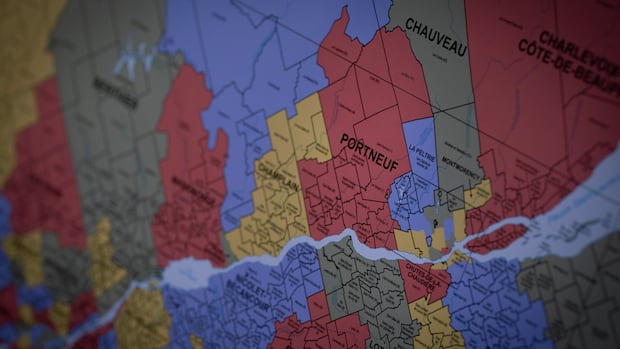
Quebec’s electoral map has been redrawn ahead of the upcoming provincial election, with both the Gaspésie region and the island of Montreal losing one riding each.
The rapidly growing Laurentians and Centre-du-Québec regions, meanwhile, will each gain a seat. In all, the new map modifies 51 of Quebec’s 125 ridings.
The independent commission responsible for the map, the Commission de la représentation électorale (CRÉ), made the changes to reflect population shifts. The new boundaries were published in the Gazette officielle du Québec on Wednesday.
The changes come despite a legal effort by the Coalition Avenir Québec (CAQ) government to maintain the status quo.
Breakdown of changes
The major changes are as follows.
Gaining a seat:
Laurentians: A new riding named Bellefeuille is created to address population booms north of Montreal.Centre-du-Québec: A new riding named Marie-Lacoste-Gérin-Lajoie is added south of the St. Lawrence River between Montreal and Quebec City.
Losing a seat:
Montreal: One riding is eliminated in the east end. The former ridings of Anjou–Louis-Riel, LaFontaine and Pointe-aux-Trembles have been reconfigured into two: Anjou-LaFontaine and Pointe-aux-Prairies.Gaspésie: The ridings of Gaspé and Bonaventure are merged.Political opposition
The decision to cut a seat in the Gaspésie region and eastern Montreal sparked pushback when first proposed in 2023.
Last year, all four parties in the National Assembly united to pass a law halting the redistricting process, arguing it hurt regional representation.
On Dec. 1, the Quebec Court of Appeal declared that law unconstitutional, ruling that it compromised the principle of effective representation by allowing significant disparities in voter weight to persist.
The commission finalized its map following that ruling.
However, the CAQ government filed an application for leave to appeal to the Supreme Court of Canada late last year, hoping to freeze the current map in place for the upcoming provincial election, scheduled for next fall.
The Attorney General of Quebec is now asking the Supreme Court to hear an appeal on the merits by April 15, even though the court typically takes four to six months just to decide whether it will hear a case.
The legal challenge against the government’s attempt to freeze the map was led by a coalition of municipal officials from the Laurentians, supported by leaders from Laval, the Outaouais, Eastern Townships and Centre-du-Québec regions who argued their citizens were underrepresented.