
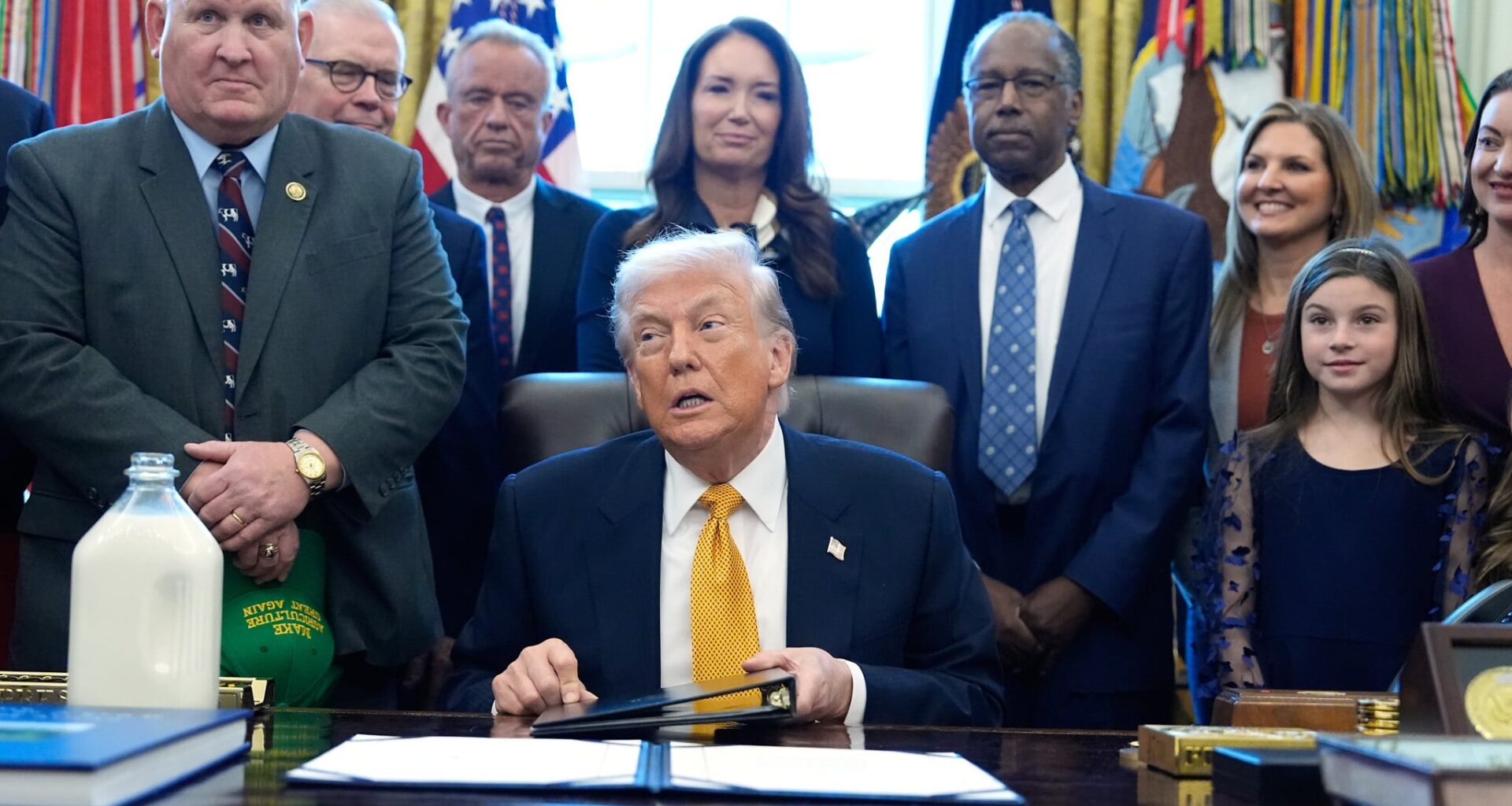
The likelihood of a US strike on Iran has increased significantly in recent days, Israeli television reported Wednesday, as the Islamic Republic threatened that it was ready to respond “decisively” to any action taken against it on the 17th day of deadly protests that have swept the troubled nation.
According to Channel 12 news, Washington’s shift toward the possibility of striking Iran came about after US President Donald Trump held a lengthy discussion with his advisers on the matter on Tuesday.
An American source quoted by the outlet said that as “the bloodshed in Iran is continuing,” it was likely that Trump “will have to do something within a day or two at the latest.”
According to the New York Times, Trump was presented with several options in recent days, including new strikes on Iran’s nuclear program — which the US joined Israel in targeting last June — or on its ballistic missile program.
Other options included striking the Islamic Republic’s internal security infrastructure, or launching cyberattacks, the US daily said, noting that these two options were “more likely” than targeting nuclear or missile sites.
Get The Times of Israel’s Daily Edition
by email and never miss our top stories
By signing up, you agree to the terms
Officials cited by the newspaper said it would likely be “at least several days” until the course of action decided upon by the Trump administration becomes apparent.
Trump has been openly threatening to intervene in Iran for days, though without giving specifics, as protests have continued unabated across all of Iran’s 31 provinces. The protests began as economic rallies on December 28, but rapidly ballooned into mass anti-regime demonstrations.
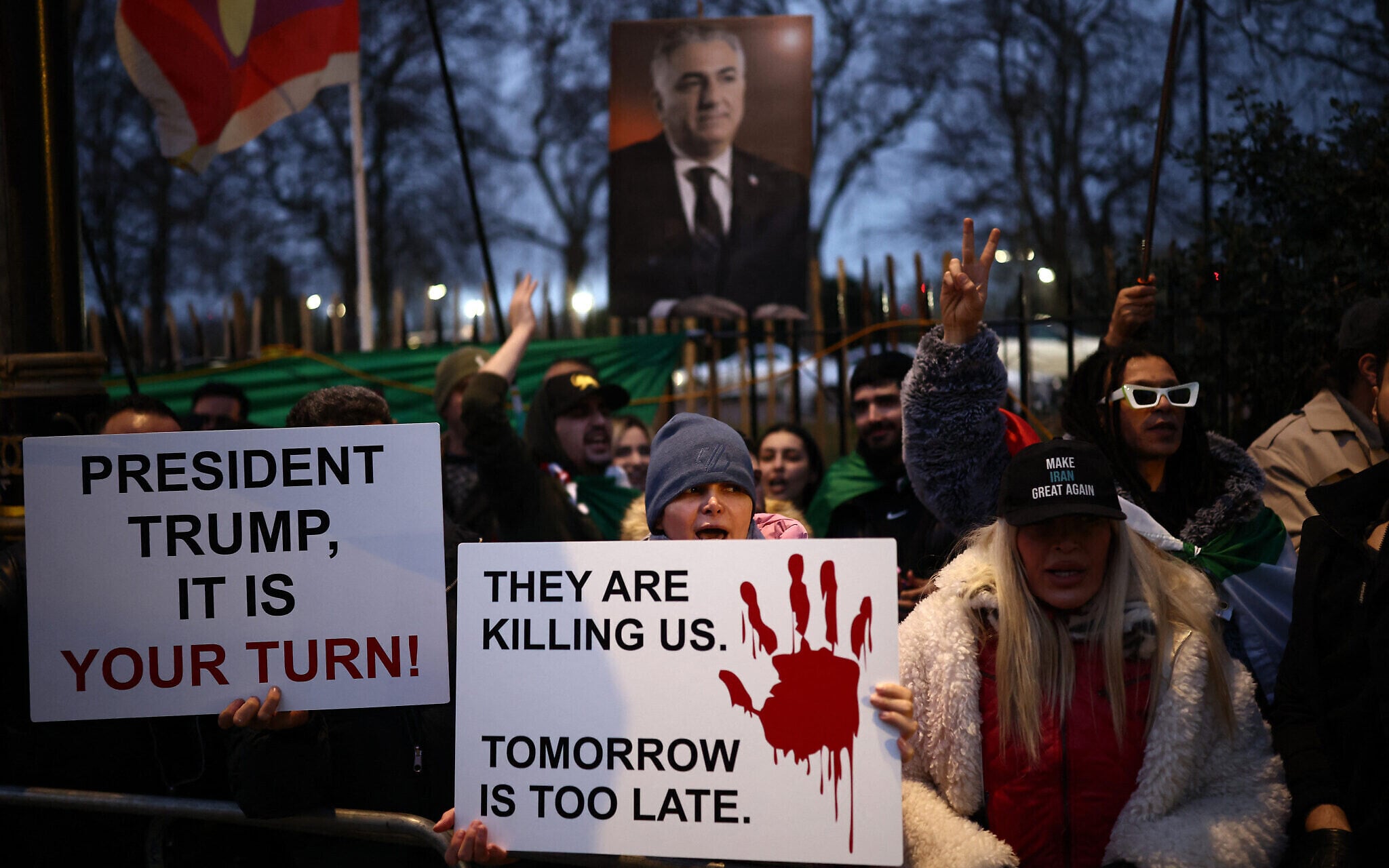
Anti-Iranian regime protesters demonstrate outside the Iranian Embassy, central London, on January 12, 2026. (Henry NICHOLLS / AFP)
But on Wednesday, the US president said Washington had been informed that the killing of protesters had ceased, and that the Islamic Republic would not proceed with executions as feared.
“We have been notified pretty strongly — but we’ll find out what that all means… We’ve been told that the killing in Iran is stopping, and it’s stopped,” Trump told reporters in the Oval Office without elaborating on who passed along that message to Tehran.
However, he avoided saying definitively that military action was off the table, while refusing to specify who had informed him that the killings had ceased when pressed by journalists.
“We have been informed by very, very important sources on the other side, and they said the killing has stopped, and the executions won’t take place,” Trump said.
“There was supposed to be a lot of executions today, and [those] won’t take place,” The added. “We’ve been told on good authority, and I hope it’s true, [but] who knows.”
Trump said footage of protesters in body bags is from previous days, suggesting that the extrajudicial killings have ceased more recently.
“We’re going to watch and see what the process is, but we were given a very good statement by people [who] are aware of what’s going on.”
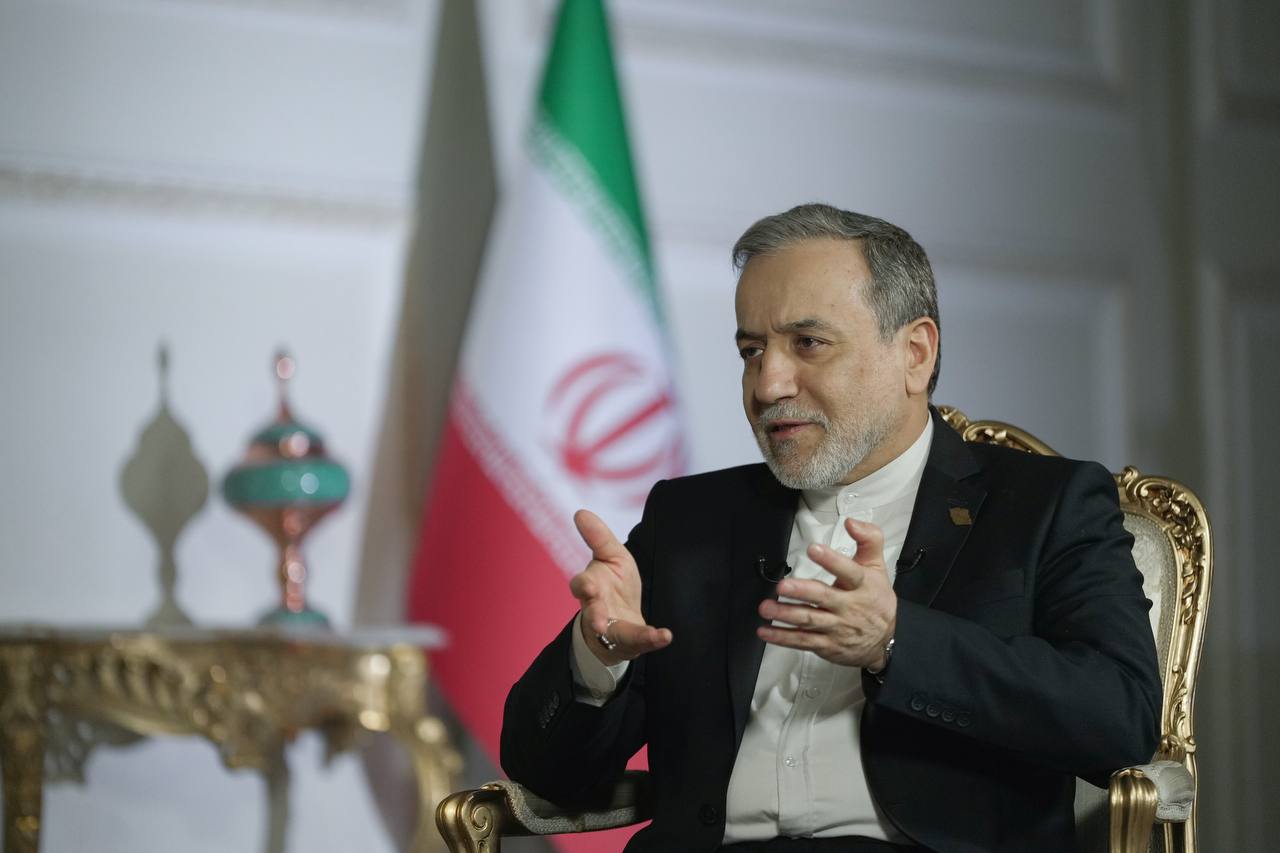
Iranian Foreign Minister Abbas Araghchi speaks during an interview with Al Jazeera in Tehran. (Iranian Foreign Ministry via ZUMA Press Wire, Reuters)
Iran’s foreign minister, Abbas Araghchi, had been in touch with Trump’s top aide Steve Witkoff over the weekend.
Araghchi declared on Wednesday that the government was in full control after brutally cracking down on the protests.
“After three days of terrorist operation, now there is a calm. We are in full control,” Araghchi told US broadcaster Fox News’s “Special Report” program.
Earlier on Wednesday, the US-based Human Rights Activists News Agency said that at least 2,571 people had been killed and more than 18,100 had been arrested in the more than two weeks of protests. The Mossad is said to believe the death toll is more than twice as high.
‘Unpredictability is part of the strategy’
Amid Trump’s threats of action, the Iranian regime has threatened to retaliate, warning that it will target both US military bases in the US and Israel should Washington act.
The commander of the Islamic Revolutionary Guard Corps (IRGC) accused Israel and the US on Wednesday of being behind the protests that have upended the country, and reiterated that Tehran was ready to respond “decisively” should it be threatened.
The Guard is at “the height of readiness to respond decisively to the miscalculation of the enemy,” said IRGC Commander Mohammad Pakpour in a written statement quoted by state television, accusing Trump and Prime Minister Benjamin Netanyahu of being the “murderers of the youth of Iran.”
Israel, too, was said to be preparing Wednesday for the possibility of escalation between Washington and Tehran, and Channel 12 reported that Netanyahu has been in frequent contact with US Secretary of State Marco Rubio about the issue.
The pair spoke on Saturday and Monday, and another call was expected to take place on Wednesday, it said.
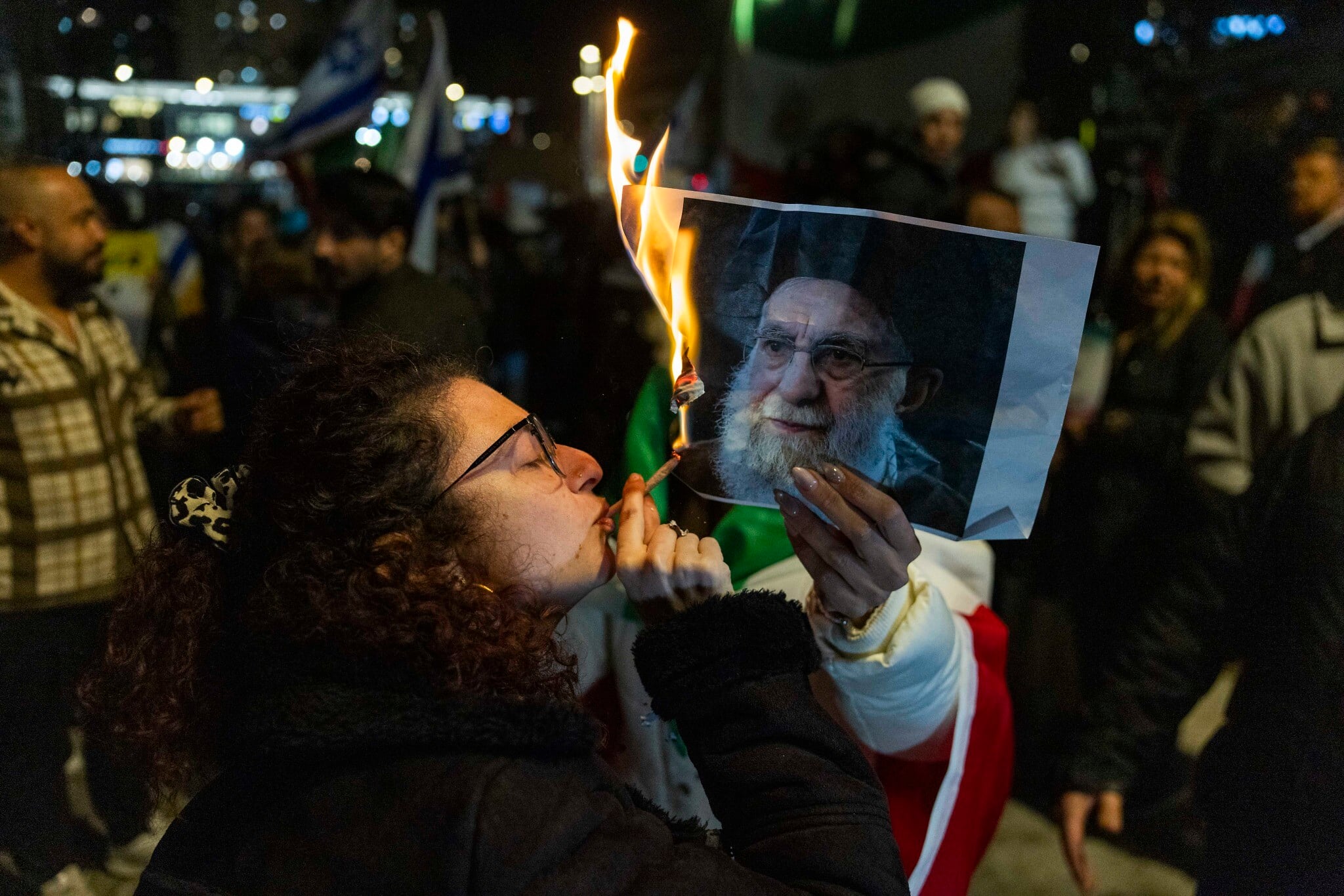
Members of the Iranian Jewish community in Israel burn a picture of Iran’s Supreme Leader Ali Khamenei during a demonstration in support of the Iranian people in the city of Holon, central Israel, January 14, 2026. (Chaim Goldberg/Flash90)
It was unclear, however, whether Netanyahu had spoken directly with Trump in recent days, or if a call between the two leaders was planned.
Addressing the possibility of Iranian retaliation against Israel, the report cited a senior Israeli security source as saying that “if Iran attacks, there won’t be another round — we will act to topple the regime.”
According the network, Arab diplomats have delivered similar warnings to the Iran-backed Hezbollah terrorist group in Lebanon, threatening unprecedented consequences if it takes any aggressive action against Israel in the event of a US strike on Iran.
A Lebanese source familiar with the terror organization’s thinking told Reuters that Hezbollah did not offer explicit guarantees that it would withhold from military action against Israel, but said it had no plans to act unless a US strike on Iran was deemed to be “existential” for the regime’s leadership.
The Israel Defense Forces said on Wednesday night that it has stepped up its defensive posture and was closely monitoring developments in the region, but urged the public to rely only on official updates and avoid spreading rumors.
“I am aware of the reports over the past day and especially in the last few hours and request to clarify – the IDF is closely following the developments,” IDF Spokesman Brig. Gen. Effie Defrin said in a statement posted on X.
Chief of Staff Lt. Gen. Eyal Zamir has been holding ongoing situational assessments in recent days, Defrin said, and the military is on full alert.
“Rely only on official IDF statements and avoid spreading rumors that could cause public concern,” he wrote, urging the public not to rely on unofficial information. “At this stage, there is no change in the Home Front Command’s defensive guidelines.”
“The IDF is prepared and will continue to act responsibly to protect the security of the citizens of the State of Israel,” he said.
Meanwhile, after some personnel were advised to leave the US military’s Al Udeid Air Base in Qatar on Wednesday, The UK’s newspaper reported that Britain was also withdrawing some personnel from an airbase in Qatar.
The British defense ministry had no immediate comment on the report.
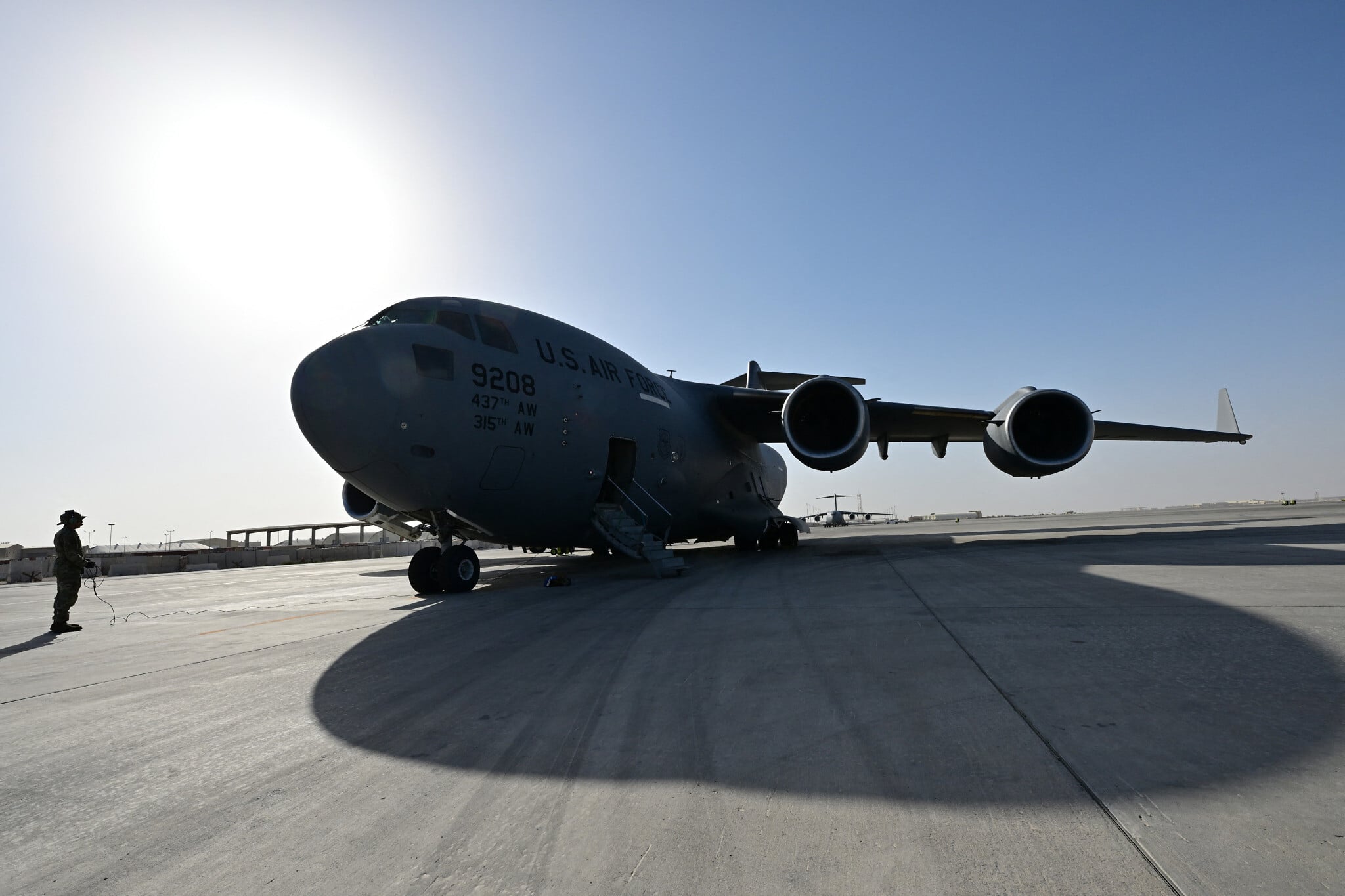
Illustrative: A US military transport aircraft is pictured on the tarmac at the Al-Udeid air base southwest of Doha, Qatar, on March 21, 2024. (Giuseppe CACACE / AFP)
“All the signals are that a US attack is imminent, but that is also how this administration behaves to keep everyone on their toes. Unpredictability is part of the strategy,” a Western military official told Reuters later on Wednesday.
Two European officials stated that US military intervention could occur within the next 24 hours, corroborating Channel 12’s account.
Later on Wednesday night, six American Stratotanker aircraft took off from the base, according to flight tracking websites.
It was unclear whether the KC-135s were repositioning to US bases further from Iran or were preparing to support a US strike in the region.
Commercial ships anchor outside Iran’s port limits
Separately, data and shipping sources showed on Wednesday that dozens of commercial ships had dropped anchor at a distance outside Iran’s port limits in recent days.
Such movements were precautionary given the tensions amid ongoing protests in Iran, the shipping sources said. Port limits are significant because they run a higher risk of collateral damage in the event of air strikes on nearby infrastructure.
The country relies on seaborne trade for imports using dry bulkers, general cargo and container ships as well as oil tankers for oil exports.
The number of tankers moving into Iran’s exclusive economic zone (EEZ), a stretch of water along its Gulf and Caspian coasts that extends up to 24 miles and beyond local territorial limits of 12 nautical miles, jumped from 1 vessel to 36 tankers between January 6 and January 12, analysis by maritime intelligence solutions provider Pole Star Global shows.
At least 25 bulk carriers were stationary in Iran’s EEZ off the major port of Bandar Imam Khomeini, data from ship tracking and maritime analytics provider MarineTraffic showed.
A further 25 ships including container and cargo vessels had dropped anchor further south off the port of Bandar Abbas, MarineTraffic data showed.
The level of interference with GNSS navigation systems, which included GPS, had increased to “substantial” in the Gulf and Strait of Hormuz area over the past week, the US Navy’s Combined Maritime Force said in a note on Monday.
“This is highly likely due to force protection measures being taken in relation to the ongoing political tensions in the region. Vessels transiting this area could be impacted,” the note said.
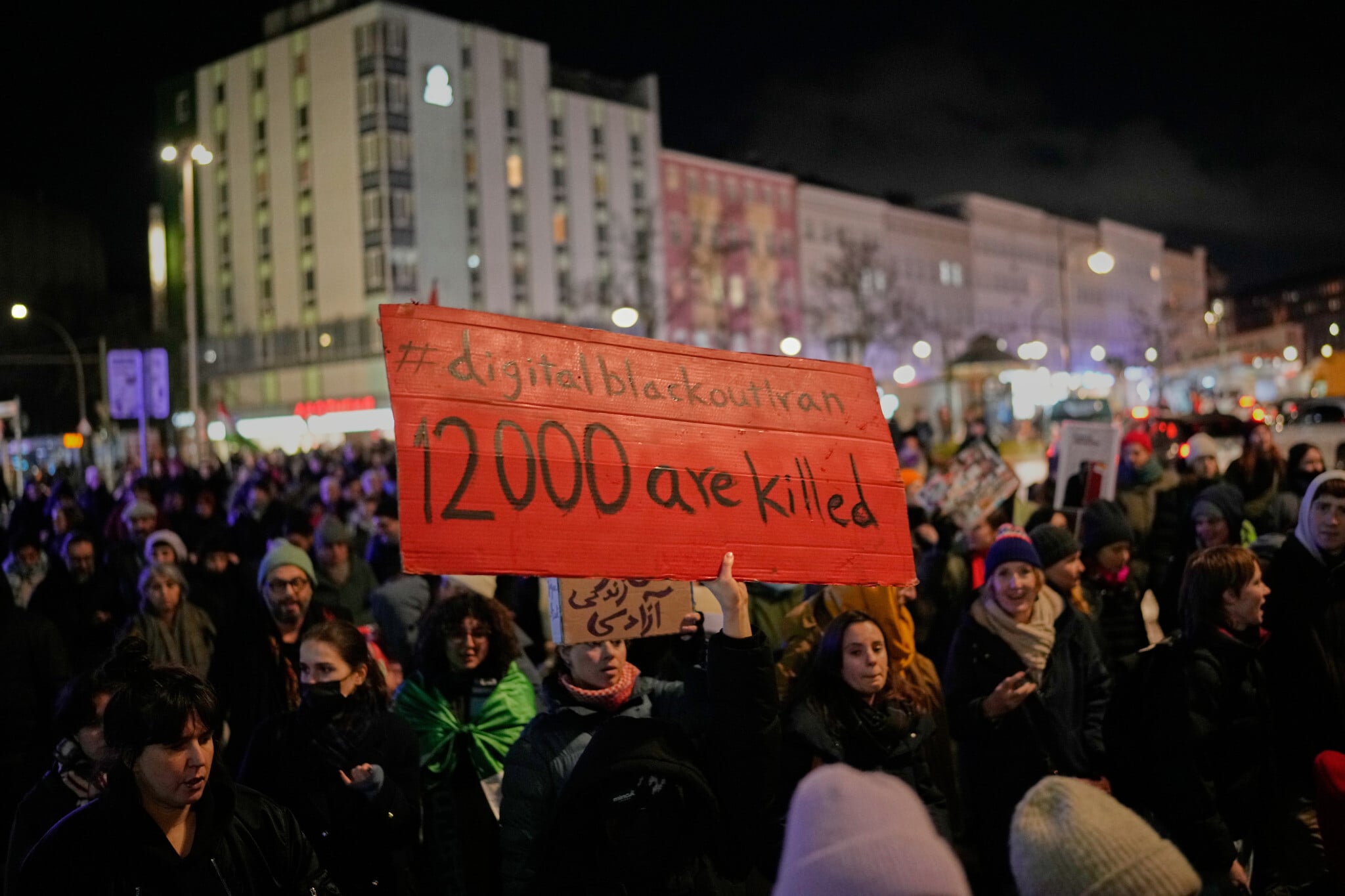
People take part in a rally in support of anti-government protests in Iran, Berlin Germany, June 14, 2026. (AP Photo/Ebrahim Noroozi)
The flow of information from inside Iran has been hampered by an internet blackout.
The government’s prestige was hammered by its 12-day war with Israel last June that followed setbacks for Iran’s regional allies in Lebanon and Syria. European powers restored UN sanctions over Iran’s nuclear program, compounding the economic crisis there.
The unrest on such a scale caught the authorities off guard at a vulnerable time, but it does not appear that the government faces imminent collapse, and its security apparatus still appears to be in control, one Western official said.
The authorities have sought to project images showing they retain public support. Iranian state TV broadcast footage of large funeral processions for people killed in the unrest in Tehran, Isfahan, Bushehr and other cities.
People waved flags and pictures of Supreme Leader Ayatollah Ali Khamenei, and held aloft signs with anti-riot slogans.
Iranian President Masoud Pezeshkian, an elected figure whose power is subordinate to that of Khamenei, told a cabinet meeting that as long as the government had popular support, “all the enemies’ efforts against the country will come to nothing.”
State media reported that the head of Iran’s top security body, Ali Larijani, had spoken to the foreign minister of Qatar, while Iran’s top diplomat Araghchi had spoken to his Emirati and Turkish counterparts. Araghchi told UAE Foreign Minister Sheikh Abdullah bin Zayed that “calm has prevailed.”