
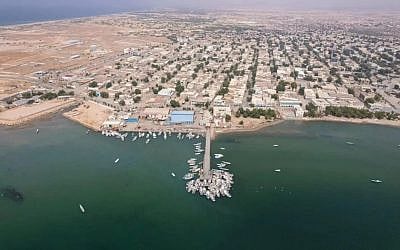
The coast of Berbera, Somaliland. Credit Hamza Sulub_Shutterstock
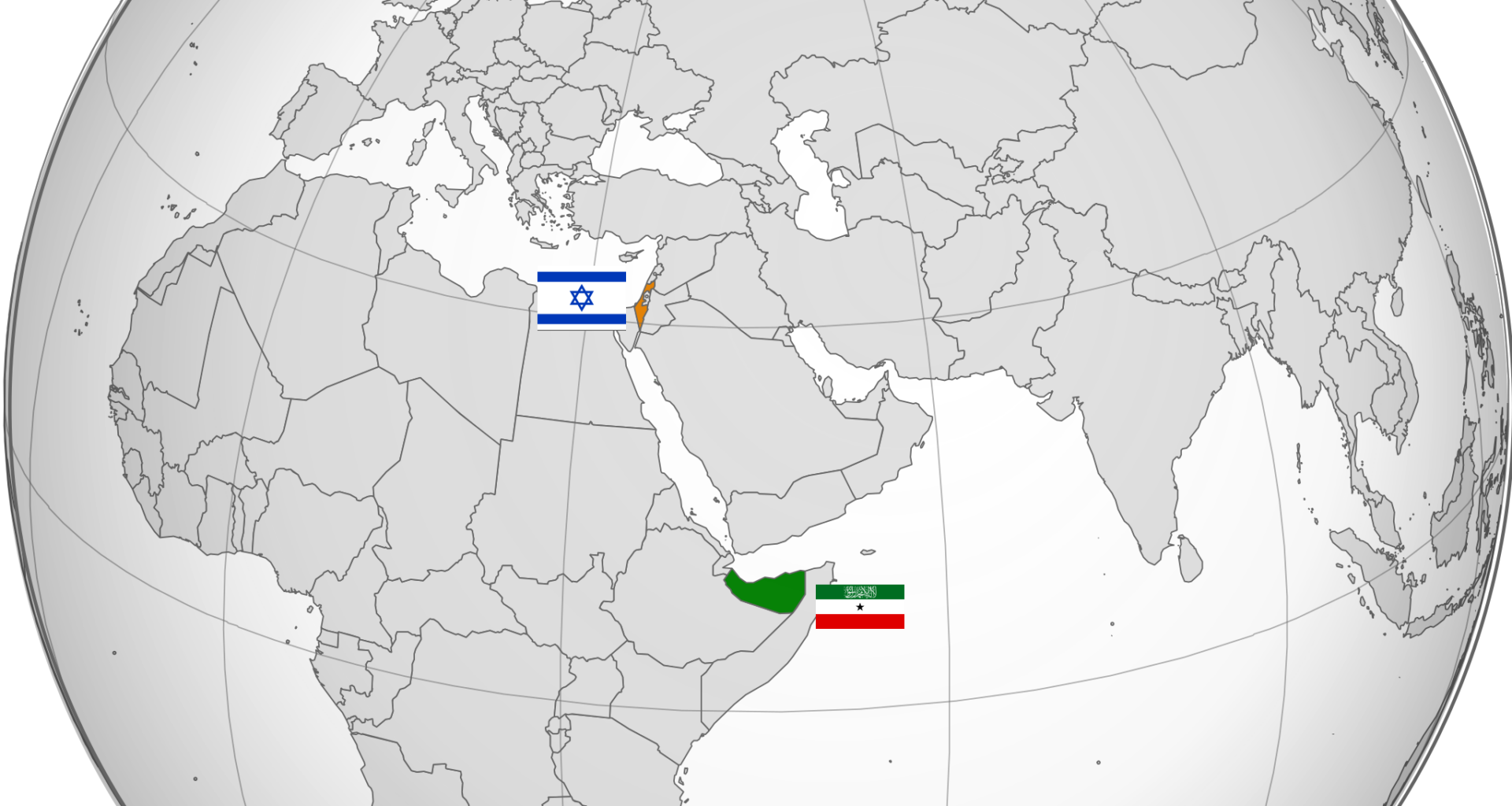
On December 26, 2025, a 34-year diplomatic silence was shattered not by the sound of gunfire, a noise far too common in the fractured Horn of Africa, but by the resonant tone of a historic video call. When Israeli Prime Minister Benjamin Netanyahu greeted Somaliland’s President Abdirahman Mohamed Abdullahi, the world witnessed more than just a bilateral pleasantry; it saw the birth of a new geopolitical reality.
As a Government Communications strategist who has spent past years navigating the high-stakes corridors of government communications such us the Somaliland diplomatic MoU with Ethiopia, I recognize this moment for what it is: the most significant reconfiguration of Red Sea security in a generation. For Somaliland, it is not merely a ‘diplomatic win’ but rather the ultimate validation of a resilient democratic exceptionalism that has endured in isolation since 1991.
Decoding the Mechanics: A Convergence of Realpolitik and “Information Statecraft”
The recognition was not a sudden impulse but a calculated deployment of “Information Statecraft”, the synchronization of diplomatic ends with high-impact communication means. This move transforms Hargeisa from a “a region that restored its independence from Somalia” in the eyes of the cynical into a “Strategic Sentinel” for global trade.
The mechanics were surgical:
Legal Restoration: Israel’s recognition leans on the 1960 precedent, when Somaliland enjoyed five days of independence recognized by 35 nations, including Israel.
Institutionalization: Within days of the announcement, Foreign Minister Gideon Sa’ar made a landmark visit to Hargeisa in January 2026, signaling that this was a working alliance, not a symbolic headline. The Move shattered AU-led Somaliland recognition diplomatic understanding.
Security Fusion: The partnership leverages Somaliland’s 850-kilometer coastline to monitor Houthi launch sites just 160 to 250 kilometers across the Gulf of Aden.
Quantifiable Economic Impact: Studies show that newly recognized states often experience a 25% to 40% increase in Foreign Direct Investment within the first five years. This recognition validates the Berbera Port as a secure, viable alternative to the Turkish-influenced ports of Mogadishu. Furthermore, the Israeli’s agricultural technology, known for increasing yields by 200% in arid regions, promises to modernize Somaliland’s livestock-dependent economy
The Geopolitical Strategy: The “Three Red Seas”
The core strategy behind this recognition is the construction of a “pro-Western security architecture” that bypasses the traditional, often stagnant, diplomatic norms of the region. Israel is creating a “southern front” to encircle the Iranian Axis of Resistance. By establishing a footprint in Somaliland’s coastline, situated just 160 to 250 kilometers across the Gulf of Aden from Houthi launch sites, Israel gains a vantage point geographically closer to Iran than to Tel Aviv, placing strike capabilities within 45 minutes of Houthi launch sites and four hours from Iranian nuclear facilities.
Fear Narratives of the Status Quo Axis
A shift of this magnitude has drawn “Pavlovian condemnations” from a new coalition of opponents: the Axis of the Status Quo.
The Mogadishu-Ankara Axis: Somalia’s Federal Government (FGS) views this as an “existential threat”. Turkey, which operates its largest overseas military facility (Camp TURKSOM) in Mogadishu and is currently building a 900-square-kilometer spaceport and ballistic missile testing facility near Kismaayo, sees its regional monopoly crumbling. Ankara’s “Blue Homeland” doctrine and Neo-Ottoman ambitions, designed to project influence into the Indian Ocean, are now directly challenged by a technologically superior adversary.
The Iranian-Houthi Proxy Network: Tehran is alarmed by an Israeli “forward presence” capable of neutralizing the Houthi “Red Sea card”. Israeli presence near Bab el-Mandeb means Iran’s Houthi arm smuggling routes are under constant surveillance and interdiction
The Syrian Fragmentation Fear: The post-Assad regime in Damascus has rejected the move too, fearing Israel will apply a similar “model” to the Druze in southern Syria.
The Regional Disruptors: Djibouti and Kenya
The recognition has forced a fundamental recalibration for neighboring states, specifically Djibouti and Kenya.
Djibouti’s Strategic Obstructionism: Djibouti, which currently chairs the African Union and hosts IGAD, has become the frontline of diplomatic resistance. Historically a “gatekeeper” for the Horn’s maritime access, Djibouti views a recognized Somaliland as a direct threat to its logistical monopoly. Consequently, Djibouti is weaponizing its international seats to block Hargeisa’s progress, cloaking commercial self-interest in the language of “territorial integrity”.
Kenya’s Pragmatic Pivot: In contrast, Kenya is quietly reorienting its Somaliland policy. Policymakers in Nairobi increasingly view Israel’s “icebreaker” as a strategic opening to recognize a stable northern partner. With over 15,000 Kenyan nationals working in Somaliland and a vast untapped market for Kenyan tea and miraa, the “domino effect” of recognition is shifting from fringe discourse to a core component of Kenya’s counter, Al-Shabaab strategy.
The Riyadh-Cairo Strategy: Why Saudi Arabia and Egypt are Rejecting Hargeisa
Perhaps the most complex opposition comes from Saudi Arabia and Egypt, who have joined Turkey in a “Red Sea Axis” to protect the status quo.
Saudi Arabia’s Strategic Logic:Riyadh acts as the “central convener” of this status quo coalition. For Saudi strategic planners, the UAE-Israel alignment in Somaliland represents an “encirclement strategy”. Saudi Arabia is prioritizing the security of its 1,811-kilometer Red Sea coastline against asymmetric threats. By supporting the Federal Government in Mogadishu and intervening to dissolve the UAE-backed Southern Transitional Council (STC) in Yemen in early 2026, Riyadh is signaling that it will not tolerate fragmented, sub-state actors controlled by its rivals on its southern borders. Yet, this reactive posture, focused narrowly on immediate threats while overlooking the deeper shifts in regional alignments, reveals a pattern of Diplomatic Myopia.
Egypt’s Operational Anchor:Cairo positions itself as the axis’s “operational anchor.” Its participation is shaped by a deep-seated fear that Israel’s presence in Somaliland, coupled with talk of a Haifa-Addis Ababa rail corridor, undermines the primacy of the Suez Canal. Moreover, Egypt interprets Ethiopia’s role in the Somaliland port deal as an extension of the Grand Ethiopian Renaissance Dam crisis, casting Hargeisa as a proxy in its wider confrontation with Addis Ababa.
Supporting Somaliland: The Latticework of Influence
Despite this formidable opposition, “Latticework of Influence” supports Somaliland’s path:
The Silent Architect (UAE): Abu Dhabi has facilitated this realignment to secure its maritime network, which stretches from Socotra to the eastern Mediterranean. By choosing “ports over capitals,” the UAE is hedging against regional instability through fragmented but functional allies.
The Regional Heavyweight (Ethiopia): Addis Ababa views the recognition as a path to reviving its 2024 maritime MoU, granting it sea access in exchange for recognition.
The Global Hedge (United States): While official Washington remains split, segments of the administration view Somaliland as a vital “hedge” against Chinese influence in Djibouti.
Strategic Navigation: The “One Aim, One Voice” Doctrine
How should Somaliland navigate this critical juncture? From a communications perspective, the strategy must be a blend of traditional legitimacy and innovative digital diplomacy.
Somaliland’s recent launch of its “Unified Government Communications Strategy” is essential. Under the principle of “One Aim and One Voice”, Hargeisa must ensure that every relevant ministry reinforces a consistent, credible narrative of stability.
Somaliland must pivot from “victimhood” to “success story”. We are not “seceding”; we are “restoring” an independence legally attained in 1960, while embodying our role as a sentinel of the Red Sea.
In a borderless media landscape, Somaliland must employ the “3 Vs”: Visual, Volume, and Value-driven content. We must master “Twiplomacy” and engage influencers to counter the disinformation campaigns of the Mogadishu-Ankara axis.
The Way Forward: Immediate and Long-Term
Immediate Actions (0-6 Months):
Rapidly open embassies in Tel Aviv and Hargeisa to move beyond symbolic headlines to “working level” cooperation in security alliance and water technology. In parrallel, formalize the “fusion mechanism” for maritime security, making Somaliland an indispensable partner in the U.S.-led “Operation Prosperity Guardian”
Long-Term Vision (1-5 Years):
Leverage the ‘domino effect’.Use the Israeli “icebreaker” to encourage coordinated recognition from middle powers like Greece and Cyprus, who share a common rival in Turkey. At the same time, capitalize on the Berbera corridor to transform Somaliland into the primary logistical gateway for East Africa, ensuring that our sovereignty is built on the bedrock of trade, not just aid.
Israel’s recognition of Somaliland is not a “destabilizing” act; it is a lawful acknowledgment of a long-established reality. For too long, the international community has held a functional democracy hostage to the ghost of a failed state. That era is over. The Red Sea now has a sentinel, and its name is Somaliland.