
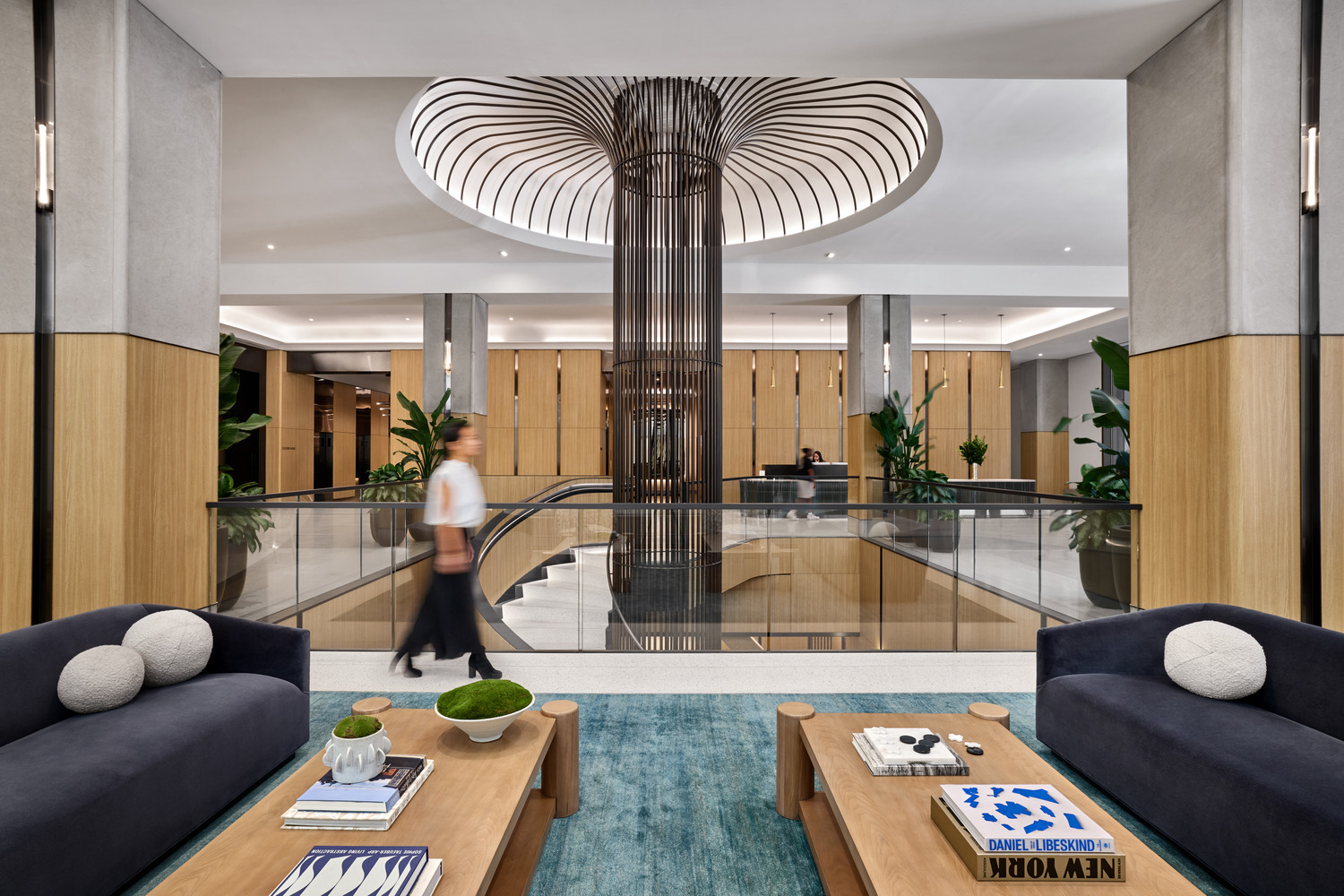
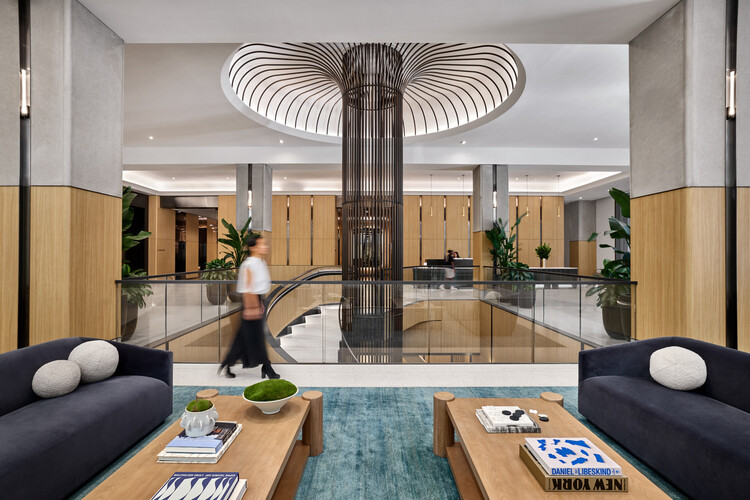
 Recognizing New York City’s housing shortage and surplus office space, Vanbarton Group engaged Gensler to convert an aging downtown office tower into a 588-unit residential building with extensive amenities. Five new floors were added, and upgrades to the façade, insulation, and operable glazing improved building performance. By reusing the existing structure, the project saved an estimated 20,000 metric tons of embodied carbon and now exceeds local 2030 energy targets. Image © Garrett Rowland, Courtesy of Gensler
Share
Or
https://www.archdaily.com/1037488/fragile-by-design-how-can-buildings-be-designed-to-outlast-their-first-purpose
Having explored adaptability at the city scale, we are now zooming in on the building itself—and, crucially, on practice. How can architects, developers, and consultants embed adaptability as a measurable, mainstream outcome? This question will be on the agenda at the Adaptable Building Conference (ABC) on January 22 at the Nieuwe Instituut in Rotterdam, where architects, engineers, policymakers, and industry leaders will explore the potential of adaptable buildings—and how to deliver them at scale.
For Steven Paynter, an architect and principal at Gensler—and a speaker at ABC—designing buildings that can evolve is less about invention than rediscovery. “We’ve been designing buildings that outlast their original purpose for hundreds of years,” he says. “In fact, most of the older buildings that are still standing in European cities have had dozens of different uses over their lifetime. These buildings have survived because of their durability, but also their simplicity, which made them easy to understand, break apart, and re-envision for a new use.”
The problem, Paynter argues, is what came next. “For decades we have moved away from that, constructing complex, single-use buildings with materials that have short lifespans and would require buildings to be fully shut down for renovation.” Adaptability today, he suggests, requires a return to simplicity, along with foresight: can building components be easily upgraded or replaced in 50 years?
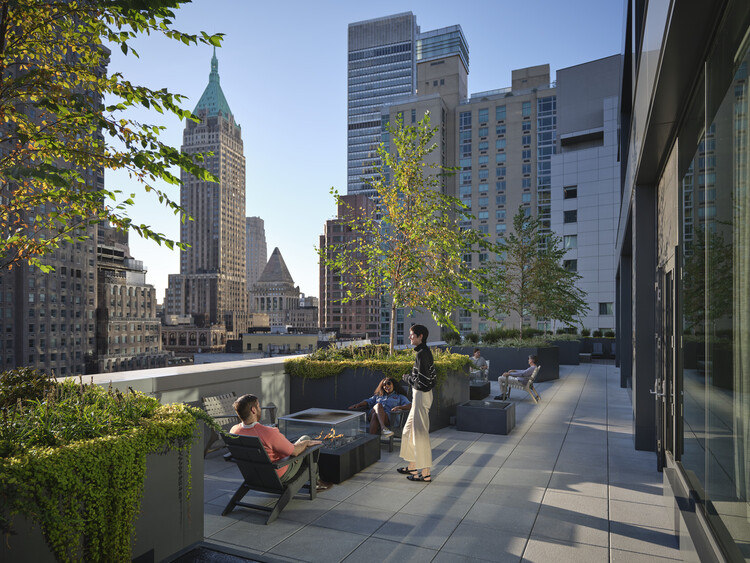 By converting vacant office space into hundreds of homes with shared amenities, Gensler’s Pearl House revitalizes its downtown New York City context, bringing new activity and long-term value while demonstrating how adaptive reuse can help cities evolve to meet changing urban needs. Image © Robert Deitchler / Gensler
One barrier to making adaptability mainstream is that it is often treated as an abstract ambition rather than a measurable asset. Paynter has helped develop digital tools aimed at changing that, starting with an unexpectedly straightforward metric: location. “Buildings that remain at the heart of a busy neighborhood will always find a use,” he says, highlighting another key theme addressed at ABC—the inseparable link between the adaptability of cities and buildings. “We should not just be focusing on adaptable buildings, but on walkable, engaging, adaptable neighborhoods.” Speaking on behalf of 3XN/GXN, which will participate in ABC, GXN senior associate and sustainability engineer Adam Ozinsky adds, “The urban realm is often solved at a building level, but the real power comes when you work at the urban scale. You need insights from the municipality’s vision and expectations so that buildings can work collectively towards that vision.”
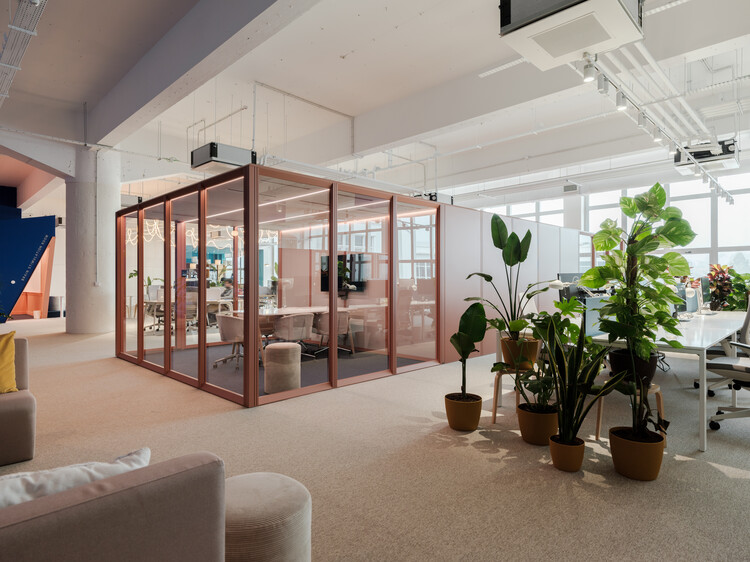 In search of complete flexibility for a series of multifunctional, custom-sized, sound-insulated spaces in its Lisbon office, UpHill Health turned to Mute Modular – the world’s largest adaptable room-in-room system and a partner of the Adaptable Building Conference. As a result, their meeting rooms can be expanded, reduced, merged, or divided into smaller spaces—all without generating renovation waste or CO₂ emissions. For a sustainability-driven company, this flexibility was a major advancement.. Image © HGEsch Photography, courtesy of Mute Modular
Quality becomes harder—yet more revealing—to define. After studying more than 1,800 projects, Gensler has found that quality is “a complex combination of factors,” Paynter explains. Ceiling heights, access to daylight, and proportions all matter, but so does architectural character. “Buildings that people would describe as ‘timeless’ definitely prove more adaptable than those you’d described as ‘iconic.'” According to Paynter, the final indicator is simplicity. “Buildings that are easy to operate and adjust, and that use architectural systems that are easy to disassemble, are much more likely to be reused.”
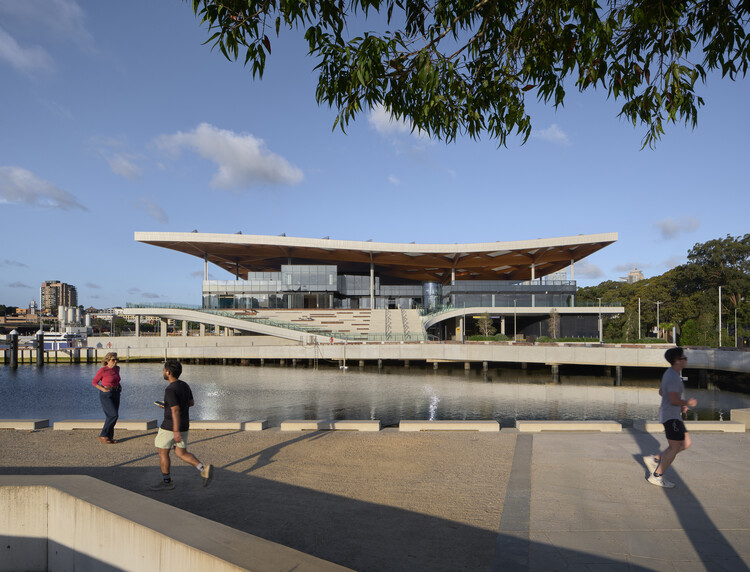 The new Sydney Fish Market builds adaptability into its DNA. Designed by 3XN/GXN with BVN and Aspect Studios, it has a sweeping, floating roof that sits on a regular structural grid, freeing the spaces below to flex, reconfigure, and respond as retail, food culture, and public life evolve—ensuring the building can grow with how people actually use it. Image © Tom Roe, courtesy of 3XN/GXN
Similar ideas emerge from research and practice at 3XN/GXN, where adaptability is framed as separating long-life “hardware” from short-life “software.” “Nowadays, longevity is about a building staying useful through multiple cycles,” Ozinsky notes. “The key is to decouple the building life cycle from the programmatic one.”
Projects such as the new Sydney Fish Market—designed by 3XN/GXN in association with BVN and Aspect Studios—demonstrate how structural grids, modular roofs, and clustered services can create what Ozinsky describes as “a kit of interchangeable parts,” enabling changes to be made without the need for structural intervention. Measuring adaptability in this context means asking practical questions: Is it used? For how long? At what cost? What level of friction is involved in making something adaptable, in terms of finances, materials, or embodied carbon?
Certification could be the missing link that translates these strategies into market value. Paynter argues that any credible framework must focus on early design decisions, such as demonstrating that a building’s core and shell have been tested for future uses, while avoiding overengineering. Emphasizing operational simplicity, in line with existing green design-for-disassembly standards, could help reposition adaptability as a strategy that strengthens assets rather than a speculative add-on. Ozinsky echoes this point, noting that shared metrics can validate “lower obsolescence risk, longer asset life, and higher residual value”—benefits that directly appeal to developers and investors.
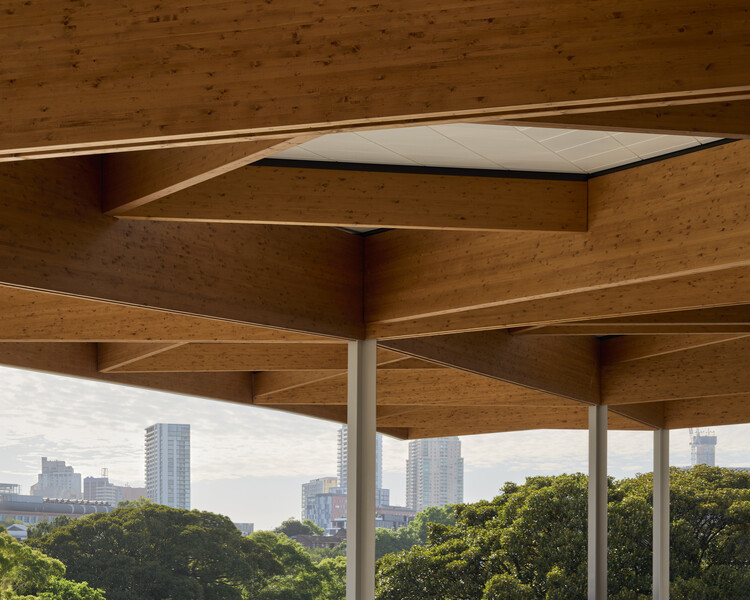 At the Sydney Fish Market, the roof structure is engineered for efficiency and sustainability. Its cassette geometry and orientation bring in natural daylight while blocking direct sunlight, reducing reliance on artificial lighting and providing shade. The modular system also streamlines construction and enables rainwater harvesting, solar power generation, controlled shading, and natural ventilation. Image © Tom Roe, courtesy of 3XN/GXN
This is where ABC positions itself as a catalyst. “The main reason I’m excited to join ABC is to bring people together and start focusing on what adaptability will mean for buildings over the next 100 years,” Paynter says. “By bringing together people from all stages of the process—including cities, developers, product suppliers, and contractors—we should be able to take the first major steps towards creating a prototype for adaptability.”
The full program and speaker lineup have now been announced, with sessions spanning policy, digital assessment, certification, and real-world delivery. ABC also expands the conversation to interior systems: partners such as Knauf, with its soon-to-be-launched adaptable and circular wall system Panels, as well as Hettich, Streda, Tesa, and Mute, will showcase how components and interiors can be designed with adaptability and longevity in mind.
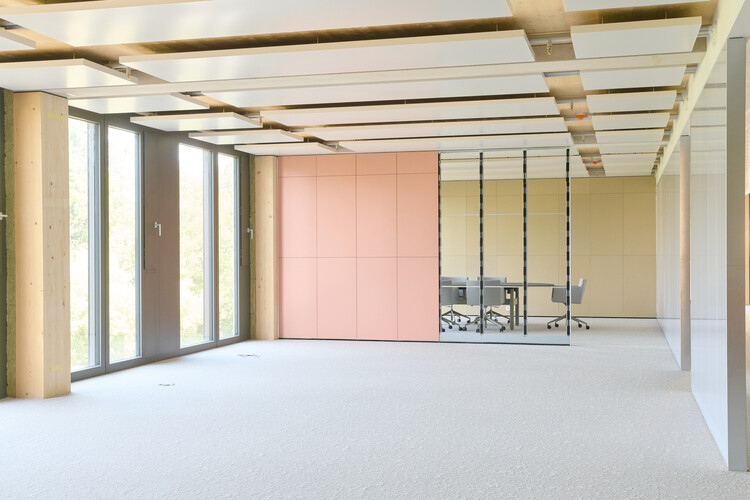 Knauf’s soon-to-launch Panels system rethinks the life cycle of interior walls, turning partitions into reusable building blocks that can shift, move, and return to service without waste—on site or elsewhere. Image © Knauf Panels / Niklas Vindelev
ABC makes a clear case: adaptable buildings are no longer an exception or an experiment. They are a standard practice—one that, when deliberately designed, can ensure buildings outlast not just their original purpose, but many uses to come.
Register now to join the conversation and help shape the future of adaptive architecture—tickets available here.