
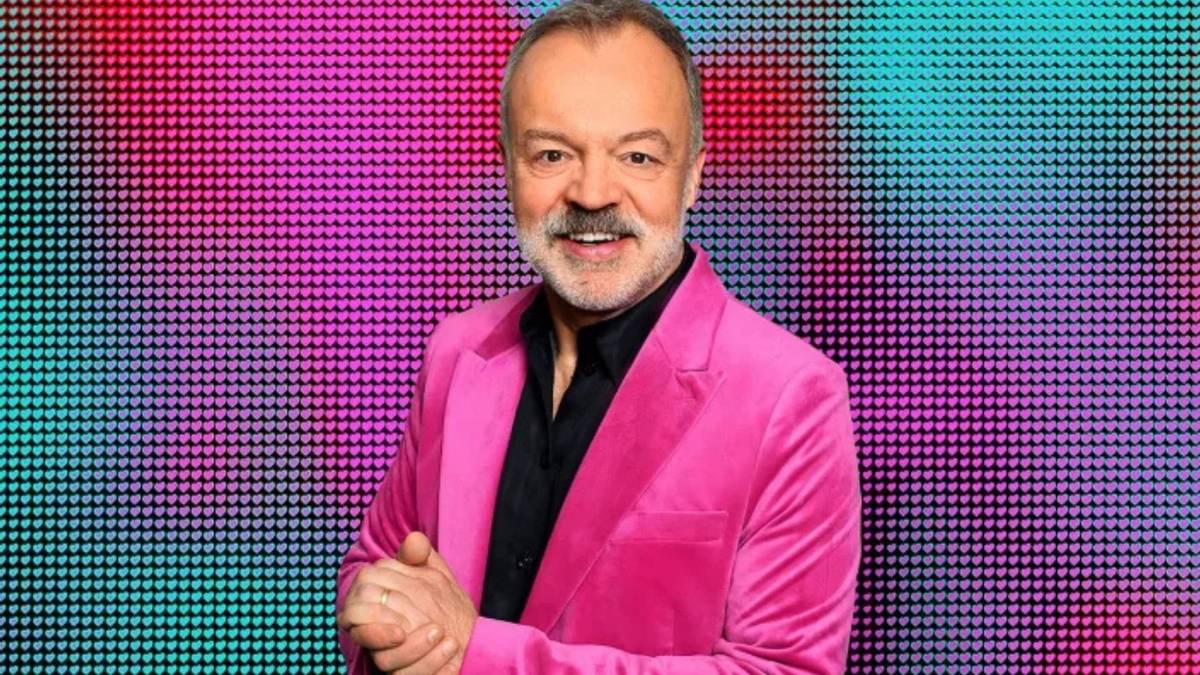
The Graham Norton Show has been Britain’s flagship chat show since 2007, airing on both BBC One and BBC America. The series occupies one of the most prestigious entertainment slots on UK television and has long been comparable to US late-night shows. Its unique format of bringing all guests out together to create shared conversation rather than isolated interviews has helped sustain its success and cultural influence across 33 seasons. That formula is now being shaken up by the biggest change the genre has seen in decades.
Graham Norton currently presents one annual season running from September to March with 21 episodes, having previously hosted two seasons per year before 2021. The BBC has now confirmed that the second annual season will return, but this time with Claudia Winkleman as host. She will front her own standalone program, with her own set, for an initial seven-episode run. The commission is positioned as a major moment not only for this franchise, but for British late-night television more broadly, as it is the first time in several decades that a flagship evening talk show has a female host.
Claudia Winkleman Allows the BBC To Expand Late Night in a Real Way
Claudia Winkleman has worked at the forefront of British television since the early 1990s and is one of the BBC’s most established presenters. She has recently completed a 15-year run hosting the UK’s Dancing With the Stars equivalent, Strictly Come Dancing. She is also the host of The Traitors, the BBC’s most recent entertainment success, and her career spans radio, journalism, and publishing. The announcement of her own talk show replacing a time slot previously held by Norton isn’t a complete surprise. In February 2025, Winkleman guest-hosted The Graham Norton Show for a single episode while he toured Australia, interviewing high-profile guests including Chris Pratt.
In hindsight, that appearance now seems to have functioned both as a showcase of her talents and as a network test. It demonstrated her ability to handle major international talent, manage a live studio audience, and gave the broadcaster a clear opportunity to assess her suitability for the role. BBC Television managing director Graham Stuart said Winkleman matched Norton’s ability to make the “Friday night talk show slot” a “dazzling appointment to view,” adding that the challenge of following Norton was met by “booking a host equally as brilliant.”
The commissioning of an initial seven-episode run signals confidence that the format, and Winkleman’s approach to it, can succeed. In her typical humor, she said alongside the announcement that she’s “obviously going to be awful” but is “over the moon” that the BBC is letting her try. As a proven host, Winkleman is also well-suited to the specific mechanics of the Norton format. Her quick-wit, affable style, and deep familiarity with celebrity culture support informal, anecdote-led conversations.
Related
Watch Out, Graham Norton, Another UK Idol is Coming For Your Spot!
Graham Norton has some fierce compeition.
Women Have Typically Been Left Out Of The Late Night Television Schedule
Placing Claudia Winkleman in this prominent time slot has larger implications when viewed against the wider late-night landscape. In the UK, only Jonathan Ross occupies a comparable position on ITV. In the US, flagship late-night shows remain dominated by male hosts, including Jimmy Fallon, Stephen Colbert, Seth Meyers, and Jimmy Kimmel. Although women such as Ruby Wax, Sharon Osbourne, and Davina McCall hosted interview programs in the UK during the 2000s, they were not in that coveted BBC One flagship time slot.
For Ruby (1997–2000), Wax used a dinner-party roundtable format with up to five guests and held long, unscripted conversations edited significantly for broadcast on BBC Two. Meanwhile, Osbourne’s UK chat shows in the 2000s had shifting formats and sat in the early-evening slot framed as “tea-time talk” rather than late-night post-watershed conversation. Other female-led shows in the same era also focused more specifically on subjects like music and trends, such as Lily Allen and Friends (2008). These shows were also never on BBC One and were not built with a long tenure in mind. Claudia Winkleman’s new series is different because it replicates the BBC’s established prime-time formula. It is launching with an existing audience and carrying international reach via BBC iPlayer, making it a change that drops Winkleman into the center of British late-night rather than another side project on the margins of the genre.
The timing of the BBC’s switch is especially interesting because US late-night has been openly destabilizing. In the New York Times, Conan O’Brien has described market saturation, the collapse of the “captive audience” due to streaming, and a more polarized culture that makes broad comedy harder to land as reasons the genre has changed in recent years. Jimmy Kimmel’s late-night show faced significant disruption in September 2025 when ABC temporarily pulled the series due to controversial comments made by the host that angered some affiliate station owners. CBS also announced in July 2025 that The Late Show with Stephen Colbert would end in May 2026 with no similar program replacing it. The network framed the decision as a financial one amid a “challenging backdrop in late night.”
Comparatively, the BBC looks to be moving in the opposite direction by commissioning The Claudia Winkleman Show — it is using the available late-night slot as a place to modernize and innovate the space. In a genre that has remained largely unchanged for decades, The Claudia Winkleman Show looks set to prove that the late-night format can change without losing its ratings and international appeal.