
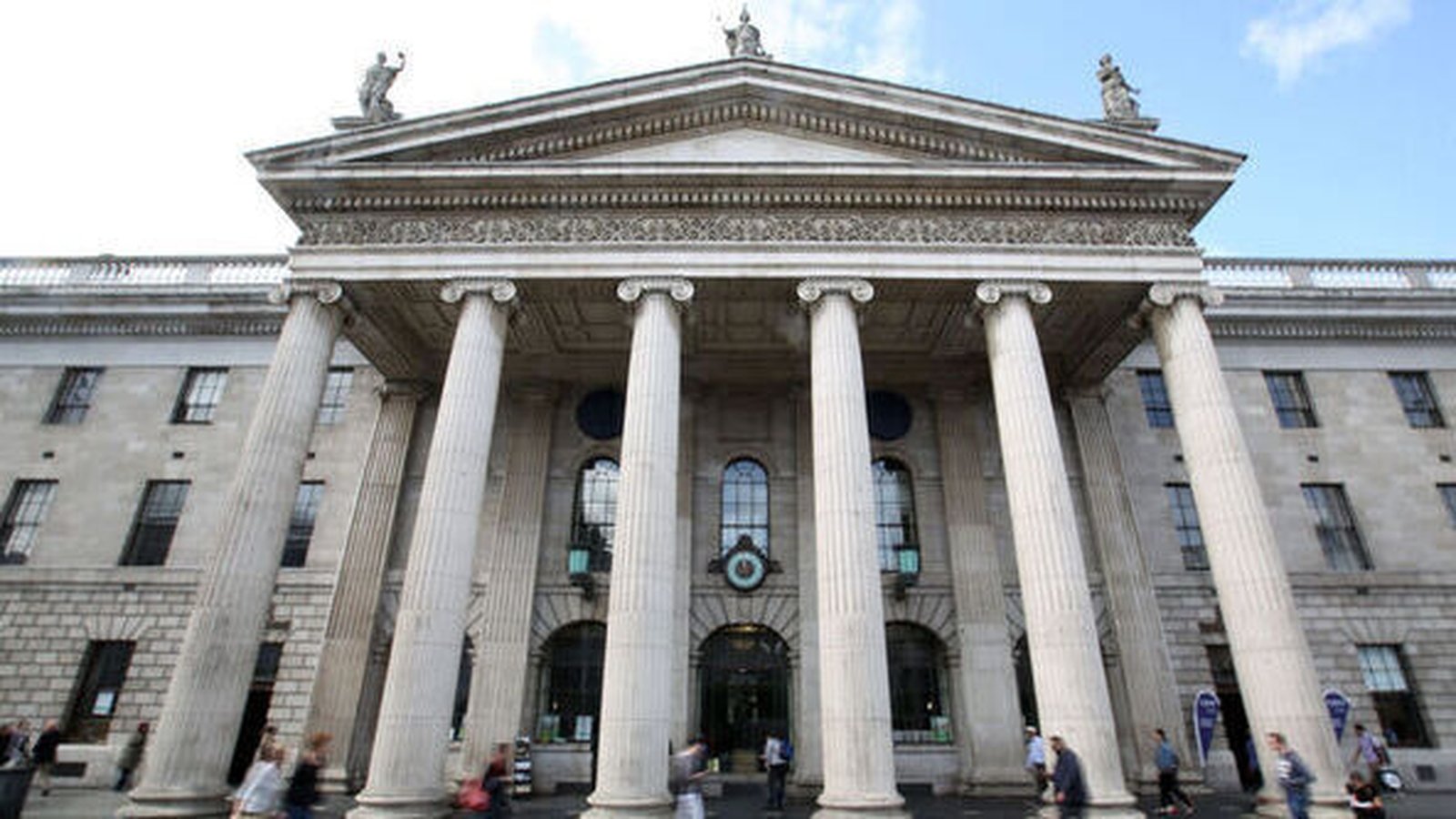
RTÉ radio is marking 100 years of public service broadcasting in Ireland with a series of broadcasts from the GPO.
RTÉ Radio 1, Raidió na Gaeltachta, RTÉ 2fm and Lyric FM will broadcast programmes from Dublin’s O’Connell Street throughout the day, beginning at 6am and finishing at 8pm.
The GPO was the transmission location for Irish radio from 1928 and was the building that housed Radio Éireann until 1976.
At 7.45pm on 1 January 1926, the precursor to RTÉ, then 2RN, delivered the fledgling new Irish State’s first public radio transmission, with the first broadcast taking place right around the corner on Little Denmark Street.
Across that century, RTÉ, in its guises as 2RN, Radio Éireann, Teilifís Éireann and latterly RTÉ, has been focused on marking the life of the nation across an expanding range of services.
Broadcaster, historian and author John Bowman said covering the early days of radio in Ireland is very difficult to capture as there were very few people with radios and resources were limited.
Speaking on RTÉ’s Morning Ireland, he said that people were “in awe” of the new medium, but receiving the broadcasts was difficult.
He said sports commentary was one of RTÉ’s earliest achievements.
In relation to promoting traditional Irish music, Mr Bowman said radio “had an extraordinary impact and this was both historically important because early recordings of key musicians were captured and then they were nourished.”
Listen: Douglas Hyde Opens 2RN 1 January 1926
We need your consent to load this rte-player contentWe use rte-player to manage extra content that can set cookies on your device and collect data about your activity. Please review their details and accept them to load the content.Manage Preferences
The first broadcast from the GPO this morning was RTÉ 2FM Breakfast, followed by Today with David McCullagh on RTÉ Radio 1.
Speaking on that programme, archivist and author Caitriona Crowe said RTÉ should be commended for its extensive archive of traditional music that has been broadcast over the last 100 years.
“That is part of building up an archive of things that otherwise would have been lost,” she said.
“RTÉ should be commended hugely for the way that it has preserved and made accessible acres and acres of tape and acetate discs and all the rest of it, so that we have recordings of people who are now dead and gone, a collection of songs in particular that probably are unique in Europe.
“This was all done on a shoestring by people who really cared about it.”
Professor of modern Irish history at UCD Diarmuid Ferriter said there were “considerable constraints” during the early days of broadcasting on 2RN.
Speaking on the same programme, he said that the then-Minster for Posts and Telegraphs JJ Walsh had to take a recommendation from the Dáil at the time that 2RN should be a state broadcasting service.
“Which means that the early broadcasters are civil servants. They were working under all the constraints that civil servants have to work under,” he said.
“There’s often the stonewall of the Department of Finance, there was no budget there at the outset. There was no concrete detail as to how much and who could be paid. There was a skeleton staff. There was a reliance on favours for people to come into the studio.
“80% of the output of radio in those early years was live music. There was only five minutes of news, and only five and a half hours of broadcasting in the day. So it was a very limited service.”
Former Dublin South Central Historian-in-Residence Cathy Scuffil said radios were a luxury item when 2RN first began broadcasting 100 years ago, with just 1% of the population owning a receiver set.
“It would cost you ten pounds to buy a receiver, and another four to buy the microphone and/or the aerial,” she added.
“The average wage at the time was about a pound a week, so this was a luxury item.”
At 1pm, the Full Score with Liz Nolan on RTÉ Lyric FM will host a special programme featuring the Army No. 1 Band, who played the first music heard on 2RN.
Tenor Gavan Ring will also perform a number of songs, including two which were performed during that first 1926 broadcast.
RTÉ Raidió na Gaeltachta’s Tús Áite, presented by Fachtna Ó Drisceoil, will take over from 5pm and will include conversations about the history of the broadcasting service, a look through the archives and special guests will share their memories of Irish radio.
RTÉ Radio 1’s Arena will mark the centenary with a special programme, featuring live music and exploring literature with Booker Prize-winning novelist Paul Lynch, novelist Christine Dwyer Hickey and An Cailín Ciúin’s Colm Bairéad.
RTÉ weather forecasts will also be broadcast live from the GPO throughout the day.
An Post has issued a special stamp to mark 100 years of broadcasting.
Unveiled yesterday, An Post said the stamp, which features an antenna surrounded by transmission signals “radiating across the nation”, celebrates a “historic milestone in Irish cultural life” and the evolution of broadcasting over the last century.
Minister for Communications Patrick O’Donovan said: “When 2RN began broadcasting, this nation was only in its infancy in the first years of independence, and with limited resources, the State prioritised finding and sharing a new voice for the nation.
“This established, here in Ireland, a medium which to this day remains one of the most accessible and engaging forms of communication and self-expression, which is as popular today as ever with the majority of people here in Ireland still listening to radio on a daily basis.”
We need your consent to load this rte-player contentWe use rte-player to manage extra content that can set cookies on your device and collect data about your activity. Please review their details and accept them to load the content.Manage Preferences