
I recently addressed the Israeli Left with a message that provoked strong reactions. Some felt attacked. Others felt misunderstood. So let me clarify the intent, the context, and the principle behind it.
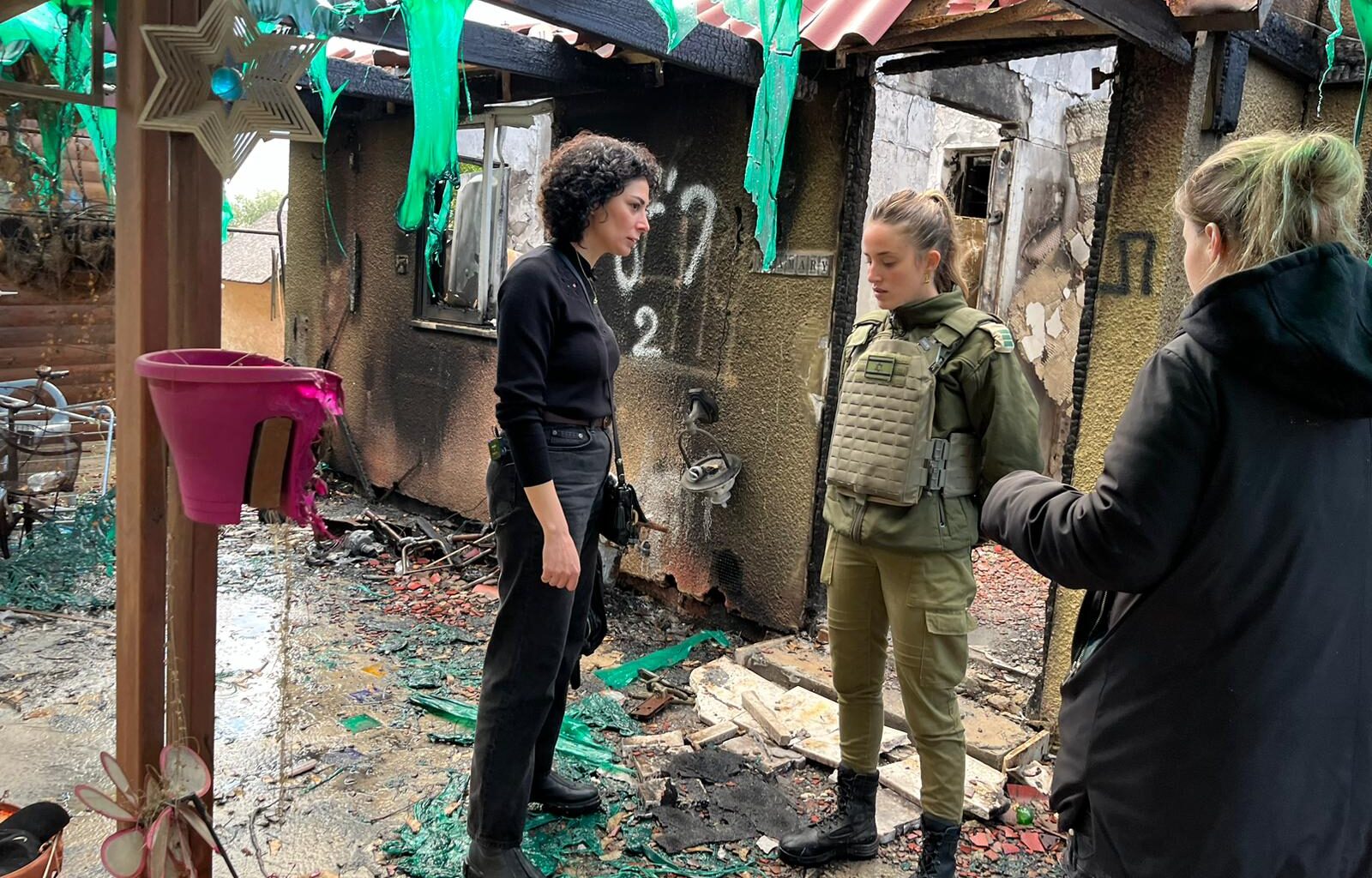
Over the past two years, I have visited Israel more than fifteen times. During those visits, I have spoken with thousands of Israelis, on the left and on the right, in uniform and out of it, in cafes, universities, protest sites, and private homes. I listened more than I spoke. I asked questions and tried to understand not only positions, but also fears, assumptions and fault lines.
I write this as an observer who is deeply invested in Israel’s best interest. Not its image. Not my comfort.
Addressing the Israeli Left was not a defense of the current Israeli government. Nor was it a denial of legitimate grievances, failures, or fears. It was a call for perspective.
Look at Iran.
There, dissent is a crime. Protesters are imprisoned, tortured, raped, and executed. Women are beaten for uncovered hair. Journalists disappear. Families are punished collectively. Courts are instruments of repression, not restraint. Power is enforced through fear, not consent.
None of this is abstract. It is happening now.
Against that reality, something essential must be said clearly: No matter how bad the situation in Israel is perceived to be, it does not compare to living under a dictatorship.
Israelis protest freely and loudly. They block highways. They insult ministers. They accuse the prime minister of dictatorship and corruption. They petition the courts. They mobilize civil society. They argue endlessly — in public, on television, online, and in the streets — without fearing prison, torture, or death.
That difference matters. And when it is erased in language, something dangerous happens.
Before going further, a clarification is necessary when I use the term “the Left.”
Many Israelis rightly argue that what exists today is not a coherent ideological Left, but a broad opposition that cuts across parties, identities, and political histories. The protest movement includes liberals, centrists, former security officials, disillusioned conservatives, reservists, entrepreneurs, and citizens who do not identify as left-wing at all.
That is partly true.
But movements are shaped not only by who participates in them, but by who sets their tone, language, and moral framing. The rhetoric, symbols, international messaging, and intellectual vocabulary of the protests still draw heavily from what historically constituted the Israeli Left — particularly its NGO, media, and academic ecosystems. That is the “Left” I am addressing.
When language shifts from accountability to delegitimization, from critique to collapse narratives, it affects the entire opposition — including those who never signed up for it. And when calls for proportionality are dismissed as betrayal, the space for persuasion closes.
Over the past years, parts of this discourse have adopted a rhetoric of catastrophe. Israel is described not merely as flawed or endangered, but as already lost. Its government is spoken of in the same moral register reserved for the mullahs of Iran or Assad’s Syria. Democratic disputes are framed as existential tyranny.
Criticizing a government is democratic. Delegitimizing the system itself through exaggerated, absolutist language is not.
Why address the Left at all?
Because the protest movement is largely organized, shaped, and amplified through networks historically associated with the Left, and because that camp claims moral leadership. With moral leadership comes responsibility — including responsibility for accuracy, proportionality, and the long-term consequences of rhetoric.
Language does not exist in a vacuum. When Israel is portrayed as indistinguishable from authoritarian regimes, its enemies do not object. They applaud. That language travels far beyond Tel Aviv and Jerusalem. It feeds international narratives that deny Israel moral legitimacy altogether. And domestically, it alienates large parts of the Israeli public, pushing the political center further right rather than persuading it.
That outcome should concern anyone who genuinely wants to protect democracy.
October 7 was a national trauma. The failures were real and devastating. Accountability is necessary. Investigations are necessary. Protest is necessary.
But trauma does not justify the abandonment of moral boundaries. A democracy survives crises not only through resistance, but through restraint — the ability to distinguish between what is broken and what is fundamentally different from tyranny.
Iran should be a warning, not a rhetorical prop.
It should remind Israelis on all sides that there is a profound difference between fighting over the shape of democracy and living without one at all. That difference should inspire humility rather than hysteria, persuasion rather than demonization.
If Israel is to endure, it will not be because one side silenced the other. It will be because Israelis — left and right — rediscovered the discipline to argue fiercely without erasing each other, and to criticize power without destroying the moral framework that makes criticism possible.
Rawan Osman is a Syrian-born, German activist, content creator and writer who advocates normalization with Israel. Raised in Lebanon and educated in Germany, she studied Islamic and Jewish Studies at Heidelberg University. Her journey—from being raised in an antisemitic environment to becoming a self-described “Arab Zionist”—has inspired her work with organizations like Sharaka, the Center for Peace Communications and the Aseret movement in Israel. After October 7, Rawan founded “Arabs Ask,” a social media channel to combat the misinformation propagated about Israel and the Jews in the Arab World. She is currently working on a book about her evolving relationship with Judaism and Israel. She is also the main figure in “Tragic Awakening“, a documentary on the roots of antisemitism.