
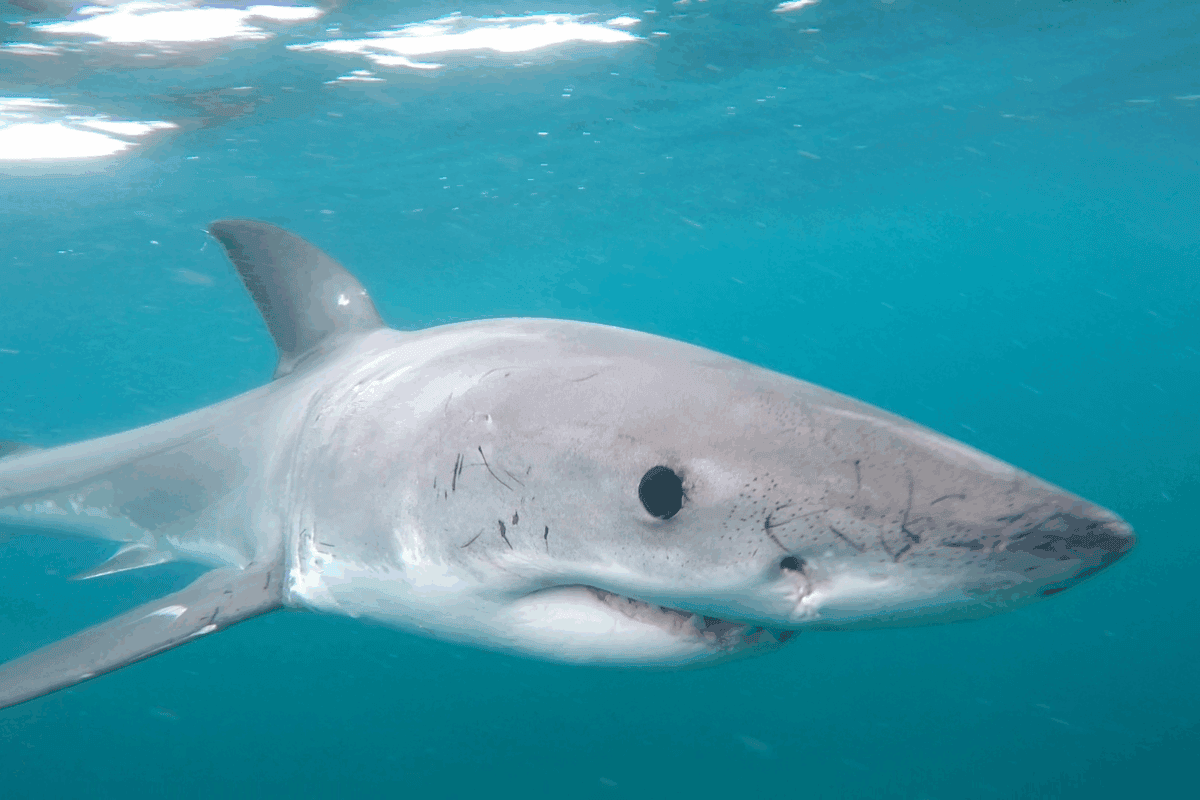
Great white shark populations in South Africa are disappearing, driven largely by human activities that are likely responsible for the collapse of a locally critical apex predator. That’s the conclusion of a review paper published by a group of scientists and conservationists who analyzed data on the abundance of great whites in South African waters.
Once considered the global hotspot for great white sharks (Carcharodon carcharias), in South Africa, populations have largely vanished from their main aggregation sites on the Western Cape since 2018.
“This synthesis of various pieces of historical and newly acquired data tells a worrying story about the state of the white shark population in South Africa,” Neil Hammerschlag, one of the authors, told Mongabay via email.
Researchers have been trying for years to explain the almost complete disappearance of white sharks from the area. Some researchers argue that the population has simply shifted eastward.
As a top ocean predator, the only documented natural threats to great white sharks is predation by orca pods. Recent studies have found pressure from orcas (Orcinus orca) is likely contributing to changes in the sharks’ distribution. However, humans are responsible for a significant portion of the decline, the researchers found.
For instance, South Africa’s KwaZulu-Natal Sharks Board (KZNSB) maintains a program of lethal control of great whites to ensure beach safety. Between 1978 and 2018, KZNSB’s nets and drumlines were responsible for an average of 28 great white shark deaths annually. The sharks are also caught as bycatch in the country’s demersal shark longline (DSL) fishery. Together, such human activity could result in an average of 44 great white deaths annually, the researchers note.
That’s between 5% and 10% of the entire population. “With a population of 500 to 1,000 white sharks left, that is not sustainable,” said marine biologist Enrico Gennari, one of the paper’s authors.
Great white sharks have generated roughly $240 million in conservation and tourism value over the last 30 years. In 1991, South Africa became the first country in the world to legally protect its great white shark population requiring the species to be managed using a precautionary approach. This means measures should be implemented to prevent ecosystem degradation even in the absence of full scientific certainty.
“We hope to be wrong, but if the direction the data is clearly pointing in is consistent with our common-sense interpretation, then the outcome of waiting is dire,” Hammerschlag said.
The authors advise the South African government to reduce anthropogenic sources of white shark mortality to prevent possible local extinction. Gennari advocates for updating fishery guidelines to better protect endangered species, including great white sharks.
South Africa’s Department of Forestry, Fisheries and the Environment did not respond to Mongabay’s request for comment by the time of publication.
Banner image: A great white shark in South Africa’s False Bay, before the species largely disappeared from the area. Image courtesy of Chris Fallows.
