
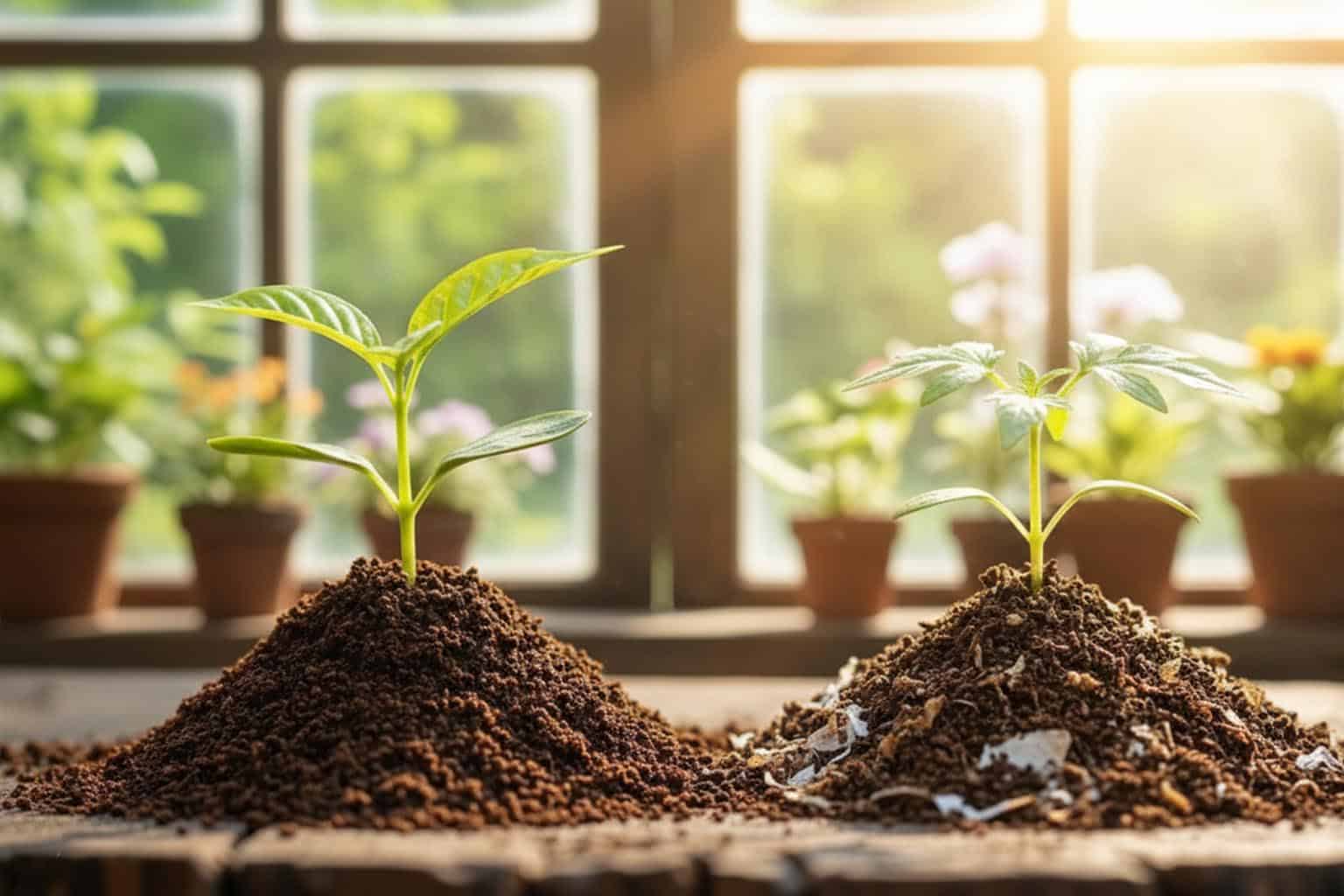
Every morning, you dump coffee grounds into the bin. Crack an egg, toss the shell. Peel a banana—straight to the trash. It’s muscle memory at this point. But while you’re throwing away what feels worthless, a struggling houseplant three rooms away is literally starving for exactly what you just discarded.
The plant wilts. You assume you have a black thumb. The reality? The answer was already in your trash bag.
The Hidden Value:
• Kitchen scraps make up 30-40% of household garbage by weight
• Coffee grounds contain 2% nitrogen, more than most commercial fertilizers
• Eggshells are 95% calcium carbonate, the same mineral in expensive plant supplements
What You’re Actually Throwing Away
Used coffee grounds are loaded with nitrogen. Eggshells are roughly 95% calcium carbonate—the same mineral that prevents blossom-end rot on tomatoes and strengthens cell walls in every plant you own. Banana peels contain potassium. Tea leaves bring tannic acids and trace minerals.
You don’t see nutrients, so you don’t register value. They just look like garbage.
A young couple in London kept their coffee grounds in an old ice cream tub under the sink. No compost system. No special setup. Once a week, they sprinkled a light layer around their balcony herbs and a lemon tree that hadn’t grown in months.
Within weeks, the basil stopped dying after two harvests. The lemon tree—which had sulked for a year—started pushing new shoots. Nothing else changed. Same water. Same light. They just stopped throwing away what their plants needed.
The Scale Nobody Talks About
Municipal waste studies show kitchen scraps make up 30-40% of household garbage by weight. Most of that ends up in landfills, where it breaks down without oxygen and releases methane. Research from Cornell University shows that diverting organic waste from landfills could significantly reduce greenhouse gas emissions while supporting soil health.
We obsess over zero waste and recycling, yet the most direct form of recycling—feeding soil with what came from soil—still gets curbed every week.
How to Actually Do This (Without Becoming Obsessed)
Start stupidly small. Pick one thing you throw away daily. One thing. A bowl, jar, or old tin beside where your hand already moves: next to the kettle, by the cutting board, under the sink. Not in the shed at the garden’s far end where you’ll never use it.
For coffee: Rinse used grounds, let them dry on a plate. Mix a light sprinkle—just a dusting—into your pot’s top layer once weekly. Not a thick carpet. Plants prefer gentle, regular feeding over one heavy dose. If you’re already using coffee grounds for cleaning burnt pots, save some for your plants too.
For eggshells: Save them in a jar. Rinse and dry, then crush by hand or roll them under a glass. You’ll get a coarse powder to blend into soil when repotting or scatter in a ring around tomatoes and other fruiting plants.
For everything else: Slice banana peels small and bury them in soil (not on the surface, which attracts flies). Chop citrus peels and mix them deep, not near delicate seedlings. The rule is consistent: light, mixed, and buried. What banana and lemon peel combinations can do extends beyond just plant feeding.
Most people pile coffee grounds thick on top of pots, creating a water-repelling crust that goes moldy. Or they dump raw kitchen waste on a small plant like it’s a compost bin. Think seasoning, not stuffing.
Kitchen Waste
What It Provides
Best Use
Coffee Grounds
Nitrogen, slight acidity
Light dusting, mixed into soil
Eggshells
Calcium carbonate
Crushed, around fruiting plants
Banana Peels
Potassium, phosphorus
Chopped small, buried in soil
Tea Leaves
Tannic acids, trace minerals
Composted or mixed lightly
Why This Matters More Than the Hack Itself
When you notice—actually notice—that the leaves turned a deeper green. That new shoots came faster. That the soil smells like forest floor instead of dust. That’s when something shifts.
You realize you’re not outside the system. You’re part of it. That tired plant isn’t a failure of your thumbs—it was a failure of relationship. The moment you start seeing your scraps as currency instead of waste, you see yourself differently too.
It’s small. It won’t fix the waste crisis. But on a difficult day, stepping onto your balcony and seeing a plant you fed with what you once called rubbish feels like a quiet form of repair. Like you’re not just a creature that takes and throws away.
One friend notices your monstera suddenly looks like a jungle. You mention eggshells with a shrug. Their skepticism shifts to curiosity. That’s how these habits spread—one slightly embarrassed confession at a time.
What Happens Underground
The chemistry is straightforward. Your scraps are tangles of carbon, nitrogen, potassium, calcium, and micronutrients. In a landfill, they break down anaerobically and become methane. In soil that’s mixed and aerated, microbes move in and transform waste into forms roots can actually absorb: nitrate, phosphate, soluble salts.
Studies on banana peel nutrients show that what we consider waste contains significant concentrations of potassium, phosphorus, and other essential plant nutrients. The research demonstrates that banana peels, when properly processed, can serve as effective organic fertilizer.
What Science Shows:
• Banana peels contain 42% potassium, 25% phosphorus, and 3% nitrogen
• Coffee grounds improve soil structure and water retention by 15-20%
• Eggshells slowly release calcium over 6-8 months, preventing nutrient burn
Earthworms pull fragments deeper. Fungi weave through like white threads, extending what your roots can reach. Your morning coffee habit is feeding an entire underground city, even if that city is just beneath a balcony pot.
Over time, that modest, regular input becomes powerful. Not because it’s revolutionary—people have done this for generations—but because you’re finally in the loop instead of outside it.
Next time your hand hovers over the bin with coffee grounds and eggshells, pause. Visualize the roots below, waiting like open hands. You can still throw it away. The bin isn’t going anywhere.
Or you can drop it back where it belongs.