
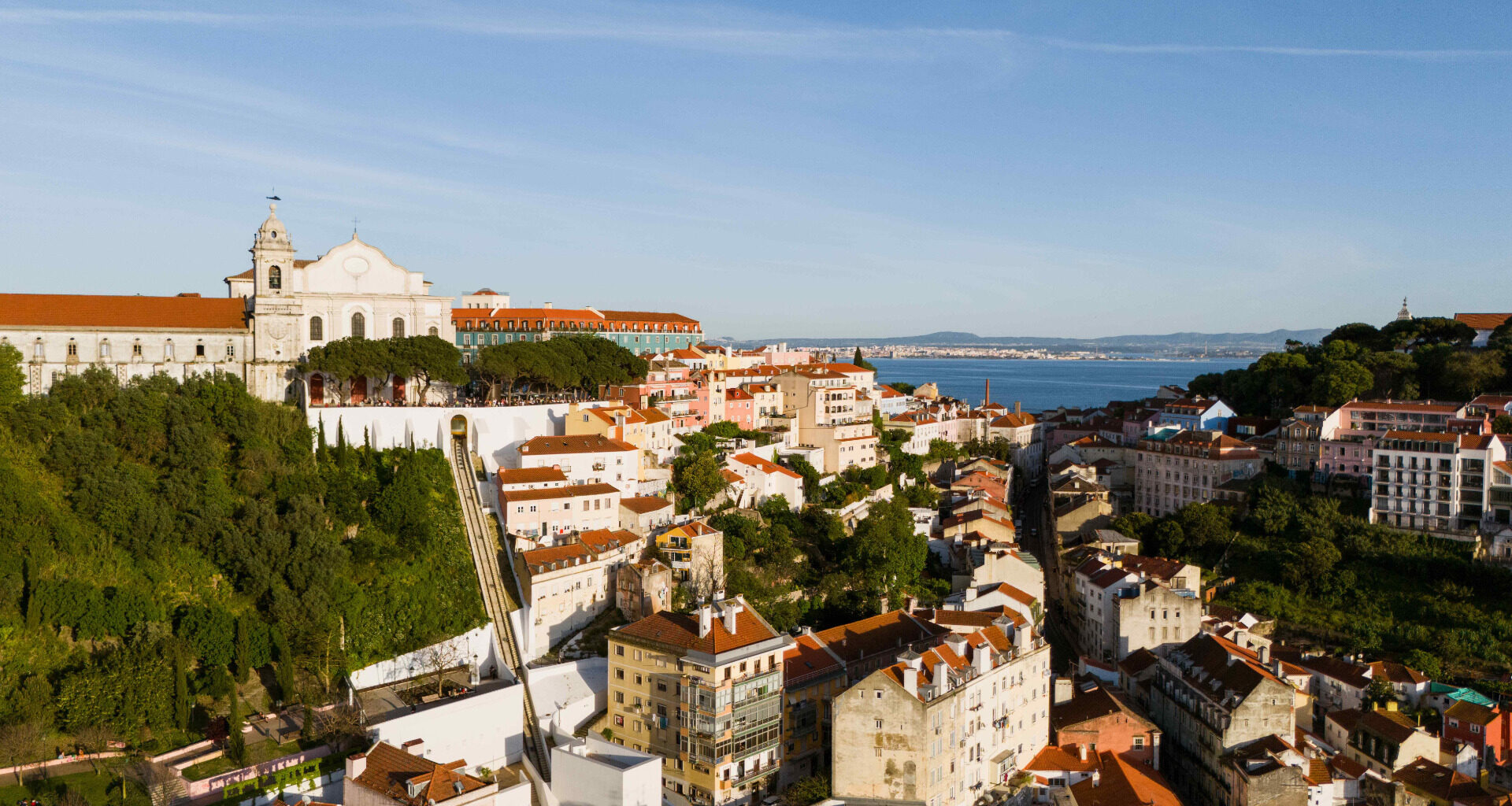
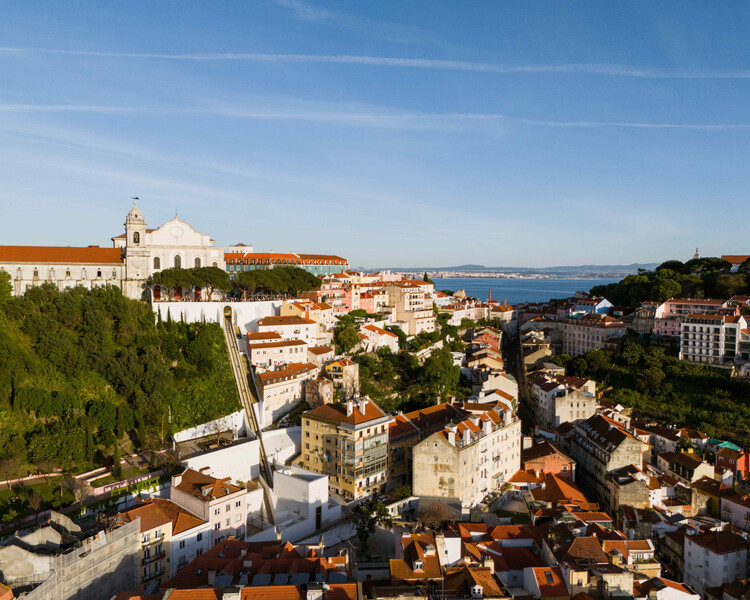
 Graça Funicular / Atelier Bugio. Image © Alexander Bogorodskiy
Share
Or
https://www.archdaily.com/1037858/eu-mies-awards-shortlist-and-mvrdvs-fluid-facade-in-beijing-this-week-in-architecture
Spanning multiple geographies and scales, this week’s architecture news reflects ongoing discussions around long-term planning, institutional frameworks, and the public role of architecture. National-scale urban initiatives and large civic developments point to how planning and infrastructure are being used to reorganize cities and territorial systems, while parallel attention to stadiums, cultural facilities, and mixed-use projects highlights the expanding civic ambitions of large-scale architecture. Alongside these, interviews and heritage-focused projects foreground participatory practices and the careful reuse of existing structures, highlighting architecture’s capacity to operate within complex social and political conditions. Recognition platforms and professional programs further situate these practices within a broader architectural discourse, offering insight into how contemporary work is evaluated and shared across regions.
Urban Transformation and Large-Scale Infrastructure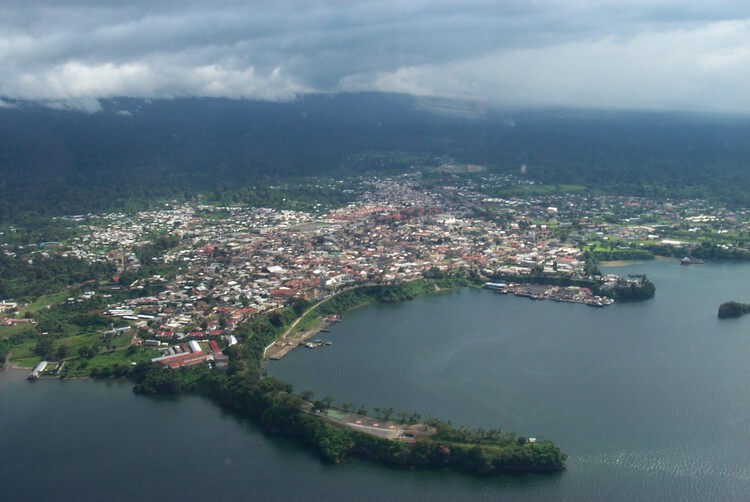 Aerial view of Malabo, 2007. Image © Ipisking at English Wikipedia, under the terms of the GNU Free Documentation License
This week, major developments in civic planning and urban infrastructure highlight how architecture shapes both governance and everyday life. In Equatorial Guinea, the official relocation of the national capital from Malabo to Ciudad de la Paz marks the culmination of a long-term planning effort aimed at redistributing population, easing pressure on existing infrastructure, and strengthening national cohesion. Conceived by Portuguese firm IDF – Ideias do Futuro, the new capital integrates a monumental civic core, functional zoning, and a hierarchical road network with natural landscapes, using the surrounding river and forest systems as organizing elements. The design emphasizes legibility, operational efficiency, and symbolic representation of state power, illustrating how architecture and urban planning can directly influence the organization of civic life and the distribution of public services.
Related Article 2026 EU Mies Awards Reveal 40 Shortlisted Works Across 18 Countries 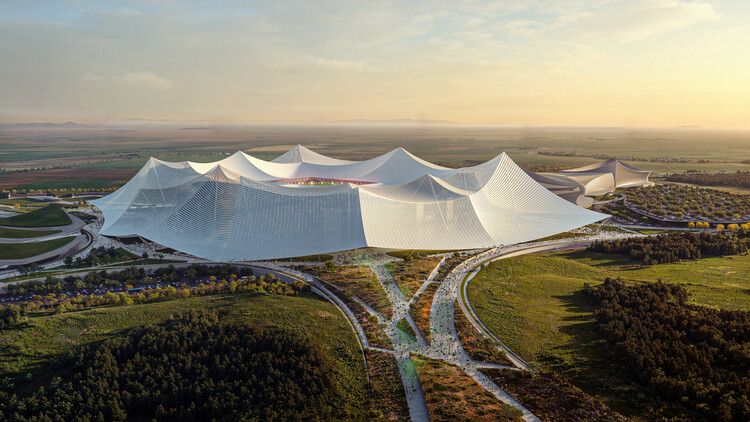 Grand Stade Hassan II stadium project. Image Courtesy of Oualalou + Choi
At the same time, fourteen major stadium projects announced during 2025 demonstrate a parallel interest in embedding large-scale event infrastructure within broader urban frameworks. Spanning Asia, Europe, Africa, the Middle East, and North America, these projects, led by offices including Populous, Foster + Partners, Heatherwick Studio, OMA, and Gensler, combine sports venues with mixed-use programs, public space activation, and mobility upgrades, positioning stadiums as long-term civic anchors rather than isolated facilities. Many of the developments incorporate sustainable and adaptable strategies, such as timber and locally sourced materials, demountable construction systems, and all-electric operational models, reflecting growing attention to environmental performance and resource efficiency.
Heritage, Participation, and Contemporary Recognition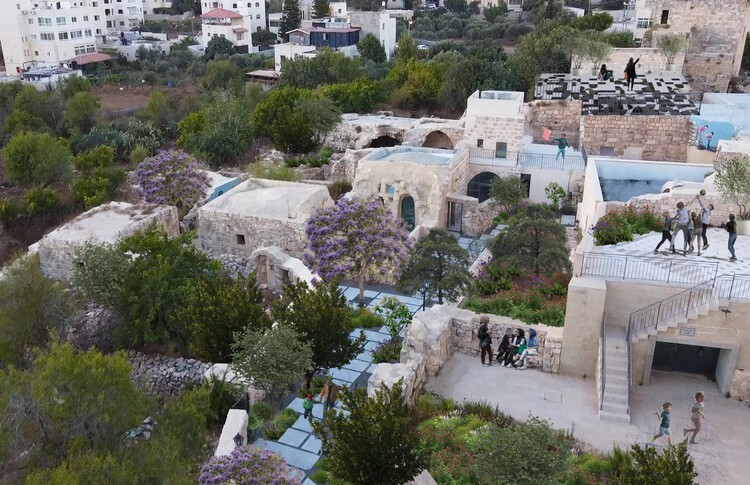 Qalandiya Rendering. Image Courtesy of RIWAQ – Centre for Architectural Conservation
Across Europe and the Middle East, architecture this week continues to balance cultural continuity, social engagement, and professional recognition. In Palestine, we published an interview with RIWAQ – Centre for Architectural Conservation about Qalandiya: the Green Historic Maze, a project that reactivates a historic village center fragmented by political and social pressures and Grand Prize winner of 2025 Holcim Foundation Awards. Through incremental rehabilitation, participatory design processes, and the use of local materials, the project transforms abandoned structures into active public spaces, strengthening collective memory while fostering economic and social resilience. The interview emphasizes how the project operates within complex social and political conditions while maintaining a clear architectural and environmental vision, showing architecture’s role as a tool for community connection, stewardship, and knowledge transmission.
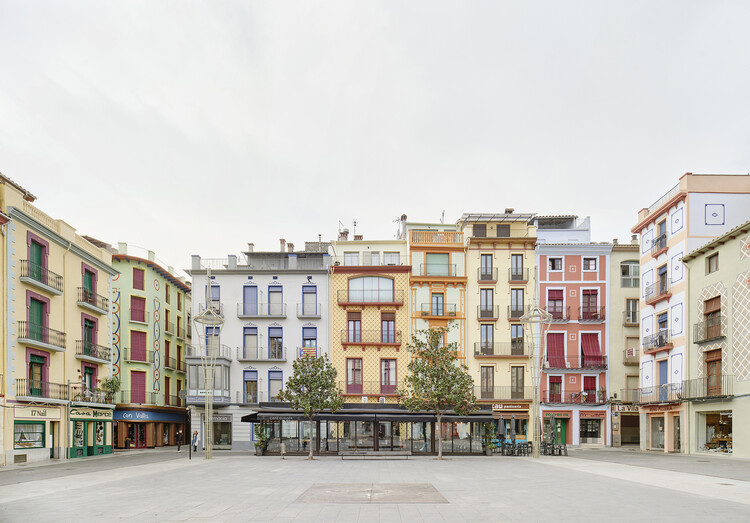 Plaça Major – Public Space. Heritage, Housing and Urban Life / Un Parell d’Arquitectes + Pep de Solà-Morales Arquitectes + Quim Domene. Image © José Hevia
Meanwhile, the 2026 EU Mies van der Rohe Awards shortlist presents 14 projects from 18 countries, encompassing cultural, residential, educational, and infrastructural programs. Selected from over 400 nominations, the works span urban regeneration, new construction, and adaptive reuse, highlighting strategies through which architects respond to social, cultural, and environmental challenges. The jury emphasized a balance between local expertise and transnational collaboration, underscoring the diversity of contemporary European architectural practice.
On the RadarMVRDV Designs Fluid Glass Facade for Tiffany & Co.’s Flagship Store in Beijing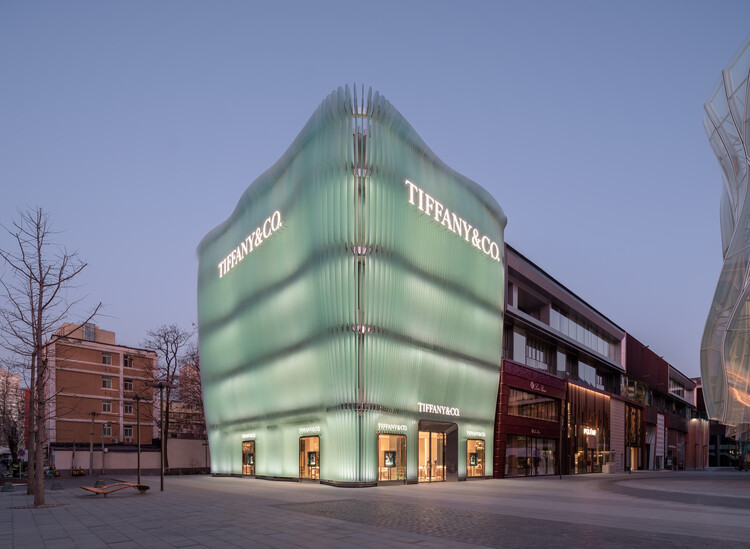 Tiffany & Co.’s flagship store’s facade in Beijing by MVRDV. Image © Tiffany & Co
MVRDV has completed a new façade design for Tiffany & Co.’s flagship store in Beijing‘s Taikoo Li Sanlitun district, introducing a series of vertically rising, translucent glass fins that give the building a soft, sculptural presence within the dense luxury retail context. Inspired by the fluid forms of jewellery designer Elsa Peretti, particularly her Bone Cuff, the four-storey façade is composed of gently curved, textured glass elements that layer light and movement across the surface. Responsibly recycled and locally manufactured, the fins shift in appearance depending on viewing angle and daylight conditions, creating a dynamic interplay between transparency, reflection, and depth. At night, integrated lighting illuminates the glass in Tiffany Blue, giving the building a diffuse glow while minimizing visible hardware. Designed as a demountable system, the fcçade allows for future disassembly, reuse, or recycling, aligning expressive architectural identity with material efficiency and lifecycle considerations.
Adaptive Reuse Transforms Le Havre Harbor Structure into a Civic Cultural Destination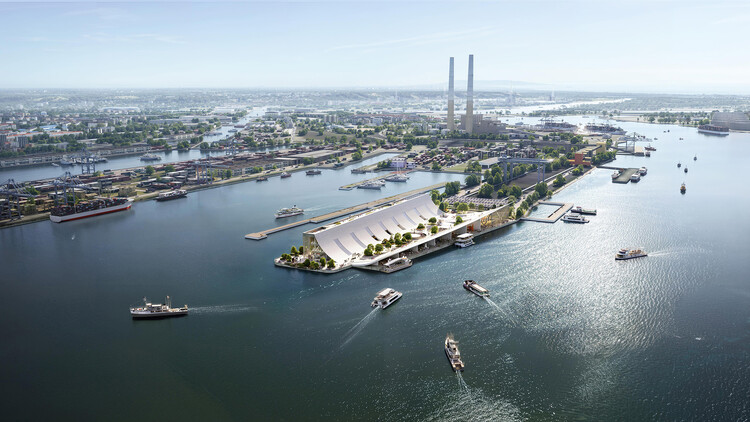 Brise-Vent Havre Harbor Museum. Image © LYT-X Studio
LYT-X Studio has proposed the adaptive reuse of the Brise-Vent harbor structure in Le Havre, France, reimagining the historic industrial building as a public cultural facility embedded within the city’s waterfront network. Retaining the existing structure as the project’s primary historical layer, the design introduces new architectural elements that expand public access and spatial continuity between the city, the harbor, and the waterfront. A defining intervention extends the building’s curved roof into a continuous canopy along the water’s edge, organizing circulation, providing passive shading, and creating semi-open public spaces and a sheltered courtyard accessible beyond museum hours. Exhibition halls, performance spaces, and flexible cultural areas are arranged to support both curated programming and informal daily use, positioning the museum as a connective civic environment rather than a standalone destination while emphasizing adaptability, structural reuse, and long-term urban relevance.
Wat Paknam Phasi Charoen Observation Tower Proposes a Vertical Ecological Sanctuary in Bangkok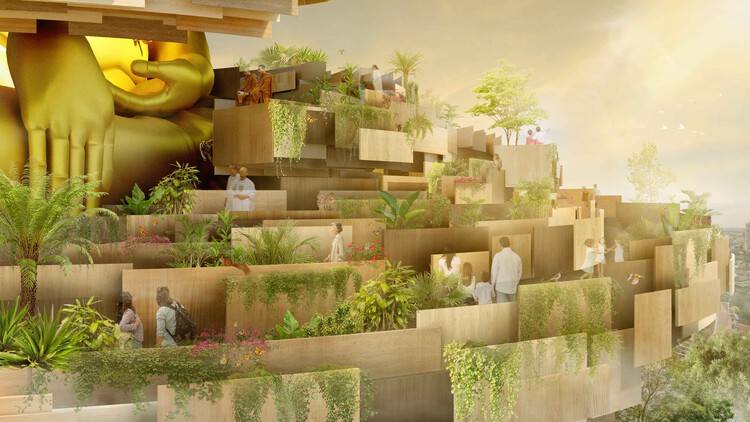 Wat Paknam Phasi Charoen Observation Tower in Bangkok. Image © Jenchieh Hung + Kulthida Songkittipakdee
HAS Design and Research has unveiled a proposal for the Wat Paknam Phasi Charoen Observation Tower in Bangkok, reimagining the historic Buddhist temple as a vertical ecological sanctuary integrated with the city’s spiritual and urban life. Designed by Jenchieh Hung and Kulthida Songkittipakdee, the project preserves the existing temple complex while introducing a zero-pollution timber extension that connects the ground to the 69-meter Phra Buddha Dhammakaya Thep Mongkol statue. Conceived as Thailand‘s first vertical ecological corridor, the structure combines meditation spaces, ecological pathways, and observation platforms within a continuous architectural sequence that supports biodiversity, edible planting, and passive environmental strategies. Scheduled for completion in 2028, the project positions the temple as a living ecosystem, fostering a renewed relationship between Buddhism, nature, sustainability, and urban coexistence.
This article is part of our new This Week in Architecture series, bringing together featured articles this week and emerging stories shaping the conversation right now. Explore more architecture news, projects, and insights on ArchDaily.