
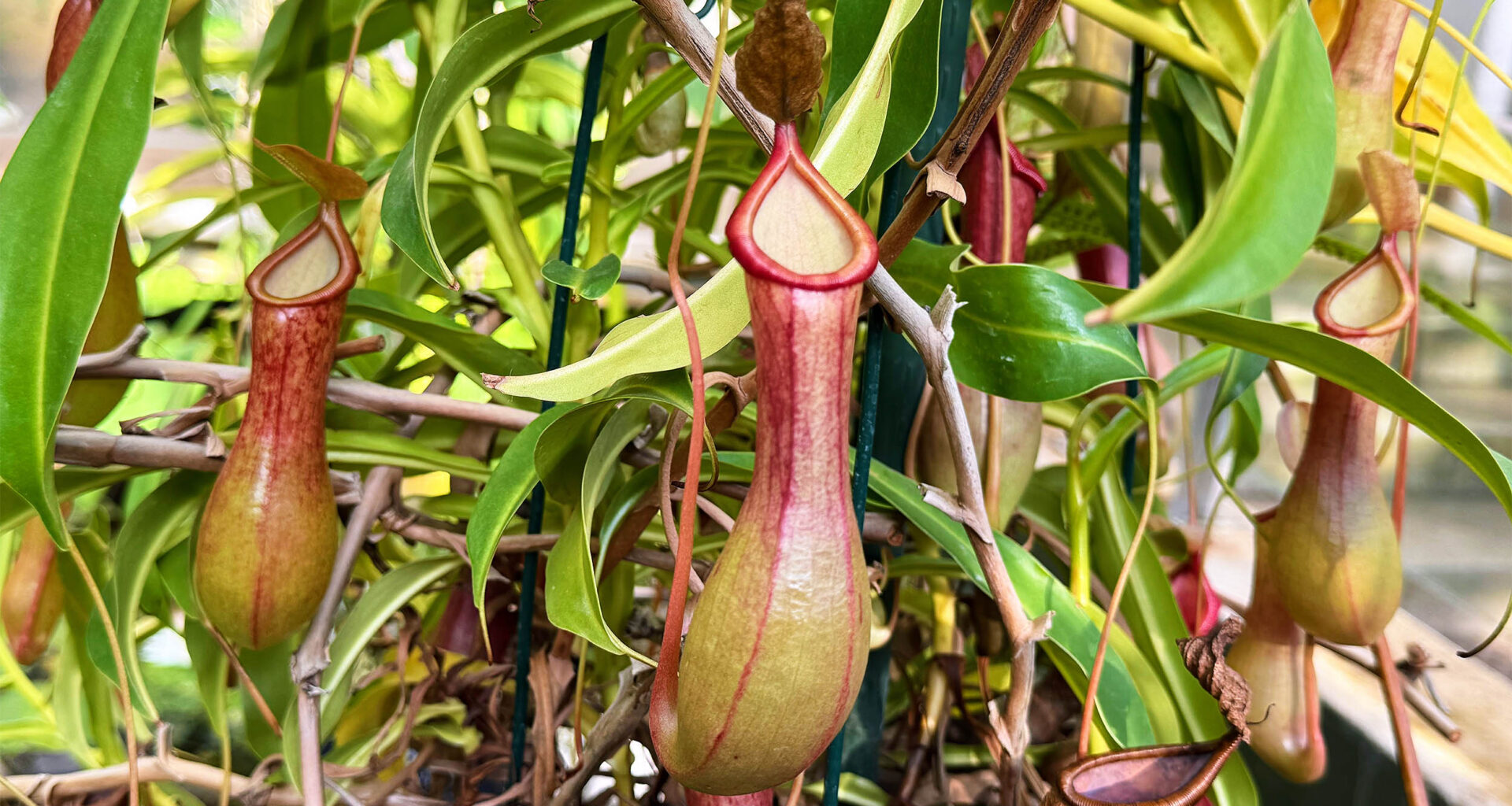
New analyses show that Nepenthes khasiana, a carnivorous pitcher plant from northeast India, loads its nectar with a nerve-disabling chemical that quickly incapacitates ants and other insect pollinators.
The work was led by Chandni Chandran Lathika, a plant chemist at the University of Kerala, who analyzed nectar samples for chemicals that disrupt ant movement.

At Jawaharlal Nehru Tropical Botanic Garden and Research Institute (JNTBGRI) in Kerala, lab work traced which molecules in the pitcher plant’s nectar actually disables the ants.
Ants and pitcher plant nectar
Lab feeding trials linked isoshinanolone, a plant-made compound that blocks a nerve enzyme, to ant poisoning from pitcher plant nectar.
Ants that sipped the nectar moved slowly, showed weak muscles, and spent long stretches grooming instead of walking steadily.
When coordination broke down, many slipped into digestive fluid inside the pitcher plant’s flowers, and some likely died before reaching the bottom.
Three different sugars in the nectar pull in water and leave the rim slick during humid air or rain. Studies of the peristome, the pitcher rim that insects step on, show wetness can erase footholds.
Microscopic ridges along the flower’s edges guide the ants’ feet inward, and a thin water film makes claws and pads lose grip of the surface and slide inside.
With the sugary layer keeping surfaces wet, the rim can stay dangerous even before the nectar toxin takes over.
Nectar stops being nutrition
Nectar on a plant usually gives insects easy calories, but this pitcher nectar carries little nutritional payoff.
Analyses found a high C:N ratio, more carbon than usable nitrogen for insects, plus very low amino acids and proteins.
That mix provides quick sugar energy while denying building blocks for growth, so ants keep returning to the rim.
The plant gains visits without spending much nitrogen, and the trap gets more chances to capture the same foragers.
CO2 and pitcher plant nectar
Gas sampling showed unopened pitcher plants can build up CO2 at levels far above outside air.
Researchers think respiration and trapped gases feed that pocket, changing acidity and chemical reactions inside the trap.
“Nepenthes pitchers are leaf-evolved biological traps containing high levels of CO2 within them,” wrote Lathika.
Evidence still cannot show whether CO2 directly drives toxin release, but the link points to tight internal control.
How the tests worked
Researchers did not rely on field observations alone; they tested nectar chemistry and its effects in controlled steps.
At JNTBGRI, the team collected nectar from rims and lids, then purified the one molecule that caused the strongest effects.
Parallel analyses mapped sugars, minerals, and volatile chemicals, giving a full view of what insects taste on contact.
By tying chemical fingerprints to ant behavior, the experiments made it harder to dismiss the toxin as an accidental contaminant.
Benefits of nerve toxins
Nutrient-poor ground pushes many carnivorous plants to look for nitrogen and phosphorus in insects instead.
Glands in the pitcher fluid release enzymes that cut prey proteins into small pieces, letting the plant absorb those nutrients.
For Nepenthes khasiana, which grows in thin, acidic soils, each captured ant can supply nutrients that leaves cannot extract.
That payoff explains why a risky chemical lure can make sense, even if some visitors escape after sampling the nectar.
Pitcher plants on the brink
In the wild, Nepenthes khasiana survives in a narrow corner of northeast India, and one report describes it as rare and endangered.
Land clearing and collection reduce the number of mature pitchers, so fewer plants reach the next season with enough stored nutrients.
Because the species lives in small, fragmented patches, losing one boggy slope can erase unique local genetic lines.
Understanding its feeding strategy adds scientific value, but protecting habitat decides whether future researchers can still study it.
Uncertain future for pitcher plants
Future work on toxic nectar will need to pinpoint which insects detect the risk and which keep feeding anyway.
Experiments could compare ant species and test whether smell or taste receptors change after exposure to the toxin.
Chemists may also track how pitchers control isoshinanolone levels across seasons, especially as CO2 and humidity vary in traps.
Until field data show real-world doses and non-target effects, the discovery stays a lesson about evolution, not a ready-made insecticide.
Taken together, the evidence shows a trap that lures with sugar, disables with a nerve-blocking compound, and profits from poor soil.
The finding clarifies how a single species can tune chemistry and surface physics for feeding, while reminding conservationists that rarity matters.
The study is published in Plant Biology.
—–
Like what you read? Subscribe to our newsletter for engaging articles, exclusive content, and the latest updates.
Check us out on EarthSnap, a free app brought to you by Eric Ralls and Earth.com.
—–