
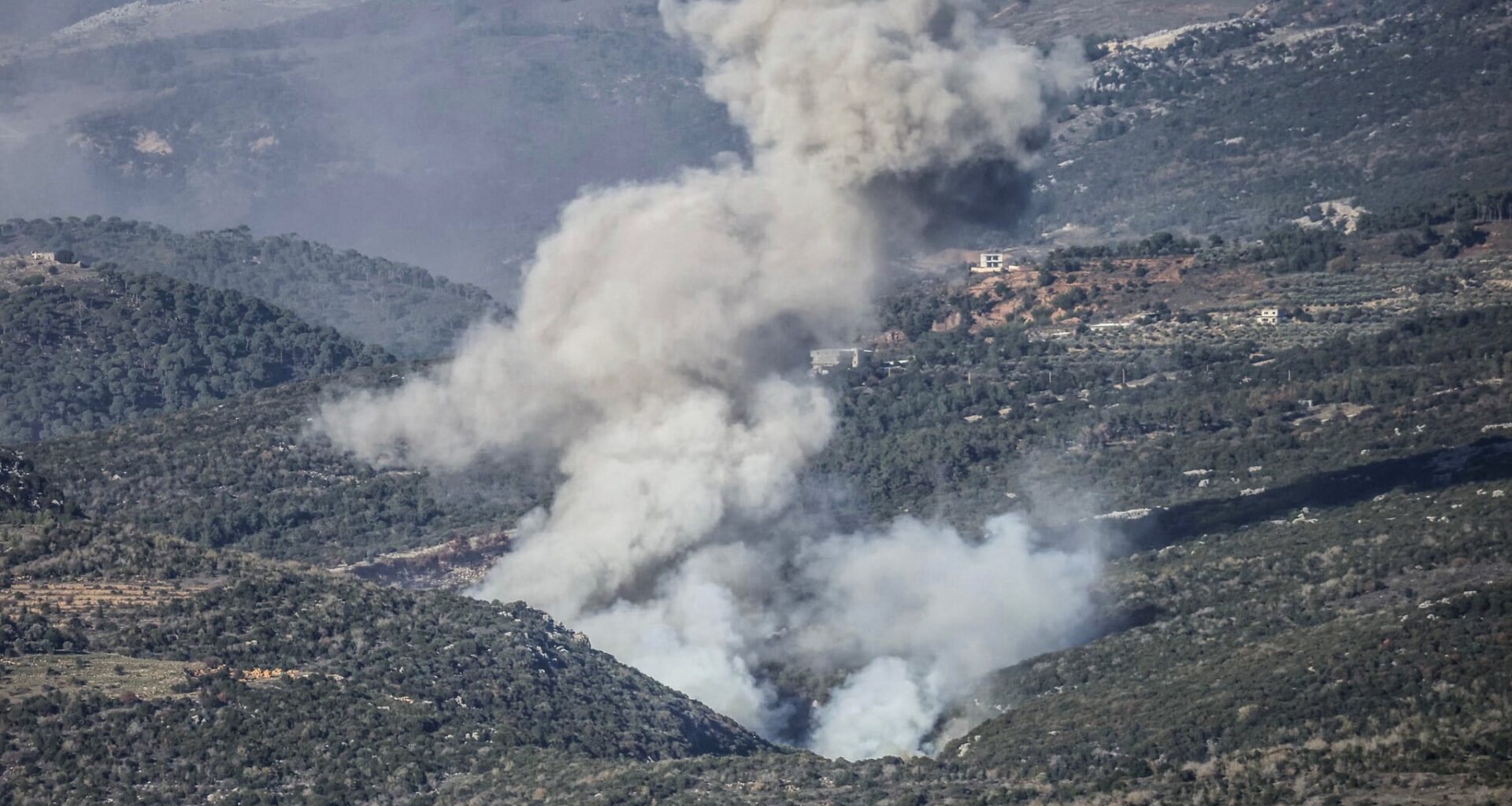
The IDF said it carried out strikes on Hezbollah weapons depots and other military infrastructure in southern Lebanon and deeper within the country on Thursday, targeting sites allegedly used to support the terror group’s efforts to rebuild and prepare attacks against Israel.
According to the military, the strikes hit several weapons storage facilities and other infrastructure in southern Lebanon, as well as an underground arms depot deeper within Lebanese territory.
The IDF said Hezbollah’s activity at the targeted sites violated the understandings between Israel and Lebanon.
Shortly before the strikes, the IDF issued evacuation warnings for the towns of Machghara in the Western Beqaa District and south Lebanon’s Sohmor.
The strikes come a week after the Lebanese military said it had completed disarming Hezbollah south of the Litani River, the first phase of a nationwide plan, though Israel has called those efforts insufficient.
Get The Times of Israel’s Daily Edition
by email and never miss our top stories
By signing up, you agree to the terms
Prime Minister Benjamin Netanyahu’s office said in response that the ceasefire “states clearly, Hezbollah must be fully disarmed.”
בעומק ובדרום לבנון: צה”ל תקף מחסני אמצעי לחימה של ארגון הטרור חיזבאללה
מוקדם יותר היום, צה”ל תקף תשתיות של ארגון הטרור חיזבאללה בדרום ובעומק לבנון.
במספר מרחבים בדרום לבנון, צה”ל תקף מספר מחסני אמצעי לחימה ותשתיות טרור נוספות ששימשו את ארגון הטרור חיזבאללה לקידום מתווי טרור נגד… pic.twitter.com/BvdEGOIwLA
— צבא ההגנה לישראל (@idfonline) January 15, 2026
Israel and Lebanon agreed to a US-brokered ceasefire in November 2024, ending more than a year of fighting between Israel and Hezbollah that had culminated in Israeli strikes that severely weakened the Iran-backed terror group. Since then, the sides have traded accusations over violations, with Israel insisting that Hezbollah has worked to rearm itself.
On Sunday, Lebanon’s official National News Agency (NNA) reported “a series of violent Israeli strikes” on Jezzine, Mahmudiyeh and Al-Dimasqiyeh, as well as “more than 10 strikes” on Al-Bureij, all in southern Lebanon.
Lebanon has faced growing pressure from the US and Israel to disarm Hezbollah, and its leaders fear that Israel could dramatically escalate strikes across the battered country to push Lebanon’s leaders to confiscate Hezbollah’s arsenal more quickly.
On Wednesday, senior Hezbollah political official Mahmoud Qmati warned Lebanon’s government that pressing on with efforts to disarm the group throughout the country would trigger chaos and possibly civil war.
In an interview with Russian state media outlet RT, Qmati said pursuing a state monopoly on arms further north would be “the biggest crime committed by the state.”
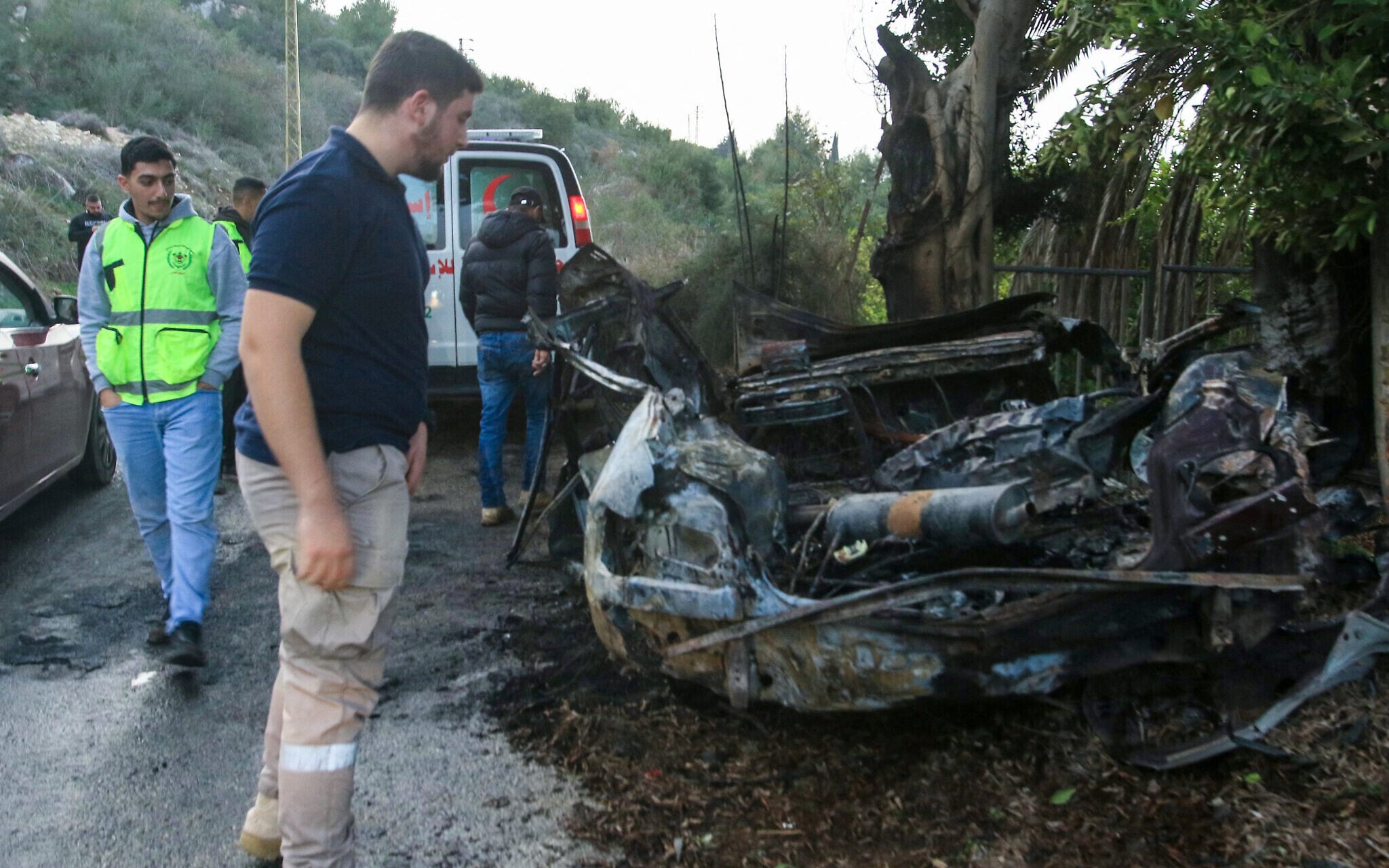
Lebanese army soldiers and paramedics inspect the wreckage of a car that was targeted in an Israeli airstrike in the area of Zaita in southern Lebanon on January 8, 2026. (Mahmoud ZAYYAT / AFP)
While Hezbollah considers Israel’s frequent strikes in Lebanon to be a violation of the ceasefire, Lebanese Foreign Minister Youssef Rajji on Tuesday disputed this, saying that the agreement allows for Israeli strikes as long as Hezbollah continues to hold onto its arms.
Since the ceasefire, the IDF has killed around 400 operatives and struck hundreds of additional Hezbollah-linked targets. The IDF has repeatedly asserted that the activity at the targeted sites constitutes a violation of the understandings between Israel and Lebanon.
The conflict began on October 8, 2023, when Hezbollah started firing rockets and drones at northern Israel, one day after its fellow Iran-backed terror group Hamas launched a shock assault on southern Israel, sparking the war in Gaza.
Lebanon charges 4 alleged Mossad agents accused of kidnapping an official with ties to Ron Arad’s capture
Separately on Thursday, a Lebanese judicial official said four people accused of an alleged kidnapping in Lebanon for Israel’s Mossad spy agency last month have been charged, after a retired security officer whose brother was linked to an Israeli airman’s disappearance went missing.
Israel has apprehended suspects in Lebanon before, and Mossad is accused of regularly attempting to contact Lebanese people to facilitate its operations, while Lebanon has arrested dozens of people on suspicion of collaborating with Israel over the years.
Lebanese authorities believe the agency known for espionage operations outside of Israel’s borders is behind the disappearance of retired security officer Ahmad Shukr last month.
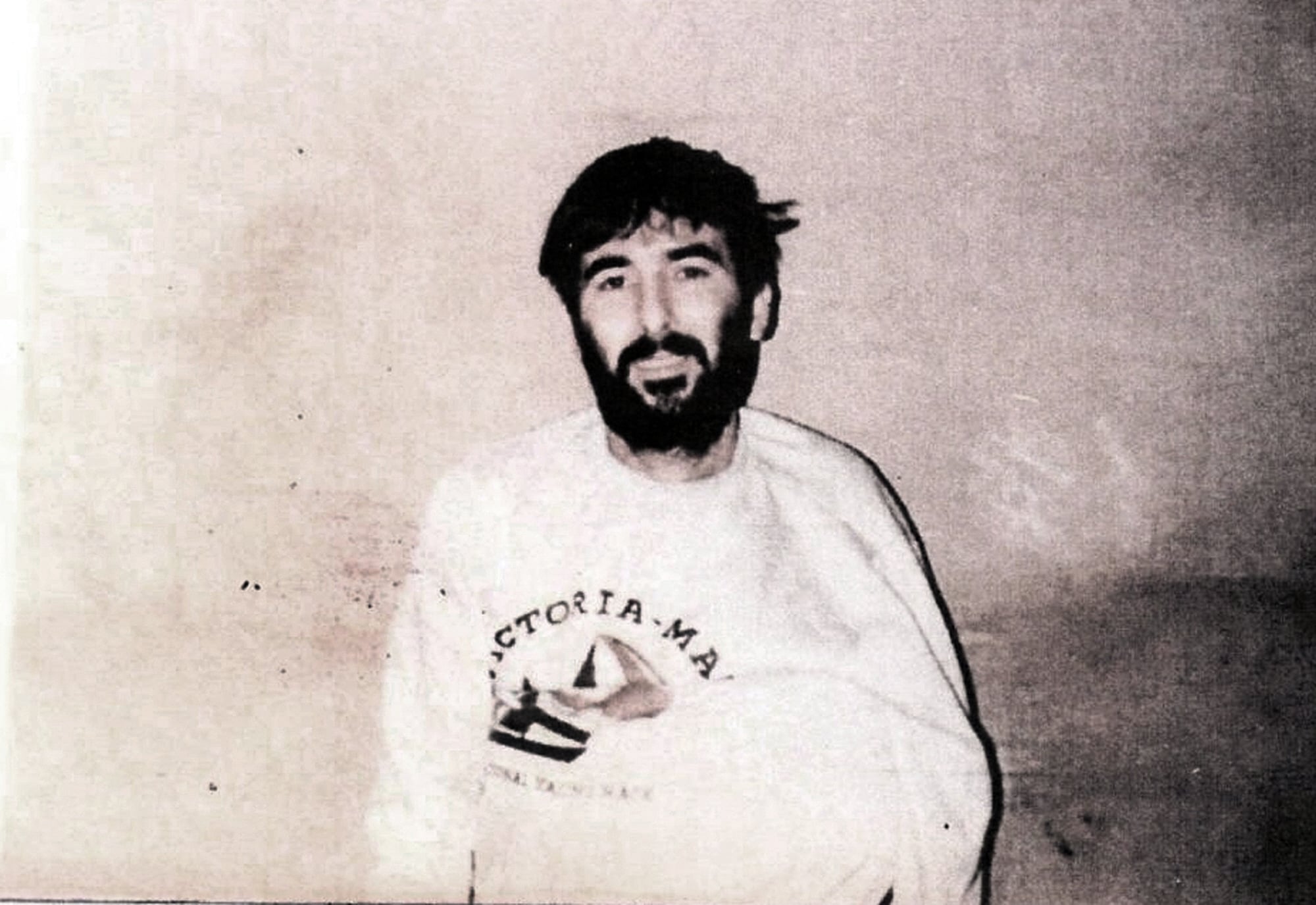
A handout photo from Israeli television made available on July 13, 2008, shows a photograph of Ron Arad, an Israeli Air Force navigator who was captured after his fighter jet was shot down in Lebanon in 1986. (HO / AFP)
Shukr, whose brother Hassan is suspected of involvement in the 1986 capture of Israeli Air Force navigator Ron Arad, disappeared in the Beqaa region of eastern Lebanon.
Authorities have arrested and charged one Lebanese man and charged three more who remain at large.
The four are charged with “communicating with and working for Mossad within Lebanon in exchange for money, and carrying out the kidnapping of Ahmad Shukr,” a judicial official told AFP on condition of anonymity.
The three are “a Lebanese woman, a Lebanese-French man, and a Syrian-Swedish man,” the official said.
The Israeli airman Ron Arad, whose plane went down in southern Lebanon during the country’s civil war between 1975 and 1990, is now presumed dead and his remains were never returned.
Hassan Shukr was killed in 1988 in a battle between Israeli forces and local fighters, including from the Iran-backed Hezbollah terror group, a source close to the family told AFP last month, requesting anonymity.
Is accurate Israel coverage important to you?
If so, we have a request.
Every day during the past two years of war and rising global anti-Zionism and antisemitism, our journalists kept you abreast of the most important developments that merit your attention. Millions of people rely on ToI for fact-based coverage of Israel and the Jewish world.
We care about Israel – and we know you do too. So we have an ask for this new year of 2026: express your values by joining The Times of Israel Community, an exclusive group for readers like you who appreciate and financially support our work.
Already a member? Sign in to stop seeing this
You appreciate our journalism

You clearly find our careful reporting valuable, in a time when facts are often distorted and news coverage often lacks context.
Your support is essential to continue our work. We want to continue delivering the professional journalism you value, even as the demands on our newsroom have grown dramatically since October 7.
So today, please consider joining our reader support group, The Times of Israel Community. For as little as $6 a month you’ll become our partners while enjoying The Times of Israel AD-FREE, as well as accessing exclusive content available only to Times of Israel Community members.
Thank you,
David Horovitz, Founding Editor of The Times of Israel