
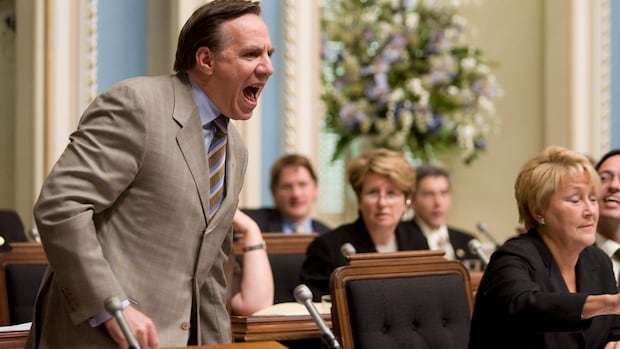
François Legault spent a lifetime climbing the rungs of Quebec’s corporate and political ladders before stepping down Wednesday from a position that had become increasingly lonely — key members of his cabinet abandoning ship and his once staggering popularity plummeting.
He leaves behind a province reshaped by his brand of assertive nationalism that was popular enough to break a near 50-year political duopoly, yet controversial enough to draw international condemnation for policies that led to lengthy legal battles.
Legault was born 68 years ago in the West Island, growing up in Sainte-Anne-de-Bellevue, Que., before moving on to his business studies at HEC Montréal.
He quickly found his way into the airline industry, starting first as the director of finance and administration of Nationair Canada, from 1984 to 1985.
He later co-founded Air Transat alongside Jean-Marc Eustache and Philippe Sureau.
As his international airline company took off with him in the CEO’s seat, Legault went on to join boards of major companies like Provigo and Culinar.
Air Transat became one of the largest airline companies in Canada, and Legault stepped down — making substantial gains by selling his shares — so he could dedicate his life to public service.
Even before becoming an elected member of the National Assembly, Legault entered Lucien Bouchard’s Parti Québécois (PQ) cabinet in 1998 as the minister of industry, commerce, science and technology.
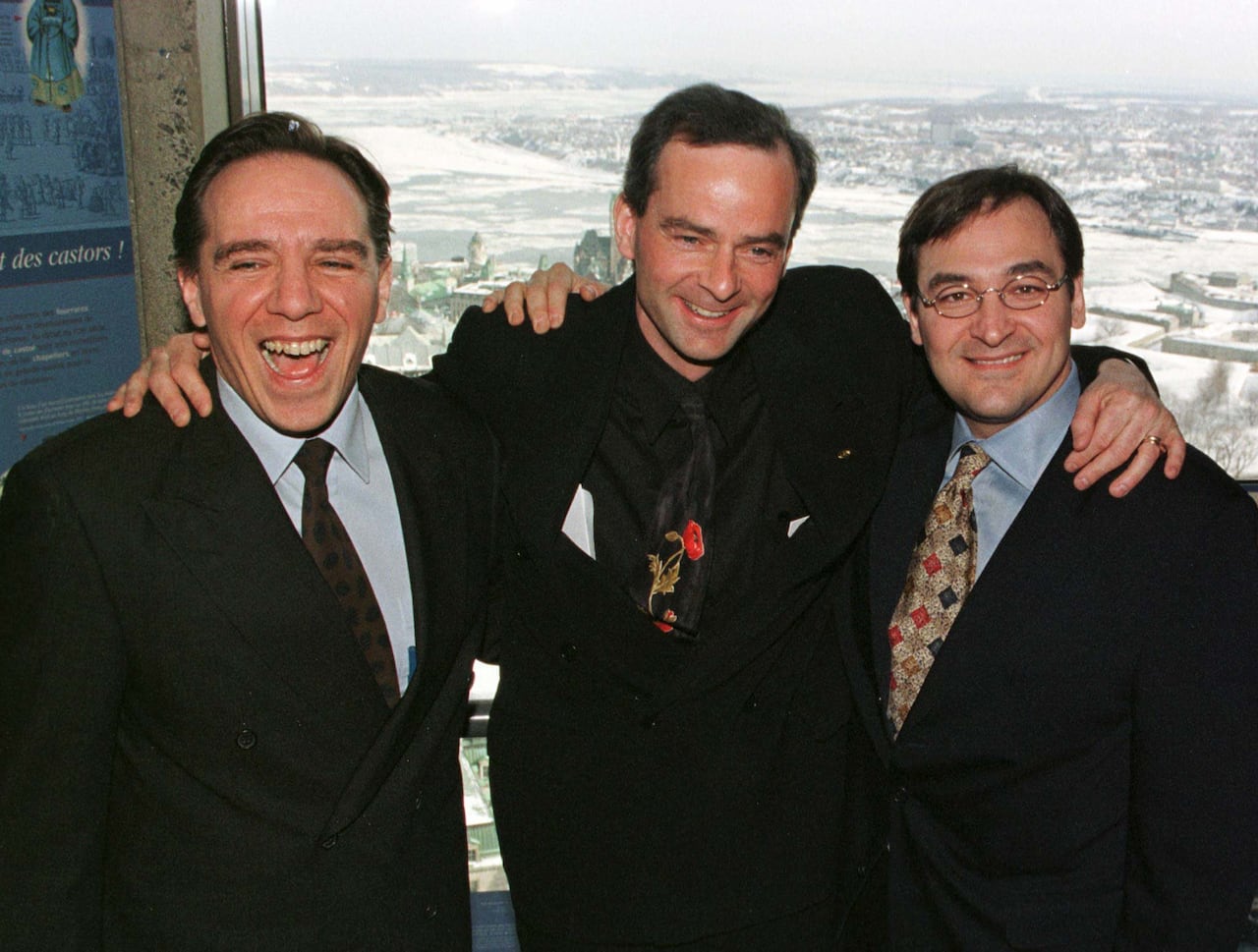 Louis Garneau, centre, holds education minister François Legault, left, and federal economic development minister Martin Cauchon in 1999. (Jacques Boissinot/The Canadian Press)
He was officially elected in the Lanaudière riding of Rousseau during the general election on Nov. 30, 1998. Between then and 2003, he served as education minister under Bouchard and health minister under Bernard Landry.
In 2005, Legault decided not to run for the PQ leadership.
Following Jean Charest’s Liberal victory in 2003, Legault served on the opposition benches and was re-elected in 2007 and 2008.
He then left political life for the first time in 2009.
Launching a new party
But two years later he was back, with a radical new idea and a new party.
That idea was to reject the debate over federalism and Quebec independence to focus instead on building Quebec’s economy and fighting for Quebec values.
His gamble eventually paid off. He co-founded the Coalition pour l’avenir du Québec in February 2011 with businessman Charles Sirois.
On Feb. 14, 2012, the party merged with the Action démocratique du Québec (ADQ) — the former party of Mario Dumont and Jean Allaire — and was renamed the Coalition Avenir Québec (CAQ).
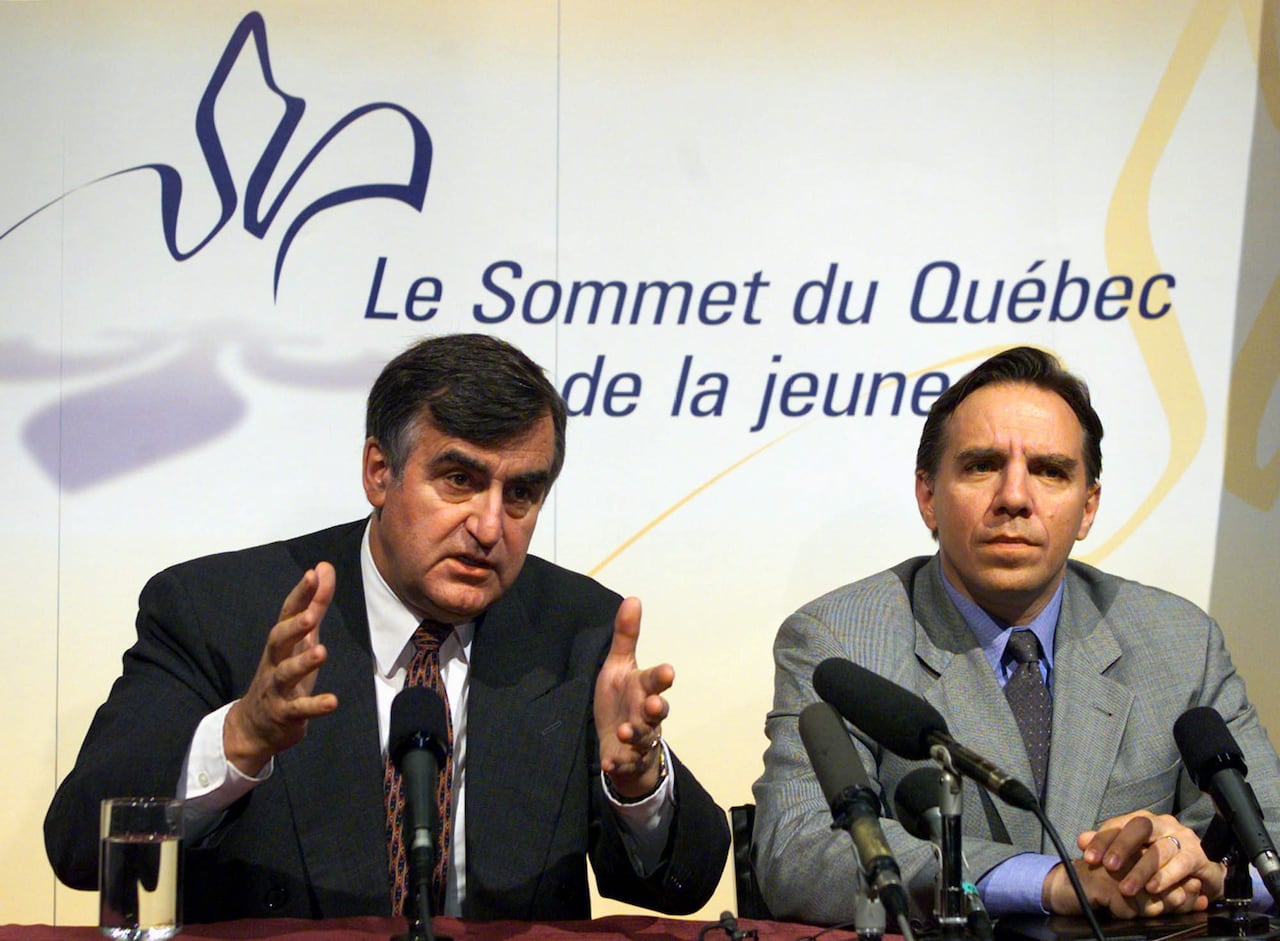 Former Quebec Premier Lucien Bouchard, left, responds to a reporter’s question on Sept. 9, 1999, at a summit on youth in Quebec City as Education Minister François Legault looks on. (Jacques Boissinot/The Canadian Press)
Legault returned to the National Assembly in 2012, this time as MNA for L’Assomption.
Now leader of the CAQ, he headed the second opposition group facing Pauline Marois’s PQ government.
From 19 seats and 27 per cent of the vote in 2012, the CAQ grew to 22 seats despite taking only 23 per cent of the vote in the 2014 general election.
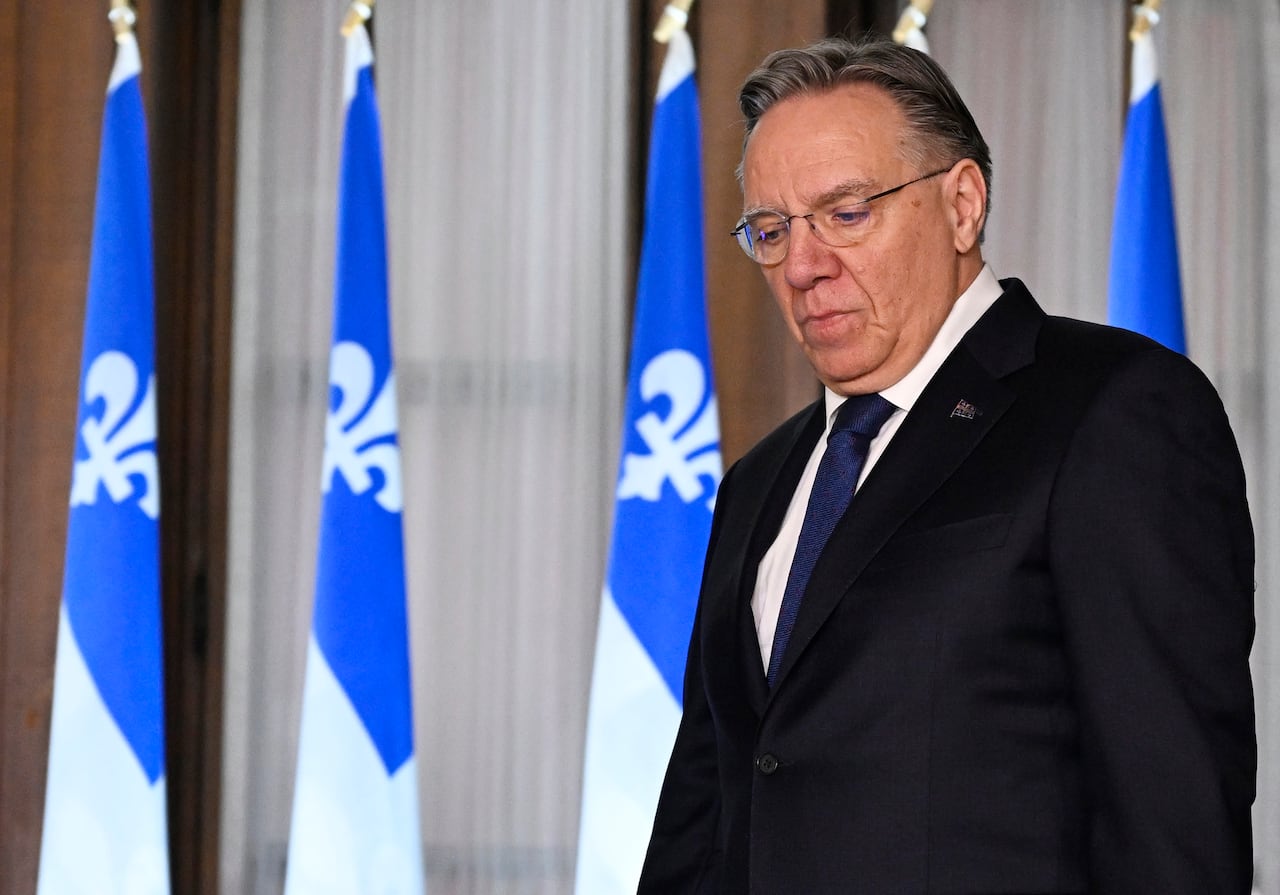 Quebec Premier François Legault walks to a news conference to announce his resignation in Quebec City, on Wednesday, Jan. 14, 2026. (Jacques Boissinot/The Canadian Press)
The CAQ was again relegated to the rank of second opposition party, behind the PQ, as Philippe Couillard’s Liberal government took power.
Above all, Legault wanted to see the wealth gap between Quebec and other provinces narrow. After decades of volleying power back and forth between the Liberals and PQ, Quebecers were looking for something new and Legault’s voice rose above the two feuding parties.
CAQ takes power
The CAQ won in a landslide victory in 2018, and Legault hit the ground running with an ambitious agenda, including the passing of Quebec’s controversial secularism law known as Bill 21, which prohibits some civil servants from wearing religious symbols at work.
While the legislation drew public outcry both locally and abroad, Legault stood his ground.
His strides were stopped in 2020 when the COVID-19 pandemic upended daily life.
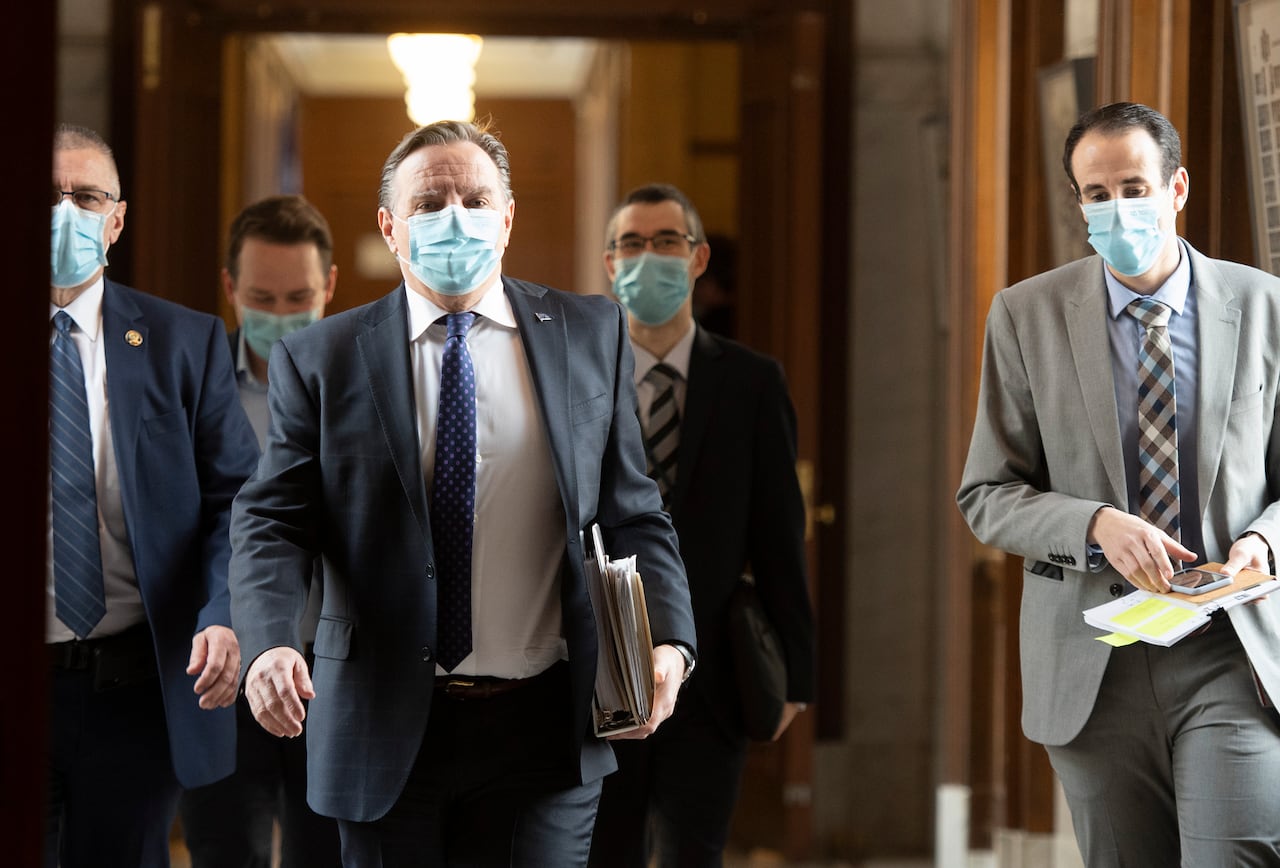 Quebec Premier François Legault, left, walks to question period at the legislature in Quebec City on Feb. 4, 2021, as press attaché Ewan Sauves walks alongside. (Jacques Boissinot/The Canadian Press)
Legault embraced the challenge, becoming a reassuring presence for Quebecers with nearly daily news conferences, and initially at least, his management of the pandemic was widely praised. The CAQ government soared in the polls, and at one point, Legault was the most popular premier in Canada.
Towards the end of his first mandate, Legault shifted focus again to Quebec’s identity by making major changes to the Charter of the French Language with a law known as Bill 96.
While the proposed changes drew plenty of outcry, Legault continued to do well in the polls.
WATCH | Looking back on Legault’s legacy in Quebec: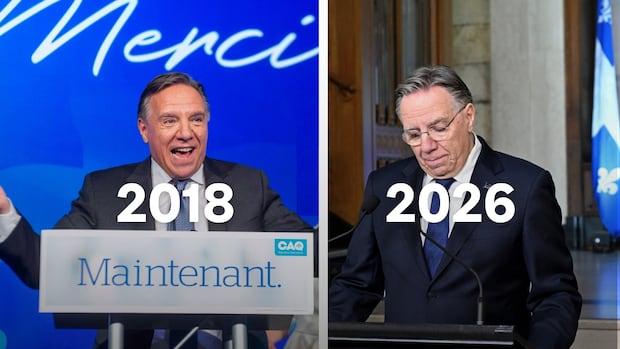
François Legault’s rise and fall, and the legacy Quebec’s first CAQ premier will leave behind
He rose from Quebec’s business world to shatter the province’s binary political dynamic of sovereignists and federalists. But François Legault leaves behind a controversial legacy as he concludes his more than seven years as premier. CAQ maintains power
In the October 2022 election, the CAQ garnered almost 41 per cent of the vote, electing 90 members to the National Assembly in another landslide victory.
But it wasn’t long before that popularity began to nosedive.
Just months after the election, Legault had to defend his government’s decision to spend up to $7 million on two NHL pre-season games as opposition parties decried what they called a poor use of public funds.
 François Legault is greeted by his mother, Pauline Schetagne, during a campaign stop at his childhood home in Sainte-Anne-de-Bellevue, Que., on Aug. 8, 2012. (Graham Hughes/The Canadian Press)
Then there was the on-again off-again third link project in Quebec City, which Legault decided to revive following a devastating loss to the PQ in a byelection in the Quebec City riding of Jean-Talon.
But some feel it was the disastrous launch of the automobile insurance board’s online platform SAAQclic that upset residents across the province most.
A public inquiry, called the Gallant commission, was launched last year because an auditor general report found the automobile insurance board’s digital transition was at least $500 million over budget.
The premier found himself testifying at that inquiry, denying having any prior knowledge of the cost overruns.
By that point, Legault’s right hand Pierre Fitzgibbon, former economy and energy minister, had resigned abruptly in September 2024.
From there, several others have stepped down, including former Health Minister Christian Dubé, who cited difficult negotiations with the unions representing doctors in Quebec as a key reason for his resignation.
Popularity continues to plummet
In early 2024, the CAQ’s fundraising activities raised questions of ethics. Party backbenchers had reportedly been inviting citizens to networking events with cabinet ministers that were, in effect, fundraisers requiring a donation to the CAQ.
The party eventually announced it would stop accepting political donations from the public altogether.
In September 2025, the Legault government closed the books on a high-stakes file, terminating its agreement with Northvolt, essentially nixing the planned battery cell plant on the South Shore.
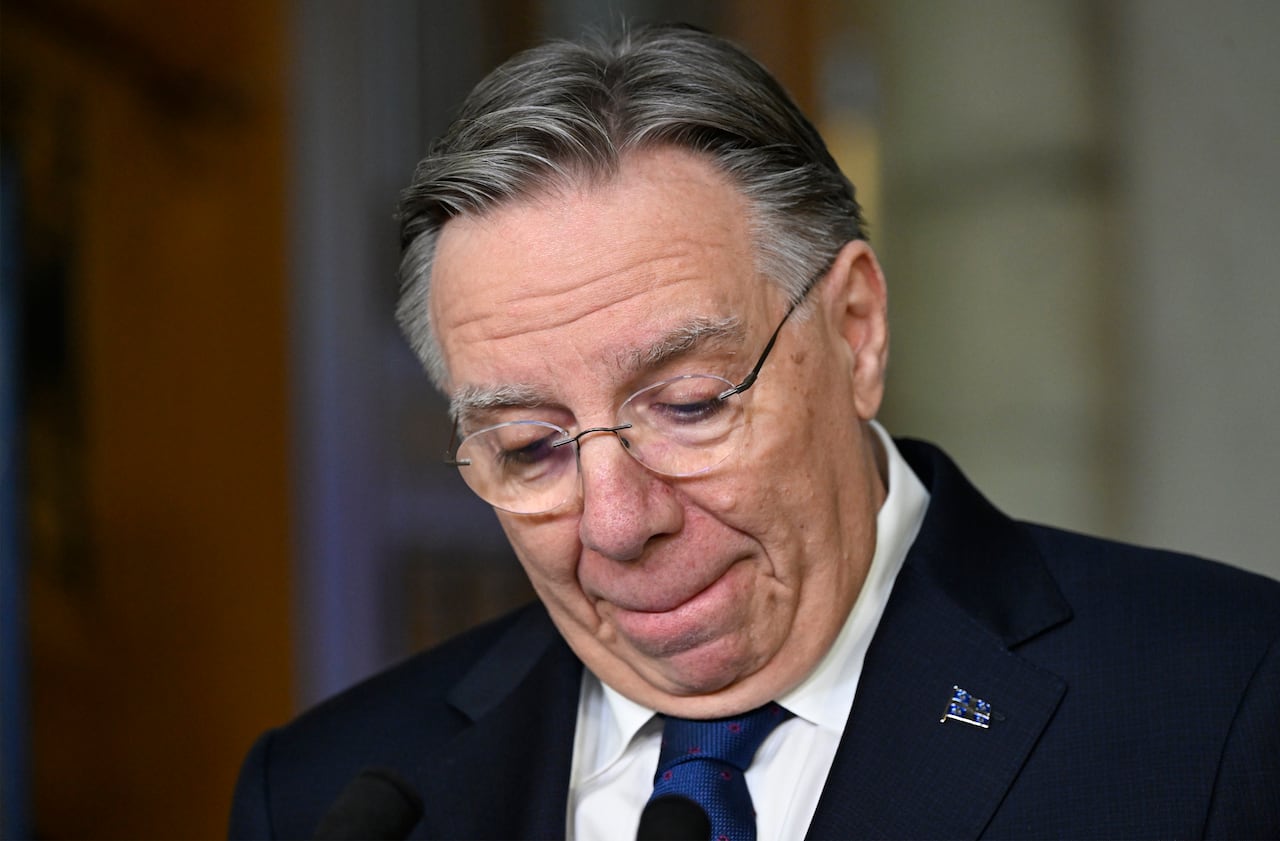 Premier François Legault announces his resignation during a news conference at his office in Quebec City on Jan. 14, 2026. (Jacques Boissinot/The Canadian Press)
The Quebec government alone injected — and lost — $270 million in the bankruptcy of Northvolt’s parent company in Sweden.
As he slid further and further in the polls, Legault tried to change the channel. He positioned himself as “Rocky,” ready for one last comeback.
He unveiled his shuffled cabinet in September with hopes of regaining the public’s confidence before the upcoming election.
“We have made changes over the past seven years, but it is not enough,” Legault said at the time. “I want, more than ever, to fight.”
But the cabinet shuffle and reset of priorities didn’t move the dial, and on Wednesday, Legault announced his resignation during a news conference. He thanked Quebecers and said being premier had been “the greatest honour of my life.”
Legault will stay on as premier until the CAQ selects a replacement. It’s the first time the party will have to choose a new leader.