
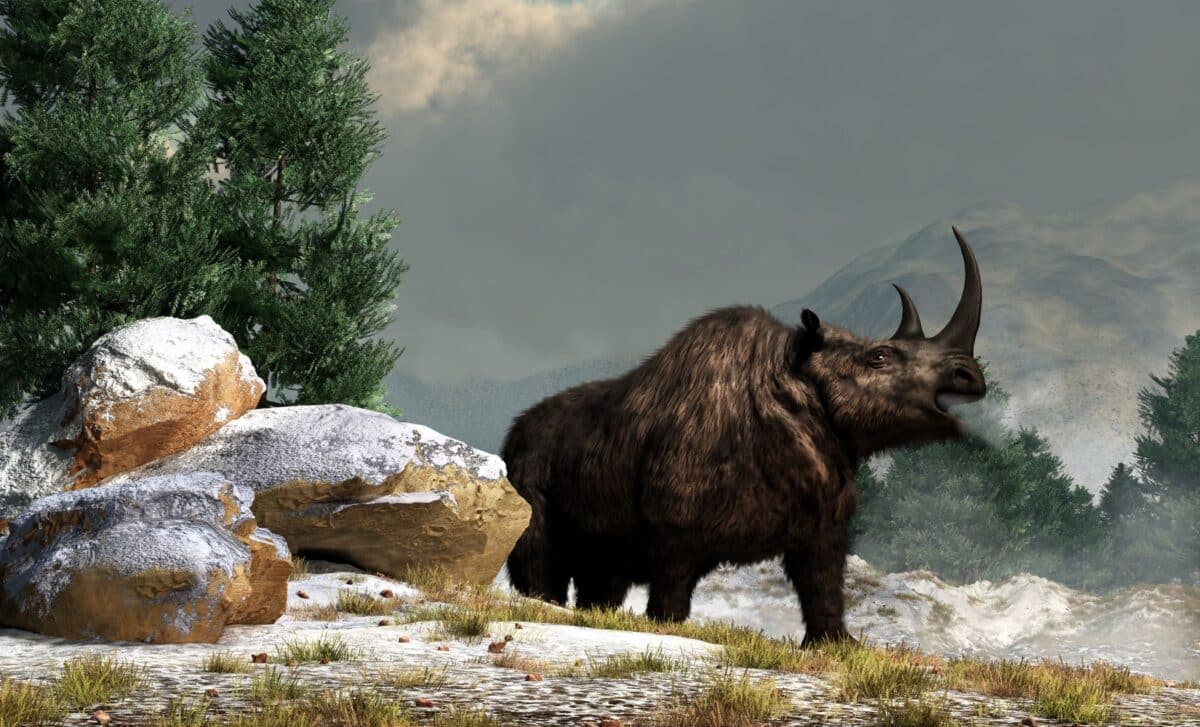
Trapped by a landslide and frozen in the Siberian permafrost, a two-month-old wolf cub carried more than just its own story into the future. Inside its stomach lay a rare discovery that helped decode the genetic state of one of the Ice Age’s most iconic species shortly before it disappeared.
The wolf cub was first discovered in 2011 near the village of Tumat in northeastern Siberia. Preserved for more than 14,000 years, its body remained remarkably intact thanks to the freezing conditions. When scientists examined its stomach, they found a piece of matted, hairy tissue, later confirmed to be the flesh of a woolly rhinoceros, a massive herbivore that went extinct around the same time. This unique discovery gave researchers an unprecedented opportunity to study the animal’s genome from a sample dating just before its extinction.
Genome Recovered from a Digested Meal
Using advanced genetic techniques, scientists at the Centre for Palaeogenetics, a collaboration between Stockholm University and the Swedish Museum of Natural History, sequenced the genome of the woolly rhinoceros based on the tissue found in the cub’s stomach. It marked the first time a genome from an extinct Ice Age species was recovered from the stomach contents of a predator.
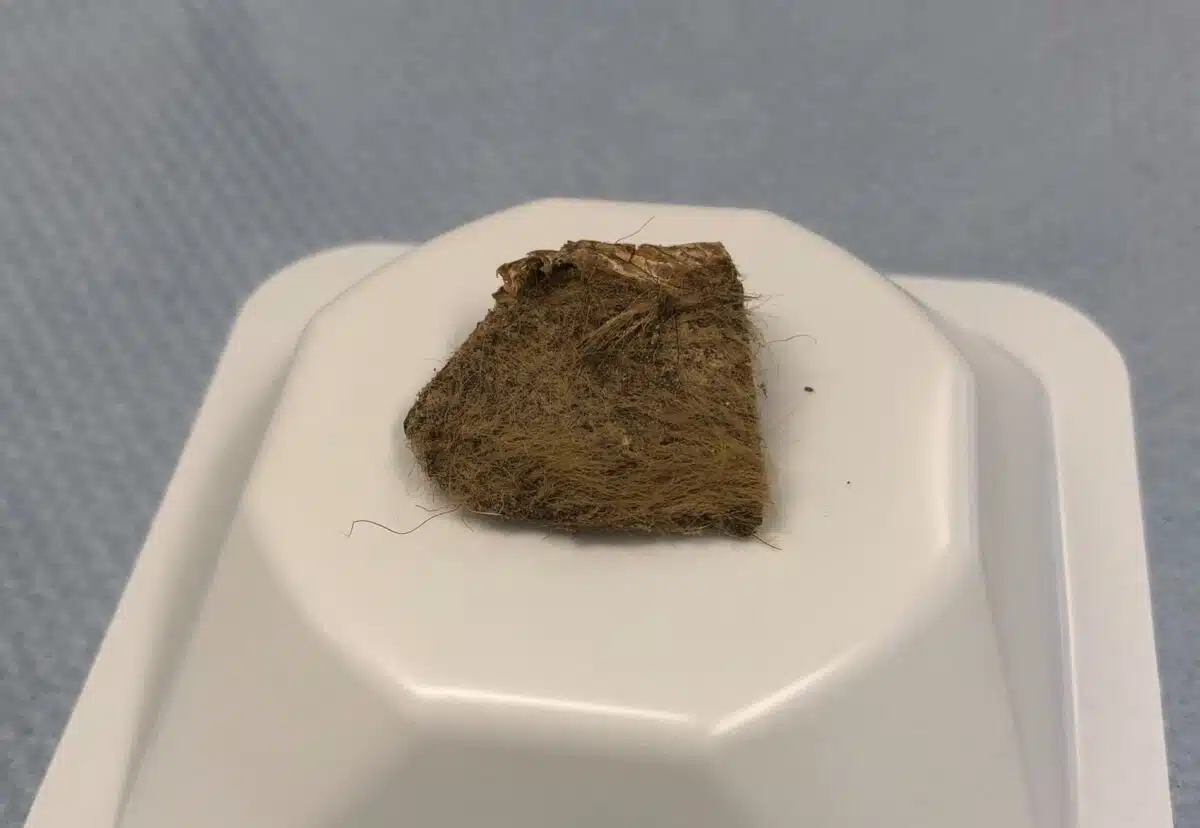 A fragment of woolly rhino tissue discovered in the wolf’s stomach. Credit: Love Dalén
Dr. Camilo Chacón-Duque, a former researcher at the center, emphasized the rarity of the opportunity. As reported by the study, published in Genome Biology and Evolution, well-preserved samples from the final years of extinct species are difficult to obtain, and getting usable genetic material from inside another animal is almost unheard of.
“To our knowledge this is the youngest woolly rhinoceros for which we have the genome,” he said.
No Genetic Signs of Species Collapse
When the scientists analyzed the rhino’s DNA, they expected to find classic signs of a species in crisis: a reduction in genetic diversity, signs of inbreeding, or the buildup of harmful mutations. These are typical indicators of what’s known as “genomic erosion,” a condition that often precedes extinction. But in this case, the data told a different story.
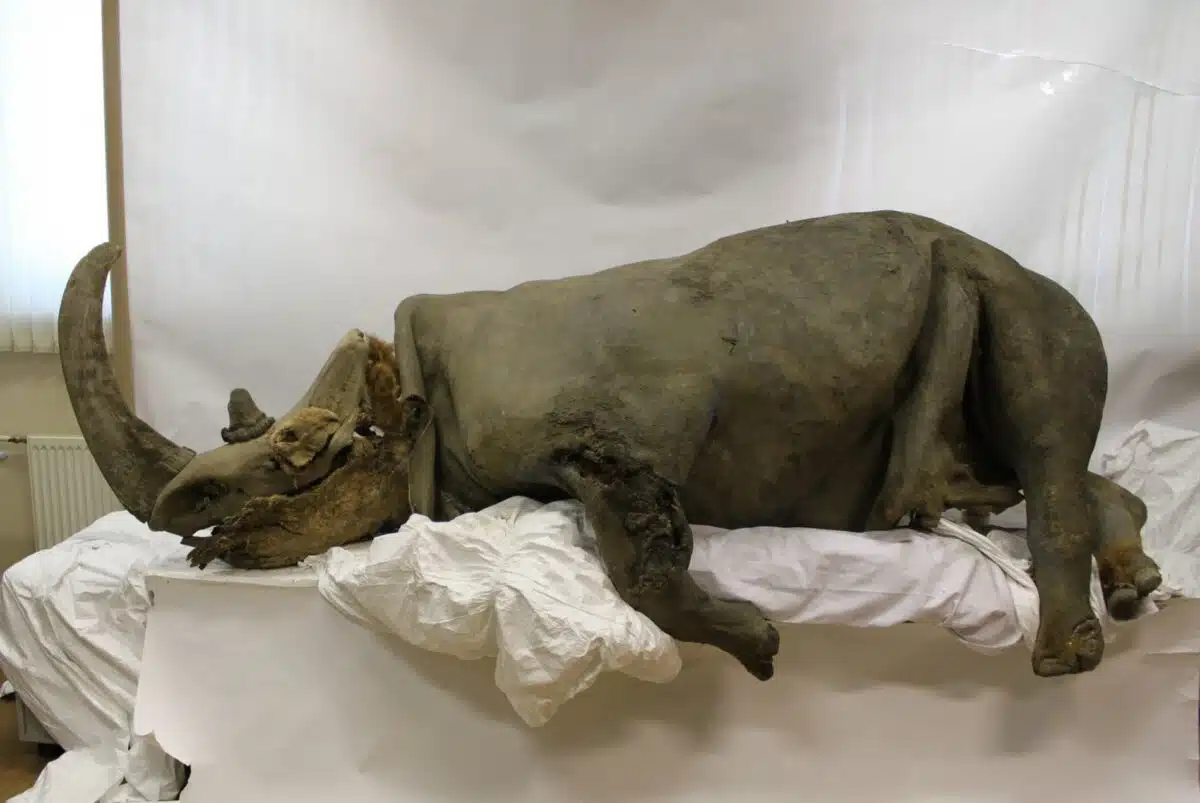 Permafrost-preserved woolly rhinoceros remains uncovered in a different location. Credit: Mammoth museum of North-Eastern Federal University
According to Chacón-Duque, the genome of the rhino inside the wolf was compared with two older samples, one from 18,000 years ago and another from 49,000 years ago. Surprisingly, all three showed a stable genetic profile. The woolly rhino population appeared large and healthy, right up until its disappearance.
“What we found was nothing like that. Whatever killed the species was relatively fast,” Chacón-Duque said.
Researchers estimate the extinction likely occurred within a 300- to 400-year period.
Heat May Be the Culprit
The findings challenge the idea that human hunting led to the rhino’s extinction. According to evolutionary genomics professor Love Dalén, also part of the research team, woolly rhinoceroses shared their habitat with humans for at least 15,000 years, a period during which their numbers appear to have remained strong.
Instead, scientists point to a rapid climate event known as the Bølling-Allerød Interstadial, which occurred between 14,700 and 12,900 years ago. This period of abrupt warming likely altered the ecosystems where woolly rhinos lived, impacting food availability and habitat. The Guardian reports that this environmental shift now appears to be the more likely cause of the species’ sudden extinction.
Exactly how the wolf cub came to eat woolly rhino meat is still unknown. Researchers suggest it may have scavenged from a carcass or been fed by an older pack member. A second cub, thought to be its sibling, was found nearby in 2015, and both had just started eating solid food.