
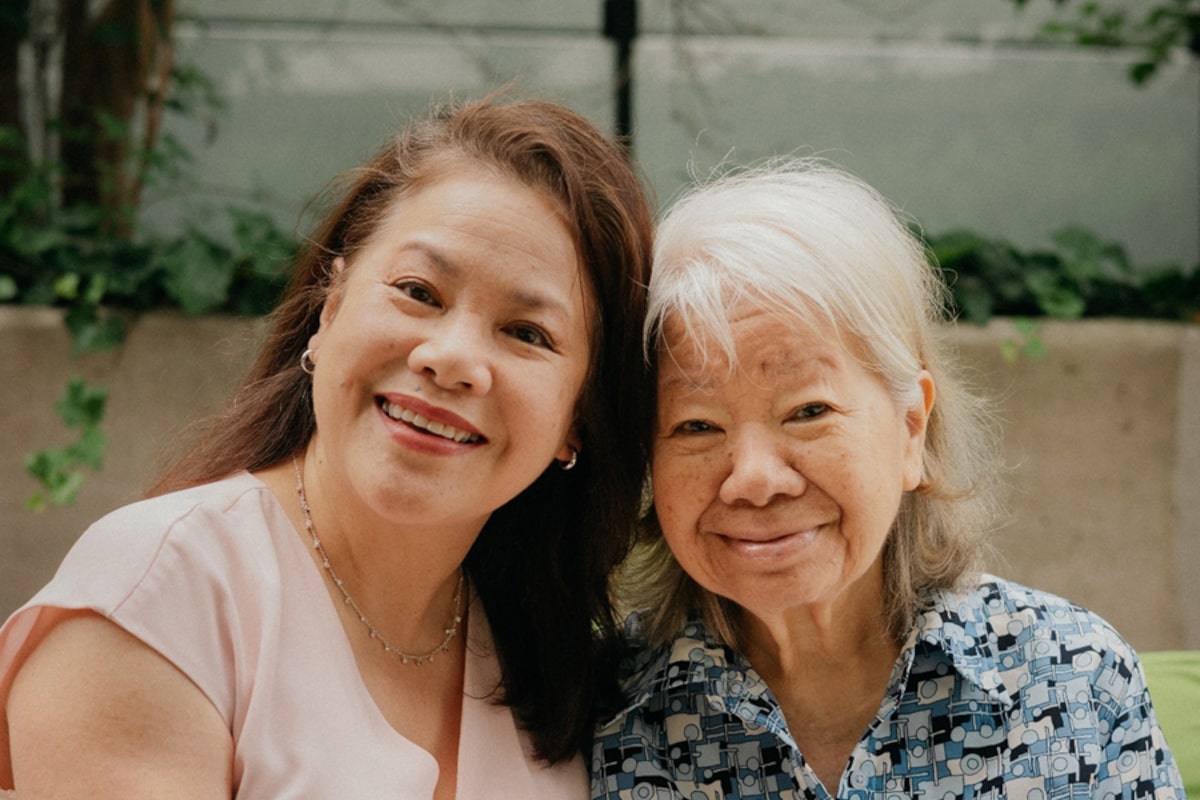
Careful savings habits have helped Theresa Nguyen (right), here with her daughter Zoonie, to enjoy a rewarding retirement.Supplied/Rhiannon Murray-Leung
In Calgary’s Silver Springs neighbourhood, Karen Kirnbauer, 70, isn’t easing into retirement. She’s making pickleball schedules, coordinating e-bike outings, and organizing other activities to ensure local seniors stay social and active. “I like to be busy,” she says. “I am not a ‘sit around with your feet up’ kind of person.”
Ms. Kirnbauer is the secretary and director of seniors’ resources and engagement at the Silver Springs Community Association, a volunteer role she took on after retiring from a 46-year nursing career. Her ability to pour time and energy into this work is partly thanks to financial choices she and her husband made before retirement.
While neither of them had a high income (her husband did inside sales for an electrical company), they never overextended themselves. Frugal savings habits during their working lives have enabled the couple to now travel two or three times a year. So far, they’ve visited countries in Asia, Europe and Central America, always keeping an eye out for hotel and flight deals.
“We’re living a good life,” Ms. Kirnbauer says. “I feel very fortunate.”
Funding the best retirement takes careful planning. Yet in 2024, the Financial Consumer Agency of Canada reported that just 32 per cent of non-retirees had a good understanding of how much they needed to save for retirement. And of current retirees, 41 per cent said their financial standard of living is lower than anticipated.
To avoid a disconnect between objectives and financial means, forecasting is critical, says Lloyd Wright, a Toronto-based senior associate in wealth planning and associate portfolio manager at Canaccord Genuity.
He urges his clients, no matter how young, to anticipate their financial shape using the Government of Canada’s free retirement income calculator as a useful first step. It lets users set their income goal, enter information about income and savings, and check income estimates from the Canada Pension Plan, Old Age Security Pension and other sources.
“You need to make conscious decisions about where your money’s going,” says Mr. Wright.
Ottawa-based Ali Oloumi retired in 2016 after a career in finance, with a company pension as well as his own savings and investments. He advises other retirees to build out a yearly budget, “to take the worry of spending out of the equation.”
Just months after he stepped away from work, his granddaughter was born. He also finally had the time to build a house on a piece of land he owns in Turkey. With his finances under control, Mr. Oloumi fills his days with his loved ones, as well as managing his properties, and walking around 12 kilometres every other day. “I’m not bored,” he says.
Mr. Wright notes that just as the working years have phases – getting married, having kids, getting promoted – retirement has stages too. The difference? You’re spending instead of earning, he says. That makes it important to understand how retirement is a journey with evolving needs and opportunities, and to adapt accordingly.
For instance, he says retirees typically spend more in the early years of retirement, when they’re more likely to travel and pursue other active interests. Later in retirement, some people may encounter health or mobility issues that curtail activity, but increase costs associated with care.
Some expenses can be unpredictable. “If you want to have a good retirement, you need to save money,” says Theresa Nguyen, 88, of Montreal.
She arrived in Canada as a refugee from Vietnam in the 1970s, and spent her career operating industrial sewing machines as part of a manufacturing company making winter jackets. Together with her husband, Ms. Nguyen raised eight children. Spending only on necessities, the couple were able to buy a house after only six years in Canada, and later put their children through university.
Those same savings habits meant that, in retirement, Ms. Nguyen has been able to travel across Europe and Asia, supported by her and her late husband’s pensions. She’s still a globetrotter, most recently visiting loved ones in Vietnam.
With Canadians living longer, outliving your money is another common concern. Ms. Kirnbauer says her husband worries about longevity. What happens if they live to 100 and need more money?
To combat that anxiety, Mr. Wright advises his clients to add different scenarios into their financial forecasting. “You can build as many ‘what ifs?’ into the model as you want.”
Ms. Kirnbauer feels confident that she and her husband will have enough money to see them through. That said, knowing how to spend in retirement doesn’t always come easy. Her son gifted her Die With Zero, a book by Bill Perkins, which argues against over-saving for retirement. The goal isn’t to die rich, but to spend to enjoy experiences while you’re alive. “You don’t pinch every penny, but you don’t go ridiculously crazy either,” Ms. Kirnbauer says. “It’s a fine balance.”