
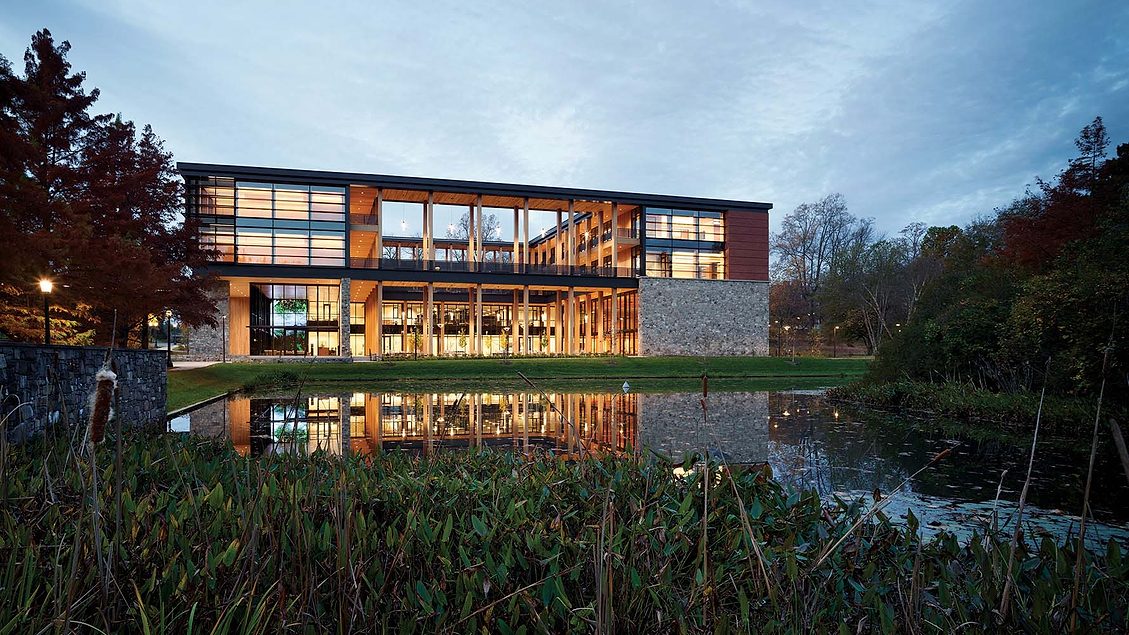
Standing in the central courtyard of the Contemplative Commons on a cold November day, one can’t help but notice how the ochre-tinted timber columns perfectly match the golden autumn grasses of the Dell, an 11-acre parkland that sits west of the University of Virginia’s famed Academical Village in Charlottesville. The pond at the heart of the Dell was critical in siting the building, as views of and access to the surrounding landscape—in particular this tranquil body of water, which serves as both retreat and stormwater management—shaped the porous new structure. For a center that aims to foster organic exploration of new ways of experiencing the world, connection to nature was key.
Giving form to a program that probably sounds unusual to most—there are a scant few such centers in the U.S.—can be tricky, but San Francisco–based Aidlin Darling Design, selected from a short list of seven firms, had experience with the building type, having completed a similar but much smaller project, the award-winning Windhover Contemplative Center (2014), at Stanford University.
“Over 20 years ago, we saw a stark increase in the demand for mental-health resources on college campuses, which often became the responsibility of counseling centers run by student affairs—but they were being overwhelmed,” recalls Kelly Crace, executive director of UVA’s Contemplative Sciences Center, whose offices and research arm occupy the Commons’ second floor. Indeed, nearly 32 percent of adolescents today have been diagnosed at some point with anxiety, according to a recent New York Times article, and more than one in 10 adolescents have experienced a major depressive disorder. Says Crace, “The main mission of the center is to advance and deepen flourishing and contemplation through both research and practice.”
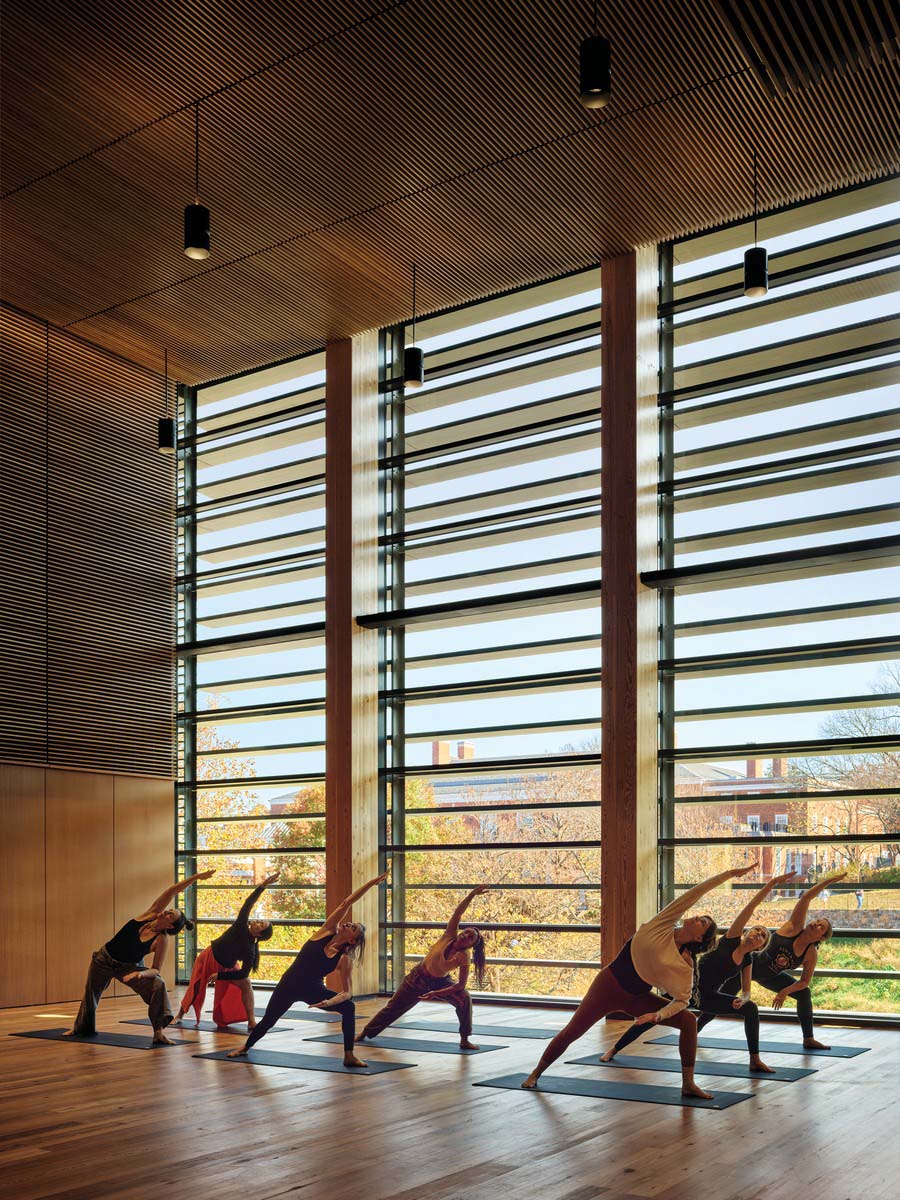
Movement studios on the upper levels. Photo © Matthew Millman
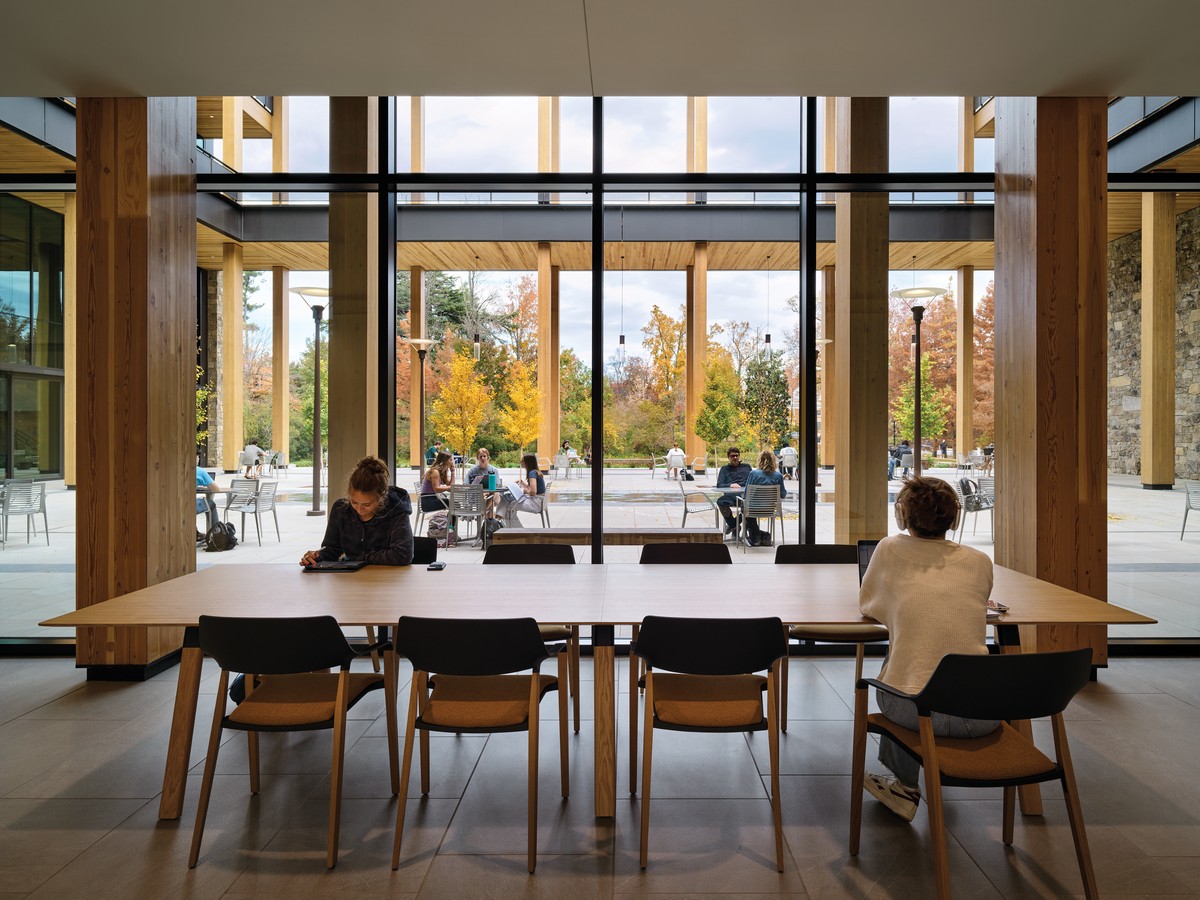
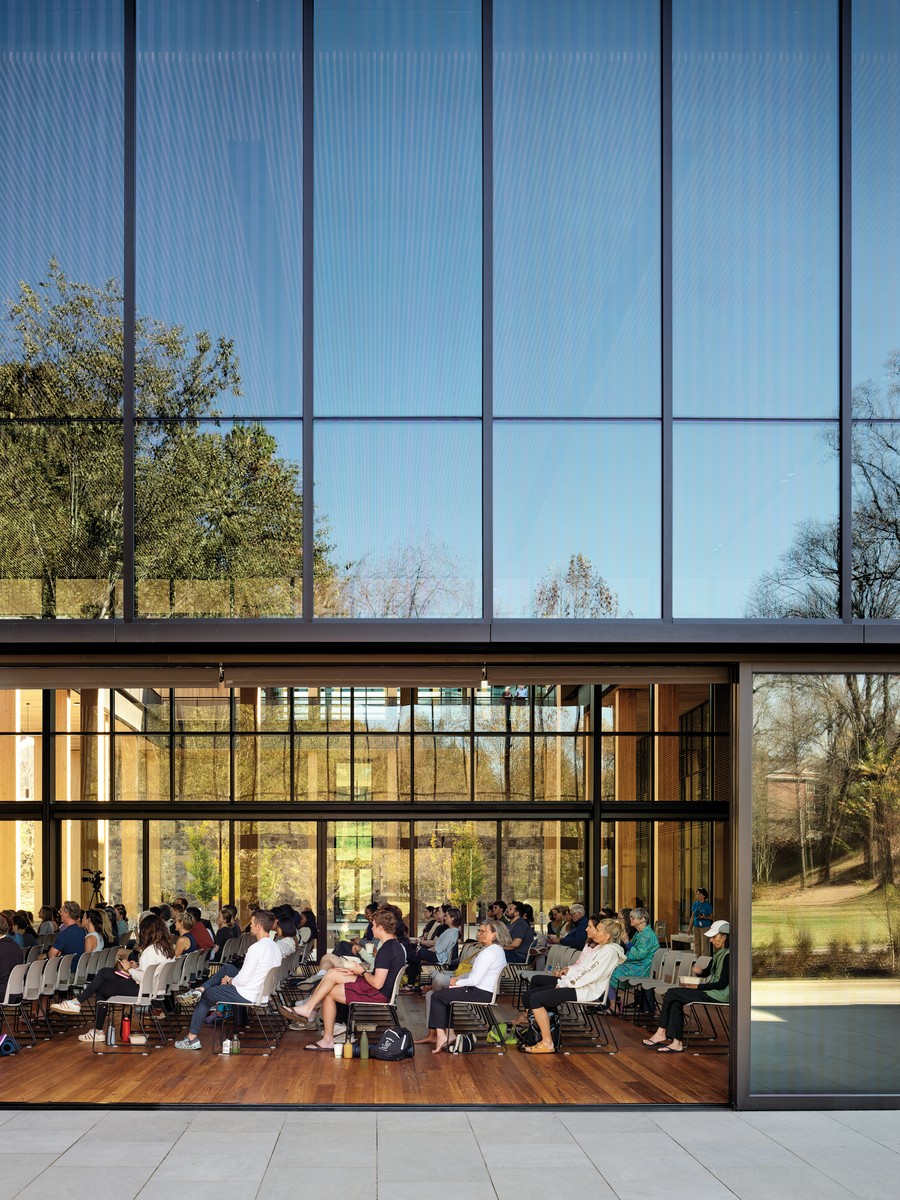
That manifests in a series of “learning studios” that occupy three of the four floors of the 55,000-square-foot U-shaped building. What sets them apart from ordinary classrooms is their flexibility. These are spaces for movement, meditation, art immersion, and yes, even traditional learning. They range in size from an intimate 800-square-foot studio to the 3,800-square-foot Convergence Room. Some are double-height spaces, some offer stunning views of the campus through the facade’s extruded-aluminum brises-soleils, and some allow building visitors to peer inside them—witnessing, for instance, an Ashtanga yoga class for students, faculty, and the community. In certain rooms, wood doors transform into whiteboards; in the Convergence Room, a sprung floor lets a meeting area become a space for performance—in either case, its walls of glass doors slide open to fully connect with the outside.
1
Ground-floor rooms open completely to the courtyard (1 & 2). Photos © Matthew Millman
2
The art installed in the Contemplative Commons has been intentionally curated to promote student, faculty, and visitor wellbeing by integrating the nature-centered design of the building. An oversize video display with changing views of fields and flowers welcomes visitors in the 26-foot-high lobby. Of special note, Ninfeo, by Wolfgang Buttress, also on the ground floor, is an immersive experience defining a room made up of 3,320 unique, laser-etched illuminated crystal blocks inspired by the water lilies of the Dell’s pond.
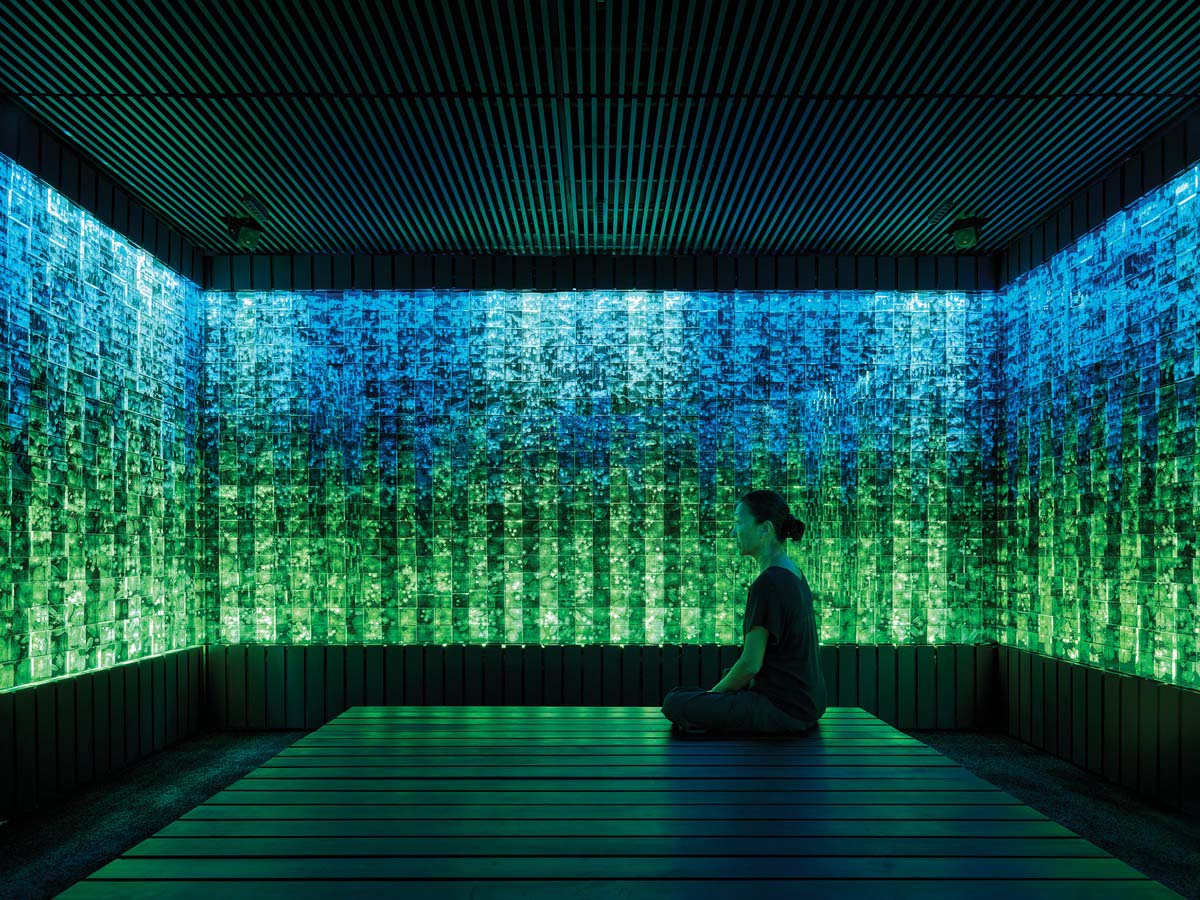
The immersive Ninfeo room. Photo © Matthew Millman
The location of the new building, over what used to be a parking lot, helped solve universal-accessibility issues, according to Thomas Woltz, senior principal of Nelson Byrd Woltz Landscape Architects, which worked on this project, and led the design of the Dell more than 20 years ago.
“Bringing a bridge in as part of the building connected two halves of the campus at different elevations.” While the Contemplative Commons is a place of serenity, it is bordered on the east by the busy Emmet Street. To buffer the building’s courtyard from the thoroughfare’s traffic noise, Aidlin Darling—with local firm VMDO as architect of record—incorporated a 95-foot-long wall of fieldstone between that open area and the ground-floor lobby. The same 4-inch-thick stone clads the facades’ lower elevations, alluding to other fieldstone buildings on campus, including the neo-Gothic University Chapel just 500 yards away.

A bridge connecting different elevations of campus is part of the building design. Photo © Matthew Millman

3
Parts of the ground-floor lobby (3) and facade (4) include biophilic materials such as wood and fieldstone. Terraces and walkways loom over the courtyard (5). Photos © Matthew Millman
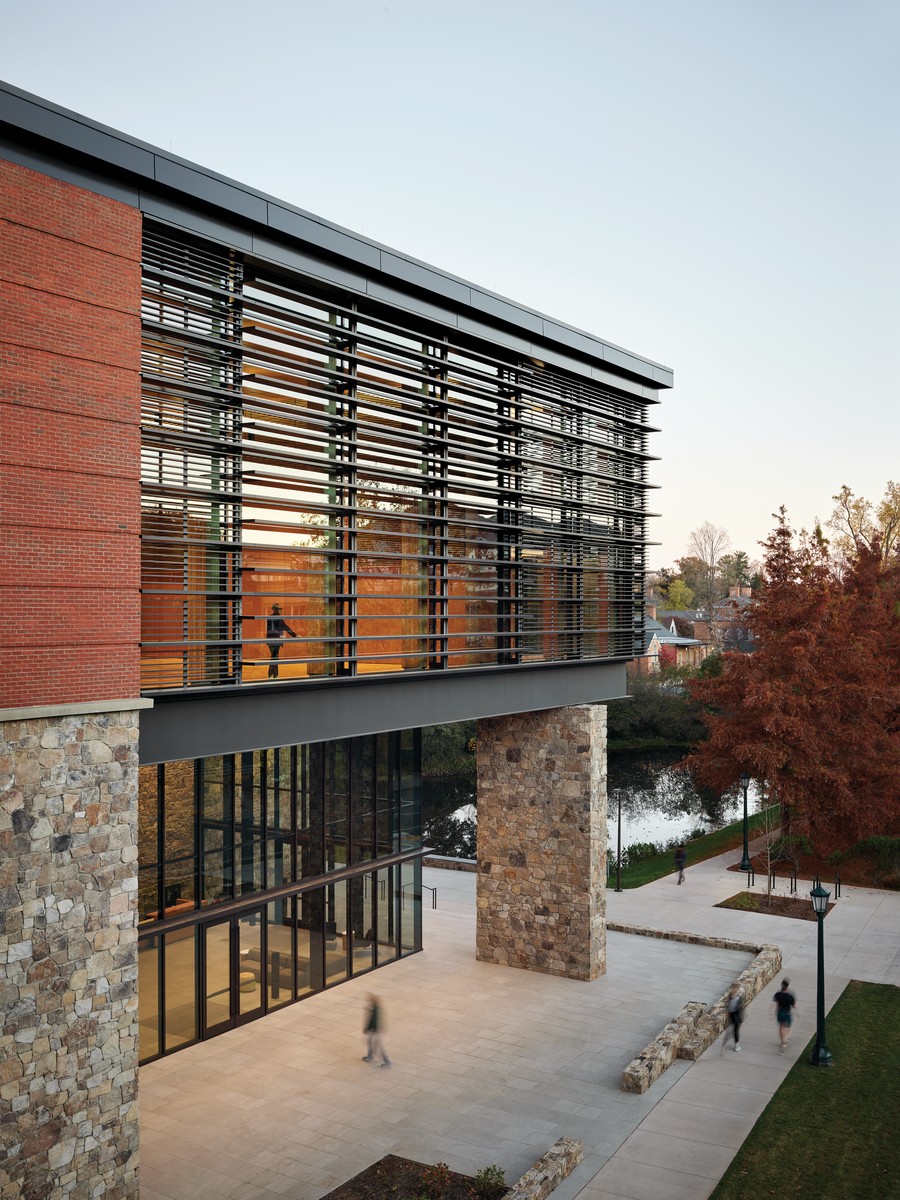
4

5
But it’s difficult to build at UVA without referencing Thomas Jefferson’s original design for the Academical Village, a U-shaped terraced lawn that encompasses housing, classrooms, and dining halls inspired by classical architecture, with a library—the Rotunda, modeled after the Pantheon in Rome—at its head. The Contemplative Commons is a striking contemporary building on campus, its hybrid steel and mass-timber structure unique among the many traditional edifices. But, like the majority of those, it incorporates red brick, de rigueur at the college. Proportions at the Commons intentionally echo those of earlier buildings. For instance, a dimension of the building’s Vision Room matches that of the inner colonnaded area of the Rotunda. River-recovered heart pine wood, the same as that in the Rotunda, is used for flooring.
Walking around the hilly campus, however, and experiencing its many lookout points—especially within the terraced lawn at its core—one understands the real link between that place, with all its history and charm, and the new building. The terraces and outdoor walkways of the Commons’ courtyard—on which visitors can meander or simply take in views of the Dell or the activity in the interior spaces beneath them—evoke a similar feeling. But with its rows of timber columns, it feels less like an academic village, and more like a tree house—bringing us back to a childhood time without the stresses and pressures of adult life. And being free of those—isn’t that the point?

Image courtesy Aidlin Darling Design

Image courtesy Aidlin Darling Design
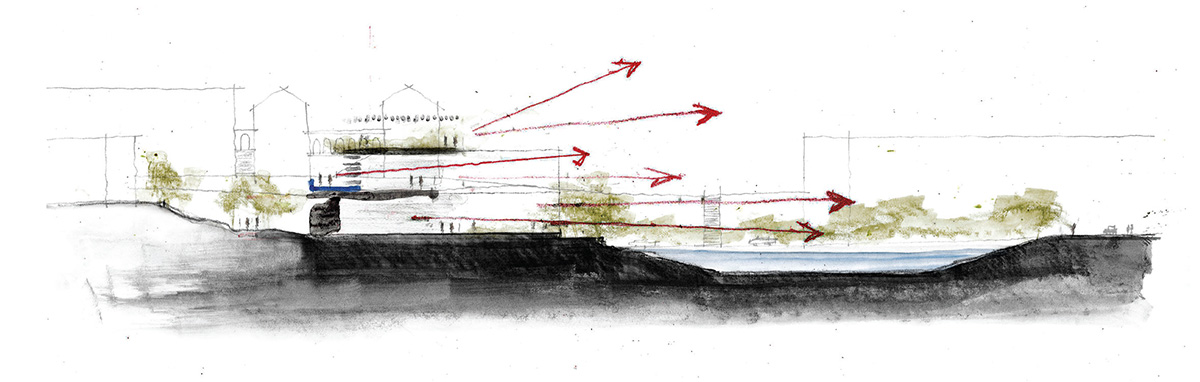
Image courtesy Aidlin Darling Design
]]>
Read about other Health & Wellness projects from our January 2026 issue.
Credits
Architect:
Aidlin Darling Design — Joshua Aidlin, principal in charge; Roslyn Cole, principal/ project manager; Kent Chiang, principal/project architect; Chip Hubert, associate
Architect of Record:
VMDO Architects
Engineers:
Springpoint Structural (structural); AEI/Affiliated Engineers (MEP); TRC (civil)
Consultants:
Nelson Byrd Woltz Landscape Architects (landscape); Buro Happold (programming); RE:4M (sustainability); Apeiro Design and Pivotal Lighting Design (lighting)
General Contractor:
Hourigan
Client:
University of Virginia
Size:
55,000 square feet
Cost:
Withheld
Completion:
September 2024
Sources
Masonry:
Glen-Gery
Fieldstone:
Frederick Block Brick & Stone
Curtain Wall:
Kawneer
Moisture Barrier:
Henry Company
Roofing:
Carlisle
Doors:
LaCantina
Heart Pine Wood Flooring:
Goodwin Company
Hardware:
Schlage (locksets); Von Duprin (exit devices); LCN (closers); Ives (pulls)
Glass:
Guardian
Acoustical Ceilings:
Armstrong
Lighting:
Arco, XAL, ETC, Lumenwerx, Vode, Boca, Gotham (interior); Focal Point, Bega, King Luminaire, Spring City, Holophane (exterior)