
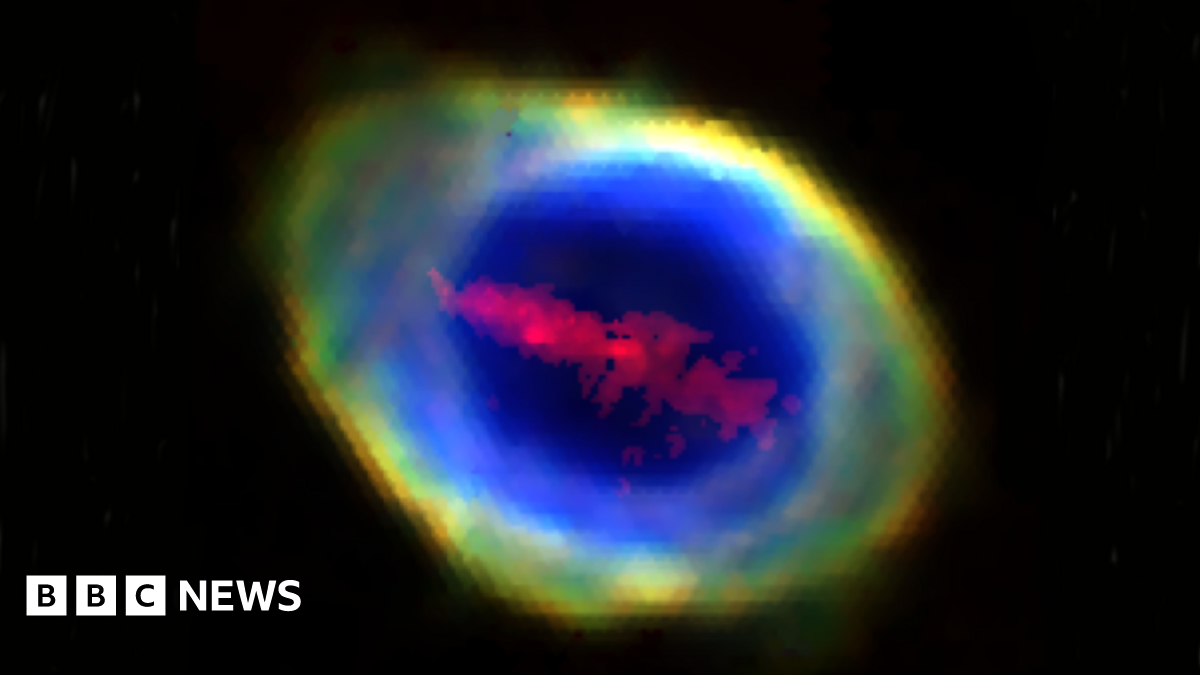
Lead author Dr Roger Wesson, based jointly at Cardiff University and UCL, said although the Ring Nebula had been studied using many different telescopes and instruments, Weave had allowed them “to observe it in a new way, providing so much more detail than before”.
He said: “By obtaining a spectrum continuously across the whole nebula, we can create images of the nebula at any wavelength and determine its chemical composition at any position.
“When we processed the data and scrolled through the images, one thing popped out as clear as anything – this previously unknown ‘bar’ of ionized iron atoms, in the middle of the familiar and iconic ring.”