
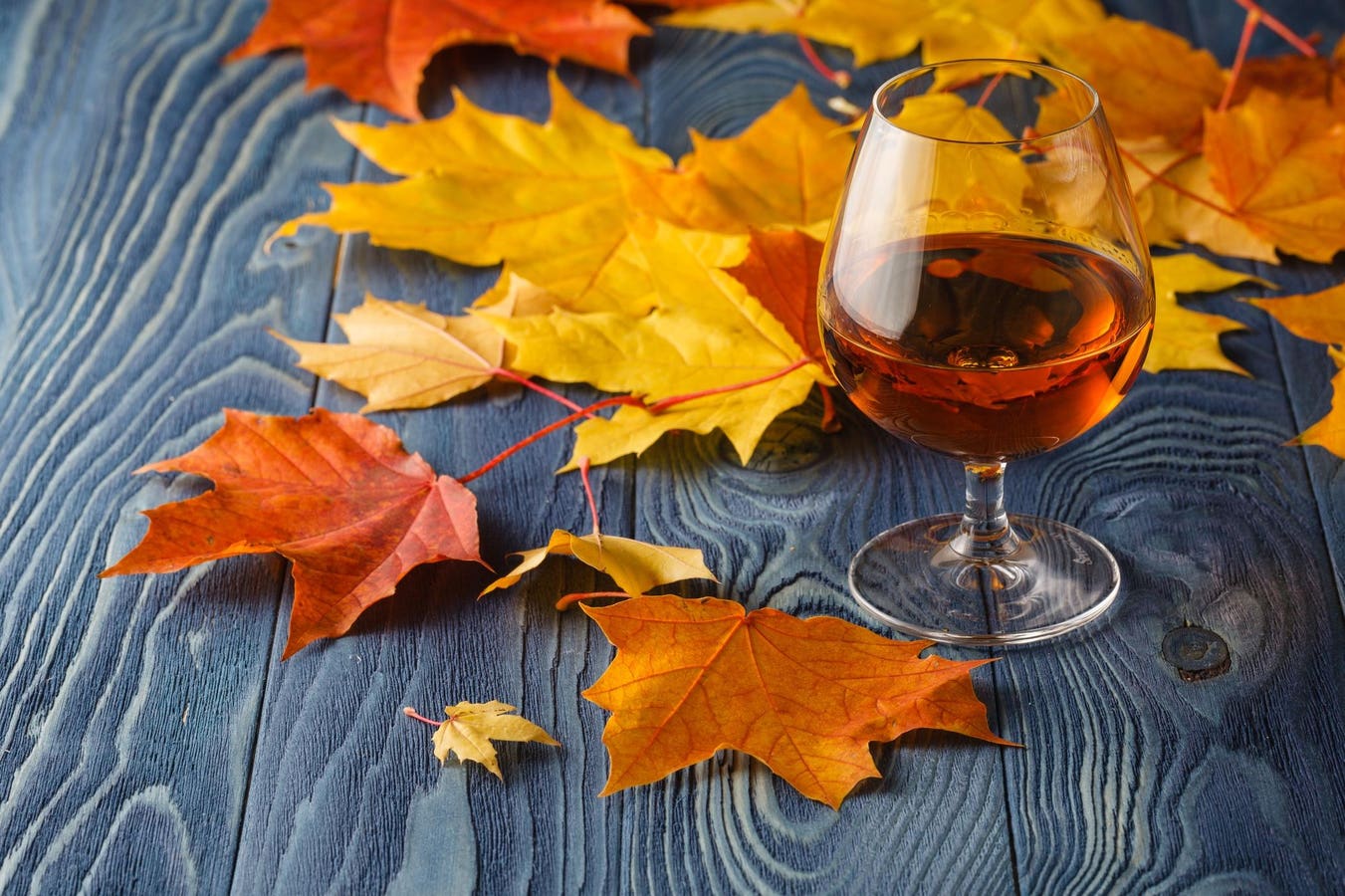
A glass of Canadian whisky surrounded by maple leaves, Canada’s national symbol
getty
Canadian single malt is the most dynamic growth story in Canadian whisky. Across the country, a new generation of craft distilleries is taking a Scotch-based template: 100% malted barley mash, pot-still character, and deliberate maturation, and translating it into a distinctly Canadian language shaped by local grains, climate, and increasingly adventurous cask-finishing programs.
The Canadian Whisky Awards (CWA) have become an annual spotlight on the evolution of Canadian whisky. Founded in 2010 by whisky writer and historian Davin de Kergommeaux, the CWA remains the longest-running awards program devoted exclusively to whiskies distilled and matured in Canada.
The Awards are among the key scorecards for the category because they place Canadian whisky in a Canadian context. The program is built around structured, comparative judging across style and strength bands—rye-forward whiskies, mixed-grain “Canadian-style” blends, cask-strength releases, and a fast-growing set of craft single malt bottlings. The point is not just to crown a single “best,” but to distinguish what is merely competent from what is distinctive, deliberate, and consistently well-made.
The judging is conducted blind by a multi-judge panel, with whiskies assessed for aroma, flavor, balance, and complexity. The results were unveiled at a gala dinner on January 15, 2026, in Victoria, B.C., held in conjunction with the Victoria Whisky Festival.
In practice, the Awards have also become a useful spotlight for the country’s smaller producers. Big houses still matter, but the interesting story is how often the medals now go to places like Sannich, North Vancouver, Guelph, and Whitehorse. These distilleries build flavor through mash design, fermentation choices, wood policy, and finishing regimes rather than scale.
Below is a brief background and my tasting notes on four outstanding Canadian single malt whiskies that shone at the 2026 CWA.
Macaloney’s Distillery, The Peat Project: Harvest Coast, 46% ABV, 750 ml.
Macaloney’s The Peat Project: Harvest Coast was awarded Single Malt Whisky of the Year. The Sannich, Vancouver Island-based distillery, has been one of the shining lights in the Canadian single-malt craft whisky movement.
The distillery has built a reputation for peat-forward single malt and for treating peat as an ingredient with its own “origin story,” rather than just a smoky setting. “The Peat Project” is explicitly framed as a series meant to showcase peat selection, and Harvest Coast is constructed as a multi-cask composition rather than a single-note peat bomb.
The maturation protocol reflects a cask combination of American virgin oak, ex-bourbon, Spanish Oloroso, PX, and Portuguese red wine casks, designed to add layered, nuanced complexity to a whisky peated at 54 PPM.
The whisky offers aromas of coastal brine, dried lemon peel, dark chocolate, and an earthy, smoldering peat fire that reads more maritime than medicinal. It’s robust and sweet on the palate, with upfront malty sweetness and citrus zest, followed by chocolate and smoke. The peat is persistent yet well-integrated, providing a counterpoint to the multi-cask sweetness. The finish is long, drying, and smoky, with lingering notes of sweet malt, coastal peat, and dark chocolate.
Blue spruce branches alongside a glass of Canadian single malt whisky.
gettyBridgeland Distillery, Glenbow Single Malt, Porta-Rossa Cask Finish. ABV 52.5%, 750 ml.
Bridgeland’s Glenbow Single Malt, Porta-Rossa Cask Finish, was awarded Best Barrel Finished Whisky and Best Line Extension at the 2026 CWA.
Bridgeland’s whisky story is inseparable from its finishing mindset. The “Porta-Rossa” expression underscores the distillery’s approach to fortified-wine cask influence, showcasing red-fruit richness, oxidized nuttiness, and the tannic structure those barrels can impart when used with restraint.
The whisky features aromas of red berries, dried cherries, cocoa powder, and a port-like nuttiness over a clean malt core. It’s sweet and fruity on the palate, with honey, cooked barley, and toasted oak, followed by dark fruit notes of fig jam, raisin, and cherry preserves, along with baking spices and a drying wine-cask tannin backbone. The finish is long and gently bittersweet, with lingering notes of cooked malt, cocoa, and dried red fruits.
John Sleeman & Sons Spring Mill Distillery, Wine Cask Aged Single Malt, 54.5% ABV, 750 ml.
Sleeman’s Wine Cask Aged Single Malt took awards for Best Single Barrel Release and for Best Whisky No Age Statement.
Spring Mill’s identity is unusually explicit for a Canadian whisky operation: a single-malt program built on a Scotch-style template, with similar equipment and processes. The distillery is housed in a heritage building on the Speed River, with a grain-to-glass emphasis. Its wood strategy is a house signature, featuring tight-grained Canadian white oak casks and an in-house cooperage.
The Wine Cask Aged Single Malt is a single-cask, wine-cask-aged malt matured for 6 years in a French oak wine cask. The whisky offers aromas of vinous red berries, fresh must, sweet malt, vanilla, and seasoned oak. On the palate, it’s fruity and lovely, with flavors of honey, cooked barley, dark fruits, especially plum and raisin, and cocoa. The French oak lends a firmer, spiced structure and a prominent tannic backbone. The finish is long, sweet, and gently drying, with lingering notes of wine-cask red fruit, clove, seasoned oak, and cooked malt.
More From Forbes:ForbesThe Best Single Malt Scotch Whisky Of 2025, According To Top Spirit CompetitionsBy Joseph V MicallefForbes10 Scotch Whisky Trends Every Drinker Should Know In 2026By Joseph V MicallefForbesThe World’s Best Single Malt Scotch, According To The World Whiskies AwardsBy Joseph V Micallef