
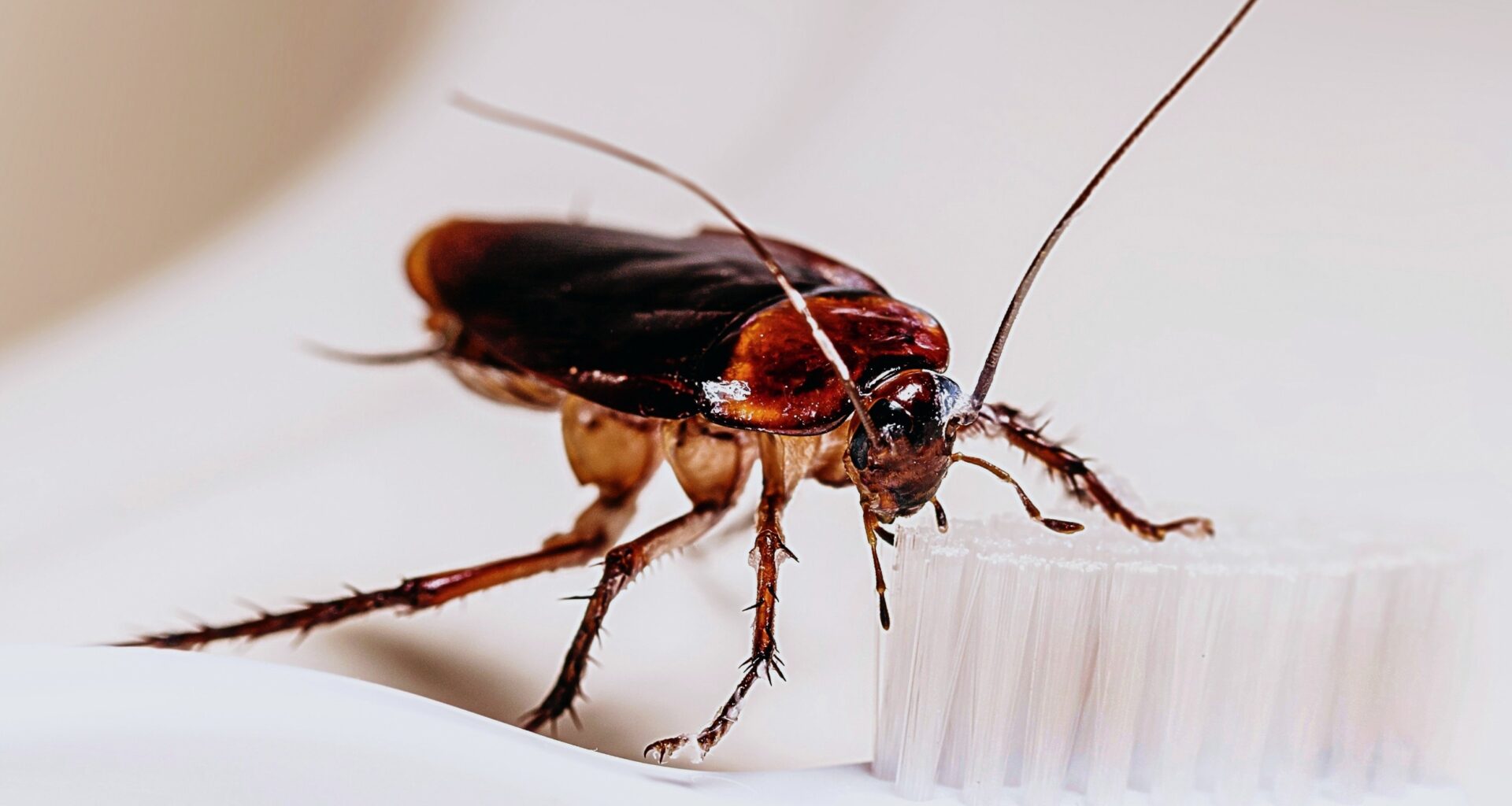
Cockroaches are often seen as creatures that react without thinking, but new lab experiments suggest their behavior can change with experience.
In Scotland, male cockroaches exposed to bright light became more cautious when faced with uncertain scent cues.

They responded far less often than unstressed cockroaches, with reaction rates dropping to about 40 percent. The result shows that environmental stress can shape insect decisions even when signals are unclear.
That matters because it challenges the idea that insect behavior is fixed or purely reflexive. Instead, environmental pressure appears to influence decision-making in consistent, measurable ways.
Testing mood through choice
Inside a behavior room at the University of Aberdeen, a team led by Dr. David Fisher tested male Blaptica dubia cockroaches one at a time to see how experience shapes decisions under uncertainty.
Each cockroach learned to associate one odor with a sugar reward and another with salty water.
When the sugar-linked scent appeared, the roach extended its mouthparts in a reflex called the maxilla-labia response. The salty solution, unpleasant at that concentration, suppressed the same response.
After training, the researchers presented blends of the two odors. These mixtures sat between clear reward and punishment, allowing the team to use a method known as judgment bias – a way to track whether expectations tilt cautious or bold when outcomes are uncertain.
Because the odors fall into gray areas rather than clear signals, shifts in response can reveal mood-like changes without claiming human-style emotions.
Stress shifts cockroach decisions
To test negative bias, the researchers kept half of the male cockroaches under shelter and exposed the other half to bright light. Light is aversive for many cockroaches and can raise arousal signals and stress that push the brain toward safer choices.
“The cockroaches we exposed to a negative stimulus showed a significant pessimistic bias toward the range of ambiguous scent ratios,” said Fisher.
When the two groups were compared, light-exposed roaches responded less often than those kept in shelter. For the positive condition, males were placed in shelter with cardboard carrying female scent before facing the same odor blends.
Chemical cues can activate social and mating circuits, which may increase approach behavior even when signals are uncertain.
“The cockroaches in the optimistic judgement bias experiment were typically more responsive to ambiguous scents after exposure to cockroach-scented cardboard, although the result was marginally non-significant,” said Fisher.
The difference between groups was present but weaker and less certain than the negative result.
Reading cockroach decision signals
Each trial counted a single maxilla-labia response as a yes-or-no signal of expectation. During training, sugar touched the mouthparts and activated taste neurons that reinforced the odor-reward link.
Saltwater acted as punishment, suppressing the response through repeated pairing.
Using ambiguous odors worked because the mixtures formed a smooth scale from mostly reward to mostly punishment.
As the sugar-linked odor faded, responses dropped in both experiments, showing that the animals tracked odor ratios rather than guessing.
The treatment effect stayed consistent across all mixtures. Instead of changing behavior at one specific ratio, light and scent shifted overall responsiveness.
That consistency makes comparisons between groups easier, even while allowing room for individual learning differences.
Relying on a fast reflex gives the method strong control, but it may miss slower forms of hesitation or avoidance that appear in freer movement.
What counts as optimism in insects
Earlier work in bumblebees found faster approaches to uncertain cues after a surprise sugar reward, a pattern described as optimism.
Sugar can increase foraging drive by feeding energy into muscles and reward circuits, which may mimic optimism in choice tests.
Later critiques warned that motivational effects alone could explain some findings. To reduce that risk, the cockroach team used female scent instead of food for the positive condition.
Even with that safeguard, optimism remains a behavioral label rather than proof of pleasure. Replication across different setups and species will be essential to clarify what these shifts truly represent.
Limits built into the design
The stress experiment included only male cockroaches because females were too strong to hold safely in the harness.
Harnessing left the head and antennae free but removed walking, hiding, and escape behaviors that matter in real environments.
Small sample sizes and short test windows can amplify chance patterns, especially when results sit close to statistical cutoffs.
These limits do not negate the findings, but they point clearly toward follow-up studies with freer movement and larger groups.
Insect welfare questions grow
Questions about insect welfare now sit inside a broader discussion of sentience – the capacity to have subjective experiences – in animals without backbones.
That debate gained momentum after a landmark report helped the UK formally recognize octopuses, squid, and many crabs as animals capable of suffering.
Cockroaches are not included in those protections, but growing evidence complicates their dismissal.
Experiments showing stress-linked changes in cockroach decision-making suggest that their behavior can reflect recent positive or negative experiences rather than simple reflexes.
Taken together, training and mixed-odor tests indicate that cockroach choices track good or bad outcomes from the recent past.
If future studies strengthen and replicate these findings in freer, more natural settings, the implications could extend well beyond the lab.
Insect farming and pest control may face increasing pressure to reduce needless harsh conditions, with debates over insect care grounded in solid behavioral evidence rather than long-held assumptions.
The study is published in the journal bioRxiv.