
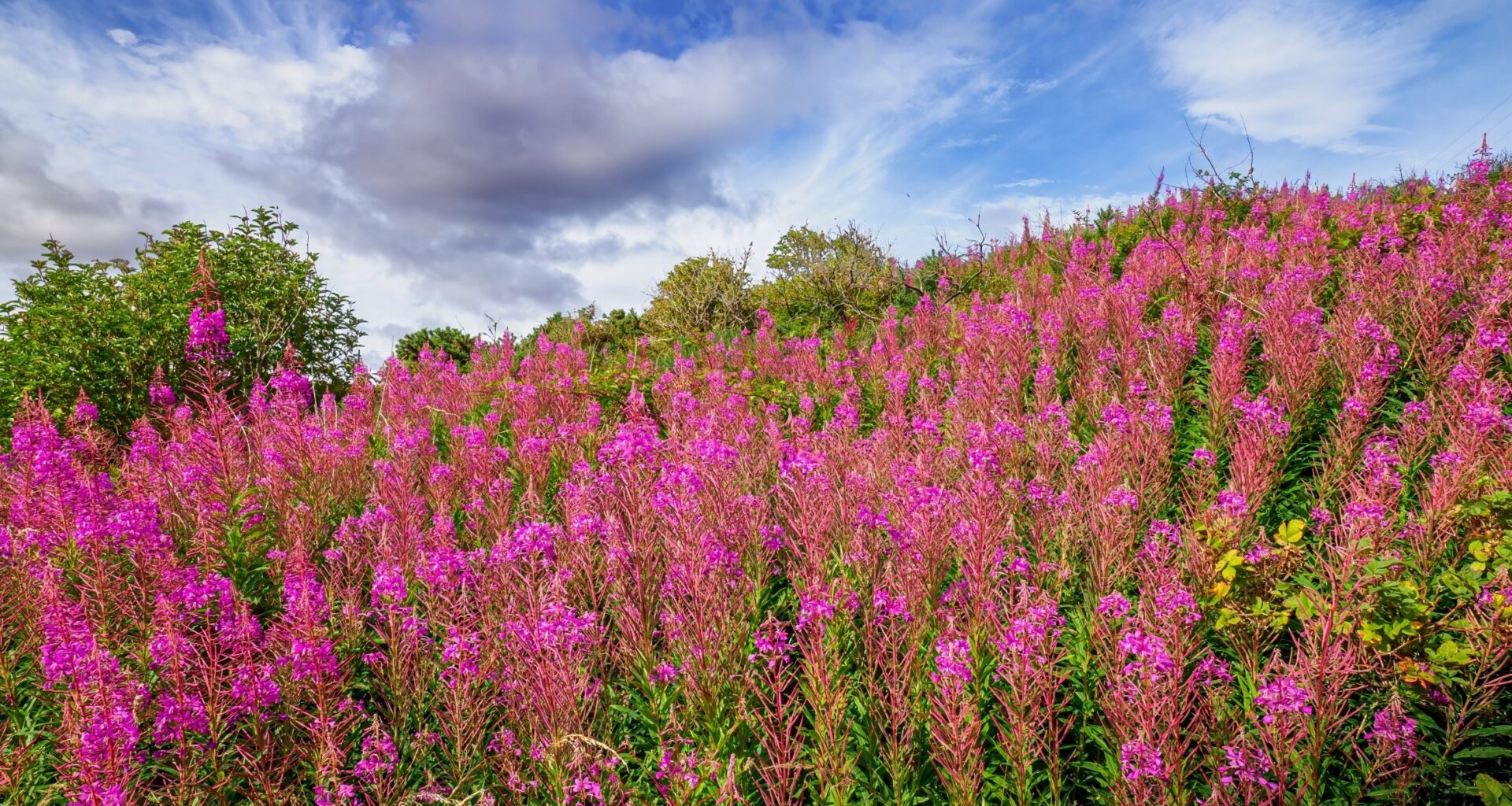
Plants may appear silent, but plant communities are constantly communicating. Instead of sound or movement, plants exchange information through chemical scents released from their leaves, flowers, and roots.
Inside grasslands, many smells mix together and form an invisible language. Research now shows that plant diversity strongly shapes how rich and powerful this chemical language becomes.
Plant smells support living systems

Plants release volatile organic compounds that guide interactions with insects, microbes, and nearby plants.
Some smells attract pollinators such as bees. Other smells push away insects that eat leaves. Certain signals warn nearby plants about danger and prepare defenses in advance.
Plant odors also affect soil life. Microbes and fungi respond to chemical signals released above and below ground. Healthy communication supports nutrient cycling, plant growth, and ecosystem stability.
A research team led by Sybille Unsicker at the Max Planck Institute for Chemical Ecology explored how plant diversity changes odor release across whole plant communities and within individual plants.
“Understanding how a plant’s chemical signals change with plant diversity in its environment helps us to see the loss of biodiversity as more than just a loss of species. It also changes the chemical communication of an entire ecosystem,” said Unsicker.
Real ecosystems reveal signals
Many plant studies happen inside laboratories or greenhouses. Such spaces limit natural interactions. Grasslands present a different picture.
Plants grow close together and share insects, soil organisms, light, and air. Every plant experiences signals from many neighbors at once.
The researchers used the Jena Experiment, a long-term grassland project that includes plots with one plant species and plots with many species growing together. Such conditions allow natural plant behavior to appear.
“In our experiments, we wanted to include more than one or two neighboring plants, as is common in laboratory or greenhouse conditions,” said study first author Pamela Medina van Berkum.
“In natural ecosystems, plants live in diverse communities and interact with many other plants, insects, and microorganisms. The Jena Experiment provided the ideal conditions for our research.”
Capturing plant odors
Measuring plant smells outdoors presents challenges. Wind carries odors away quickly. To solve this problem, the researchers built transparent cages that covered grassland plots.
Sunlight passed through while odors stayed trapped inside. Smaller transparent bags enclosed individual plants.
Chemical tools identified more than one hundred odor compounds released by plant communities. Terpenes and green leaf volatiles formed major parts of these mixtures.
More plants create richer smells
The results showed a clear pattern. Grasslands with more plant species released larger amounts of odors and produced more types of odor molecules.
Each plant species added unique compounds. Rare compounds appeared in small amounts but increased chemical complexity.
Chemical diversity matters because even small odor signals can affect insect behavior, plant defense, and long distance communication.
Species-rich grasslands produced longer and more varied odor blends than simple plant communities.
Community composition also shaped odor release. Grass dominated plots released especially high levels of terpenes.
Grass presence influenced odor output across entire plant groups, showing that plant neighbors strongly shape chemical signals.
Plants influence their neighbors
Ribwort plantain, also known as Plantago lanceolata, served as a focal plant. Plant diversity alone did not directly change odor release from ribwort plantain. Instead, surrounding odor signals played a major role.
High levels of green leaf volatiles in nearby plants caused ribwort plantain to reduce odor output. High terpene levels in surrounding vegetation increased odor diversity inside ribwort plantain.
Several explanations exist. Shared chemical signals may reduce the need for strong individual signaling. Dense odor environments may also reduce signal clarity, encouraging quieter responses.
Plant communication works at the community scale rather than only between single neighbors.
Odor signals help reduce damage
Odor rich plant communities showed lower insect feeding and reduced disease damage.
Green leaf volatiles lowered insect activity, while terpene rich environments reduced pathogen damage. Odor exposure prepared plants for threats before damage occurred.
Complex odor mixtures may confuse specialist insects and pathogens that rely on clear signals. At the same time, beneficial organisms may respond more strongly to diverse chemical cues.
Plant communication and biodiversity
Loss of plant species reduces chemical diversity. Fewer odor signals weaken communication across ecosystems.
Reduced signaling can increase pest damage and disrupt plant microbe relationships.
“Plant diversity has a direct impact on the co evolution of species, the stability of ecosystems, and nature conservation. The loss of biodiversity can disrupt visible interactions between species and invisible communication networks of plants,” noted Unsicker.
Sustainable farming practices such as mixed crops, flower strips, and reduced herbicide use can help restore natural signaling systems.
Plant diversity shapes ecosystems in visible and invisible ways. Odor signals connect plants, insects, microbes, and soil in living networks.
Ultimately, this research shows that biodiversity is a key driver of chemical communication.
The study is published in the journal Proceedings of the National Academy of Sciences.
—–
Like what you read? Subscribe to our newsletter for engaging articles, exclusive content, and the latest updates.
Check us out on EarthSnap, a free app brought to you by Eric Ralls and Earth.com.
—–