
Key Points
The longest total solar eclipse in 100 years will occur on August 2, 2027, with totality lasting up to six minutes and 23 seconds near Luxor, Egypt, making it the longest until 2132.The eclipse will not be visible in North America as a total eclipse, though a partial eclipse may be seen in the northernmost parts of the U.S.; the path of totality stretches across parts of Africa, Europe, and the Middle East.During totality, the moon will fully block the sun, revealing stars, planets, and the sun’s corona, but the eclipse must be viewed safely using protective glasses or indirect methods to avoid serious eye injury.
Skywatchers, mark your calendars! According to NASA’s solar eclipse calendar, the longest total solar eclipse in 100 years will occur on August 2, 2027.
While that might seem far away, if you want to catch the phenomenon, you’ll probably need to make travel plans. That’s because it won’t be visible in North America, although a partial eclipse may be seen in the northernmost parts of the U.S.
According to NASA, the eclipse will begin in Morocco and southern Spain and will advance through Algeria, Tunisia, Libya, Egypt, and Saudi Arabia, ending in Yemen and the coast of Somalia. At its peak near Luxor, Egypt, totality will last six minutes and 23 seconds, making it the longest total solar eclipse until 2132.
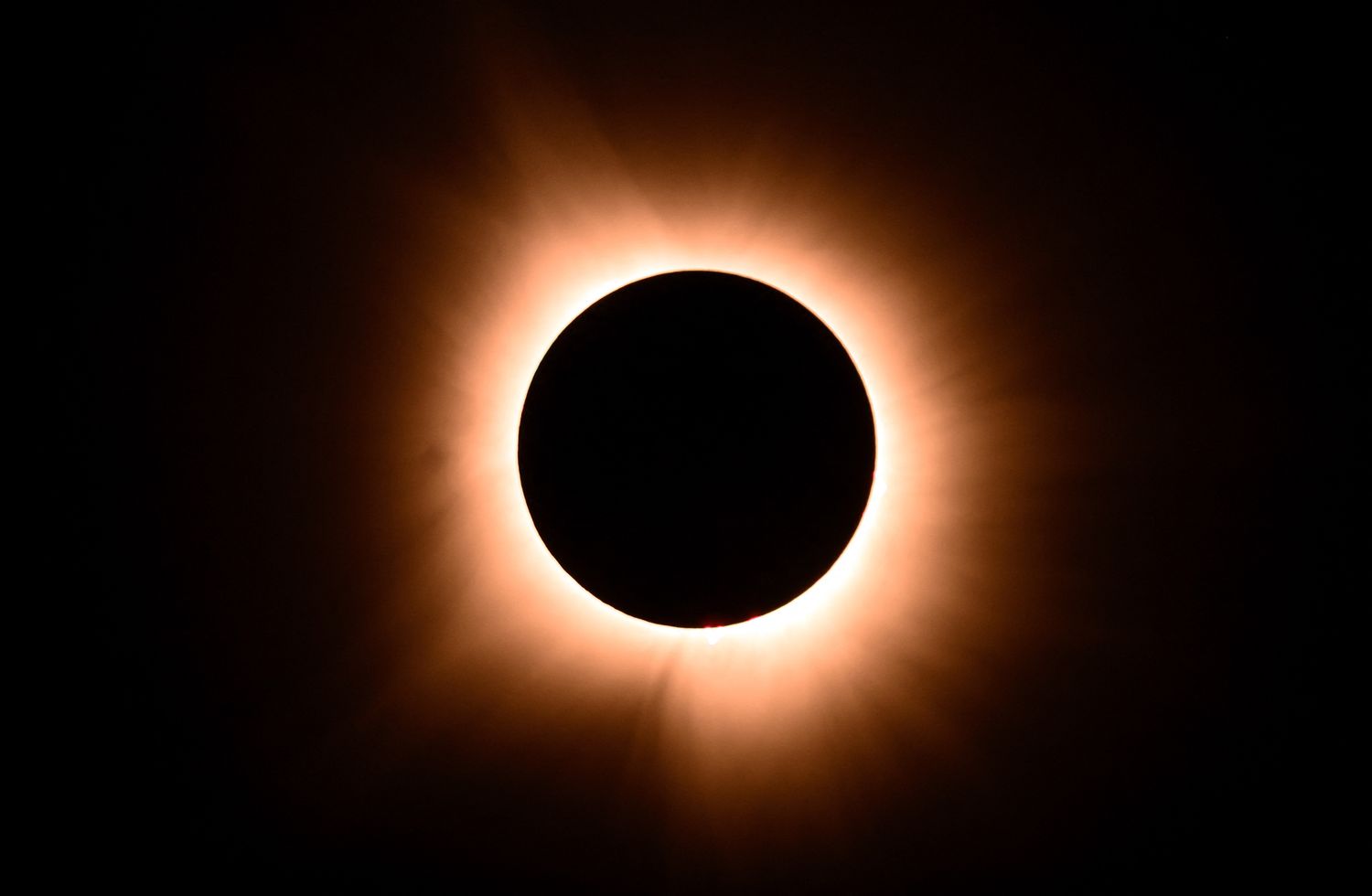
During a total solar eclipse, the moon completely covers the sun, plunging the world into temporary darkness. During this time, stars and planets will appear in the sky, and the sun’s white outer atmosphere, or corona, will be visible around the moon’s edge.
Keep in mind that solar eclipses should not be viewed with the naked eye. Either view it indirectly or wear protective glasses. You can also use a pinhole camera to safely view the eclipse, according to NASA. Looking at an eclipse without proper equipment can cause severe eye injury.