
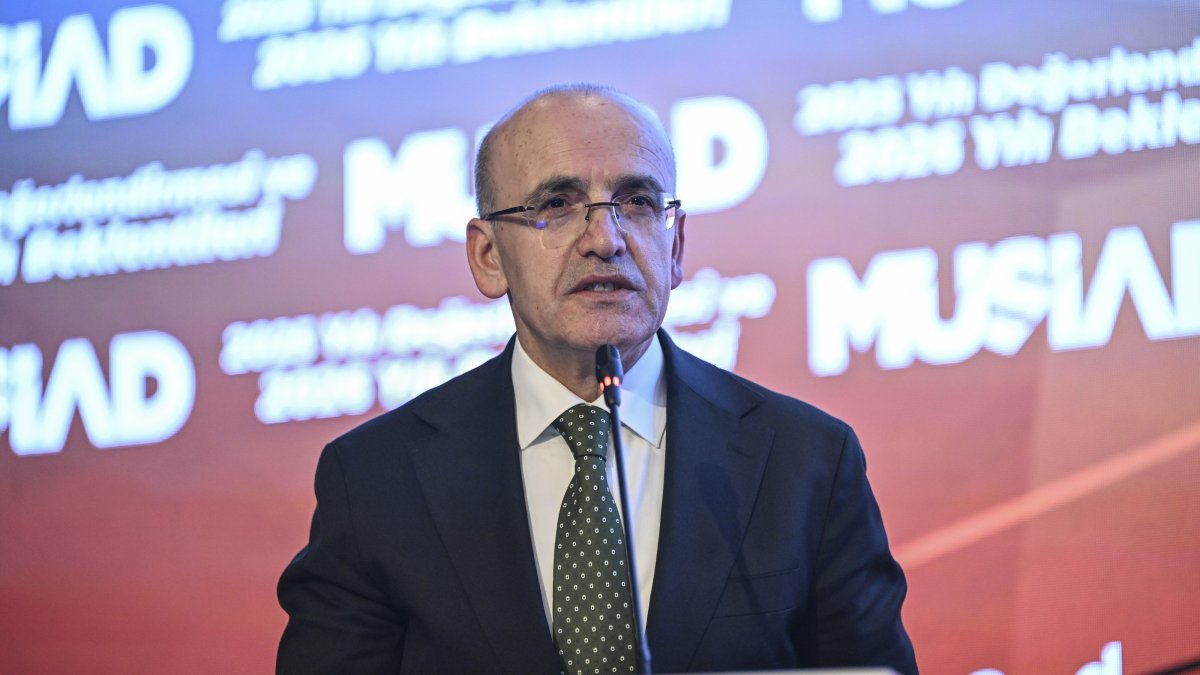
Treasury and Finance Minister Mehmet Şimşek completed his investor meetings in London on Thursday where he discussed recent developments in the Turkish government’s macroeconomic stability and reform program.
Şimşek is scheduled to continue meetings in the United States on Friday.
His meetings in London included senior executives and Türkiye country managers of rating institutions Standard & Poor’s, Moody’s and Fitch, the Treasury and Finance Ministry said in a statement.
Şimşek held 20 separate meetings in London, where he met with over 500 investors from investment institutions running assets with a size exceeding $58 trillion, the statement said.
The minister is expected to meet with investors and finance sector executives in meetings in New York, the ministry added.
Şimşek told investors that the government’s top priorities remain attaining price stability, maintaining fiscal discipline and securing a sustainable current account balance, according to his presentation shared by the ministry.
A tight monetary policy stance, supported by fiscal and incomes policies as well as supply‑side measures, would be the key drivers of sustained disinflation, according to the presentation.
It also noted that a favorable base effect, improvements in inflation expectations, a negative output gap and favorable external conditions would contribute to the process.
Türkiye has pursued tight monetary and fiscal policies since mid-2023 in order to tame inflation, which eased steadily over the last year.
Inflation ended 2025 at 30.89% annually, the lowest rate since November 2021. That compared to 44.4% posted a year earlier.
The government projects inflation to dip as far as 16% by the end of this year, within a 13%-19% range, and falling to 9% in 2027. The Turkish central bank forecasts inflation between 13%-19%.
Encouraged by the downward trend, the central bank shaved 950 basis points off its benchmark policy rate in 2025 to bring it down to 38% from 47.5%. It is widely expected to continue easing throughout 2026.
Şimşek’s presentation showed the budget deficit-to-GDP ratio is expected to have fallen to 2.9% from 4.7% in 2024 and 5.1% in 2023, reflecting the impact of tighter policies and fiscal restraint, noting a $274 billion improvement in Türkiye’s balance sheet in recent years.
According to the presentation, the foreign exchange-protected Turkish lira deposit scheme’s volume fell from $143 billion in August 2023 to about $100 million this month.
In addition, net reserves excluding swaps, which stood at minus $60.5 billion in May 2023, rose to $70.1 billion as of this month.

The Daily Sabah Newsletter
Keep up to date with what’s happening in Turkey,
it’s region and the world.
SIGN ME UP
You can unsubscribe at any time. By signing up you are agreeing to our Terms of Use and Privacy Policy.
This site is protected by reCAPTCHA and the Google Privacy Policy and Terms of Service apply.