
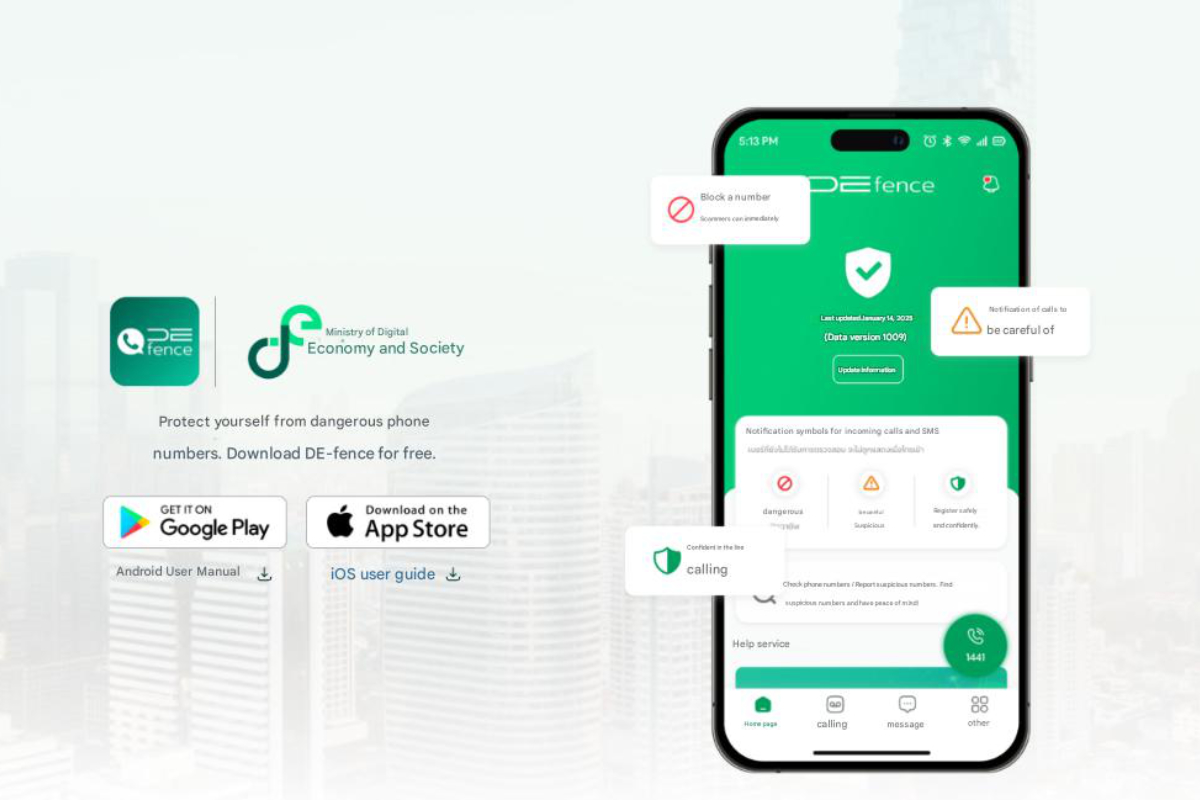
The Ministry of Digital Economy and Society has introduced “DE-fence,” a mobile application designed to protect the public from the rising tide of call centre scams and fraudulent SMS links.
Available for free on both iOS and Android, the app distinguishes itself by remaining entirely ad-free, offering a secure alternative for users concerned about cybercrime.
Developed through collaboration between the Office of the Permanent Secretary for Digital Economy and Society and the National Digital Economy and Society Commission, the platform aims to prevent citizens from falling victim to digital fraudsters. Officials emphasised that the app was built specifically for public benefit, ensuring that its core security features are accessible without hidden costs or commercial interruptions.
At the heart of DE-fence is a comprehensive database compiled from various government and private sector agencies. This includes data from the Anti-Online Scam Operation Centre (AOC), the Central Investigation Bureau, and the Cyber Crime Investigation Bureau. By consolidating these resources, the app can alert users in real-time whether an incoming call is from a verified source or a known scammer. (continues below)
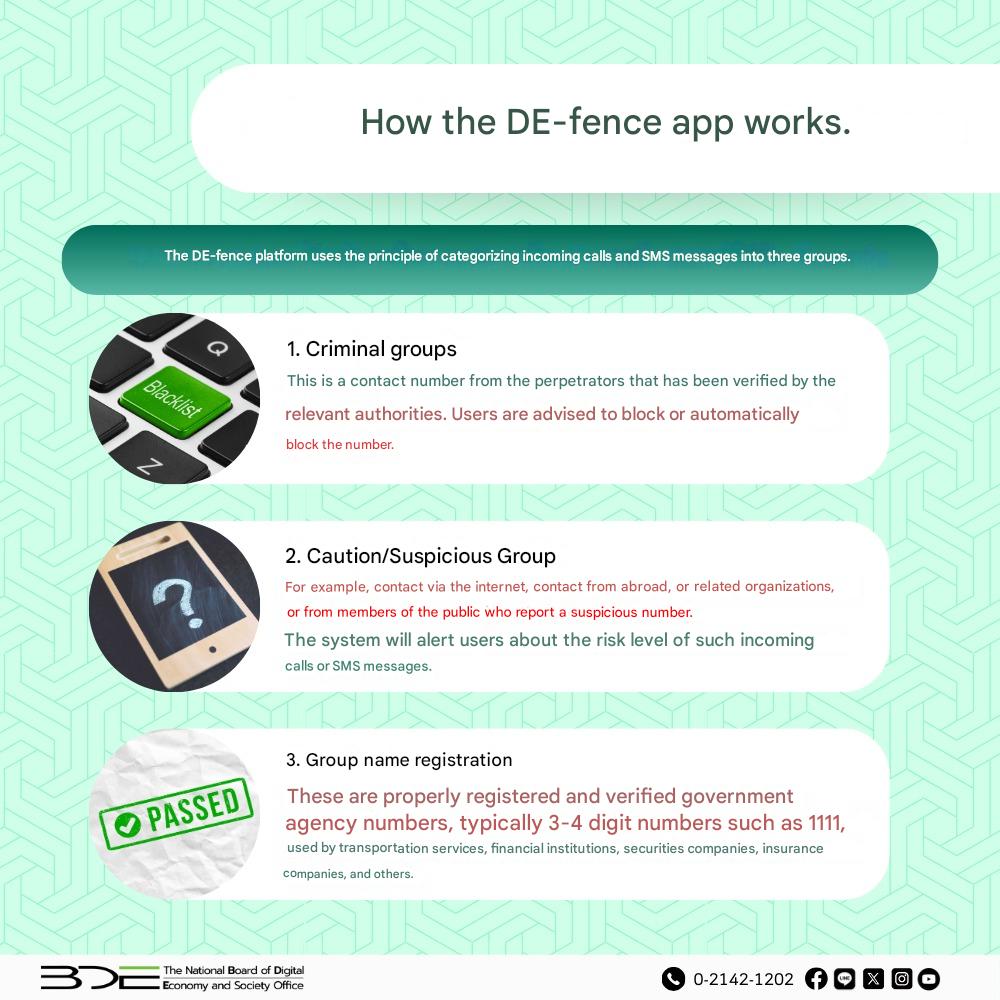
Photo: Facebook Ministry of Digital Economy and Society
The application categorises phone numbers into three distinct safety levels to help users make informed decisions:
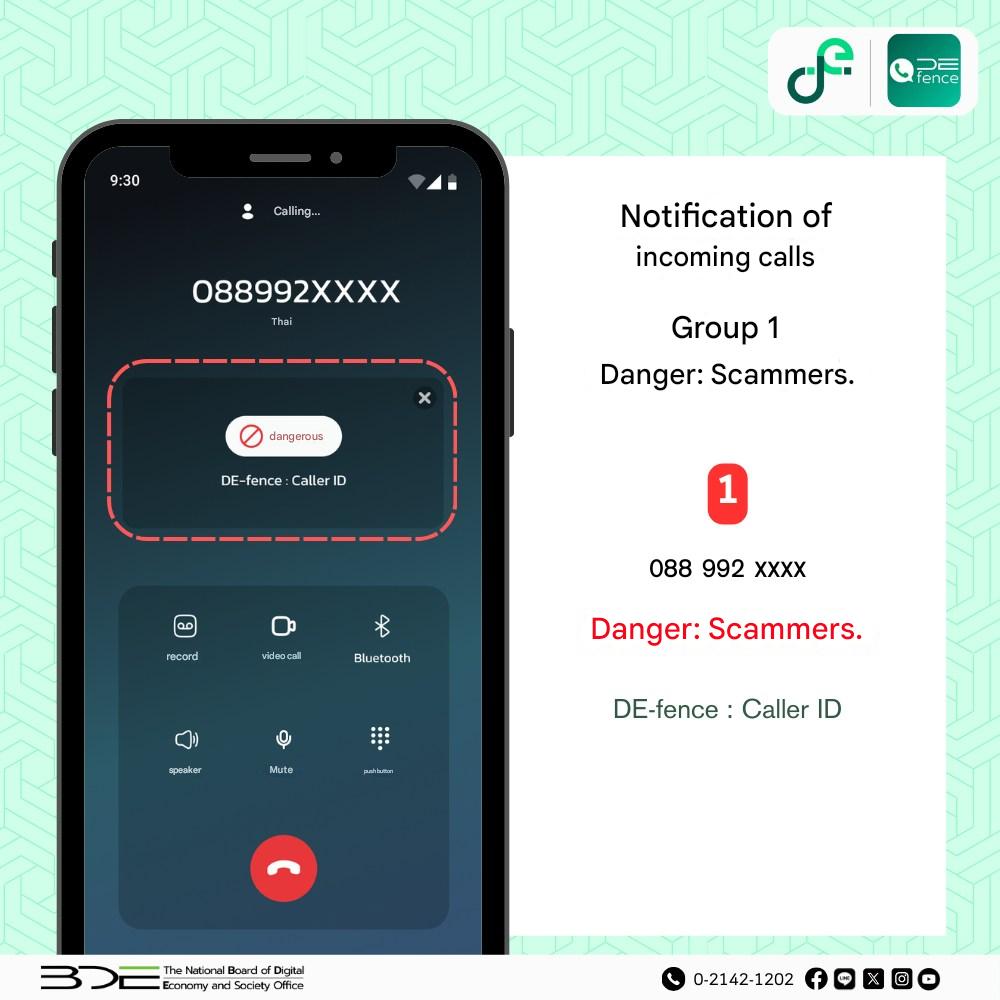
Photo: Facebook Ministry of Digital Economy and Society
Blacklist: Dangerous numbers verified by authorities as being involved in technological crimes or fraudulent activities.
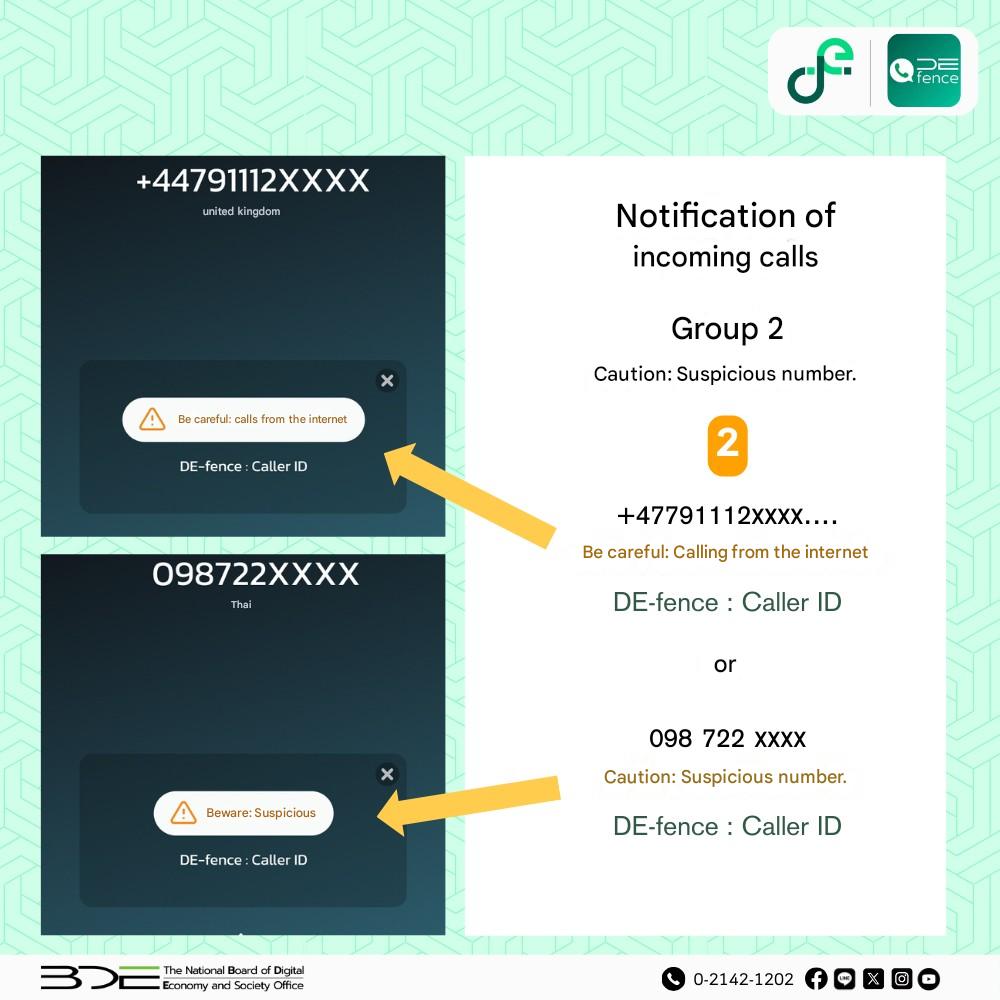
Photo: Facebook Ministry of Digital Economy and Society
Greylist: Suspicious numbers that carry a risk of fraud but have not yet been confirmed as scammers.
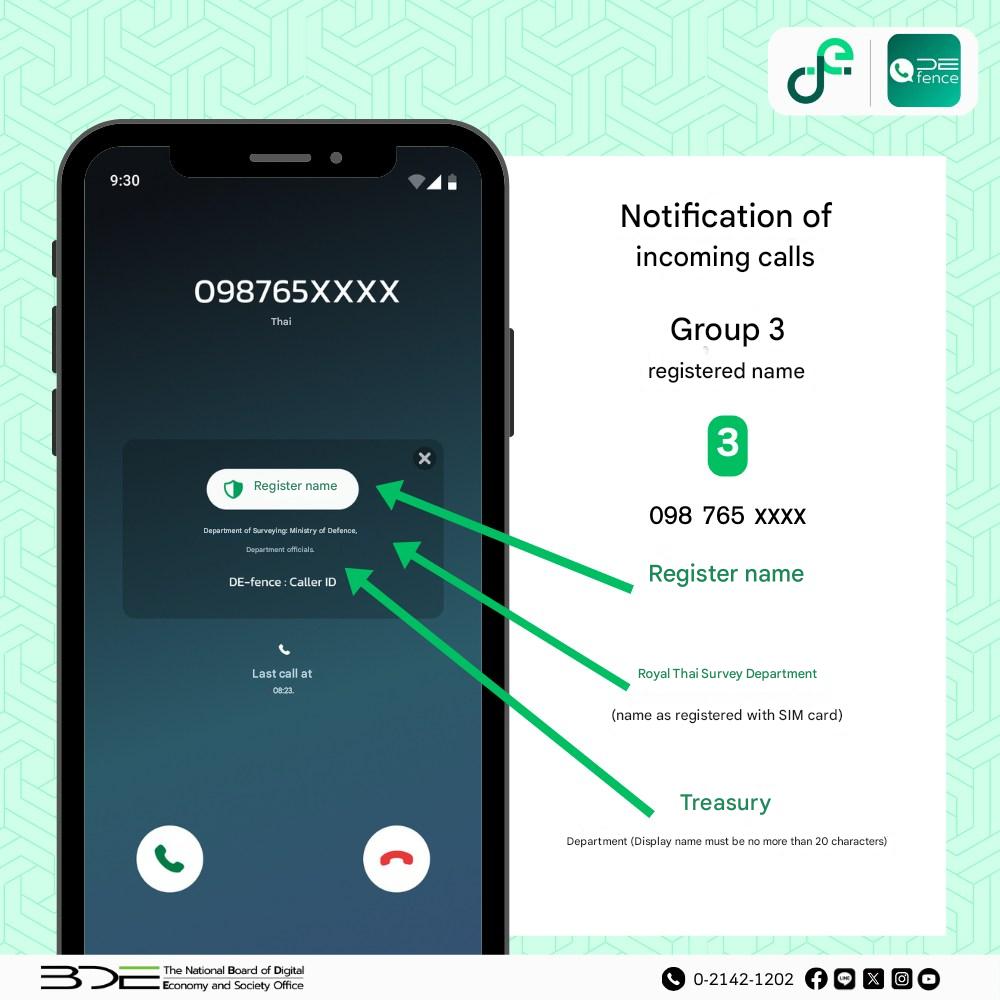
Photo: Facebook Ministry of Digital Economy and Society
Whitelist: Verified numbers from government agencies or registered entities that are confirmed to be safe and reliable.
Beyond simple call filtering, DE-fence provides direct links to official online police reporting systems. This feature is designed to give users peace of mind, ensuring they are directed to legitimate government websites rather than “phishing” sites created by criminals.
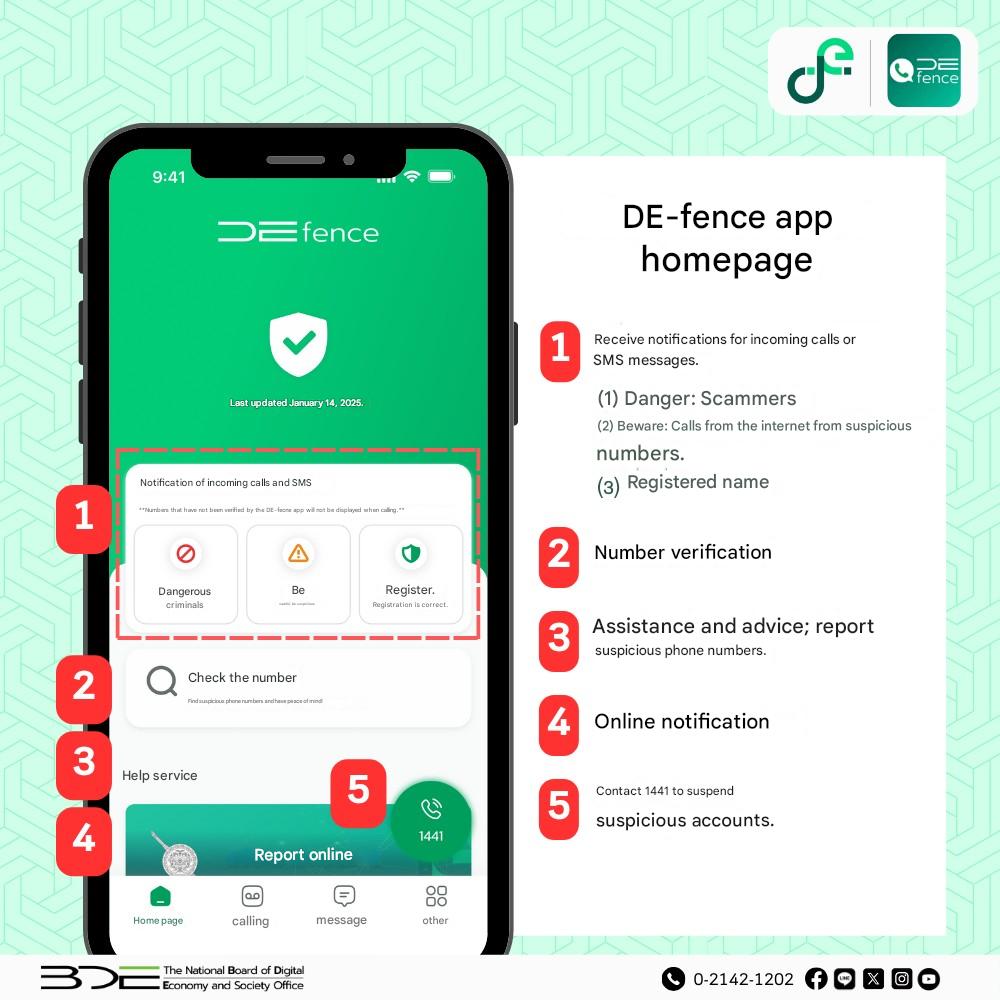
Photo: Facebook Ministry of Digital Economy and Society
In the event that a user is deceived into transferring money, the app includes a quick-dial feature for the AOC 1441 hotline. This allows victims to seek immediate advice or request the freezing of scammer accounts, with data being transmitted directly to police for rapid intervention.
To ensure the database remains current, the app allows users to report suspicious numbers, nuisances, and spam. To prevent false reporting or malicious entries, the system requires identity verification via a One-Time Password (OTP) before a report can be submitted.
While the market is currently led by Whoscall, DE-fence positions itself as a competitive alternative due to its free-to-use, ad-free model. While Whoscall maintains a larger global database built over many years, DE-fence focuses on deep integration with Thai law enforcement and specialized local features.
Authorities believe that as the DE-fence user base grows and more citizens contribute to the reporting system, the domestic database will become increasingly robust. They encourage the public to download the tool as an essential first line of defence against the evolving tactics of cybercriminals.
Download DE-fence (Android) Google Play
Download DE-fence (iOS) App Store