
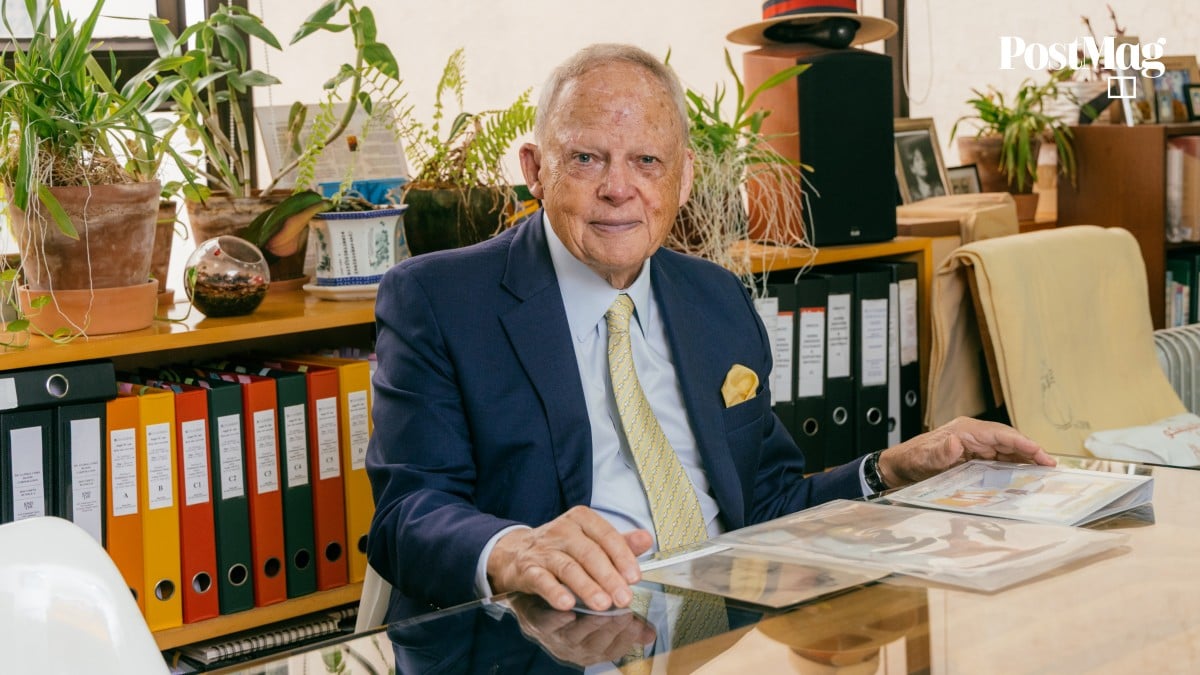
I GREW UP IN A theatrical family. My mother was also on the stage and had just begun to really make a name for herself when she married my father (Leslie Sarony). Then we saw a little bit of his true character because he said, “There’s only one star in this family,” and she was told she couldn’t work any more. We used to go to wherever my father was playing summer seasons. He was half of The Two Leslies, which was the partnership that he began in, I think, 1937. I grew up watching them on stage. My father began (in vaudeville) before the first world war. He told me he first realised he could write songs during the war. So, the upshot is, I think, nearly 600 songs of his. And my brothers and I still get the royalties, which is rather fun.
THERE ARE THREE of us, all boys, I’m the eldest. There was not much distance between my birth and the outbreak of the second world war. We were living in London. My father had just bought this house and he decided it was dangerous for us to live there. So, he moved us to Yorkshire, to Huddersfield, where we lived for the next five years. After the war, we went back to London. At the age of 13, I went to a boarding school in Kent called Sutton Valence. It was 1952, things were coming off rationing. Before I left school, I was thinking of becoming an actor (but later decided to study law).
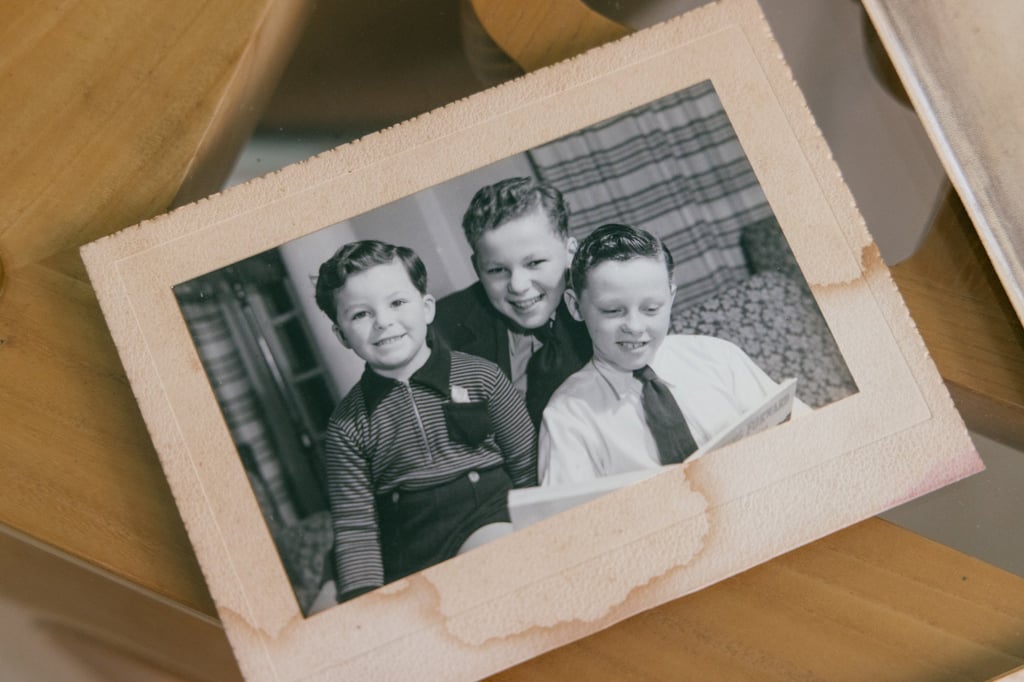 A circa 1952 photo of Neville Sarony with his younger brothers, Paul (left) and Peter (right). Photo: Tracy Wong
TWO WEEKS AFTER I left school I was in the army doing National Service. I joined the Queen’s Own Royal West Kent Regiment (which existed until 1961) and I was based in Maidstone. I took the War Office Selection Board (a series of tests to identify officer material) and then I was sent to the Mons Officer Cadet School (in Aldershot in Hampshire). I was commissioned out of Mons into the 7th Gurkha Rifles and sent to (then) Malaya, for arguably the two best years of my life. I was introduced to a culture that became part of my life. I was the battalion intelligence officer. The first thing I had to do was learn the language, Gorkhali – a mix of Nepalese and Urdu – otherwise no one speaks to you. It was quite an intense learning period, but I loved it. And then some Malay. The (Malayan) Emergency (also known as the Anti-British National Liberation War) was still on and we were hunting terrorists in the jungle.
IT WAS SO TEMPTING (to stay with the Gurkhas) but I had been offered a place at LSE (the London School of Economics) to read law and I had from an early age wanted to become a barrister. In my last year at LSE I got married. My wife was Nepali. She was the daughter of a Gurkha officer in our 1st Battalion, one of the first Gurkha officers to be given the Queen’s Commission and we met at Buckingham Palace. The queen was presenting a new pipe banner to the 6th Gurkhas (6th Queen Elizabeth’s Own Gurkha Rifles) and all brigade officers were invited to attend. We went along and as the daughter of a serving officer, she was invited. We married in 1963 and I graduated in 1964. I spent two years in London; it was terrible. It was very difficult to start at the bar and solicitors were notorious for paying late. So, we went to Nepal for three years and I wrote about that in my book Counsel in the Clouds (2014). I was the first foreign lawyer to practise in Nepal. I discovered that very few people were doing corporate law and I really focused on that. I became an adviser to members of the royal family. My wife, Bimala, was very creative and she set up the first boutique where she was designing clothes based on traditional Nepali styles but giving them a sort of Western twist.
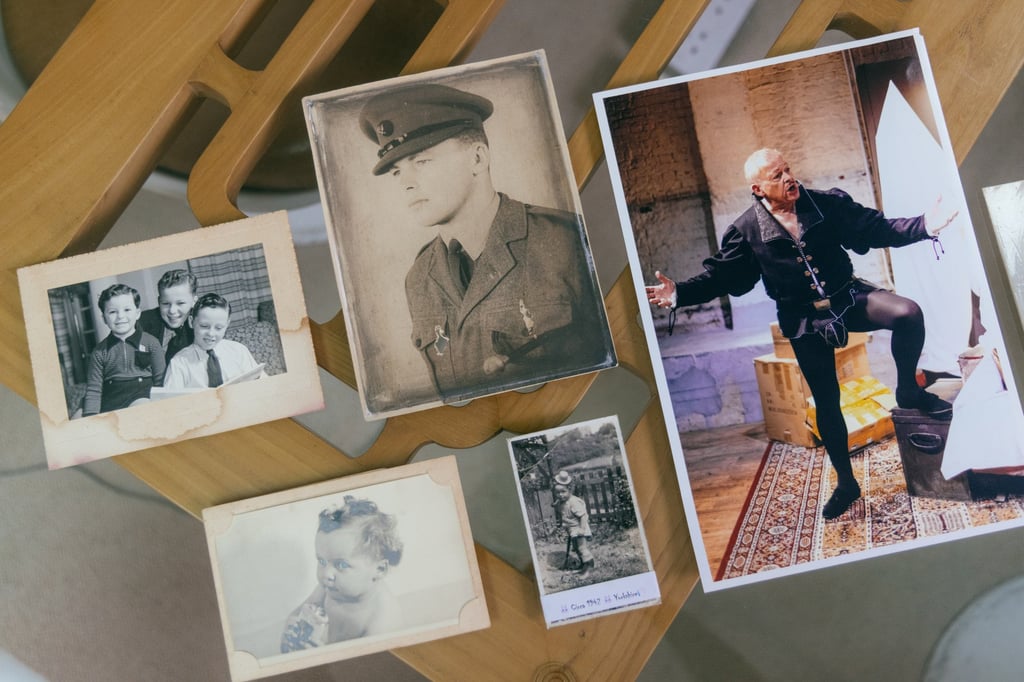 Photos of Neville Sarony from throughout his life include one from 2017 (right), when he played the ghost of John Barrymore in the Hong Kong Players’ production of I Hate Hamlet. Photo: Tracy Wong
AFTER THREE YEARS we returned to London. Bim opened a boutique in St Christopher’s Place, just off Oxford Street. It was called the Third Eye Boutique. In 1971, our daughter, Tanya, was born. Bim died in 1976 and that was a terrible time. Tanya was five and we took her mother’s ashes to her home in the Himalayas. I had to somehow look after Tanya and make a living. I married one of Bim’s sisters, which was probably a mistake. She wouldn’t live in the house, so we bought an almost derelict house in Chelsea and practically rebuilt it. (They divorced in 2000).
I DECIDED I DIDN’T LIKE the way the legal profession was going in England and I was thinking about America, but out of the blue a friend called from Hong Kong saying he was setting up chambers there. So, we came to Hong Kong in 1985. Tanya went to the Swiss German International School. I like doing both criminal and civil cases, which is not very common.