
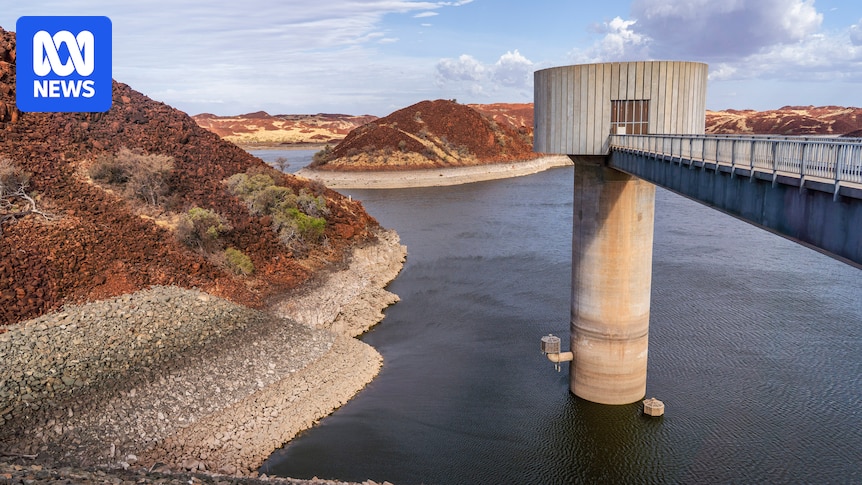
A key water source for a major city in Western Australia’s North West has hit its lowest level since 1987, as the region faces another week of temperatures creeping towards 50 degrees Celsius.
Yesterday, Karratha, 1,500 kilometres north of Perth, recorded rainfall for the first time since August 2025.
The region is typically reliant on tropical lows and cyclones to deliver rainfall each summer.
But a dry summer, with no rainfall likely in the short term, is putting increasing pressure on the city’s water supply.
Concerns for groundwater sources
The Harding Dam, near Roebourne, is the Pilbara’s primary water source.
Harding Dam has hit a low of 10.88GL in January, its lowest recorded supply since 1987. (ABC Pilbara: Kelsey Reid)
This month it dropped to its lowest level in nearly 40 years: 10.69 gigalitres, or 16.8 per cent full.
When it drops below 18 per cent capacity, the water is not suitable for supply due to poor water quality.
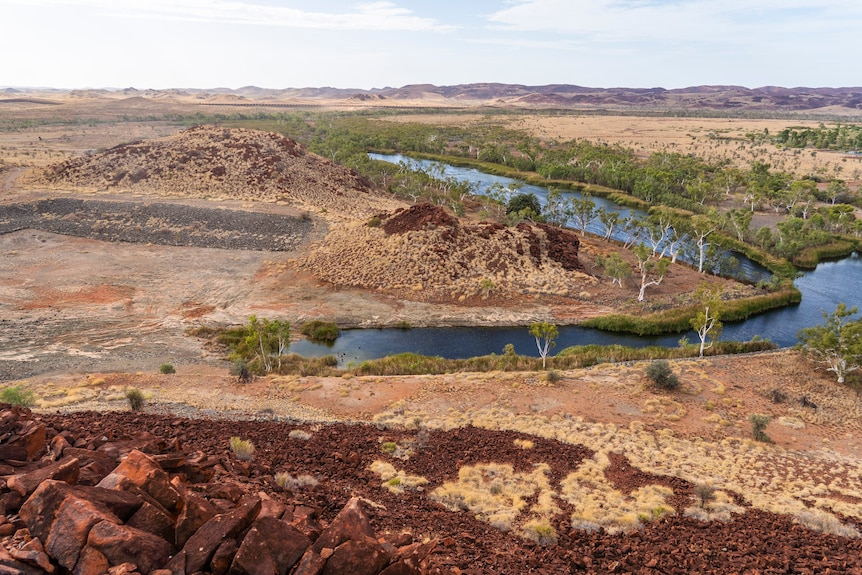
The immediate alternative is to draw water from the Millstream aquifer, a culturally sacred site for the Yindjibarndi people.

Karlon Parker, 11, cools off at Jirndawurrunha Pool which sits above the Millstream aquifer, east of Karratha. (ABC Pilbara: Kelsey Reid)
With both reliant on the same rainfall, this adds to the ongoing pressure.
Water Corporation North West regional manager Sharon Broad said hotter conditions and less rain had seen annual inflows drop by 80 per cent over the past 30 years.
“We’re going to have periods of time where there isn’t recharge into the surface water or groundwater,” Ms Broad said.
Despite the record low, she said Water Corporation was not looking to restrict water usage yet.
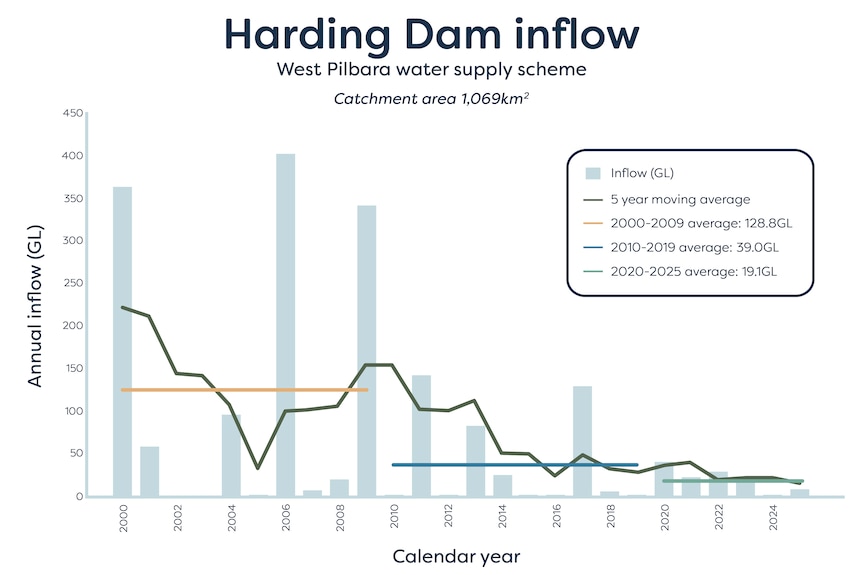
The Harding Dam has recorded 11GL this month. Anything below 18GL cannot be taken from the dam. (Supplied: Water Corporation)
Mercury rising
Amid the water issues, an extreme heatwave warning has been issued for the Pilbara and Gascoyne, with forecast temperatures getting close to 50C.
In 2022, Onslow recorded Australia’s equal highest maximum temperature at 50.7C.

Temperatures are nearing 50C in the Pilbara this summer, with 49C recorded in Onslow already in 2026. (ABC Pilbara: Kelsey Reid)
Bureau of Meteorology (BOM) forecaster Jessica Lingard said records could be broken.
“Now, unfortunately, we don’t have the most extensive weather station network through those areas, so it’s likely that a lot of those temperatures will go unverified,” she said.
“But the models have been suggesting for a while now that those temperatures are a possibility.”
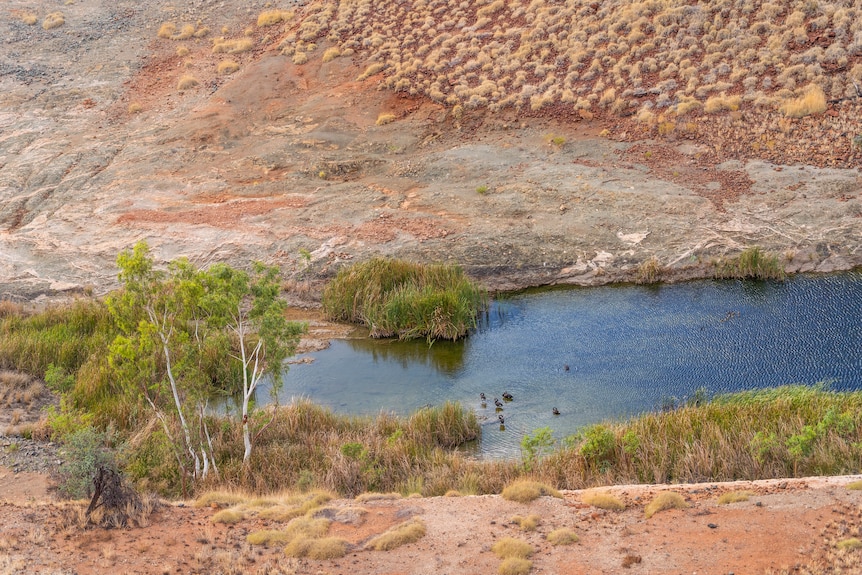
Black swans bathe in the shallow waters at Harding Dam. (ABC Pilbara: Kelsey Reid)
Ms Lingard said a tropical low, 16U, was forming in the waters north-west of the Kimberley.
“It’s got a fairly decent chance later this week of becoming a tropical cyclone, moving through the Kimberley region again over the weekend,” she said.
A water-wise Pilbara
Karratha nursery operator Natasha Selton said there was a noticeable change when the water supply was switched from Harding Dam to the Millstream aquifer.
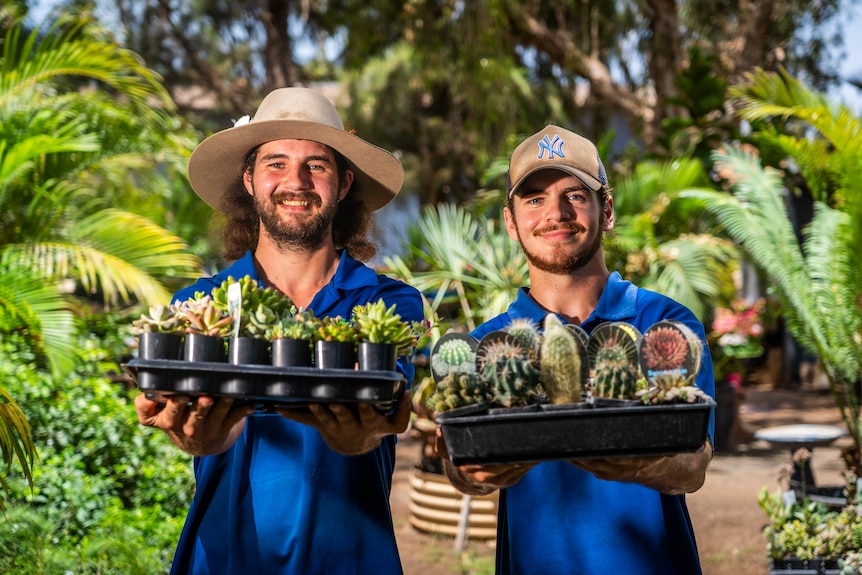
Tyler Elliott and Henry Elliott recommend plants such as succulents and cacti that can sustain periods without water. (ABC Pilbara: Kelsey Reid)
“There is a higher level of calcium in the [Millstream] water, so the plants get a film of calcium over the leaves and it makes it harder for them to uptake nutrients,” she said.
“We would definitely be affected if any water restrictions were put in place for our business.”
A desalinated future
The WA government has teamed up with Rio Tinto to plan for a new desalination plant at its existing Dampier operation for the short term, as they look for less climate-reliant solutions for the future.
Adjunct professor Bill Grace, from the University of Western Australia’s Australian Urban Design Research Centre, said change to the West Pilbara Water Scheme was needed.

Bill Grace says it is likely the north of the state will see fewer cyclones, but they will be more intense. (Supplied: Bill Grace)
“You could argue that the desal plans should really have been on the table before now — well before now, probably — because this was a relatively predictable outcome,” he said.
“Even without climate change, just looking through the climate record of past years or groups of years where there’s been very low rainfall.”
Mr Grace said the issue was caused by a combination of growth in the area, huge water demands, high temperatures and no rainfall to keep up with the pace.