
Kevin Headland, co-chief investment strategist at Manulife Investments, joins BNN Bloomberg to discuss the markets as Donald Trump warns of higher tariffs.
Canadian equities could continue to find support from banks, gold and other commodities this year, though elevated valuations and uneven earnings may limit upside after last year’s outsized rally.
BNN Bloomberg spoke with Kevin Headland, co-chief investment strategist at Manulife Investments, about geopolitical risks, the lagged impact of past rate cuts and why active management may be key in navigating choppier markets.
Key TakeawaysRepeating last year’s 31 per cent total return for the TSX is unlikely after gains were driven by a narrow group of stocks.Banks may benefit from the lagged effects of earlier rate cuts and ongoing fiscal support.Gold remains supported by central bank reserve diversification and geopolitical uncertainty.Energy stocks appear fairly valued, favouring selective positioning rather than broad sector exposure.Elevated valuations and potential earnings volatility make active risk management increasingly important.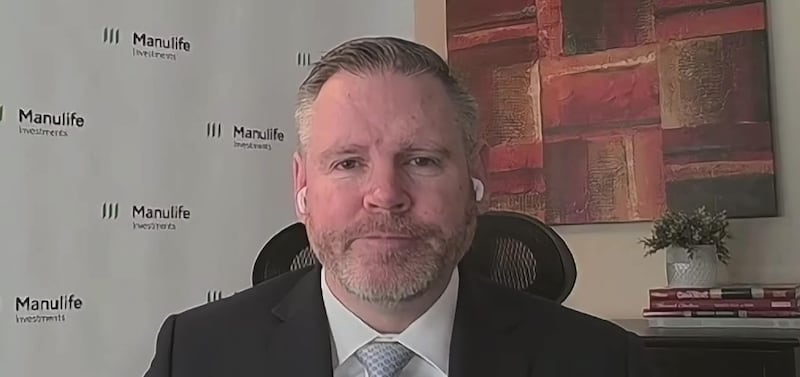 Kevin Headland, co-chief investment strategist at Manulife Investments Kevin Headland, co-chief investment strategist at Manulife Investments
Read the full transcript below:
ANDREW: We’re seeing pressure on stocks today after U.S. President Donald Trump threatened to slap an extra 10 per cent tariff on imports from eight European countries because they oppose having the U.S. take control of Greenland. Let’s get more on this from Kevin Headland, co-chief investment strategist at Manulife Investments. Kevin, thank you very much for joining us this morning.
KEVIN: Thanks for having me.
ANDREW: I know this is obviously a fast-moving situation, but what broad guidelines can you offer, or what’s jumping out for you in the current investment landscape when it comes to the Greenland tensions?
KEVIN: When we look over the years, we’re always going to see geopolitical risks throughout the year. This year is starting off with heightened geopolitical risk, which creates some choppiness and volatility in equity markets. This is where quality makes a lot of sense, looking at companies that may be more insulated from geopolitical risk and, globally, insulated against tariffs.
Gold has done well as a flight to safety, and this could actually be a positive tailwind for TSX equities, given the large weighting of gold in the index. When we look at geopolitical risk, it’s more about rebalancing rather than undoing risk altogether, understanding that these events tend to be more disruptive than destructive over the longer term.
ANDREW: That’s good — disruptive rather than destructive. I like that. Our market, the Toronto Stock Exchange, had a total return of more than 30 per cent last year, but it was relatively narrow. Gold, banks and Shopify accounted for about two-thirds of the gain.
KEVIN: Correct. That’s exactly what happened. Banks rallied quite strongly, along with gold and materials. If you include the materials sector overall, close to 80 per cent of the TSX’s return came from those areas.
There is potential for further support for the TSX, but I don’t think we can achieve the same type of results. Back-to-back 30-plus per cent returns would be great, but they’re unlikely. That doesn’t mean we’re negative on the TSX — we remain constructive.
Banks could do well again, given the support put in place by the Bank of Canada over the past 12 to 18 months. It typically takes that long for rate policy changes to have a broad economic impact, so there is still stimulus working through the system. We also have fiscal support, with the federal government looking to further stimulate the economy, which could benefit banks.
Gold is another area where we see continued support. Whether it reaches last year’s highs is uncertain, but there’s little reason for it to reverse course. Central banks and governments globally are diversifying reserves away from the U.S. dollar and toward gold, and geopolitical risk continues to support it as a flight-to-safety asset. Overall, there are underlying metrics that could support the TSX moving higher this year.
ANDREW: There don’t appear to be any major surprises on the inflation front today. The data were distorted by tax breaks the federal government introduced at the end of 2024. What’s your read? Is it conceivable the Bank of Canada cuts again in the near future?
KEVIN: The distortion you mentioned is the key point. If you just looked at the headline numbers, you might think inflation is sticky and that the Bank of Canada should be thinking about raising rates. We don’t think that’s the case at all.
Understanding the base effects and why the numbers moved is critical. From here, we don’t think the Bank of Canada necessarily cuts rates this year unless there’s an economic shock — something like a spike in unemployment or broader economic weakness. Right now, policy is around neutral and the bank appears comfortable. Inflation is trending toward target, and by some measures it’s already below two per cent. Any future move would likely be driven by economic weakness rather than inflation.
ANDREW: Are you interested in energy? What are you and your colleagues doing when it comes to oil and gas stocks?
KEVIN: When we look at energy, we’re assessing where value exists — whether that’s pipelines or producers. On a sector basis, energy is fairly valued on both trailing and forward price-to-earnings metrics, which may surprise some investors.
Oil prices remain stuck around US$60 a barrel. While Canadian producers would obviously prefer higher prices, there’s still uncertainty around tariffs, Venezuelan supply and future demand. We’re looking closely at individual companies rather than making a broad bullish call on the sector. It’s more about picking our spots.
ANDREW: When you talk to colleagues who are client-facing, what are they hearing from investors?
KEVIN: Investors are generally quite happy, especially as they open statements from 2025 after very strong returns. Many recognize that repeating the U.S. equity market’s performance from the previous two years is unlikely. This year has seen more of a handoff to the TSX and international markets.
There’s a lot of optimism, but we’re also cautioning that this may be a good time to dial back risk slightly. Strong markets don’t always continue at the same pace. There’s also talk about a potential AI bubble. We don’t necessarily see that, but risk management is important.
ANDREW: On AI specifically, are you wary of a selloff, perhaps triggered by issues like debt at some of the big players?
KEVIN: It’s important to focus on individual companies and their earnings and guidance. Spending on AI increased materially last year. We saw some stocks rally on spending announcements and then pull back afterward.
AI is a long-term theme, given the productivity gains we’re seeing, but investors need to watch whether companies are growing revenue and earnings alongside that spending. Debt could become an issue if spending isn’t translating into growth. It’s not an immediate concern, but it’s something to monitor.
ANDREW: We’ll have to leave it there. Kevin, thank you very much for kicking off the show this Monday. Kevin Headland, co-chief investment strategist at Manulife Investments.
—
This BNN Bloomberg summary and transcript of the Jan. 19, 2026 interview with Kevin Headland are published with the assistance of AI. Original research, interview questions and added context was created by BNN Bloomberg journalists. An editor also reviewed this material before it was published to ensure its accuracy and adherence with BNN Bloomberg editorial policies and standards.