
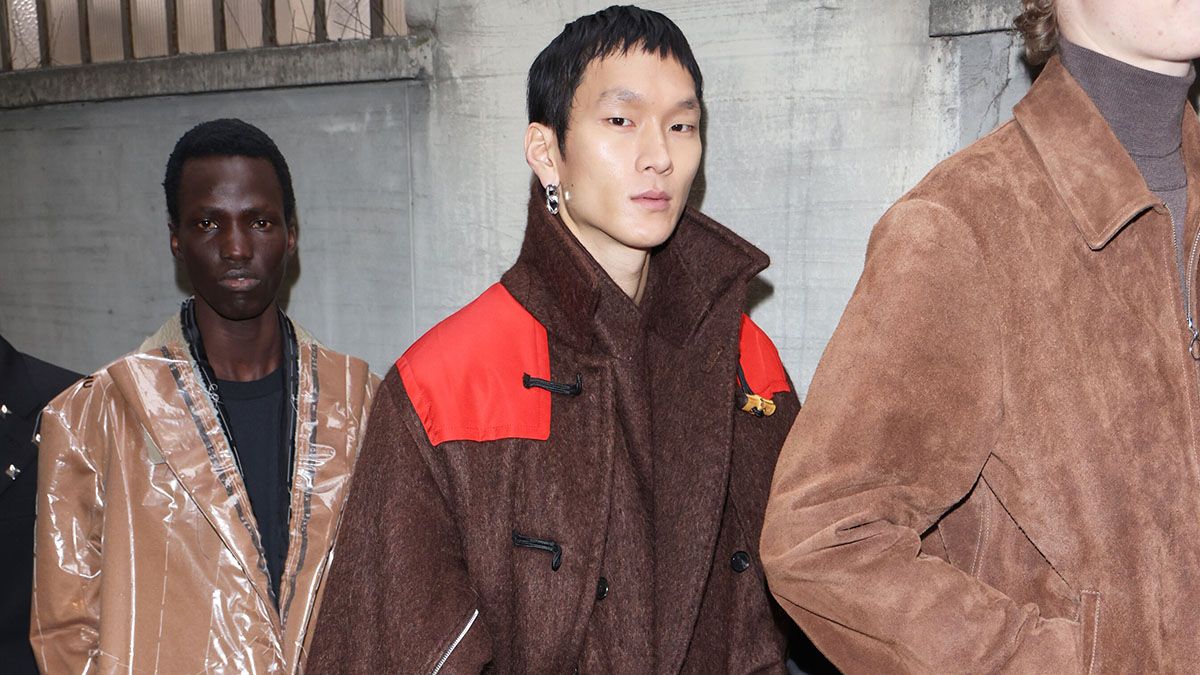
There has been a lot of discussion around the nuances of masculinity over the last year, which has in turn prompted reflection on the future of men’s fashion. In Florence and Milan, each home to traditional, sartorial tailoring, men’s designers got experimental for Fall/Winter 2026 — subverting menswear tropes, embracing Eastern design codes and showcasing ski-inspired collections (the Milano Cortina 2026 Winter Olympics kick off on February 6).
Add to that a double appearance from Heated Rivalry heart-throb Hudson Williams and an appearance from Ralph Lauren, FW26 made for an interesting season, albeit against the backdrop of continued retail challenges.
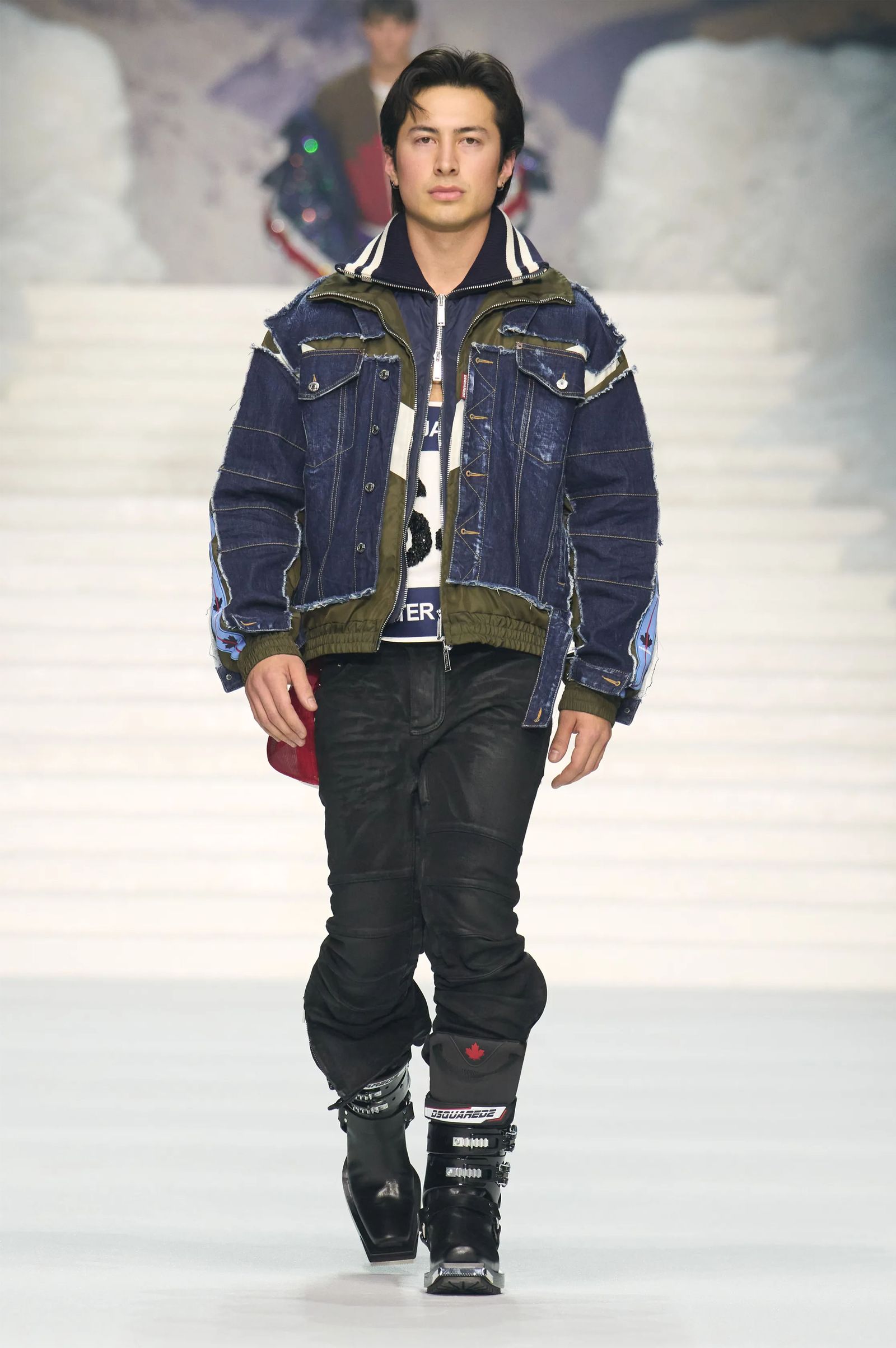
Canadian actor Hudson Williams opened Canadian label DSquared2’s Winter Olympics-inspired AW26 menswear show.Photo: Umberto Fratini/Gorunway.com
On the first day of Pitti Uomo, Saks Global, the US’s largest luxury retail group, filed for bankruptcy. Saks has since secured $500 million as part of a financing package, which provides liquidity to maintain operations. But it was a sobering reminder at the start of a new season that the fashion industry — and its menswear — is not out of the woods just yet.
Here are the key takeaways from Pitti Uomo and Milan Fashion Week Men’s FW26.
A backdrop of change
At Pitti Uomo, the number of international buyers in attendance for FW26 remained flat year-on-year, sitting at 5,000, says the men’s trade show CEO Raffaele Napoleone. “Considering the many international tensions and the market’s cautious approach, this is a significant result,” he says. “On the other hand, Italian buyers decreased slightly, reaching around 7,500, in line with the complex picture emerging from observers of national distribution and retail.”
“The economic context remains demanding, and the sector has gone through a phase of contraction across the supply chain. But menswear continues to show a solid capacity to hold its ground in international markets,” adds Camera Nazionale della Moda Italiana (CNMI) president Carlo Capasa. “Conveying coherent messages and proposing the right products makes it possible to create a more direct relationship with consumers, expanding their engagement.”
To combat retail challenges, brands need to better speak to today’s consumers, Mr Porter CEO Toby Bateman said in a talk with Brunello Cucinelli last Wednesday, during Pitti. “In the industry at the moment, it feels like retailers are losing sight of who they are selling to. They’re looking for short-term gains,” he said. “You can’t just say this is a Prince of Wales check in cashmere anymore. The customer wants to know, where is it made? What’s the [composition]? How can I style it? How does it fit into my wardrobe and work with my life? They need to be able to wear it five ways.” Across Pitti and Milan, designers leaned into this idea via their show formats, styling and communications.
Redefining menswear codes
This season, some of Milan’s biggest brands looked to the sociopolitical climate and the characters men evoke through clothing as inspiration. On Sunday, the garments in Prada’s show were conventional on the surface — trench coats, anoraks, slim suiting, simple shirts and tees — but subverted through unconventional details like buttons along the back, T-shirt necklines, sweetie-colored cufflinks, or rain hats attached to the back.