
With unprecedented technological tools in the hands of foreign and domestic actors, the proliferation of chatbots in the information ecosystem, and outdated regulatory frameworks, the integrity of Israel’s 2026 elections will be tested like never before.
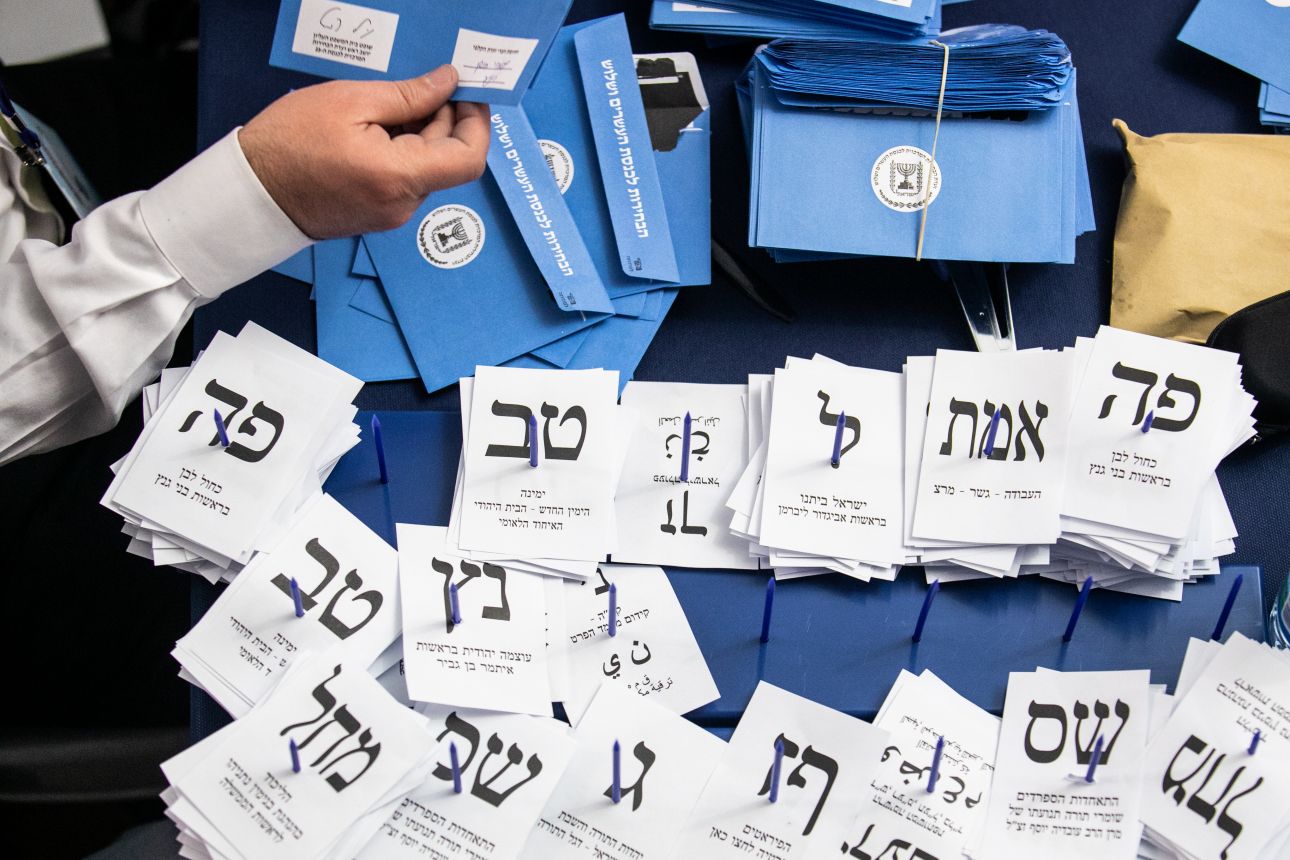
Photo by Olivier Fitoussi/Flash90
Imagine that on election day you receive voice notes on WhatsApp from someone you know, telling you not to go vote because violence has broken out at the polling stations. Or imagine scrolling through your feed and seeing a video in which the Chair of the Central Elections Committee announces that the elections have been postponed – something that, in Israel’s election system, could plausibly occur. Imagine being exposed to footage that appears entirely authentic, showing hackers breaking into the servers of the Elections Committee and altering the results.
As our ability to distinguish between authentic content and machine-generated content steadily erodes, the implication is clear: when it comes to the integrity of elections, Israel is facing a challenge unlike any we have encountered before.
When we speak of “election integrity,” we mean a level playing field for all contenders, and above all, for the voters. That means ensuring conditions that allow every citizen to form an opinion and vote freely, based on reliable information and without deception.
On the surface, every candidate seeks to persuade us to vote for them. In reality, the modern era requires campaigns to increasingly focus on two other questions: whether we will turn out to vote at all, and whether we will be willing to accept the election results. Alongside domestic actors working to encourage or suppress turnout, or to undermine trust in the Central Elections Committee, there are also the opportunists—local, and especially foreign, actors who exploit election periods as an opportunity to deepen social and political polarization, and to undermine something even more fundamental: our confidence in our ability to determine what is true and what is false in the reality around us.
How are these goals pursued? Through the media, social networks, WhatsApp groups and Telegram channels, video game forums, chatbots, and more. Sometimes something is leaked to the press and from there finds its way onto social media; sometimes a campaign targets us simultaneously across multiple platforms; sometimes a “piece of information” is dropped on Telegram, from there it migrates to X, and by evening it is leading the news broadcasts.
To this existing challenge, the upcoming elections will add a dramatic change: these will be the first elections held in the age of artificial intelligence. And this is only the beginning.
With AI, it is possible to generate dozens of versions of the same message, making it difficult for automated systems to detect coordinated activity. Messages can be tailored with extraordinary precision. We are no longer talking about a single “campaign ad” for everyone, but an emotional pressure point that speaks directly to the fears, anger, or hopes of a specific individual. When we consider that machines today can infer from a facial image not only who we are, but also emotional states and according to some studies, even highly sensitive personal information, one can only imagine the level of emotional precision and personalization such messaging can reach.
Another major development is the entry of chatbots into our daily lives. Their penetration in Israel over the past two years has been nothing short of staggering. We turn to them to understand what is happening, to check facts, to form opinions, and even to receive emotional support. And here lies a new arena—one whose political persuasive power no one yet fully understands, but where a race is already underway to poison, bias, or exploit these systems and turn them into machines of persuasion.
This, in practice, is what the threat to election integrity in 2026 looks like: a combination of generated content and information flooding that makes it harder to discern reality; emotionally personalized messaging; and the political consultant in the form of a chatbot. In such a situation, a “liars’ dividend” also emerges: the mere possibility of fabrication allows politicians to dismiss any damaging revelation as a product of artificial intelligence.
Why is this challenge so difficult to confront? Because election laws are outdated and never defined what it means to “interfere with elections” in the digital age; because decision-makers do not always understand that the entire information ecosystem must be addressed, rather than isolated pieces of content; because of the time problem—by the time platforms respond, the elections are already over; and because, at times, parties and candidates find it more convenient to benefit from the phenomenon that to confront it.
Section 122 of Israel’s Knesset Elections Law addresses “electoral corruption.” It lists curses, ostracism, boycotts, and amulets as prohibited means of influencing voters. The question that should now concern us is a simple one: what are the curses, amulets, and boycotts of 2026? If we do not give them updated meaning, election integrity will become nothing more than an empty slogan.
This article was published in The Times of Israel