
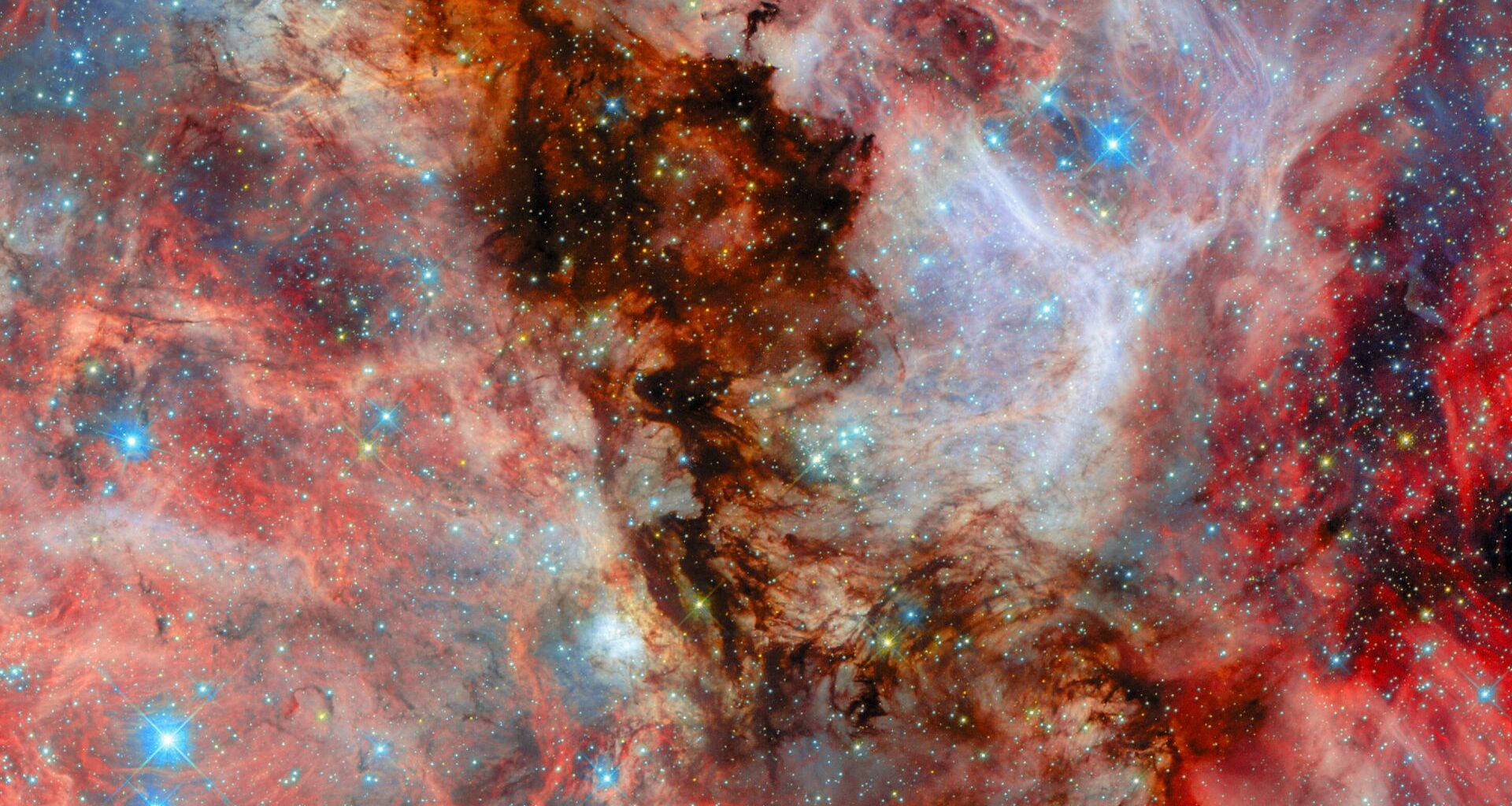
Star formation can feel like a distant, abstract concept, until you see it mapped across a landscape of gas and dust. A recent image from the Hubble Space Telescope looks at the the N159 star-forming complex within the Large Magellanic Cloud, one of the Milky Way‘s closest companions. That proximity makes it a prime place to watch how stars form in environments that aren’t exactly like our own.
Within the image, thick clouds of cold hydrogen gas arrange themselves into ridges and wispy filaments. The deep red tones come from hydrogen gas that has been energized by the harsh radiation of newly formed stars. Where the glow is brightest, it’s a sign that hot, massive young stars have recently become more active.
You may like
Where is it?
The N159 star-forming complex lies in in the Large Magellanic Cloud, which is roughly 150 light-years across and lies about 160,000 light-years from Earth.
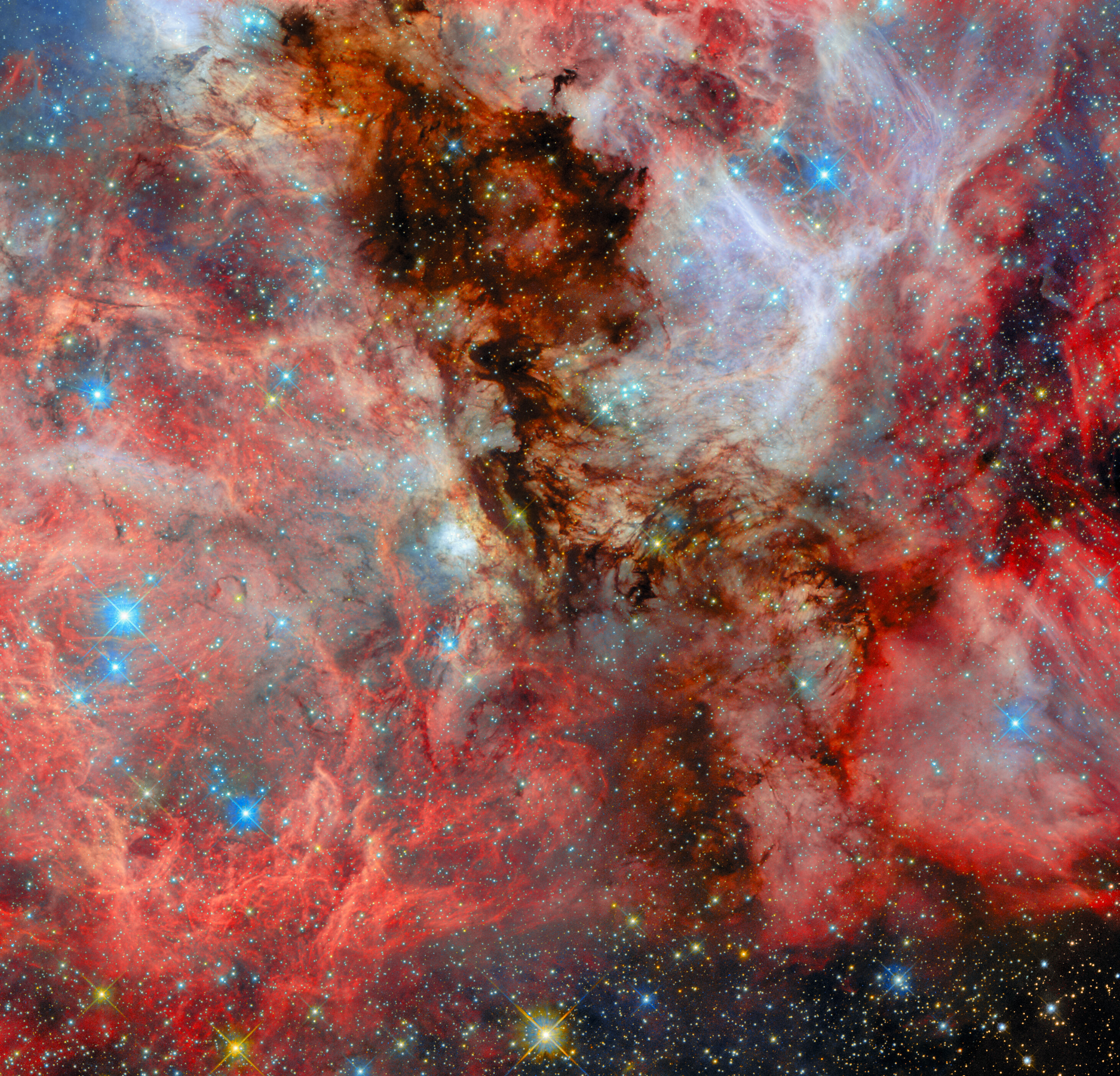
A parallel image from the Hubble Space Telescope shows the rich dynamics of star formation happening within the Large Magellanic Cloud. (Image credit: ESA/Hubble & NASA, R. Indebetouw)Why is it amazing?
This recent image captures the rich dynamics of star formation. Massive young stars don’t quietly settle in; their intense radiation and powerful stellar winds push outward, hollowing out the surrounding gas. The bubble-like structures and carved cavities in the glowing hydrogen are classic signatures of stellar feedback, the process by which newborn stars reshape the cloud that made them. That feedback can be both destructive and creative. It can blow material away and shut down star formation in one spot, while compressing gas elsewhere and helping new stars ignite.
Images like this one help astronomers better understand the nitty-gritty details of star formation, giving us more clues about the early universe and its first stars.
Want to learn more?
You can learn more about the Hubble Space Telescope and stellar nurseries.