
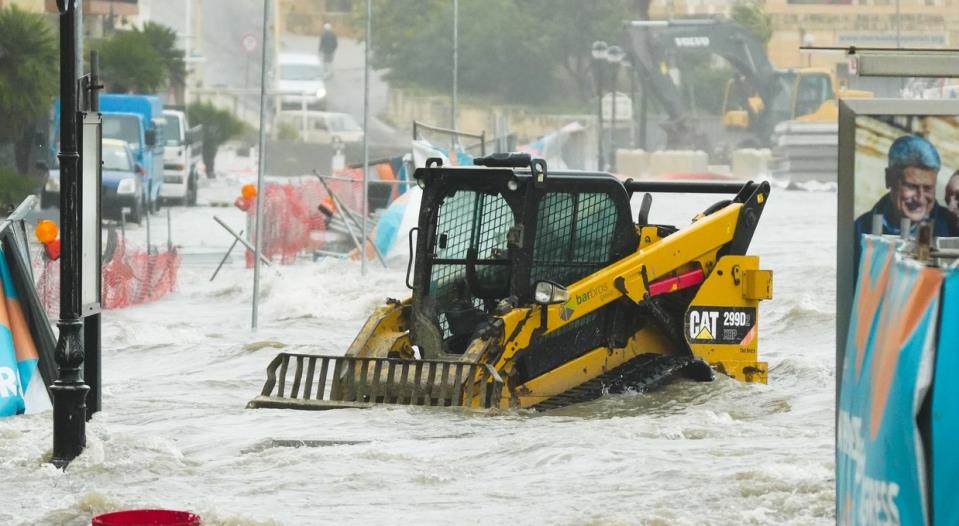

Friends of the Earth have raised the question as to whether Malta is prepared for more storms like Harry, which on Tuesday caused so much disruption and devastation.
Storm Harry hit our islands hard yesterday, the NGO said Wednesday. Gale force winds and 12-meter-high waves out at sea caused flooding and damage, especially in low-lying coastal towns like Marsascala. Thankfully no lives were lost in this storm, but there was a glaring lack of preparation to deal with the storm and protect communities.
While the storm and its impacts were all over the local media, there was little to no mention of climate change and the impact that rapid urbanization and soil sealing has had on creating real vulnerabilities to such storms. When we build so close to the sea and cover our land in hard concrete surfaces, water has nowhere to go, the NGO said.
Research by UNEP (United Nations Environment Programme) and the IPCC (the UN’s Intergovernmental Panel on Climate Change) shows that the Mediterranean Sea is a climate change hotspot, with change occurring at a faster rate than globally. Because the Mediterranean Sea is a semi-enclosed basin, it is warming faster than the open ocean. Between 1982 and 2019, Mediterranean surface seawater temperature already increased by 1.3°C, compared to a global average increase of 0.6°C. One of the expected impacts of higher sea water temperatures is increased frequency and intensity of storms – more storms like Harry, more often.
Apart from more severe storms, countries around the Mediterranean, including Malta, can expect rising sea levels, which further increase the threat of coastal flooding and permanent inundation, threatening coastal communities and critical infrastructure such as transport networks, ports and energy facilities.
Mediterranean mean sea levels are projected to rise by 21 to 27 cm by 2050, which combined with variations in extreme weather – causing flooding, waves and storm surges – will substantially increase the frequency and severity of coastal flooding and associated losses and damages. In the summer period, the climate crisis is also expected to create more extreme weather, notably prolonged and stronger heat waves and increased drought in an already dry climate.
“This is why we urgently need to demand real climate action from our government,” the NGO said. “We need to reduce our greenhouse gas emissions – nationally and globally – to prevent even more severe climate crisis impacts in the future. We need to protect our natural ecosystems, such as the Posidonia seagrass meadows around our coast, which capture CO2 – acting as a carbon sink – and protect from erosion and coastal flooding. We urgently need a strong and serious national plan to adapt to climate change and create resilience, including emergency preparedness plans to protect citizens and their livelihoods in the face of real threats.”