

Listen to this article
Estimated 3 minutes
The audio version of this article is generated by AI-based technology. Mispronunciations can occur. We are working with our partners to continually review and improve the results.
Quebec is backtracking on its commitment to reduce its greenhouse gas (GHG) emissions by 37.5 per cent below 1990 levels by 2030.
The move comes despite a November 2025 report by Quebec’s independent advisory committee on climate change, saying the government should maintain or increase its targets.
In a news release Wednesday, the Coalition Avenir Québec government refuted claims it was backtracking, saying instead it was maintaining its “ambitious targets” to reduce GHG emissions but was extending its timeline to 2035.
The advisory committee, known as the Comité consultatif sur les changements climatiques, pushed back immediately, noting the decision contradicts its recommendation to maintain the 37.5 per cent reduction target for 2030.
The committee warned that delaying the target will force steeper, more expensive cuts into a shorter time frame, increasing the economic and technological burden of reaching carbon neutrality.
The committee’s November report laid out a path toward complete decarbonization by 2045. The plan included adopting more carbon-capture technologies, carbon budgeting and sector-specific roadmaps to reduce emissions.
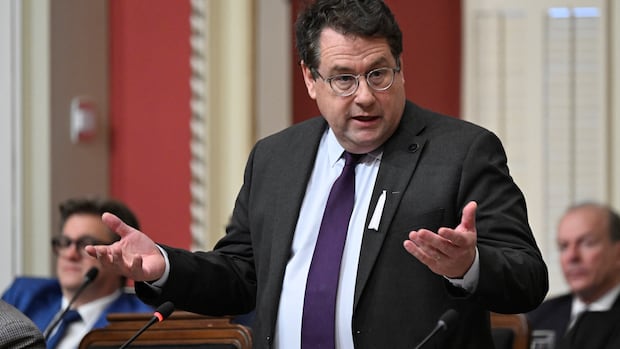
Quebec Environment Minister Bernard Drainville argued the decision allows Quebec to maintain the course on its green energy transition, while protecting the economy and jobs.
Speaking on Radio-Canada’s Tout un matin radio program, Drainville said the current economic climate and the uncertainty engendered by the tariff wars requires proceeding with caution.
In the last 35 years, Quebec has managed to reduce its emissions by almost 20 per cent, Drainville said.
“If we had maintained the target, we would have had to do the other half in less than five years,” he said.
Targets dropped elsewhere in Canada
In the fall, Premier François Legault indicated he might be putting the province’s environmental goals on hold, saying Quebecers can’t be the only ones in North America making significant efforts to fight climate change.
Drainville picked up on the refrain, pointing to other provinces like Ontario, where the government recently dropped its 2030 emission reduction goals, and British Columbia that will be abandoning its target for electrifying vehicles.
Drainville said the situation was similar at the federal level, with Prime Minister Mark Carney axing the carbon tax and also abandoning its objective to electrify vehicles.
Rollbacks elsewhere, Drainville said, could put Quebec at a disadvantage and extending the deadline to meet its own targets will allow the province more flexibility to make adjustments to remain competitive.
Opposition pushes back
Liberal MNA Désirée McGraw, the Official Opposition’s critic for the fight on climate change, wasn’t buying Drainville’s economic argument.
Although she said she wasn’t surprised by the government’s announcement, she said she was “deeply disappointed.”
“The costs of doing nothing now will be much greater in the future,” she said, “because of having to adapt to the consequences of climate change.”
McGraw also said there are economic opportunities that come from being a leader in clean technology and energy and that Quebec is already in a good position.
Québec Solidaire was also critical, saying in a statement that Drainville’s decision was neither prudent nor balanced and echoed concerns similar to McGraw’s.
The party said pushing back the deadline would only delay and amplify the scale of the province’s energy transition, passing the burden on to future generations.