
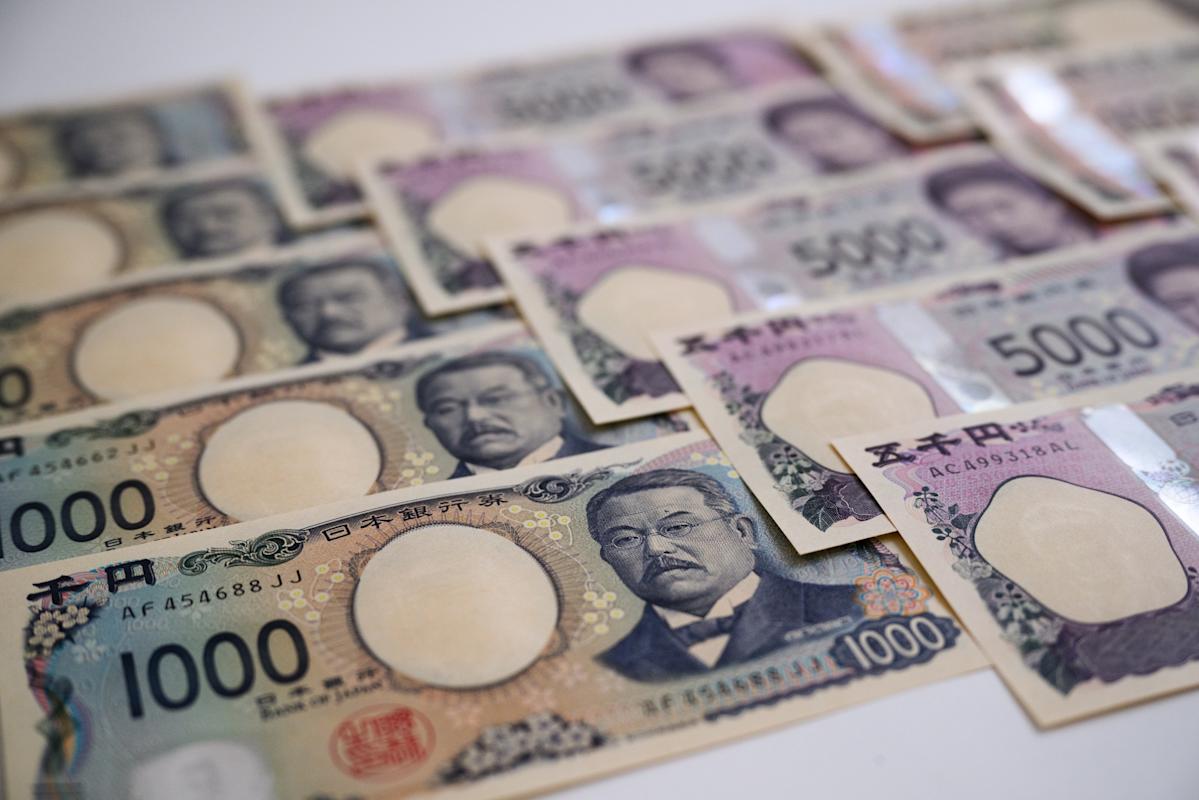
(Bloomberg) — The yen abruptly staged its biggest one-day surge since August on speculation that Japanese authorities could be preparing to mount a market intervention to halt the currency’s slide.
The yen rallied as much as 1.7% to 155.69 per dollar, extending the gains seen during the Asian trading day to its strongest level of the year. The moves reversed what had been a steady slide toward levels last seen in 2024, when Japan stepped in to buy the currency.
Most Read from Bloomberg
The jump in the US session came as traders reported that the Federal Reserve Bank of New York had called financial institutions to ask about the yen’s exchange rate. Wall Street saw it as an indication that the bank was preparing to assist Japanese officials to intervene directly in the currency market to prop up the yen. Representatives for the New York Fed declined to comment.
“Neither US authorities or Japanese authorities seem happy about the value of the yen right now,” said Harvard economics professor Jason Furman, who served as chairman of the Council of Economic Advisers under former President Barack Obama. “Everyone is on hair trigger for something that will change it.”

Japan’s finance minister, Satsuki Katayama, and the country’s top currency official issued fresh warnings to speculators earlier this month after the yen weakened. Japan last intervened in the foreign-exchange markets to support the currency in 2024, when pushed over the 160 level. That was preceded by rate checks.
Rate checks have often served as a warning to traders that authorities view the currency’s moves as excessive and are ready to buy or sell in foreign-exchange markets to influence the price of the yen. They usually happen when volatility increases and verbal intervention fails to rein in the moves.
Volatile Moves
The volatile trading in the yen follows a week of turmoil in the Japanese government bond markets heading into the Bank of Japan’s January policy meeting, at which officials held benchmark borrowing costs steady. The yield on Japan’s 40-year bond rose to its highest mark since its debut earlier this week, prompted by fears of steep government spending under Prime Minister Sanae Takaichi and rising inflation.
Those concerns have added to angst surrounding the Japanese currency, which earlier this month fell toward the 160-per-dollar mark, a historically weak level closely watched by currency traders around which Japanese authorities have previously stepped in to offer support.
Story Continues
“Market focus on the yen stems from volatility in Japan’s bond market earlier this week,” said Ed Al-Hussainy, global rates strategist at Columbia Threadneedle Investment. “It is possible that the US Treasury is nervous about spillovers from JGBs to the Treasuries market and is studying currency intervention as a stabilization tool. Whether this risk is material is an open question.”
But rate checks — and even actual intervention — “have historically not had persistent effects,” said Harvard’s Furman. There would need to be “a real policy change for that.”
What Bloomberg strategists say…
A “psychological barrier appears to be forming again. With pressure coming from fiscal uncertainty, rising yields and persistent capital outflows, the path higher for USD/JPY will get ever narrower.”
— Brendan Fagan, Markets Live Strategist. Click here for the full note.
In September, finance chiefs from the US and Japan reaffirmed in a joint statement their basic commitment to let markets determine currency exchange rates and not to target them for a competitive advantage. They left scope, however, for intervention in certain circumstances in line with previous statements, saying that it should be reserved for dealing with excess volatility or disorderly movements in the currency market.
“Given past concerns by the administration about currency intervention, the US seems to be giving Japan the green light if it does need to intervene more forcefully,” said Leah Traub, a portfolio manager at Lord Abbett & Co.
At BMO Capital Markets, managing director Bipan Rai said the speculation that the New York Fed had conducted a rate-check on the yen drove the currency higher.
“It’s also important to note that rate checks in the past haven’t necessarily meant that intervention was imminent,” Rai said. “But the fact that the NY Fed was asking implies that any potential intervention in dollar-yen won’t be unilateral.”
The US has only intervened in currency markets on three separate occasions since 1996, according to the New York Fed’s website, most recently selling the yen alongside other Group-of-Seven nations to help stabilize trading after the 2011 earthquake in Japan.
“It is plausible that the US would intervene in current circumstances with the shared goal of preventing excessive weakness in the Yen while also hoping to indirectly contribute to stabilizing Japan’s bond market,” according to Evercore ISI economists including Krishna Guha. “In any event, the fact that US involvement in FX intervention is plausible could speed a sudden unwind of yen shorts even if no such US intervention actually materialized.”
–With assistance from Miles J. Herszenhorn, Anya Andrianova, George Lei, Ye Xie, Mia Glass, Takahiko Hyuga and Maria Eloisa Capurro.
Most Read from Bloomberg Businessweek
©2026 Bloomberg L.P.