
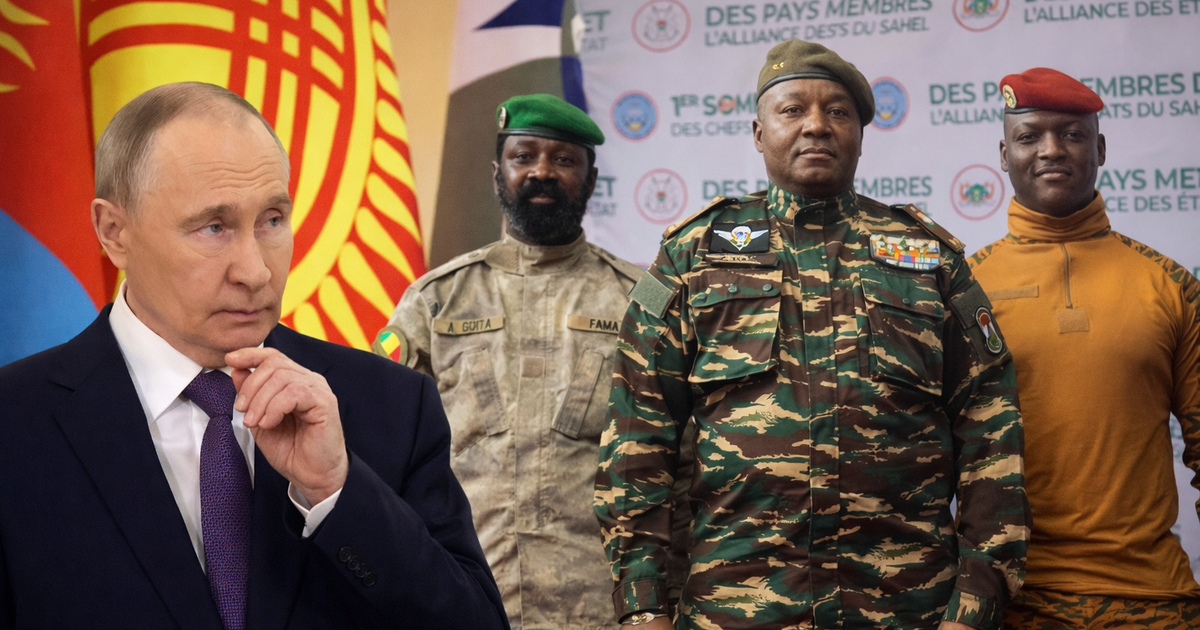
The project, discussed under the framework of the Alliance of Sahel States (AES), underscores the three countries’ growing emphasis on technological sovereignty, regional integration, and economic self-reliance amid shifting geopolitical alliances.
According to officials cited by Business Insider Africa, the satellite initiative is being pursued in collaboration with Russian partners, including Roscosmos, and is designed to serve the combined needs of the AES bloc.
The proposed satellite would support telecommunications services across the three countries, with potential applications spanning internet connectivity, government communications, security coordination, and disaster response.
A regional response to structural digital gaps
![Burkina Faso, Mali and Niger are partnering with Russia to develop the Sahel’s first shared telecommunications satellite, aiming to boost digital connectivity, security and regional economic integration. [X, formerly Twitter]](data:image/svg+xml;charset=utf8,%3Csvg%20xmlns%3D'http%3A%2F%2Fwww.w3.org%2F2000%2Fsvg'%20width%3D'790'%20height%3D'445'%20data-ring-placeholder%3D'1'%3E%3C%2Fsvg%3E "Burkina Faso, Mali and Niger are partnering with Russia to develop the Sahel’s first shared telecommunications satellite, aiming to boost digital connectivity, security and regional economic integration. [X, formerly Twitter]")
For Burkina Faso, Mali, and Niger, the satellite project addresses a long-standing structural weakness: limited and uneven digital infrastructure. Large parts of the Sahel remain poorly connected due to their vast landmass, low population density, and the high costs of laying fibre-optic cables and maintaining terrestrial networks.
Improved connectivity is critical for enabling mobile banking, digital payments, e-commerce, online education, and telemedicine, sectors increasingly central to modern economic growth.
Economists note that digital infrastructure functions as a general-purpose input across the economy. Better connectivity lowers transaction costs, improves market access, and boosts productivity for small businesses, farmers, and service providers.
For landlocked economies like Burkina Faso, Mali, and Niger, digital connectivity also helps offset geographic disadvantages by linking local markets to regional and global value chains.
Strengthening security and economic stability
![The head of head of Niger's military government General Abdourahamane Tiani (C), Malian Colonel Assimi Goita (3rd R) and Burkina Faso's Captain Ibrahim Traore (2nd R) arrive ahead of the Confederation of Sahel States (AES) summit in Niamey on July 6, 2024. [Photo by -/AFP via Getty Images]](data:image/svg+xml;charset=utf8,%3Csvg%20xmlns%3D'http%3A%2F%2Fwww.w3.org%2F2000%2Fsvg'%20width%3D'790'%20height%3D'528'%20data-ring-placeholder%3D'1'%3E%3C%2Fsvg%3E "The head of head of Niger's military government General Abdourahamane Tiani (C), Malian Colonel Assimi Goita (3rd R) and Burkina Faso's Captain Ibrahim Traore (2nd R) arrive ahead of the Confederation of Sahel States (AES) summit in Niamey on July 6, 2024. [Photo by -/AFP via Getty Images]")
Beyond civilian use, the telecom satellite carries strategic importance for security and governance, two areas that heavily influence economic performance in the Sahel.
Persistent insecurity in parts of the region has disrupted trade, displaced populations, and discouraged private investment.
While a satellite is not a substitute for political solutions, an enhanced communication infrastructure can reduce response times during crises, improve situational awareness, and support more efficient public administration.
Over time, these factors can contribute to a more stable operating environment for businesses.
The economics of regional integration
![Burkina Faso, Mali and Niger are partnering with Russia to develop the Sahel’s first shared telecommunications satellite, aiming to boost digital connectivity, security and regional economic integration. [Getty Images/Stock Photo]](data:image/svg+xml;charset=utf8,%3Csvg%20xmlns%3D'http%3A%2F%2Fwww.w3.org%2F2000%2Fsvg'%20width%3D'790'%20height%3D'452'%20data-ring-placeholder%3D'1'%3E%3C%2Fsvg%3E "Burkina Faso, Mali and Niger are partnering with Russia to develop the Sahel’s first shared telecommunications satellite, aiming to boost digital connectivity, security and regional economic integration. [Getty Images/Stock Photo]")
The satellite project also reflects a broader economic logic behind the Alliance of Sahel States, which was formed in 2023 following the withdrawal of Burkina Faso, Mali, and Niger from ECOWAS.
Shared digital infrastructure is a tangible step toward economic integration. Instead of duplicating costly national projects, the three governments are pursuing economies of scale by investing jointly in strategic assets.
This approach mirrors regional infrastructure models seen in energy pools, transport corridors, and shared payment systems elsewhere on the continent.
If successful, the telecom satellite could become a blueprint for future joint investments, including data centres, earth-observation satellites, and regional digital platforms. Such projects could strengthen intra-Sahel trade and reduce reliance on external service providers.
Why Russia, and why now?
![Russia's President Vladimir Putin. [Getty Images]](data:image/svg+xml;charset=utf8,%3Csvg%20xmlns%3D'http%3A%2F%2Fwww.w3.org%2F2000%2Fsvg'%20width%3D'790'%20height%3D'568'%20data-ring-placeholder%3D'1'%3E%3C%2Fsvg%3E "Russia's President Vladimir Putin. [Getty Images]")
Russia’s role in the satellite initiative highlights a broader reorientation of external partnerships by AES countries.
Following deteriorating relations with traditional Western allies, particularly France, the three governments have sought alternative partners willing to provide technology, financing, and political backing without stringent governance conditions.
For Russia, the partnership offers strategic and commercial benefits, including deeper influence in the Sahel and opportunities for its aerospace and technology sectors.
However, analysts caution that reliance on any single external partner carries risks, including long-term dependency and geopolitical exposure.
The economic success of the project will depend on transparent financing structures, sustainable operating models, and AES states’ ability to retain meaningful control over the asset.
A long-term bet on digital transformation
![Russian President Vladimir Putin (R) greets Burkina Faso's President Ibrahim Traore (L) during their bilateral meeting on July 29, 2023 in Saint Petersburg, Russia. [Photo by Contributor/Getty Images]](data:image/svg+xml;charset=utf8,%3Csvg%20xmlns%3D'http%3A%2F%2Fwww.w3.org%2F2000%2Fsvg'%20width%3D'790'%20height%3D'549'%20data-ring-placeholder%3D'1'%3E%3C%2Fsvg%3E "Russian President Vladimir Putin (R) greets Burkina Faso's President Ibrahim Traore (L) during their bilateral meeting on July 29, 2023 in Saint Petersburg, Russia. [Photo by Contributor/Getty Images]")
Taken together, the satellite initiative represents a long-term bet on digital transformation as a foundation for economic resilience in the Sahel.
While the three countries face immediate challenges, including inflation, fiscal constraints, and security pressures, the investment signals a strategic focus on building future-oriented infrastructure.
If effectively implemented, the shared telecom satellite could narrow the digital divide, support private-sector growth, and reinforce regional cooperation at a time of political realignment.
For Burkina Faso, Mali, and Niger, the question is not only whether the satellite will launch, but whether it can deliver lasting economic returns in one of Africa’s most fragile yet strategically significant regions.