
HBO’s Game of Thrones changed TV by kickstarting its big-budget franchise era. The transformative series brought on waves of imitators, while HBO continues to chase its success with multiple spin-offs. These shows are undeniably popular, but their massive production costs have unintended consequences for the rest of the industry, which are ultimately GoT’s true legacy.
HBO surprised everyone by diving into the fantasy genre with Game of Thrones. The 2010 premiere of the show stunned critics, and despite its controversial ending eight seasons later, GoT remains the defining TV run of its generation.
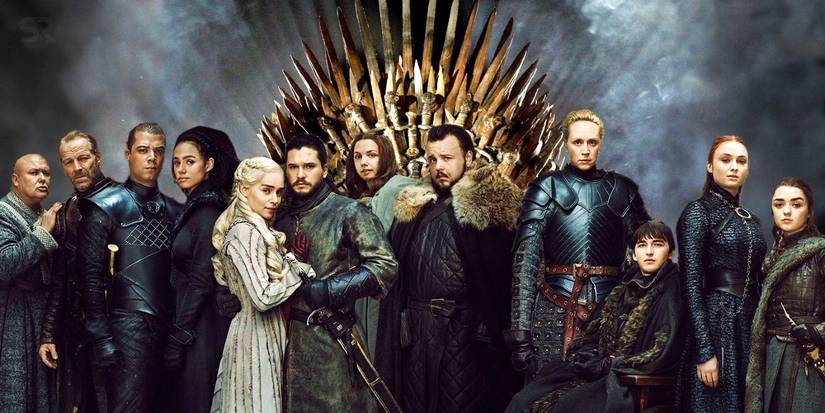
Game of Thrones season 8 cast by the Iron Throne
Game of Thrones reshaped the landscape, but its biggest impact is the shift it precipitated behind-the-scenes.
“Game Of Thrones” Changed HBO’s Approach To Television, Kicking Off The Network’s Big-Budget Franchise Era
The House Tony Soprano Built Was Conquered By Dragons
When The Sopranos’ final season aired in 2006–2007, it reportedly had a budget of $6 million dollars per episode. Three years later, the first season of Game of Thrones had approximately the same per-episode budget. It was a gamble by HBO, but it was also a sign of the network’s historic rise to power over the preceding decade.
HBO’s costly risk paid off. Over the next eight seasons, Game of Thrones became increasingly spectacular on screen, and increasingly expensive behind-the-scenes, culminating in a roughly $15 million dollar price tag for its final episodes. It also became a megahit with audiences, justifying the expense for HBO. But even during Thrones’ run, it changed HBO’s calculus with the rest of its programming.
That is, as Thrones’ cost went up, HBO became more cautious in greenlighting new shows, and less willing to let anything but surefire hits survive if the ratings didn’t justify it. It started to produce more half-hour comedies, with more manageable budgets. And once Thrones ended, it started to throw fistfuls of dollars at developing spin-offs and sequel series.
With “Thrones,” HBO Forced Every Other TV Network To Play The Game At Its Level
Game Of Thrones Elevated Genre TV From Cheap To Costly
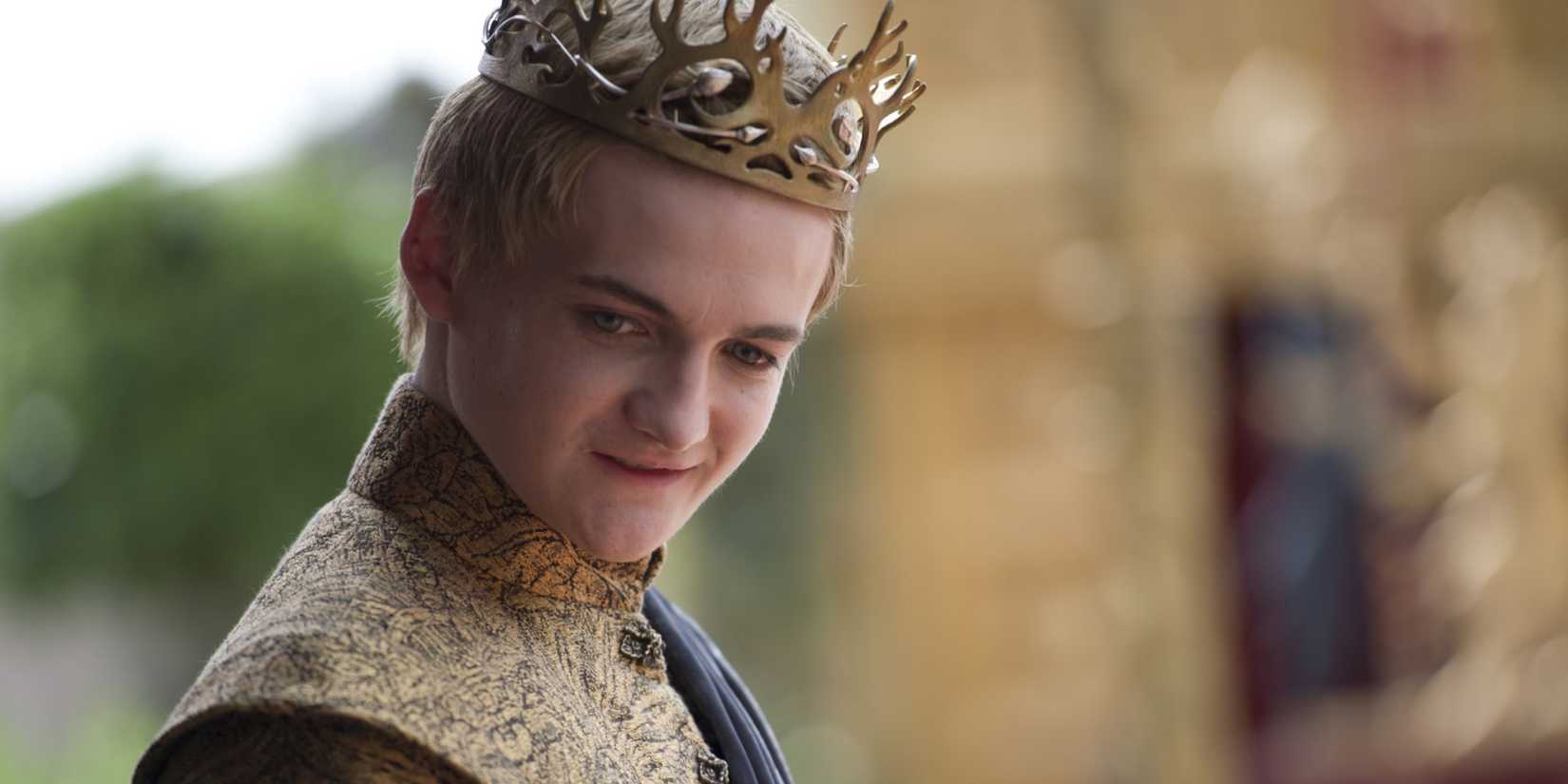
Jack Gleeson as Joffrey Baratheon smirking and looking off to the side in Game of Thrones
To be fair to Game of Thrones, the show’s budget manifests on screen. The show looks incredible, and the reputation for action set-pieces, like “The Battle of the Bastards,” that it developed in later seasons is likely to remain unmatched for a long time. That is as opposed to, say, Friends, which cost a ludicrous $10 million per episode in 2003-2004.
In a post-Thrones world, a network can’t offer a Hercules or Xena-level fantasy series and expect to hold an audience.
It’s been said plenty of times that Game of Thrones legitimized the fantasy genre on television, and that’s true. But there’s more to it than that. What Thrones did was raise the bar for franchise-based TV shows in general. In a post-Thrones world, a network can’t offer a Hercules or Xena-level fantasy series and expect to hold an audience.
Even the quality of ’90s Star Trek isn’t up to the standard set by Thrones. Of course, it’s been a bounty for TV lovers that Game of Thrones has pulled so many other shows up to its level. The flip side of that, though, is that TV has become increasingly dominated by these increasingly expensive franchise-based shows.
With “House Of The Dragon” HBO Is Spending Big Money To Chase “Thrones” Success
HBO Has Gone All-In On Its Iconic Franchise, But At What Cost?
At one time following Game of Thrones’ finale, HBO had around seven spin-offs in development. The first to make it to air, House of the Dragon, is currently in production on its third season. It is expected to finish up after season four. Dragon Season One reportedly had a $20 million per episode budget, which likely increased for subsequent seasons.
Meaning a standard episode of the spin-off costs more than the feature-length installments of Game of Thrones Season Eight. To put it further in perspective, one Dragon episode equals three episodes from The Sopranos’ final season. If you go back to Sopranos Season One, which cost around $1 million per episode, the entire thirteen-hour run cost less than an hour of Dragon.
Even accounting for inflation, and rising production costs across the board, let’s say that HBO could reasonably fund four $5 million-dollar pilots for what it costs to make one House of the Dragon episode. It’s the TV version of a familiar Hollywood problem: expensive tentpole franchises are dominant, and smaller projects have to fight for the scraps they leave.
HBO Is Doubling, And Tripling-Down On Big-Budget Franchises In Order To Recapture The Magic Of “Thrones”
HBO’s Harry Potter Is Reportedly The Most Expensive TV Series Ever
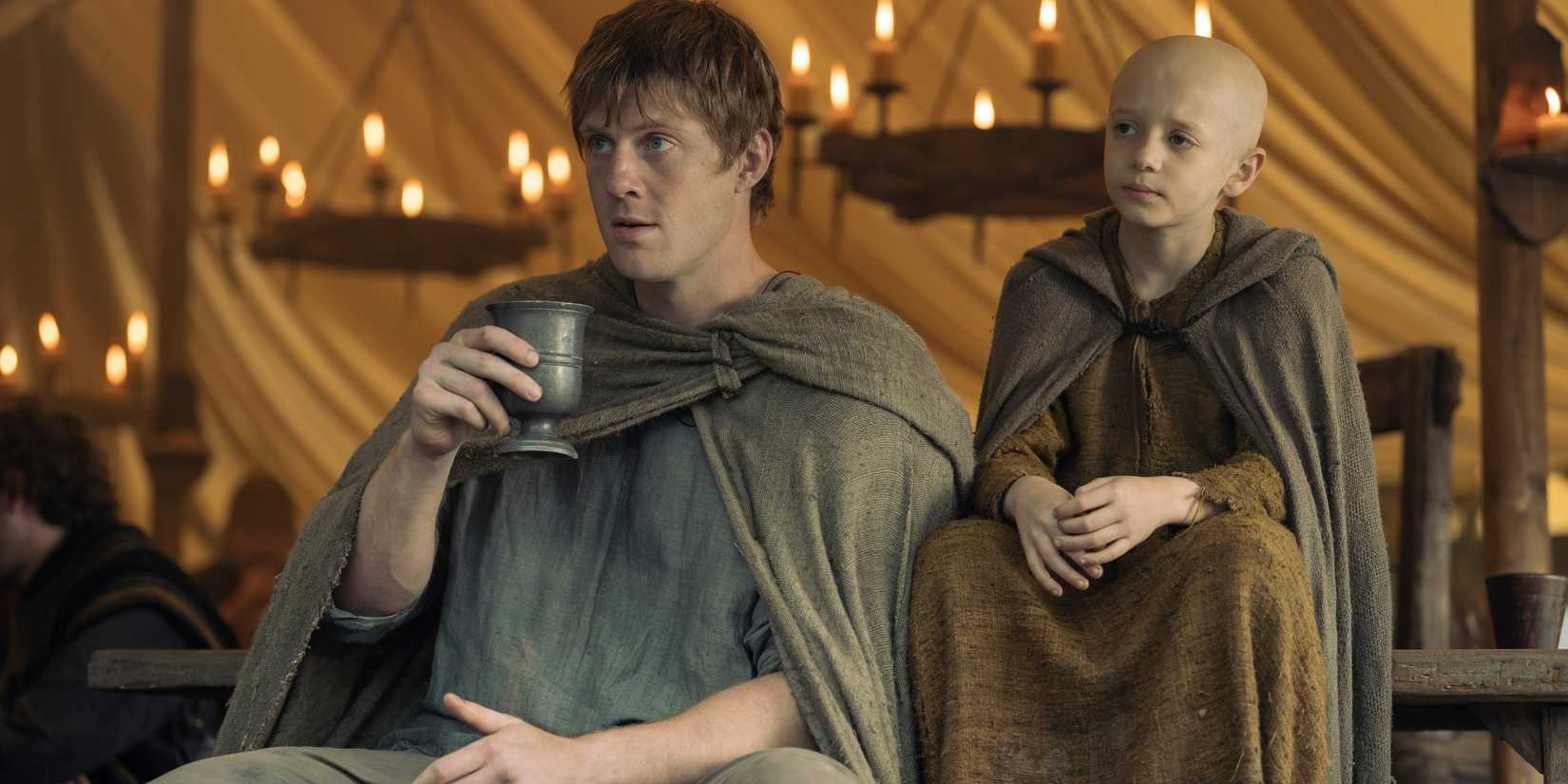
Dunk and Egg sitting together in A Knight of the Seven Kingdoms
Even with its less sprawling nature, HBO’s second Thrones spin-off, A Knight of the Seven Kingdoms, is still starting out with a Friends Season Ten budget. That is, around $10 million per episode. So, Game of Thrones’ direct descendents alone account for over $250 million of HBO’s overall production costs right now, with more on the way.
[B]udgets for major franchise shows are getting completely out of control, and it’s hard not to think of what the TV landscape might look like if that shift had never taken place…
And that’s to say nothing of Thrones’ spiritual heirs. HBO’s TV remake of Harry Potter is rumored to cost a jaw-dropping $60-75 million dollars per episode. Even half that represents an exponential escalation of Game of Thrones’ budget, and it’s all in service of trying to replicate the show’s global success. Thrones opened the door, and then HBO blew up the wall surrounding the door.
TV was a low-budget medium for most of its history, up until the 21st century. Now, budgets for major franchise shows are getting completely out of control, and it’s hard not to think of what the TV landscape might look like if that shift had never taken place with the advent of HBO’s Game of Thrones.
Cast
Emilia Clarke, Peter Dinklage, Sophie Turner, Kit Harington, Lena Headey, Maisie Williams, Nikolaj Coster-Waldau, Iain Glen, John Bradley, Alfie Allen, Conleth Hill, Liam Cunningham, Gwendoline Christie, Aidan Gillen, Isaac Hempstead-Wright, Rory McCann, Nathalie Emmanuel, Jerome Flynn, Rhys Ifans, Matt Smith, Graham McTavish, Fabien Frankel, Steve Toussaint, Eve Best, Emma D’Arcy, Matthew Needham, Olivia Cooke, Milly Alcock, Emily Carey