
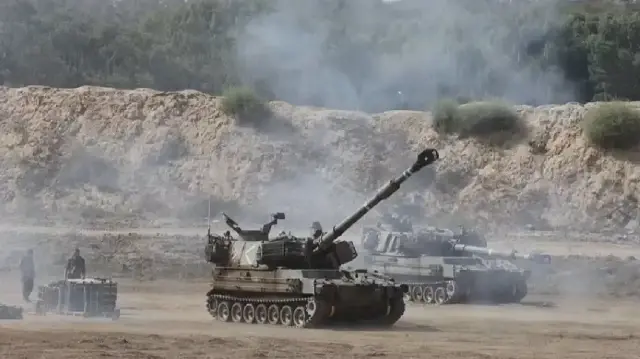
An Israeli tank fired in the vicinity of a Lebanese army force that was carrying out a coordinated mission with United Nations peacekeepers in southern Lebanon on Friday. According to Lebanon’s state-run National News Agency (NNA), the shooting targeted the area around the Lebanese unit as it operated with the UN Interim Force in Lebanon (UNIFIL) near Wadi al-Asafir, south of the town of Khiam.
The report stated that the fire originated from an Israeli tank deployed from a newly established military position in the Hammams area. The Lebanese army unit was engaged in a joint field task with UNIFIL troops at the time. The NNA did not specify any casualties or material damage resulting from the incident. There was no immediate comment from the Israeli military regarding the shooting.
Persistent Tensions and Ceasefire Violations
This event is part of a pattern of intermittent fire across the Lebanese-Israeli border, despite a ceasefire agreement. UN peacekeeping forces have repeatedly reported that their positions in southern Lebanon have come under Israeli fire and have called for adherence to the truce, appeals that Israel has largely ignored. The ceasefire ended over a year of intense cross-border hostilities linked to the war in Gaza, which resulted in thousands of casualties on both sides.
Broader Context of Incomplete Israeli Withdrawal
The fragility of the ceasefire is exacerbated by Israel’s incomplete withdrawal from southern Lebanon. Under the terms of the agreement, the Israeli army was supposed to fully withdraw by January 2025. Instead, it has only partially pulled back and continues to maintain a military presence at five border outposts. This ongoing occupation, combined with incidents like Friday’s tank fire, perpetuates a state of tension and undermines the stability that UNIFIL is mandated to help maintain, keeping the region at risk of renewed escalation.