
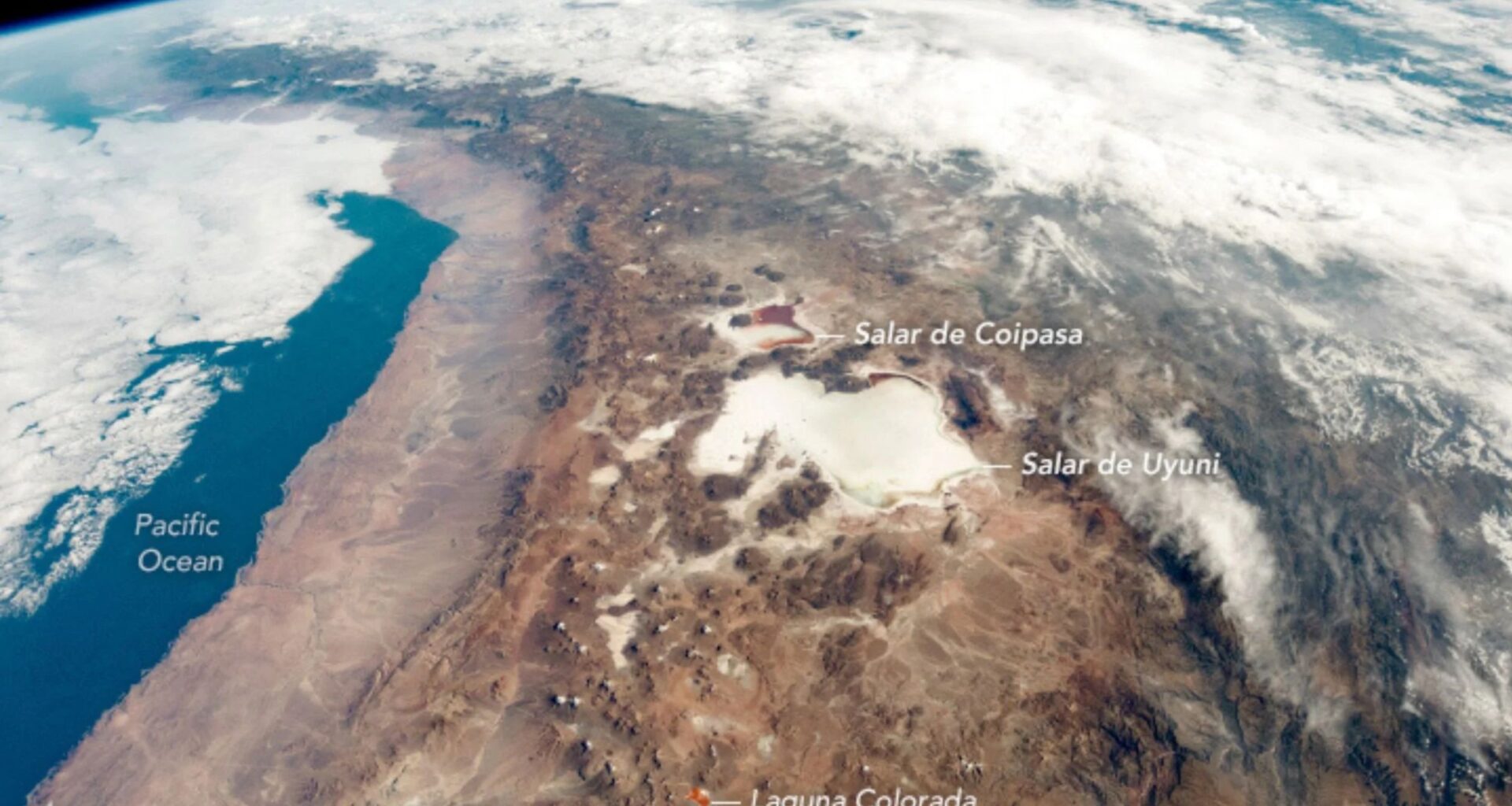
Demand for lithium is now pushing industrial activity toward one of the planet’s most recognizable salt flats, a place long valued for its beauty and isolation.
New evidence shows that extracting this metal can quietly amplify toxic risks, with consequences that extend far beyond the mine site.
Salar de Uyuni under strain

The world’s largest known lithium deposit lies beneath the Salar de Uyuni, a salt flat in Bolivia. Here, the highly saline groundwater is pumped and concentrated to supply battery production.
Tourism and early mining now share the Salar de Uyuni on Bolivia’s high plateau, where rains briefly turn salt into mirrors.
The work is led by Dr. Avner Vengosh, who studies how metals move through water in mining and energy regions.
At Duke University, his team checks chemical risks before big projects scale up, including new lithium ventures.
“The Salar is a magical place for travelers from all over the world who come to see the colors, the reflections, in this endless white landscape,” noted Dr. Vengosh.
Operators pump brine – salty groundwater loaded with minerals – from layers ranging up to 160 feet (about 50 meters) deep, then route it into ponds.
Sun and wind remove water, so unwanted salts crystallize out, while dissolved lithium becomes more concentrated in each pond.
Workers move the final concentrate to a plant that turns it into lithium carbonate, a powder that is used in many batteries. Leftover brines stay on site.
An International Energy Agency report projects lithium demand will rise over 40 fold by 2040.
Focus of the research
In the Duke study, the team tracked water and waste from a pilot operation, starting with raw brine and ending at the plant.
Lab tests were used to measure acidity and trace tiny amounts of metals and salts to see how chemistry changes across sites.
Sampling for the study included natural brine pumped underground, brine from eight ponds, and wastewater streams from the processing facility.
Natural brine stays near neutral and holds arsenic, a toxic element that harms nerves and organs, at 1 to 9 parts per million.
Acidity grows with concentration
As brine concentrates, each pond leaves a smaller volume with more dissolved material, and the water grows harsher.
Measurements show pH, a scale that tracks how acidic water is, dropping to about 3.2 in the most concentrated brine.
In their tests, the brine approaches a concentration of about 36 percent by weight of salts dissolved in water.
The accompanying acidity can change which minerals form, and it can also limit where waste liquids can be stored or released.
Arsenic spikes across the ponds
Arsenic turns into the biggest red flag as the pond sequence progresses, because the metal stays dissolved.
By the final pond, arsenic reached nearly 50 parts per million, a level that stands out in salt-flat mining.
“This arsenic level is extremely high,” said Dr. Vengosh, noting the result after his group compared samples from each pond.
Any leak or intentional discharge can spread that concentrated metal across the salt crust, where birds and insects feed.
Food webs store the dose
Wildlife around salt flats often lives on small crustaceans and algae, so contaminants can enter the food chain.
Bioaccumulation, the build-up of chemicals in organisms over time, can raise internal doses even when water levels look modest.
Lab tests showed that Artemia franciscana tolerated arsenic concentrations up to 8 parts per million, while higher levels began to reduce survival.
Because flamingos feed on brine shrimp, a crash at the bottom can thin food supplies for birds on the flat.
Wastewater disposal is not simple
The processing plant produces its own wastewater streams, and their chemistry does not match the pond brines.
Some streams run with a high pH near 10, and that alkalinity can change how metals dissolve or settle.
Compared with pond brines, the plant wastewater carries lower arsenic and boron, an element that can harm plants at high doses.
Reinjecting spent brine or wastewater from lithium processing back underground can backfire by clogging subsurface flow or diluting remaining lithium.
Keeping the ecosystem stable
Pulling large volumes of brine can drive land subsidence, the slow sinking of the ground as fluids are removed, across salt-flat basins.
A three-dimensional Salar de Atacama model links brine pumping to water-table changes that spread beyond the production zone.
Those kinds of drops can dry nearby wetlands and shallow wells, especially where freshwater sits close to the salty aquifer.
Researchers suggest that blending spent brine with wastewater might better match natural brine chemistry, but tests still need to follow.
The future of energy security
Indigenous communities live around the salt flat, and their wells and grazing areas depend on scarce water in a dry climate.
If mining wastewater escapes containment, metals can enter drinking supplies or wildlife, then move into people through food and dust.
A parallel project from Duke researchers is assessing health and well-being impacts, alongside chemical monitoring of water near communities.
“We see lithium as the future for energy security, so we’re trying to analyze it from different angles to ensure sustainable development and supplies,” said Dr. Vengosh.
Taken together, the chemistry shows that concentrating lithium also concentrates acidity and metals, so waste control becomes a core design issue.
Better containment, careful reinjection trials, and transparent community monitoring can limit harm, but only if expansion stays tied to data.
Information from an online publication by Duke University.
Image Credit: NASA
—–
Like what you read? Subscribe to our newsletter for engaging articles, exclusive content, and the latest updates.
Check us out on EarthSnap, a free app brought to you by Eric Ralls and Earth.com.
—–