
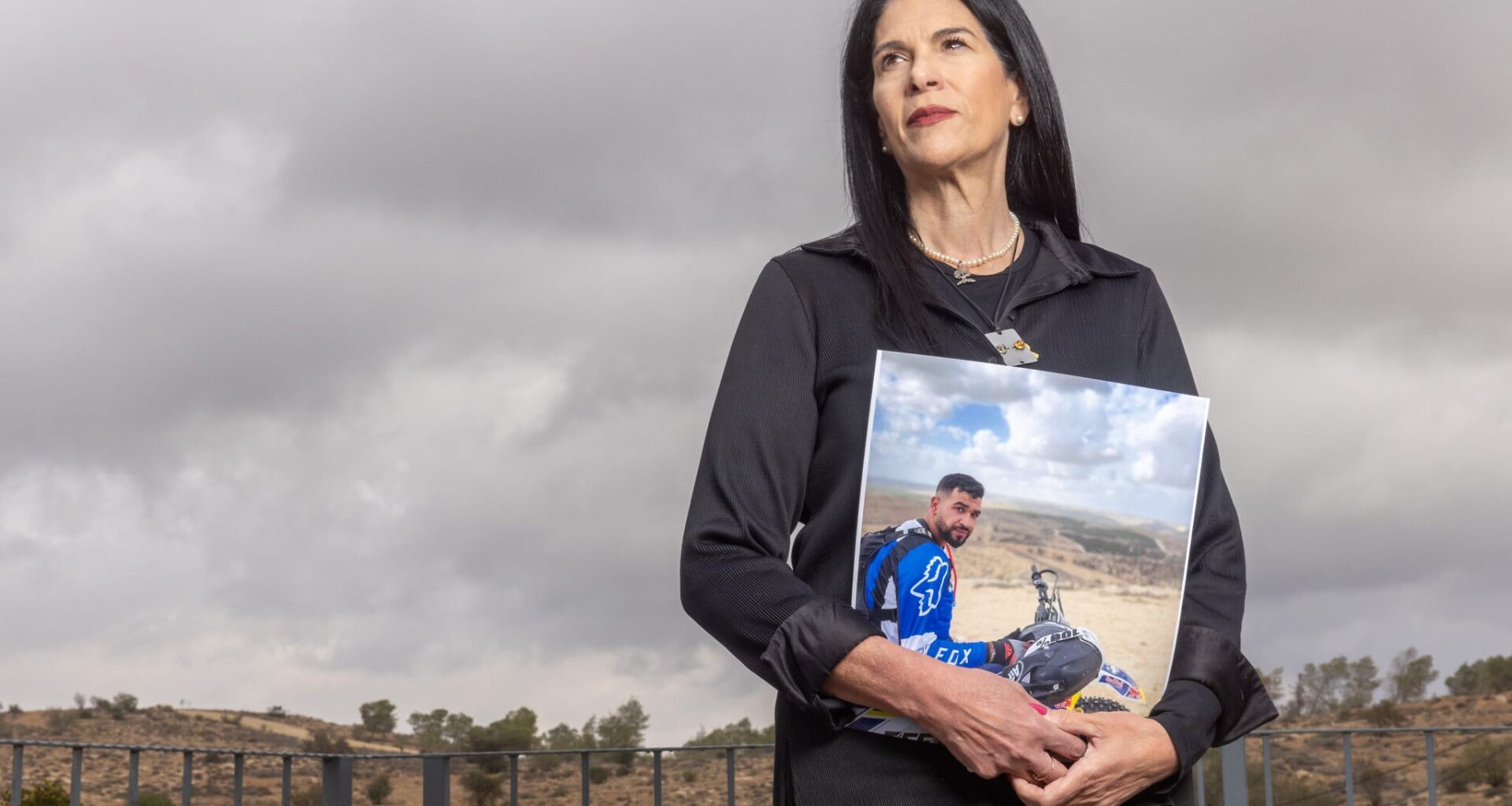
Friday afternoon, following the weekly gathering at Tel Aviv’s Hostages Square calling for the release of hostage Ran Gvili’s body, IDF Chief of Staff Eyal Zamir stopped his car across the square at the entrance to the Kirya, Israel’s military headquarters, to offer his support to Itzik and Talik Gvili.
“There’s room for optimism,” Zamir told the Gvilis.
“We’re relying on you,” said Talik Gvili, Ran’s mother, wearing a T-shirt bearing her son’s image and a yellow piece of tape marked 840, the number of days since Ran was abducted. “We’re truly relying on you.”
Two days later, on Sunday, the Prime Minister’s Office announced that IDF forces were conducting a wide-scale operation to locate Ran’s body at a cemetery in the northern Gaza Strip.
Ran Gvili was taken hostage by terrorists, along with 250 other people of various nationalities, during the Hamas-led invasion of southern Israel on October 7, 2023. Some 1,200 people were murdered in the onslaught, which sparked the Israel-Hamas war in Gaza.
All other living and dead hostages have been recovered by Israel or returned in exchanges, the last of which helped seal a fragile but ongoing ceasefire brokered by the United States, which the Trump administration hopes to see progress into its second phase in the immediate future.
The failure to recover Ran’s remains, however, is a sticking point, as Israel is reluctant to allow the deal to enter the second stage until the Hamas terror group fulfils its commitment to return all of the hostages.
On Friday, the Gvilis had gathered with former hostages, family members, friends, and supporters for a Kabbalat Shabbat event at the square, calling on the government to avoid moving into phase two of the Gaza deal until Ran was returned home.
“He should have come back in the same deal; it’s just my luck that I’m here,” said former hostage Segev Kalfon, speaking to the crowd of his release in the Gaza deal’s first phase this past October.
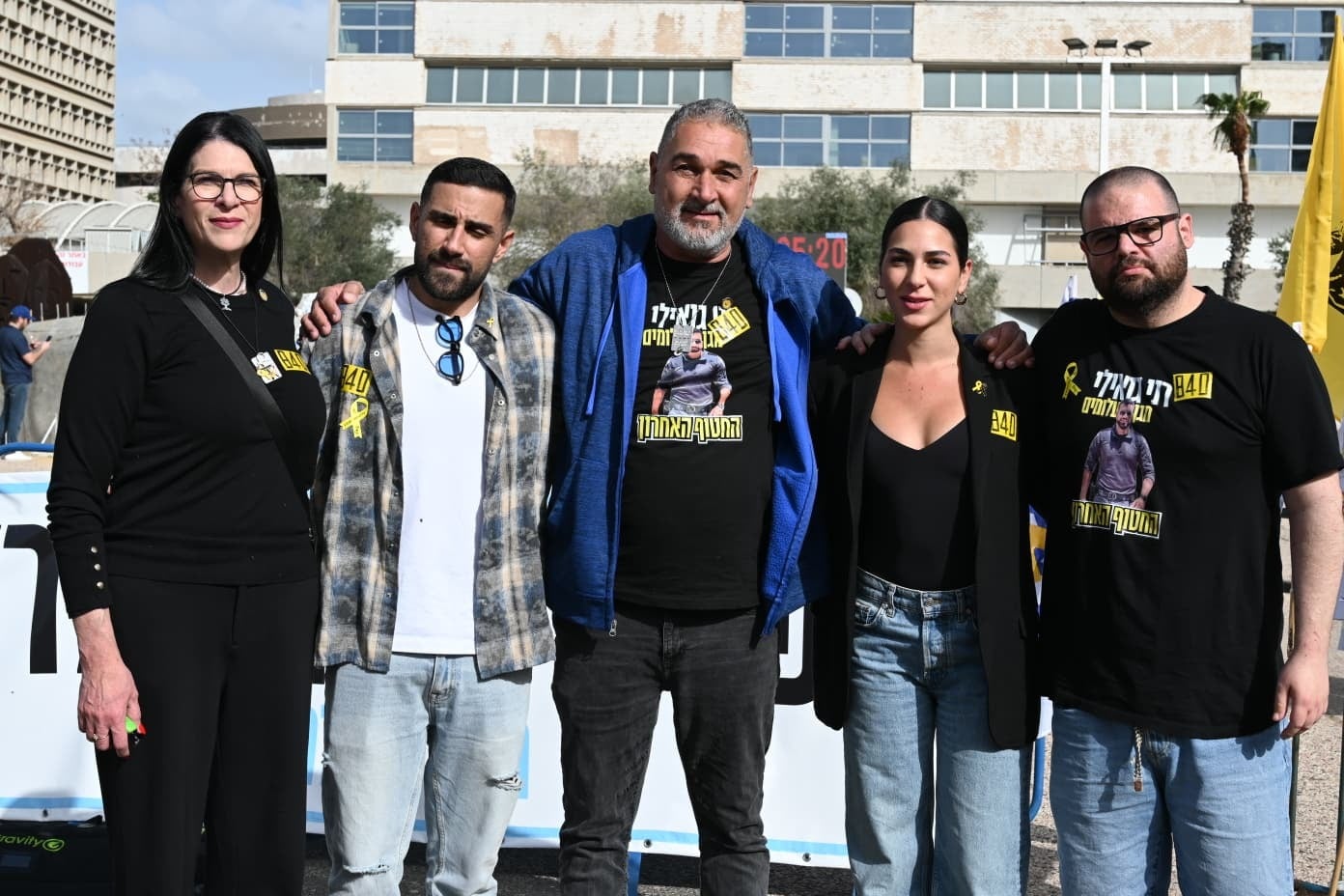
From left: Talik Gvili, Segev Kalfon, Itzik Gvili, Shira Gvili and Eitan Horn, at Hostages Square in Tel Aviv on January 23, 2026. (Jessica Steinberg/Times of Israel)
The next day, Saturday, following the arrival of Trump envoys Steve Witkoff and Jared Kushner for a meeting with Prime Minister Benjamin Netanyahu to discuss the opening of Gaza’s Rafah border crossing, the Gvilis made a public statement, asking why the pressure to move forward with the ceasefire deal is being directed at Israel rather than at Hamas, which is refusing to return the last remaining hostage, their son.
At home — and home command — in Meitar
“Everyone gets it except Witkoff,” said Gvili earlier in the week, after returning from another trip to Florida, this time at the invitation of philanthropist Miriam Adelson, who ferried her on her private jet to the Israeli-American Council’s national summit. “I don’t know what he thinks, even though I’ve spoken to him so many times. He believes that Hamas will do everything it can to find Rani, and we don’t believe that.”
Gvili was sitting at home in Meitar, having just finished a call with government hostage point man Gal Hirsch; the family receives two to three calls a day with updates.
She was dressed and fully made up for a day of meetings and interviews, a tall, imposing, pragmatic woman who doesn’t mince words and knows what she wants to say, even after existing in this liminal state for the last two years and three months.
What the Gvilis believe is that their government, the army, and the security forces are doing everything in their power to bring their son home.
“We got a promise from [US President Donald] Trump and our prime minister that they will do everything to get our boy back. It was a very clear message, and we’re waiting for it to happen,” said Gvili.
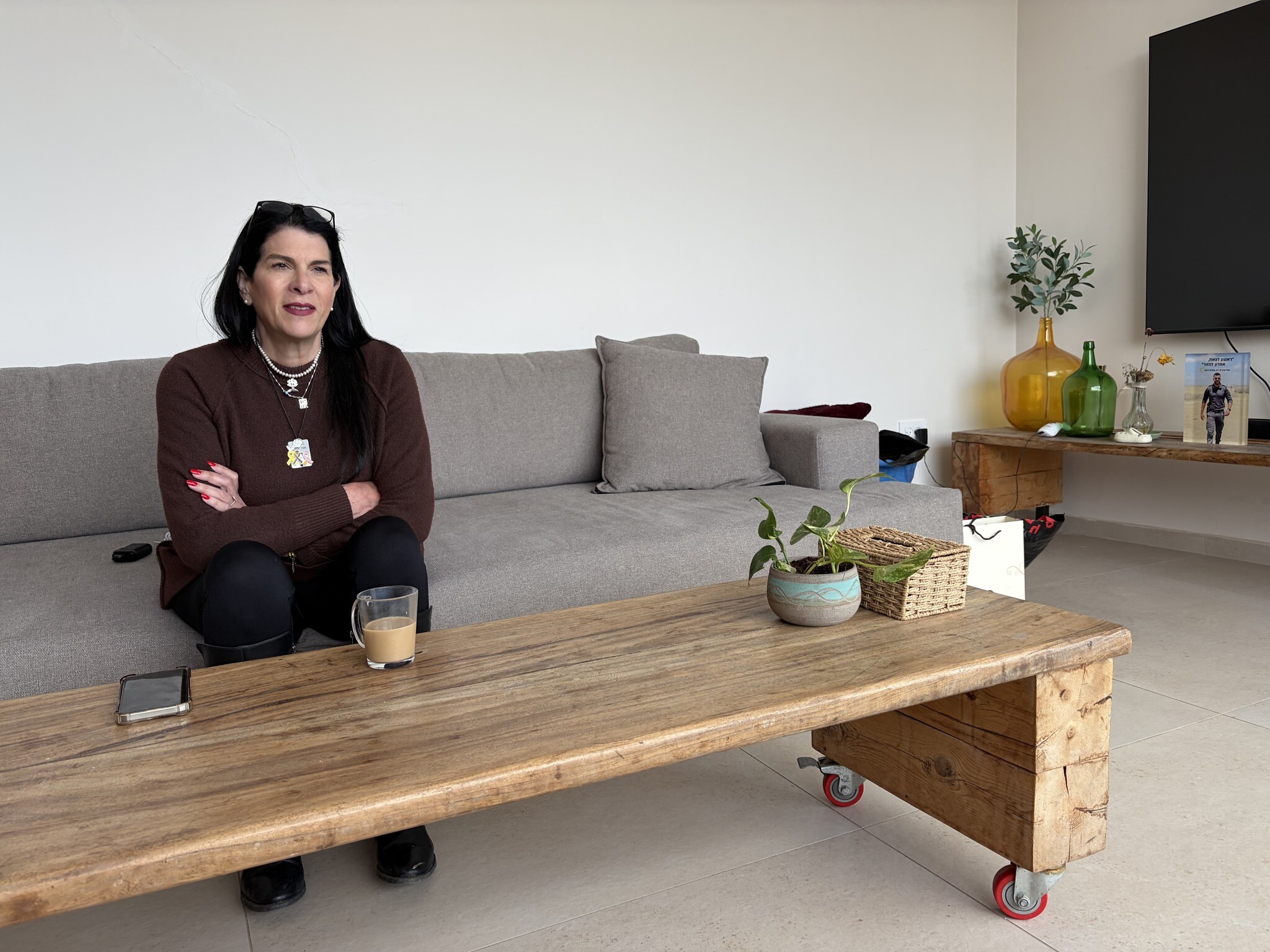
Talik Gvili sitting at her home in Meitar on January 20, 2026 (Jessica Steinberg/Times of Israel)
“I’m in contact with the prime minister,” she said. “He calls us, and if we have a question, he answers us. I get that there are pressures that I don’t know about; I’m not in that loop. But the Shin Bet, the army, intelligence — I know they’re doing everything they can to bring him back.”
Ran, her middle son, was a member of Yasam, an elite tactical unit of the police. He was awaiting surgery for a broken shoulder on October 7, 2023, when he began hearing about the Hamas invasion in the southern communities, a 50-minute drive from the family home in Meitar, outside Beersheba.
‘The Shin Bet, the army, intelligence — I know they’re doing everything they can to bring him back’
He threw on his uniform, hopped on one of his motorcycles, and sped to Kibbutz Alumim, where he battled Hamas terrorists for hours.
“We knew where he was, he sent a location, he sent a selfie of his injury, and was in touch with his staff, he knew that backup was on the way,” said his mother.
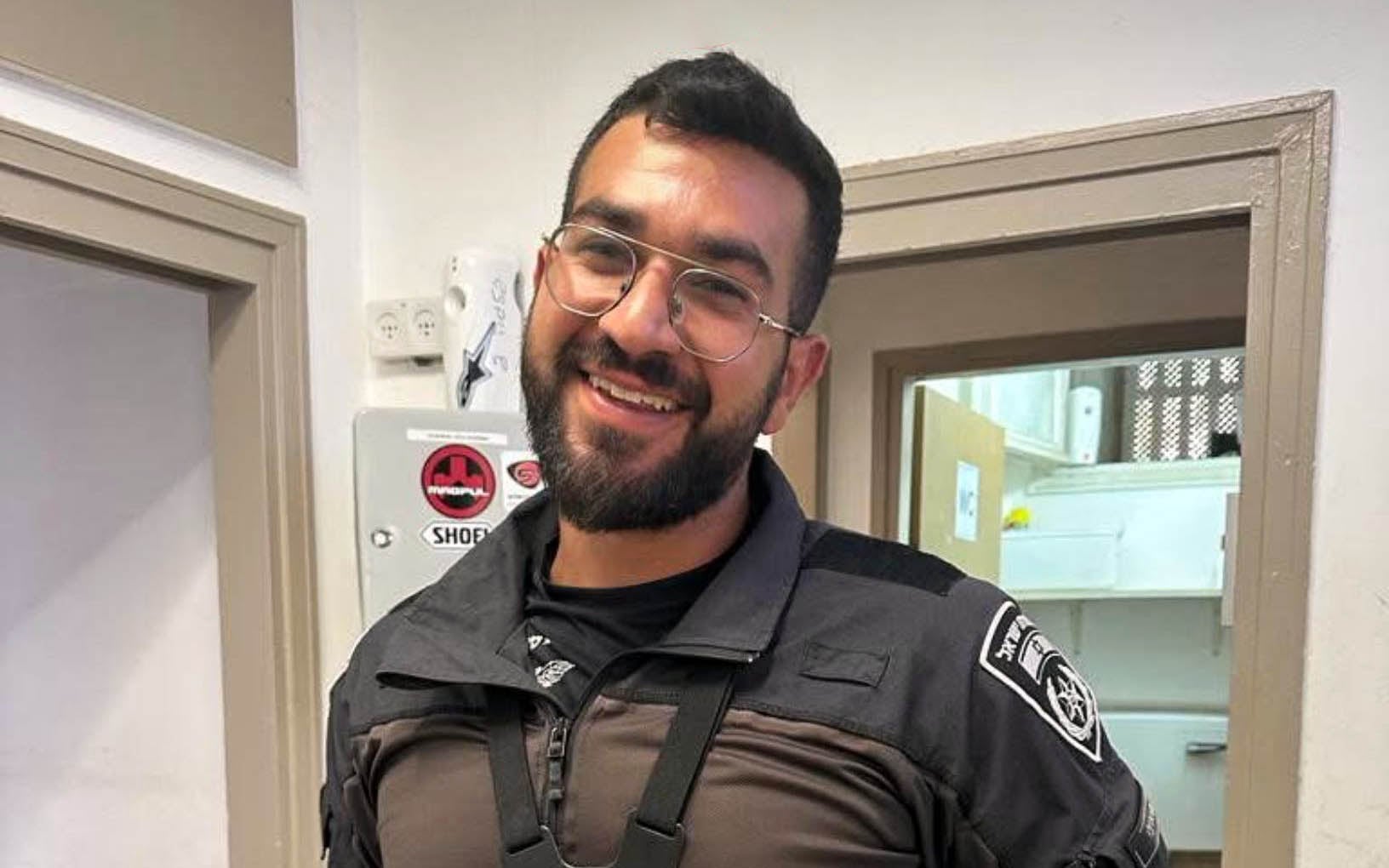
Police officer Master Sgt. Ran Gvili.(Courtesy)
It took a few days until the Gvilis were informed that Ran had been taken captive.
Only on January 30, 2024, the IDF told the Gvilis that intelligence showed that Ran had been killed and his body abducted to Gaza.
Even now, however, there remains a shred of hope that he is alive; the family received photos from October 7 showing Ran arriving unconscious at Shifa Hospital in Gaza City, and he was later reportedly seen in the city’s Zeitoun neighborhood on the back of a motorcycle.
Gvili said little is known about what happened that day, including whether or not he received medical care for his injuries.
To this day, the family refers to Ran in the present tense, determined to believe there’s still a chance he’s alive.
“Hope dies last, right?” said Gvili.
Strategic silence
Until the announcement that Ran had been killed and taken captive, the family remained quiet, not joining any of the hostages’ families’ public struggle, as it wasn’t safe to speak about a police officer kidnapped to Gaza.
Gvili, a family law attorney, closed her office, assuming it would be a month or two, maybe three, before her son was home.
“Your whole life changes,” said Gvili. “It’s like being in a jail cell.”
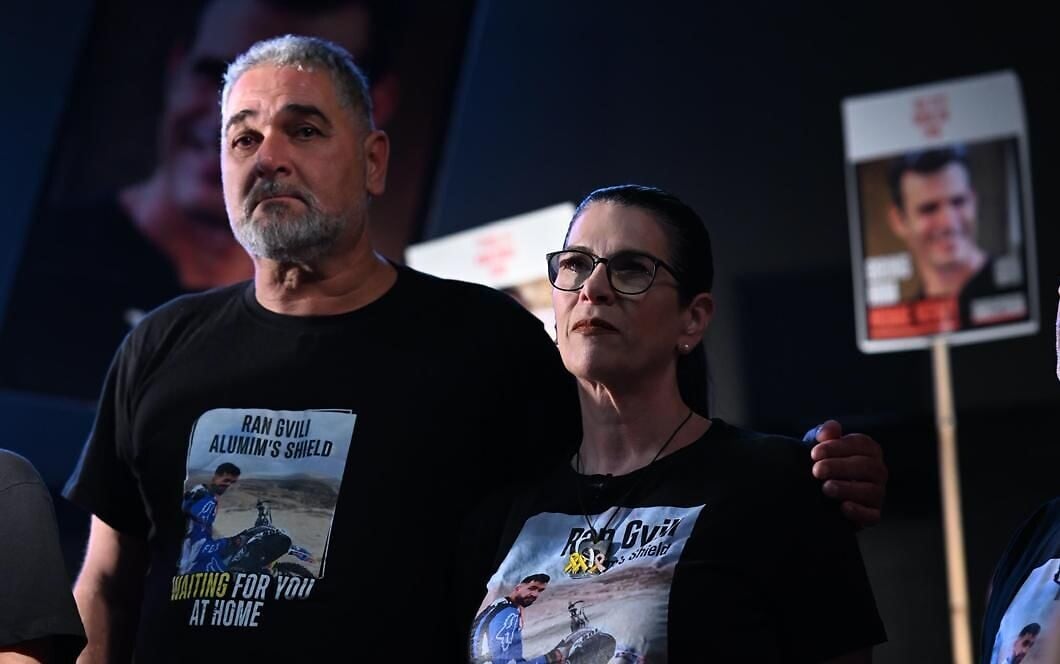
Itzik and Talik Gvili, parents of deceased hostage Ran Gvili, on November 22, 2025, at a Hostages Forum rally. (Paulina Patimer/Hostages Forum)
When their son was declared dead by the IDF, the Gvilis began speaking to the press, seeming to align themselves with the Tikvah Forum, a smaller, more hawkish group of hostage families, rather than the larger Hostages Forum, which organized weekly Saturday night rallies in Hostages Square calling for a hostage deal with Hamas rather than further military pressure in Gaza.
The Gvilis felt strongly that the use of force against Hamas was the only way to bring the hostages home.
“We as a family felt that the war shouldn’t be stopped, that we couldn’t just call ‘Peace, peace!’ and stop fighting,” said Gvili. “We felt that until we hit Hamas hard and showed them who’s boss, there wouldn’t be a deal.”
‘We as a family felt that the war shouldn’t be stopped, that we couldn’t just call ‘Peace, peace!’ and stop fighting’
During the first months after October 7, said Gvili, their family was critical of their own government as well, believing that it was too often heeding the Biden administration’s warnings regarding military pressure in Gaza.
“The Americans didn’t want war, until the Trump administration came in, and then they were a little easier in terms of keeping up the military pressure,” she said. “I felt and believed that the right thing to do to get to a deal is to hit Hamas hard.”
Gvili said she understood the stance of the other hostages’ families, their desire to stop fighting in Gaza to get a deal and get their loved ones home.
“That’s what they felt was right,” she said. “I felt that if we stopped fighting, we wouldn’t see the hostages again.”
One man left
In October, the final 20 living hostages were released, followed by the bodies of 25 deceased captives.
Throughout November, as the Hostages Forum held weekly rallies for the final remaining hostages, the Gvilis joined the effort, believing that it had been the military pressure in Gaza that led to the ceasefire.
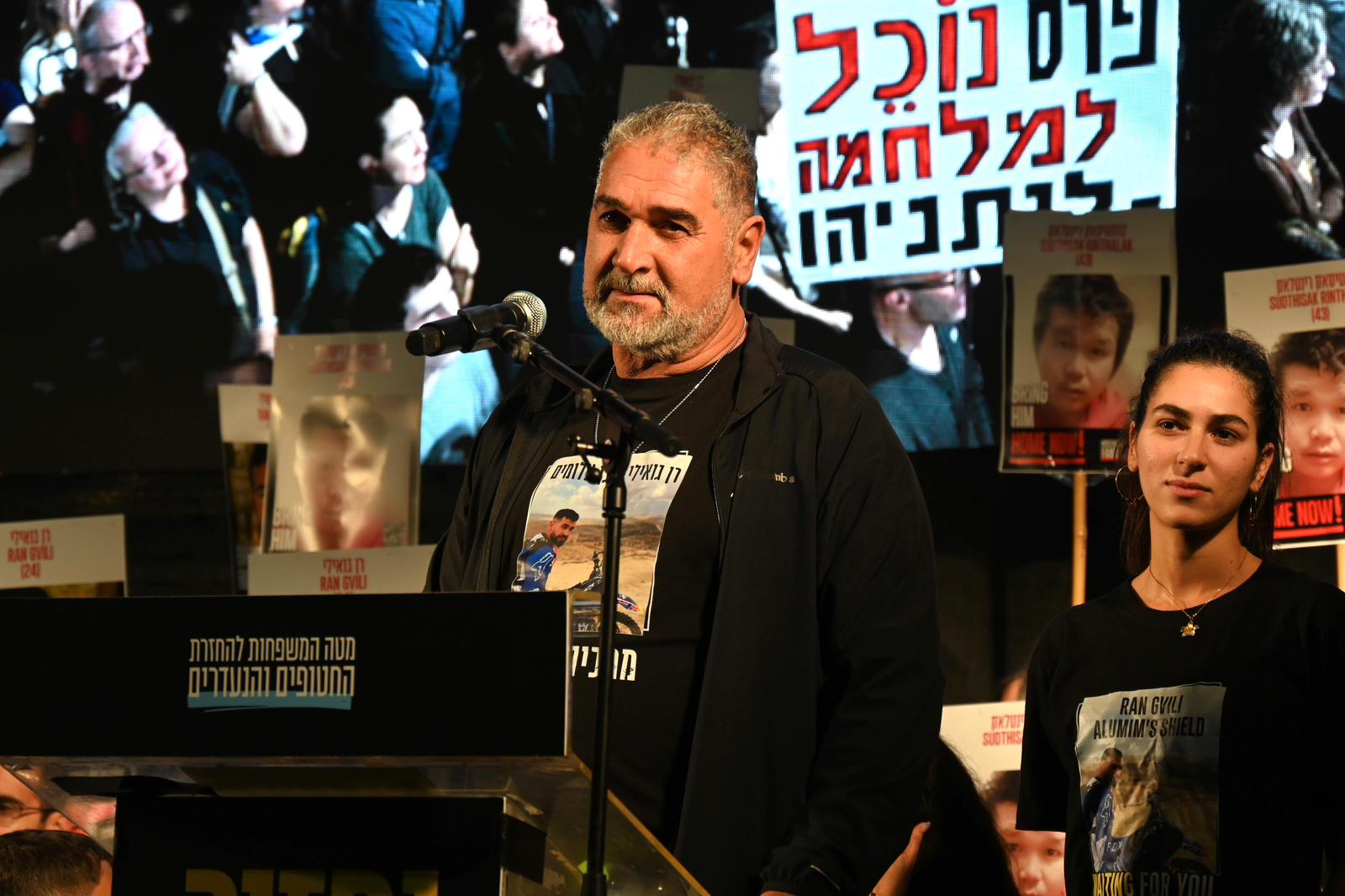
Itzik Gvili, the father of slain hostage Ran Gvili, speaks at Hostages Square, in Tel Aviv, on November 29, 2025. (Uriel Even Sapir/The Hostages and Missing Families Forum)
When the body of Thai farm worker Sudthisak Rinthalak was returned on December 4, 2025, the final remaining hostage was Gvili.
The Hostages Forum closed its offices and stopped holding the rallies, lacking further funding, and the Gvilis chose to continue with the Friday afternoon gatherings in Hostages Square, organized by a different kibbutz each week, with a rally in Meitar on Saturday nights.
Meitar is a community full of Gvili family members. Talik Gvili has lived there since she was 14, and her three siblings also live there with their families, along with her parents. Her husband, Itzik, also has siblings in Meitar.
“It’s amazing, said Gvili, “it gives you the feeling that you’re really not alone.”
When Gvili talks about the rallies, she smiles, amazed at who shows up to offer support.
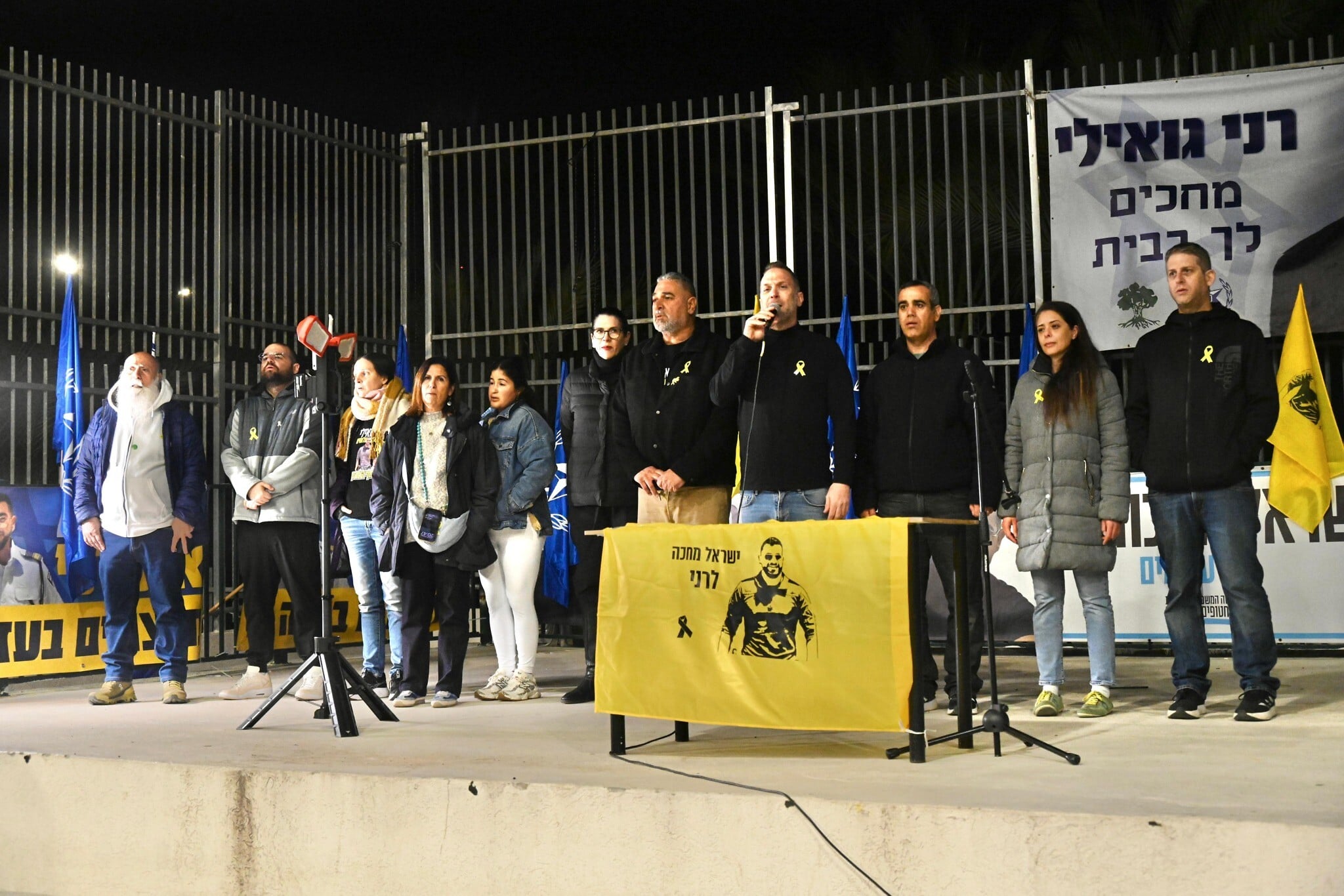
The Gvilis with former hostages Omri Miran and Eitan Horn and other bereaved family members at the rally in Meitar on January 24, 2026 (Courtesy)
“People from all sides come, Haredim and right and left,” she said. “I think people understand that Ran isn’t just our son, but everyone’s son, and there’s a feeling that you want to do something and don’t know what else to do. It does so much good for me.”
On a recent Saturday night, speakers included former hostage Eitan Horn and his sister-in-law, Dalia Cushnir, with former hostage Omri Miran and his father, Dani Miran, present as well.
‘I think people understand that Ran isn’t just our son, but everyone’s son’
“They’re the only ones who get it — who get the feelings of waiting and the pressure of the waiting, and they’re holding us. That’s what we promised each other down to the last hostage,” said Gvili, adding that Simcha and Ayelet Goldin — the father and sister of IDF soldier Hadar Goldin, who was killed in 2014 and whose body was held by Hamas until this past November — are a constant source of support.
The Gvili home in Meitar is a space full of reminders of Ran, from the banners that hang outside to the long wooden coffee table and console that Ran made himself, one of his many hobbies.
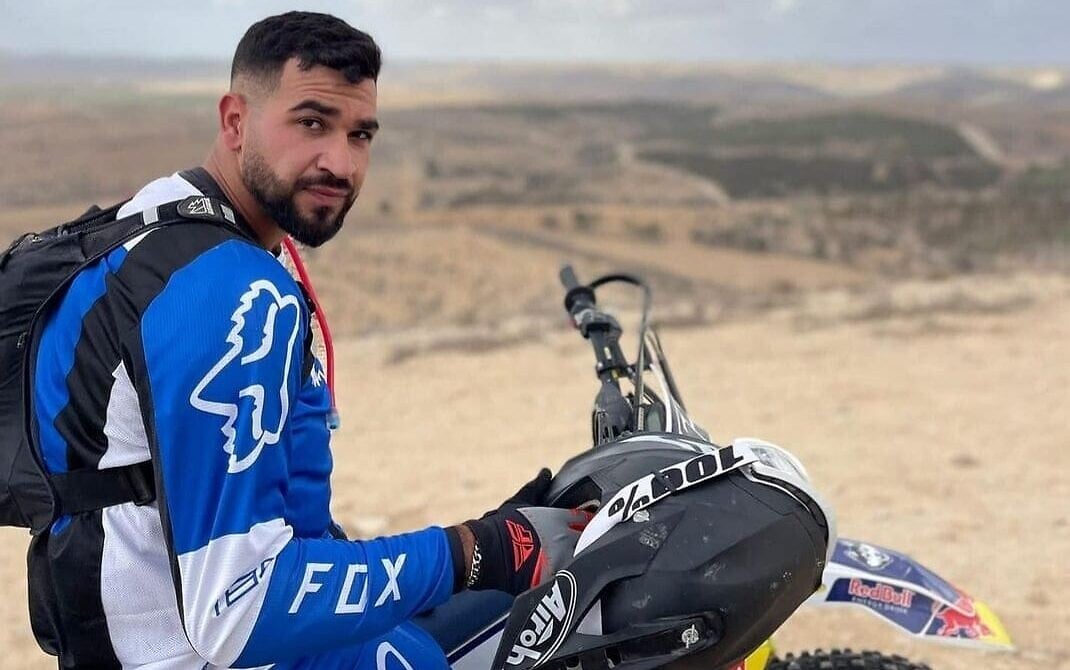
Police officer Sgt. First Class Ran Gvili, confirmed on January 31, 2024, to have been killed by terrorists on October 7, with his body abducted to Gaza (Israel Police)
The hill visible outside the living room window will soon turn green from the winter rains, said Gvili. It’s the same hill where Ran would often ride his motorcycle, a familiar scene from one of the pictures used for his hostage placard.
A lifelike, black-and-white image of Ran’s face, open and smiling, created by artist Benzi Brofman, hangs in the kitchen, visible from most places on the first floor.
“We don’t live in a memorial,” said Gvili, “but he’s part of us.”