
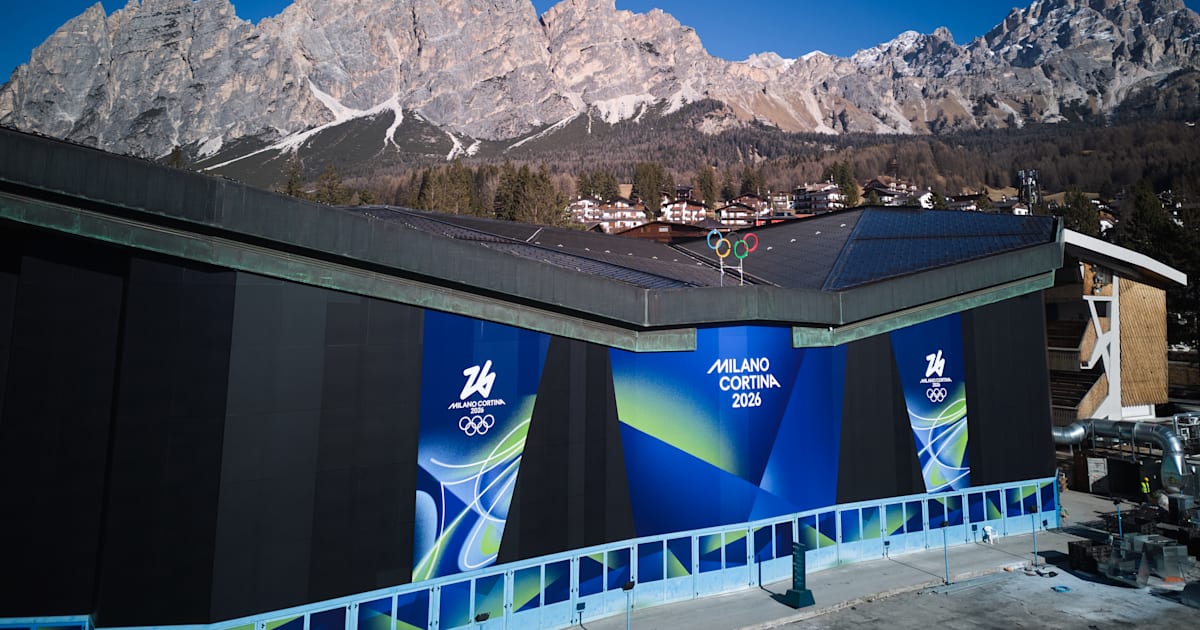
Sliding sports are also set to return to the Cortina Sliding Centre (Eugenio Monti), through a full redevelopment of the historic track. Deeply ingrained in the town’s sporting heritage, the venue has long been associated with Cortina’s Olympic identity. While the IOC encouraged the use of an existing track in another country to minimise construction, national authorities opted to rebuild the Cortina track to host bobsleigh, skeleton and luge for the 2026 Games, and the hope is now that it will continue the long-held tradition in sliding sports.
The Milano Cortina 2026 Olympic Villages will again redefine the concept of Olympic living, responding to the needs of the host communities. Six Olympic Villages will adapt to their surroundings, through new construction or the use of existing hotels and facilities. In Cortina, a temporary Alpine town has been created for the Games to welcome 1,400 residents against the dramatic backdrop of the Pomagagnon and Tofane peaks.
Opening doors to the world
The 1956 Games also transformed how Cortina connected with visitors and viewers. These were the first Olympic Winter Games to be broadcast live, in black and white, across eight European countries – a remarkable shift for an event previously experienced mainly by those able to travel to the mountains.
For the first time, winter sport reached audiences as real-time images: skiers carving down the Tofane, skaters circling the rink, a small Alpine town briefly becoming a shared European living-room spectacle.