
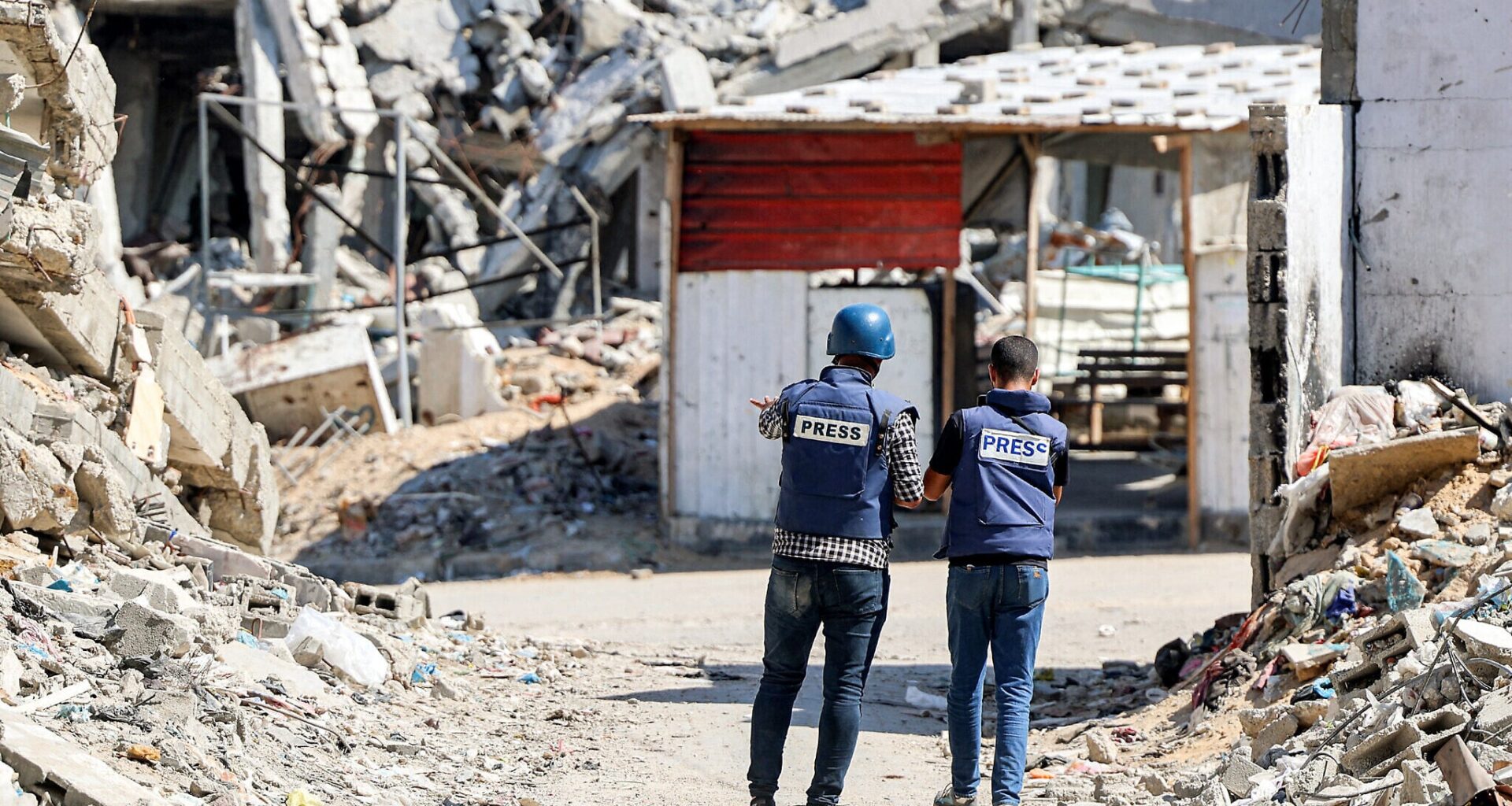
The High Court of Justice has once again avoided making a decision on a petition seeking unfettered, independent press access to Gaza, asking the state simply to provide an update on the situation in another two months’ time.
The decision comes following a hearing in the High Court on Monday on the petition filed by the Foreign Press Association (FPA). At that hearing, the justices appeared to be dissatisfied with the explanations provided by state representatives for the ongoing, blanket ban on independent press access to the territory.
The ban has been in place since the beginning of the war in Gaza following the Hamas-led October 7, 2023, massacre in southern Israel. FPA first petitioned for press access in 2024. A ceasefire in the war took effect in October 2025.
The attorney representing the state said he could only give further information behind closed doors, and the court agreed to receive the government’s explanations on those terms. The court also denied a request by Gilad Shaer, the attorney representing the FPA, to gain access to the information relayed to the court in the closed-door session.
In their decision issued on Monday night, Justices Noam Sohlberg, Chaled Kabub and Ruth Ronen said they could not publicly address the “classified security information” presented to them behind closed doors by the state attorneys to justify the ongoing ban, and requested merely that the state provide the court with an update by March 31.
Get The Times of Israel’s Daily Edition
by email and never miss our top stories
By signing up, you agree to the terms
The FPA’s legal team is likely to file a request for the court to reconsider the decision later this week.
During Monday’s hearing, the justices questioned the state’s ongoing contention that allowing journalists independent access to Gaza would endanger Israeli forces, against the backdrop of the ceasefire.
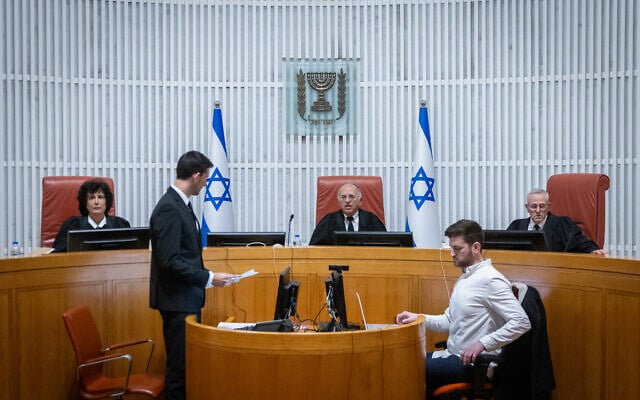
Illustrative: Supreme Court Justice Noam Sohlberg presides over a court hearing, January 13, 2025. (Chaim Goldberg/Flash90)
“Journalists want to enter independently. What risk do they pose to IDF forces?” Kabub asked Yonatan Nadav, the attorney representing the state in court.
And Ronen pointed out that the security situation had changed since the petitions by the FPA were first filed back in 2024, specifically in light of the ceasefire, which came into effect on October 10, 2025. US President Donald Trump launched the ceasefire’s second phase last week.
“You can no longer say it’s the same risk. You must explain what else must take place for journalists’ entry to be permitted. It’s not enough to claim security concerns without explaining it,” Ronen said.
The IDF and the Defense Ministry have applied a blanket ban on independent press access to the Gaza Strip since the beginning of the war. It has, however, allowed Israeli journalists, and to a lesser extent foreign journalists, to enter specific areas of Gaza as embedded reporters with IDF forces.
The state has argued that the entry of journalists into the Strip would pose security risks to IDF soldiers and to the journalists themselves.
The FPA argues, however, that the blanket ban on independent access to Gaza for journalists “contravenes the foundational principles of the state as a democratic country, and represents a severe, unreasonable and disproportionate injury to the freedom of the press, freedom of expression, and freedom of employment for journalists and the right to information.”
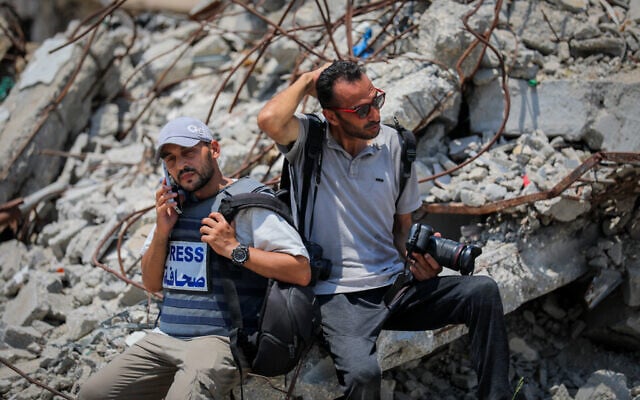
Palestinian journalists report on the war and ongoing humanitarian crisis in the central Gaza Strip, July 26, 2025. (Ali Hassan/ Flash90)
The FPA’s petition requesting that the court order the government to facilitate independent press access to Gaza during the war with Hamas was originally filed in September 2024.
The court granted the state nine extensions to file its response, and when a hearing was finally held in October 2025, the state requested another 30-day extension to update the court on its position in the wake of the ceasefire.
The court then granted several further extensions to the state until it finally submitted its response on January 4.
Is accurate Israel coverage important to you?
If so, we have a request.
Every day during the past two years of war and rising global anti-Zionism and antisemitism, our journalists kept you abreast of the most important developments that merit your attention. Millions of people rely on ToI for fact-based coverage of Israel and the Jewish world.
We care about Israel – and we know you do too. So we have an ask for this new year of 2026: express your values by joining The Times of Israel Community, an exclusive group for readers like you who appreciate and financially support our work.
Already a member? Sign in to stop seeing this
You appreciate our journalism

You clearly find our careful reporting valuable, in a time when facts are often distorted and news coverage often lacks context.
Your support is essential to continue our work. We want to continue delivering the professional journalism you value, even as the demands on our newsroom have grown dramatically since October 7.
So today, please consider joining our reader support group, The Times of Israel Community. For as little as $6 a month you’ll become our partners while enjoying The Times of Israel AD-FREE, as well as accessing exclusive content available only to Times of Israel Community members.
Thank you,
David Horovitz, Founding Editor of The Times of Israel