
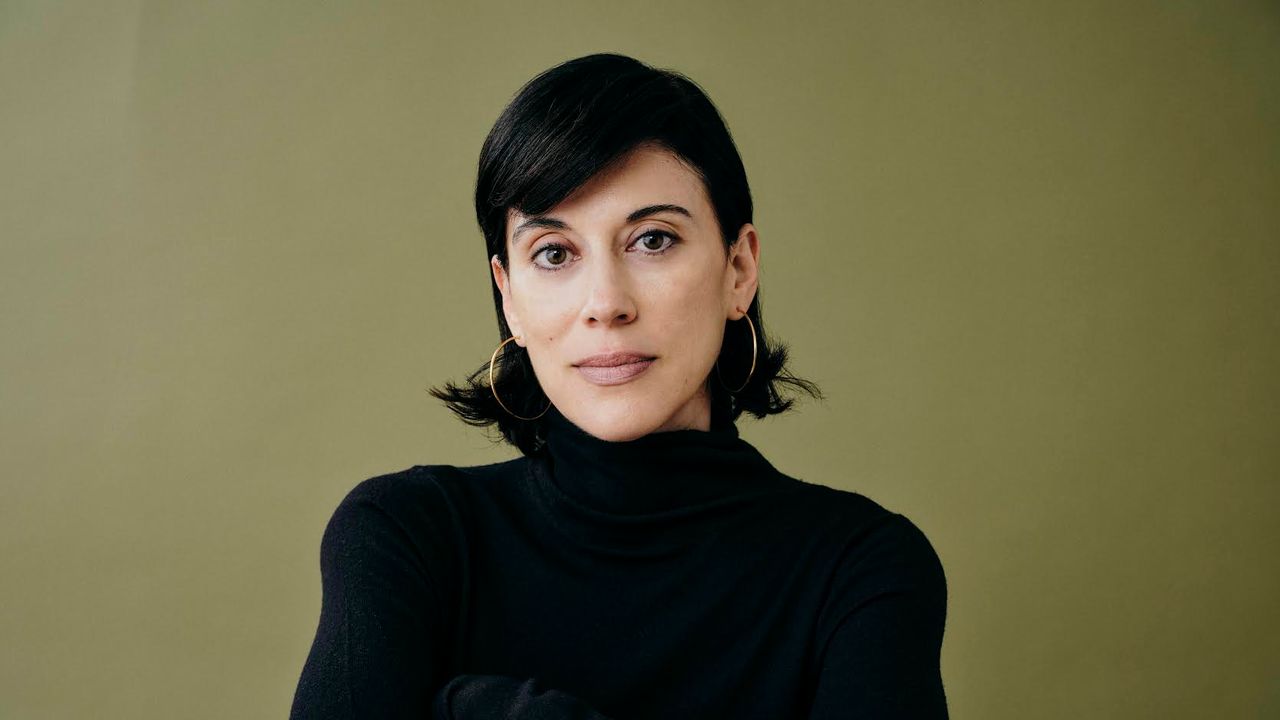
This year, the Academy Awards made history by shortlisting three Palestinian narratives—all helmed by Arab or Arab-American artists—in the best international feature category: The Voice of Hind Rajab from director Kaouther Ben Hania; Palestine 36 from director Annemarie Jacir; and Cherien Dabis’s stirring, decades-spanning family drama All That’s Left of You, in which she also stars. (Of the group, it was The Voice of Hind Rajab that eked out a place in the final lineup, though All That’s Left of You earned a nod at the Independent Spirit Awards.)
With All That’s Left of You now in select US theaters, Vogue spoke to Dabis—who is known for her work on The L Word, Ramy, and Only Murders in the Building—about navigating production at the start of the war in Gaza, drawing inspiration from Palestinian novels and Hollywood epics, and seeing her film drum up Oscar buzz alongside Ben Hania’s and Jacir’s.
Vogue: How did Noor and Malek, the two characters we meet at the outset of the film, first come to you?
Cherien Dabis: I think I started out with the three generations. I knew that it was going to be a multi-generational story about the pathways of trauma and how the ongoing [Israeli] occupation impacts different generations in one family. I started out with a grandfather, a father, and a son, and when I was first thinking about how to start the film, one of the first series of images that came to me was boys just being teenagers, having fun, running around, knowing their neighborhood like the back of their hand, taking shortcuts, jumping over things. I just really wanted it to start with energy and life, knowing where it was going to go. I wanted to feel like you could be following teenagers anywhere in the world. It just happens to be that we find out, once they get swept up in this protest, that they’re in Palestine and it’s the First Intifada.
Can you tell me a little bit about how the war in Gaza affected production on the film?
We had been planning to shoot 90% of the film in Palestine and 10% in Cyprus to take advantage of tax credits and to shoot any of the things that might be too risky to shoot in Palestine. I landed in Palestine in May of 2023 to begin pre-production, and I worked with a giant Palestinian crew on the ground. We found all of our locations; we had a massive, giant warehouse of beautifully crafted, carefully curated props from all of the different time periods; we’d begun construction on our locations; we’d just done everything. We were only two weeks away from shooting when October 7 happened, and, you know, we had to stop in our tracks. Production was based in Ramallah at that point, and things became super-tense really quickly. I had foreign crew who had just arrived in Palestine the week before, and very soon after the events of October 7, they decided that they wanted to leave and go home and they were too scared to be there, which is totally understandable. Their families were worried, and we started evacuating people on October 9th.