
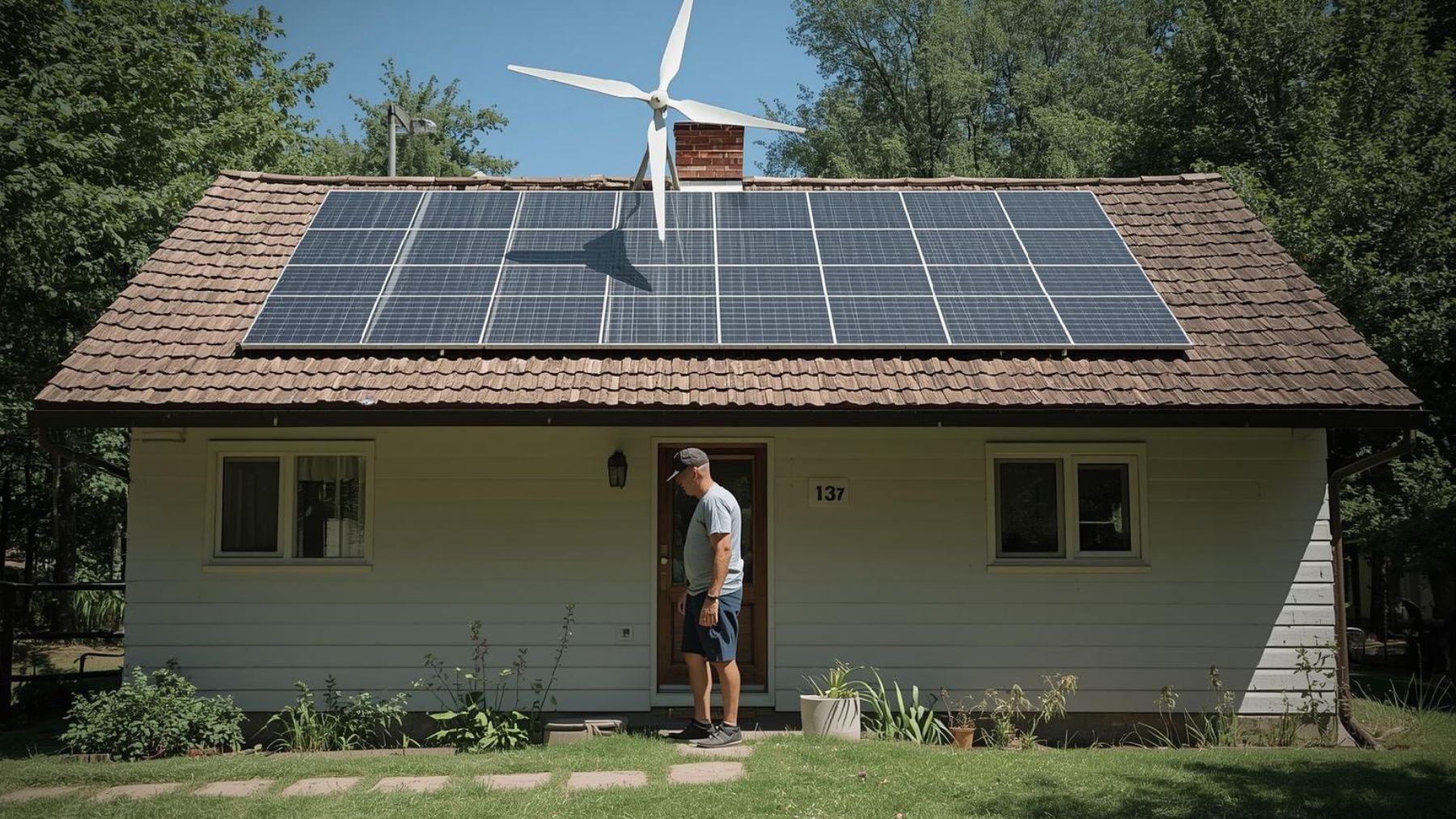
For years, solar panels have been sold as the clean answer to everything. Put them on the roof, let the sun shine, and enjoy free power forever. That’s the dream.
But real life interrupts that dream with clouds, short winter days, and cold nights, exactly when energy demand is highest and the sun is missing.
That’s when a quiet question appears: What happens when the sun doesn’t cooperate?
The clean energy promise sounds better than it behaves
Renewable energy marketing makes things look simple. Enough panels mean enough power. Add a battery and the job is done.
But in reality, solar output drops when people need energy the most.
During winter, lights stay on longer, heaters work harder, and the system that felt perfect in summer suddenly feels fragile. This gap between promise and reality is rarely talked about.
When reality shows up on camera
Sometimes, a short video can challenge a big idea. Not polished. Not staged. Just honest.
In this case, a homeowner shared a moment where solar power was failing, but another energy source quietly took over. One system slowed down, the other stepped in. The timing was impossible to ignore.
The clip spread fast through off-grid and sustainability communities.
Why winter exposes the weak spots
Winter is unforgiving. Lower sun angles, heavy cloud cover, and short daylight hours all reduce solar production.
At the same time, energy demand increases. Heating, lighting, and daily routines don’t pause just because the sun does. This imbalance is where many renewable systems struggle.
It’s not a failure. It’s simply a natural limitation.
A different energy source plays by other rules
Unlike solar, some energy sources don’t depend on daylight. They often perform best when the sun is gone.
Instead of fighting winter, this approach uses harsh weather as an advantage. Power is generated during strong conditions, stored, and used later when things calm down.
It’s not a radical idea. It’s a practical one.
This is the homeowner — and the simple solution
The homeowner is Mark, known online as @ecosufficiency. He lives off-grid on a small property in the English Lake District.
His setup combines solar panels, small wind turbines, and battery storage. When strong winds hit — often at night and in winter — the turbines charge the batteries. When conditions calm down, stored energy takes over.
Mark is open about noise, mechanical wear, and the need for safety controls. But the balance works.
The bigger lesson behind the setup
Mark’s main message is simple: there is no single-energy solution. Solar shines in summer. Wind excels in winter. Climate and location decide everything.
His honesty is why the message sticks. No hype. No miracle tech. Just a reminder that energy resilience comes from combining options, not relying on one.
Most people won’t leave the grid. But many can learn from this idea.
Sometimes, the smartest energy solution is not choosing sides — it’s letting systems work together.