
In October 2021, just before Israel’s delegation left for that year’s global climate confab in Glasgow, President Isaac Herzog announced that he would create a special climate forum.
The idea was to bring together civil society, academia, central and local government, and the economic and business sectors to lower global warming gas emissions and prepare for the effects of climate change — which include heatwaves, wildfires, intense rainfall and flooding, and rising sea levels.
The Israeli Climate Forum got its start under the so-called “change government” led by Naftali Bennett, with the president saying that “a state of emergency demands emergency measures.”
But the “change government” fell in June 2022, and elections in November of that year brought in the current government led by Benjamin Netanyahu, in which environmental and climate issues have been accorded low priority. Ministers are currently discussing a request by US President Donald Trump for Israel to follow his example and exit the UN’s landmark 2015 Paris Climate Accords.
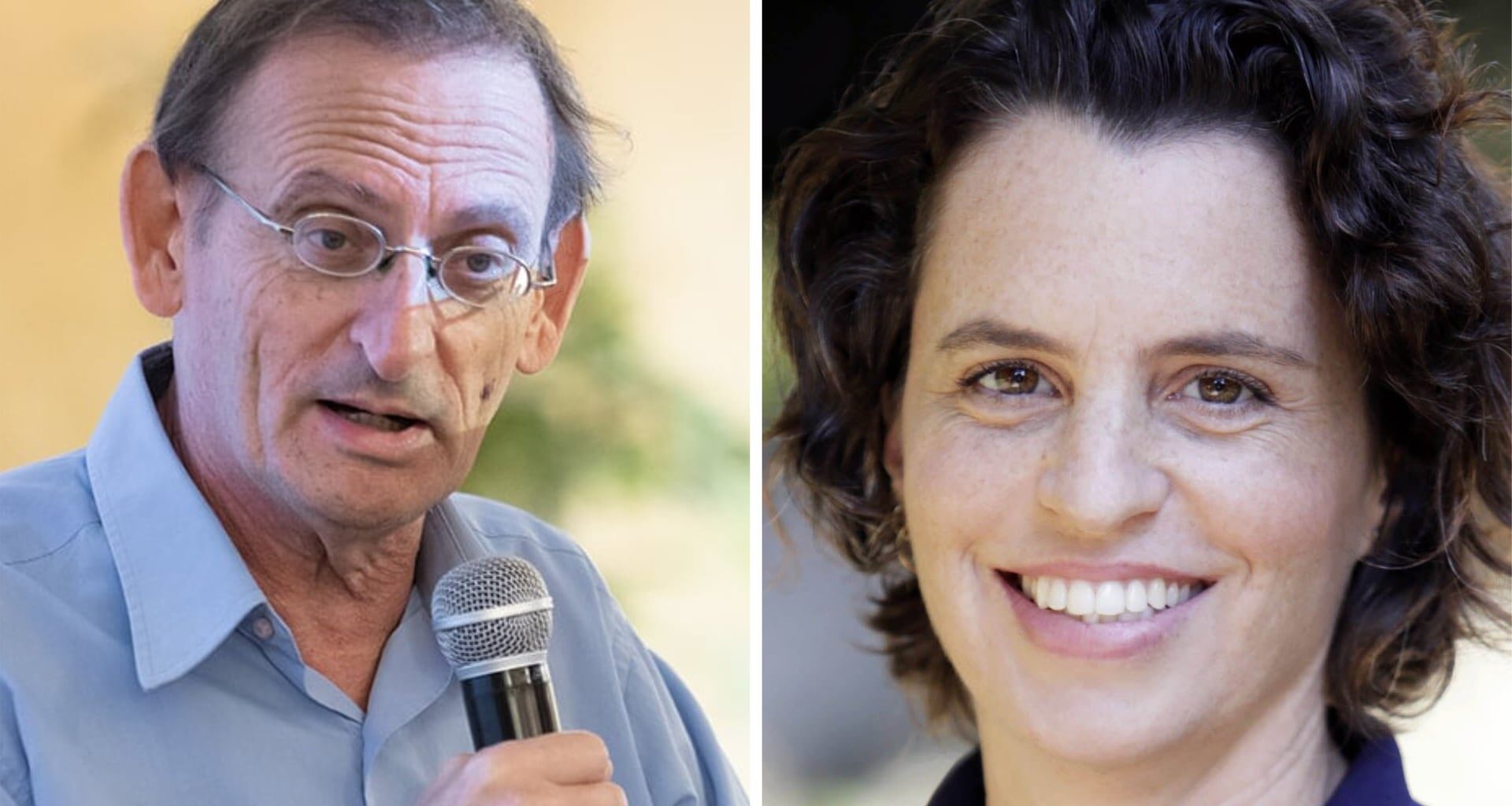
On Thursday, the Israeli Climate Forum’s chairman, Dov Khenin, and CEO, Netta Galnoor-Tene, are due to present their annual report for 2025 to the president.
Get The Times of Israel’s Daily Edition
by email and never miss our top stories
By signing up, you agree to the terms
Prior to the release of the report, they spoke to The Times of Israel in their Tel Aviv University offices.
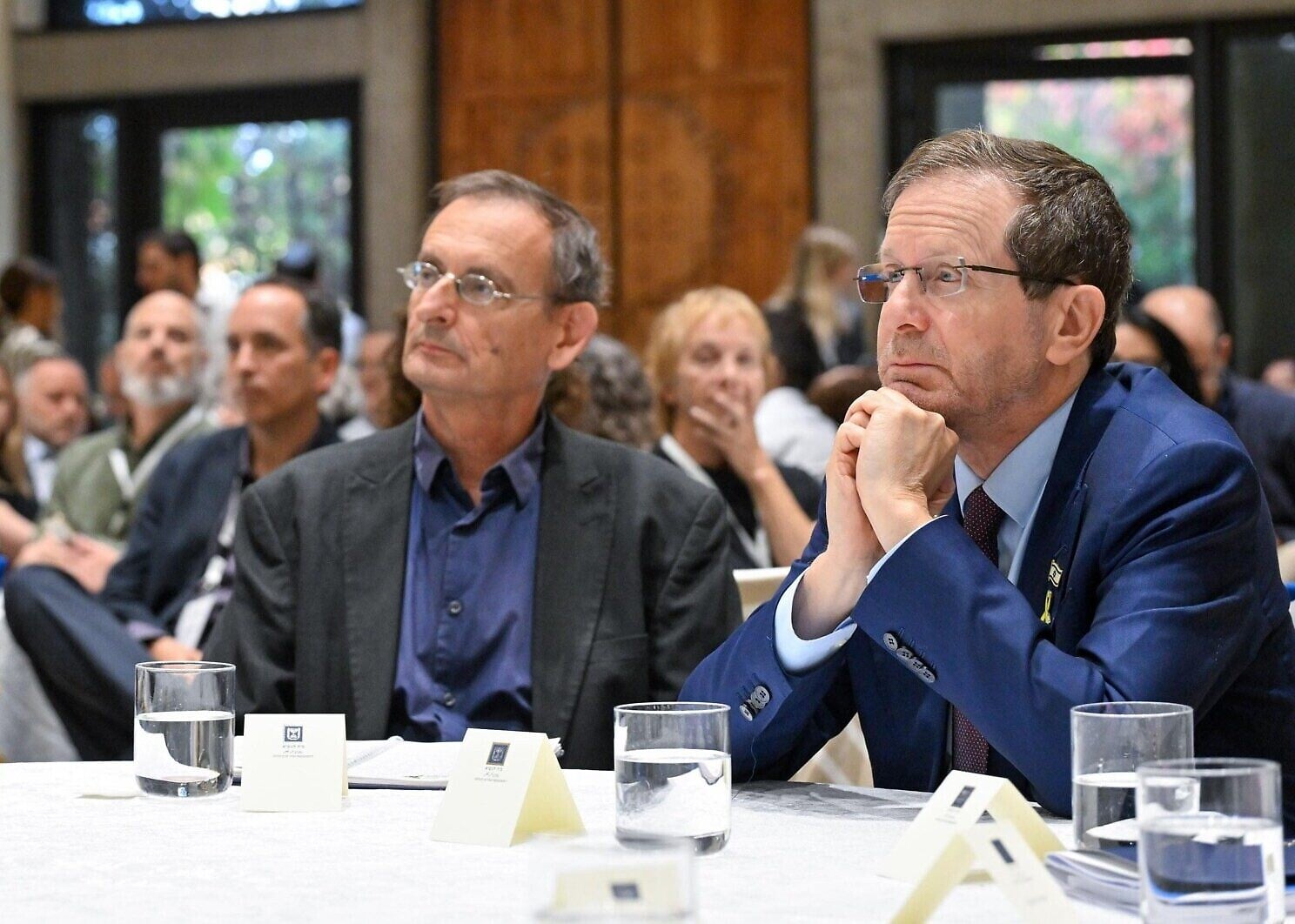
President Isaac Herzog (right) and Israeli Climate Forum chairman Dov Khenin listen to a speaker during the forum’s annual conference at the President’s Residence, November 30, 2026. (Kobi Gideon/Government Press Office)
Strengthening local government
According to Khenin, a veteran environmental activist and former Knesset member for the Hadash party, it’s “not that people don’t understand that there’s a climate crisis, but they don’t understand what to do about it.”
He explained that since the bloody October 7, 2023, Hamas invasion of southern Israel and the subsequent war in Gaza, the forum has been prioritizing programs to strengthen resilience, “to show why in our [current] reality the things we believe in are still important, not only in terms of climate, but also defense, the economy, and more.”
Advising on a new national food security plan and helping the Health Ministry better prepare to treat victims of extreme climate events are just some of the projects featured in the 2025 annual report.
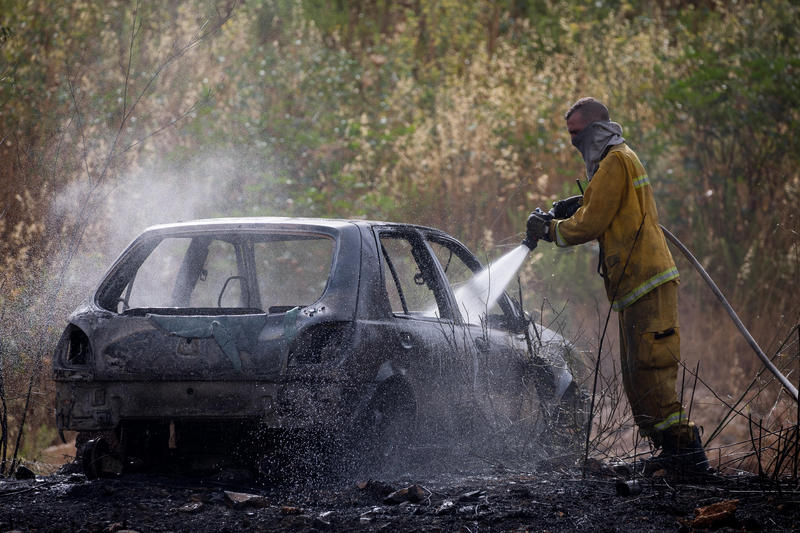
Firefighters put out a fire in vehicles parked near a forest in the Malha area of Jerusalem, during a heat wave across Israel, on July 17, 2019. (Yonatan Sindel/Flash90)
One of the things the forum has focused on over the past year has been local government, which, Khenin said, “knows better than central government how to be resilient. It is local government that advances climate policies the most, and not just in Israel.”
Despite this, he went on, 92% of Israelis’ taxes go to the central government, leaving local government without sufficient authority or funds.
Galnoor-Tene noted that dozens of local authorities had formulated plans to cope with climate change, but couldn’t afford to implement them.
In addition to promoting sustainable energy within local government, the forum has, for the past year, been working with Aklima-The Climate Center and the Keren Kayemeth LeIsrael-Jewish National Fund on a new project with 10 local authorities chosen from a call for proposals.
Each of the winning municipalities has chosen at least one climate-related project to implement.
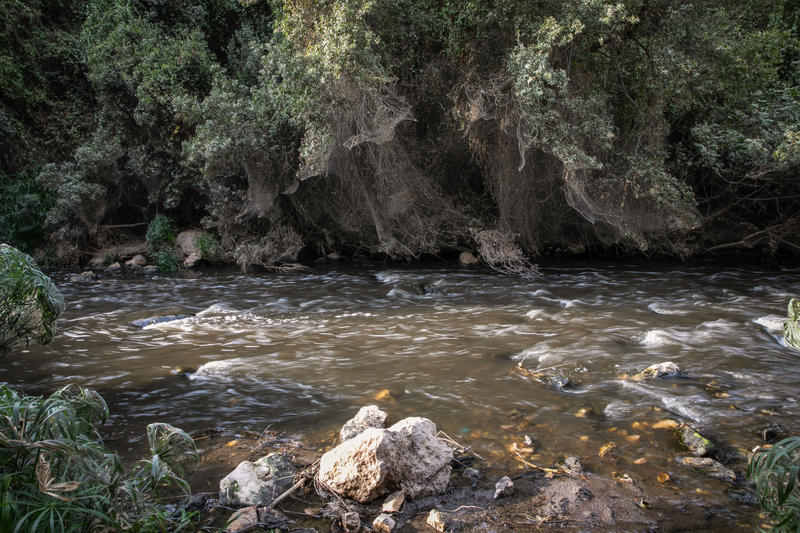
The Sorek Stream on October 6, 2018. (Anat Hermony/Flash90)
For example, Umm al-Fahm, a majority-Arab city in northern Israel, has opted to reduce waste-generated fires and to train neighborhood emergency response teams. Another municipality, the Brenner Regional Council in central Israel, is rehabilitating parts of the Sorek Stream and its tributaries and plans to lay paths to make them accessible to the public.
Khenin and Galnoor-Tene spend much time helping and advising government officials.
They are currently trying to work out how to bring climate and environmental issues into the economic leadership’s considerations.
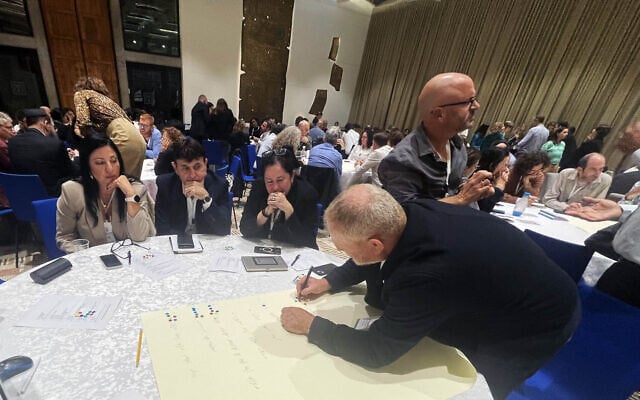
Participants from central and local government and civil society discuss priorities for action in 2026 at a meeting of the Israeli Climate Forum at the President’s Residence, November 30, 2025. (Sue Surkes/Times of Israel)
Asked about Finance Ministry officials, who tend to focus almost exclusively on the bottom line, Khenin said, “They are very intelligent young people, but their economic vision tends to be narrow. One of our challenges is to understand how we generate a more effective dialogue” with economic leaders.
Galnoor-Tene added that the forum was developing a strategy and conducting “very open” conversations with officials in key Finance Ministry departments, such as the Budgets Division and the Accountant General’s Office. In cooperation with the Jewish Climate Trust, it was developing a training program on sustainable economics for public service employees in the Finance and Economy ministries, among others.
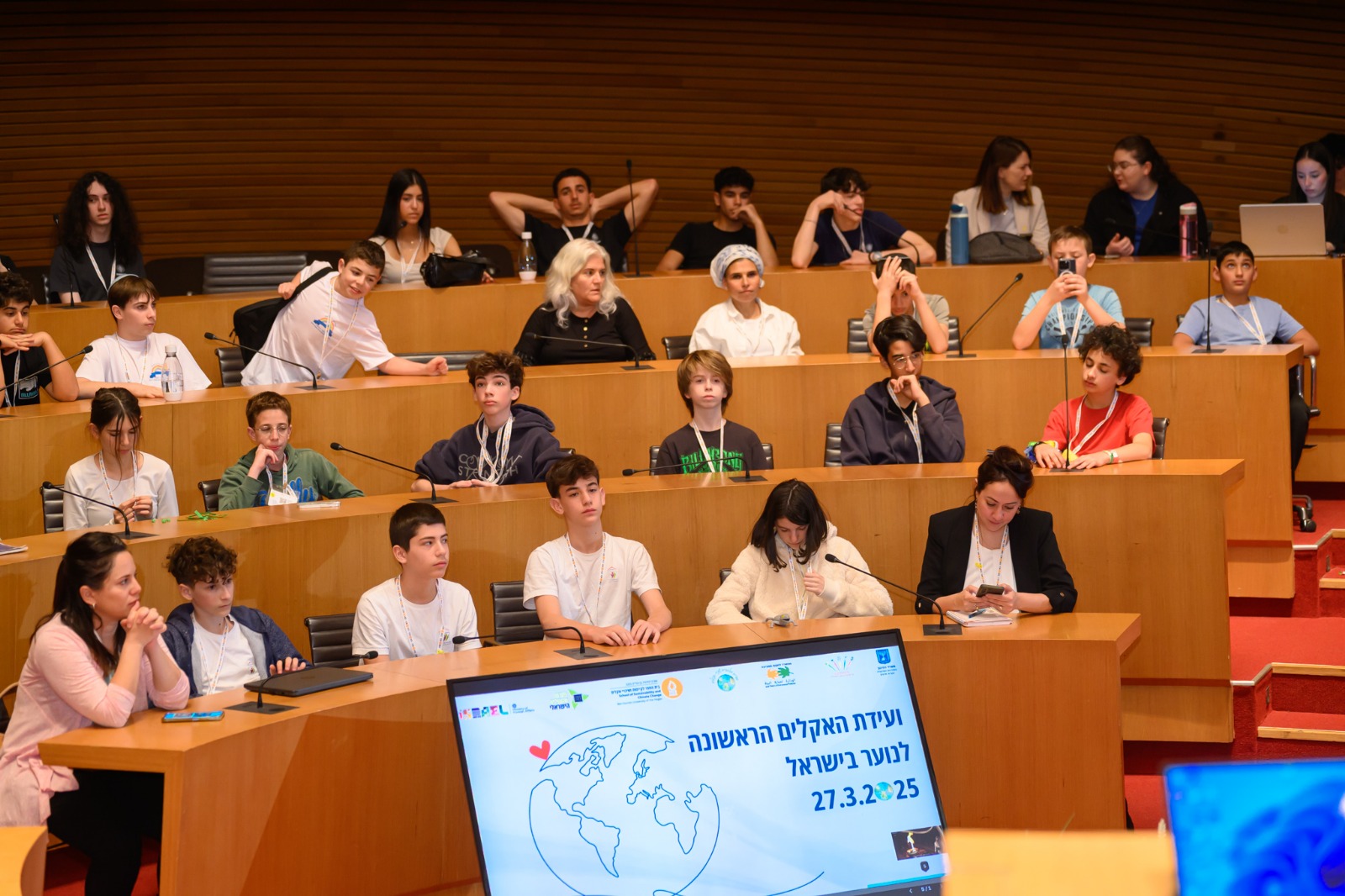
The President’s Israeli Climate Forum joined Ben-Gurion University of the Negev and the Environmental Protection and Foreign Affairs Ministries to organize the first Youth Climate Conference on March 27, 2025. (Dani Machlis)
“Life and Environment brings together the environmental organizations, which is excellent,” Khenin said of the Israeli nonprofit umbrella organization when asked how the forum connected with other environmental groups without creating overlap.
“Philanthropic funds provide support, which is great,” he added. “Our forum is neither one nor the other, but tries to cooperate with both. We are unusual, internationally, in how we bring the sectors together. We’re a triangle in a world of circles. We don’t compete with the circles. I say, the more the merrier.”
You appreciate our journalism

You clearly find our careful reporting valuable, in a time when facts are often distorted and news coverage often lacks context.
Your support is essential to continue our work. We want to continue delivering the professional journalism you value, even as the demands on our newsroom have grown dramatically since October 7.
So today, please consider joining our reader support group, The Times of Israel Community. For as little as $6 a month you’ll become our partners while enjoying The Times of Israel AD-FREE, as well as accessing exclusive content available only to Times of Israel Community members.
Thank you,
David Horovitz, Founding Editor of The Times of Israel