
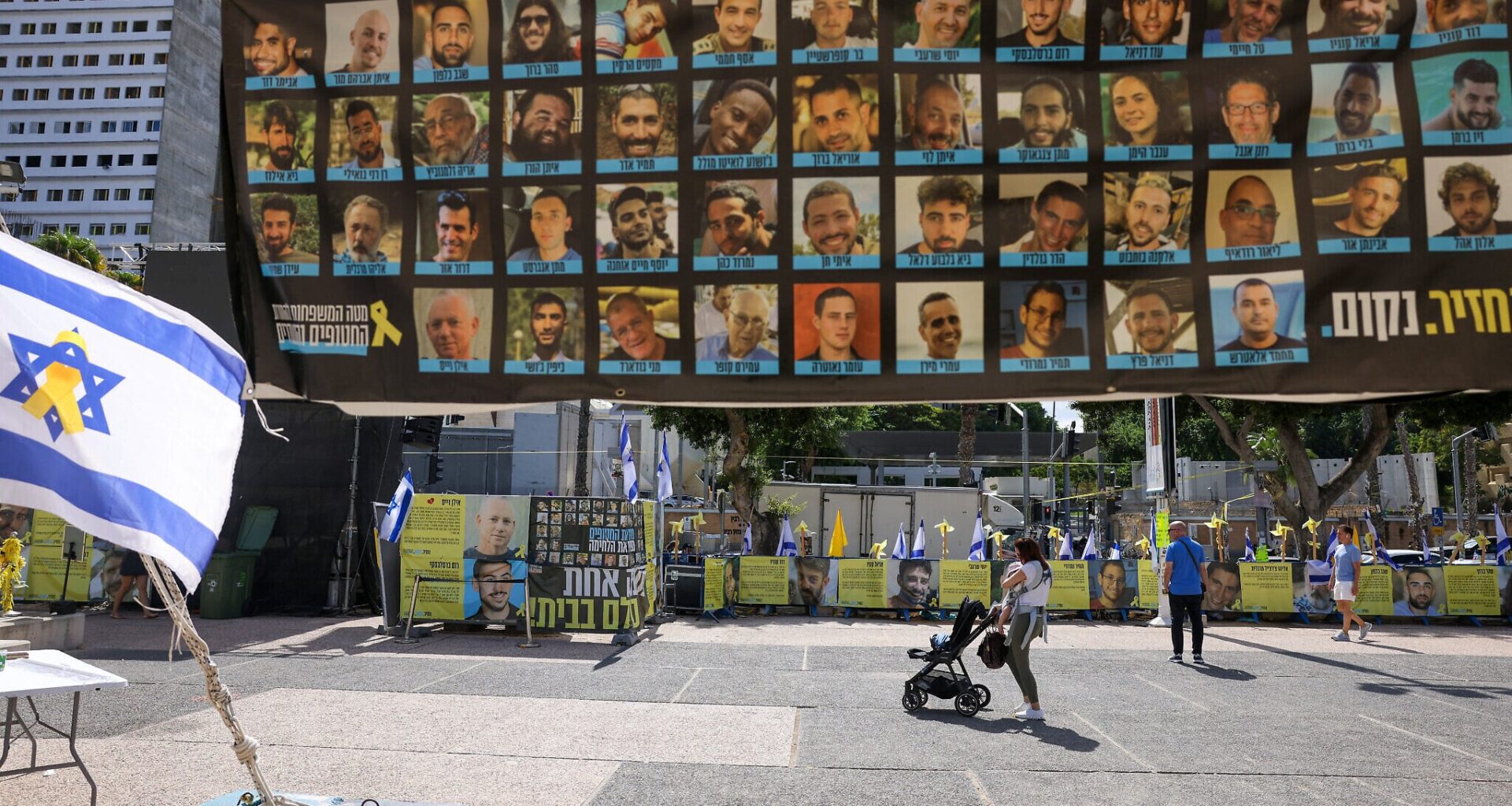
Over two years after the October 7, 2023, attack, with the return of all the captives, living and dead, from the Gaza Strip, the Israel Defense Forces said on Thursday that its Hostages and Missing Persons Headquarters was going dormant.
The unit had been established under the Military Intelligence Directorate in the wake of the Hamas-led onslaught and was tasked with intelligence-gathering efforts on the hostages and missing persons. Until November 2025, it was headed by Maj. Gen. (res.) Nitzan Alon, who also served as the IDF’s point man on hostage negotiations.
“The scenario in which everyone returned [from Gaza] is beyond all imagination; we did not assess that we would reach this situation,” a senior officer in the unit said in a call with reporters on Thursday.
In all, the headquarters dealt with 255 hostages held in the Strip — the 251 abducted in the October 7 attack and four who had been taken captive in 2014 and 2015.
During the initial days of the war, the unit was looking into 3,100 missing people, a number that dropped over time. It took until the end of 2024 to confirm that a total of 251 had been abducted, according to the officer.
Get The Times of Israel’s Daily Edition
by email and never miss our top stories
By signing up, you agree to the terms
According to the IDF’s data, 38 of the hostages were abducted alive and killed in captivity after October 8, 2023. In many cases, they were murdered by their captors, and in others, the military has confirmed that its own actions, including airstrikes, led to the deaths of hostages.
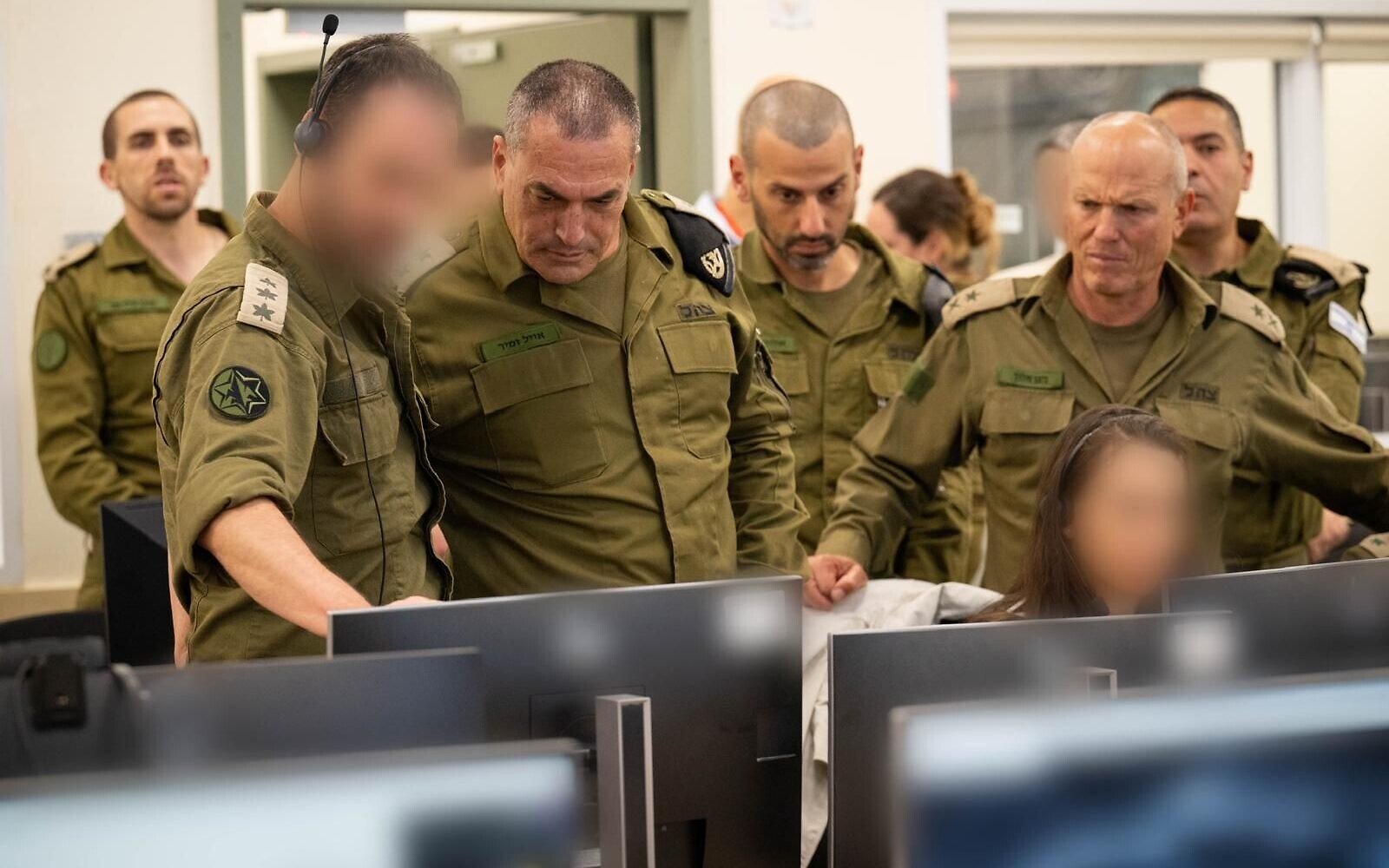
IDF Chief of Staff Lt. Gen. Eyal Zamir (3rd L) and Maj. Gen. (res.) Nitzan Alon, the IDF’s point man in the hostage negotiations (2nd R) watch the release of Israeli-US soldier Edan Alexander at the military’s hostages and missing persons headquarters on May 12, 2025. (Israel Defense Forces)
“Each such case was thoroughly investigated; there were different types of errors, and therefore there were several cases of harm to hostages,” the senior officer said.
The unit was made up of some 2,100 soldiers, around 60 percent of them reservists. The soldiers largely came from the Intelligence Directorate’s Special Operations Division, with others from dozens of units.
According to the senior officer, work at the headquarters was divided into two departments: one dealing with the living hostages and another with the deceased.
Teams of intelligence officers investigated where the hostages were held and by whom, and what their conditions were. The officer said the work was constant, as Hamas often moved hostages around, especially in Gaza City.
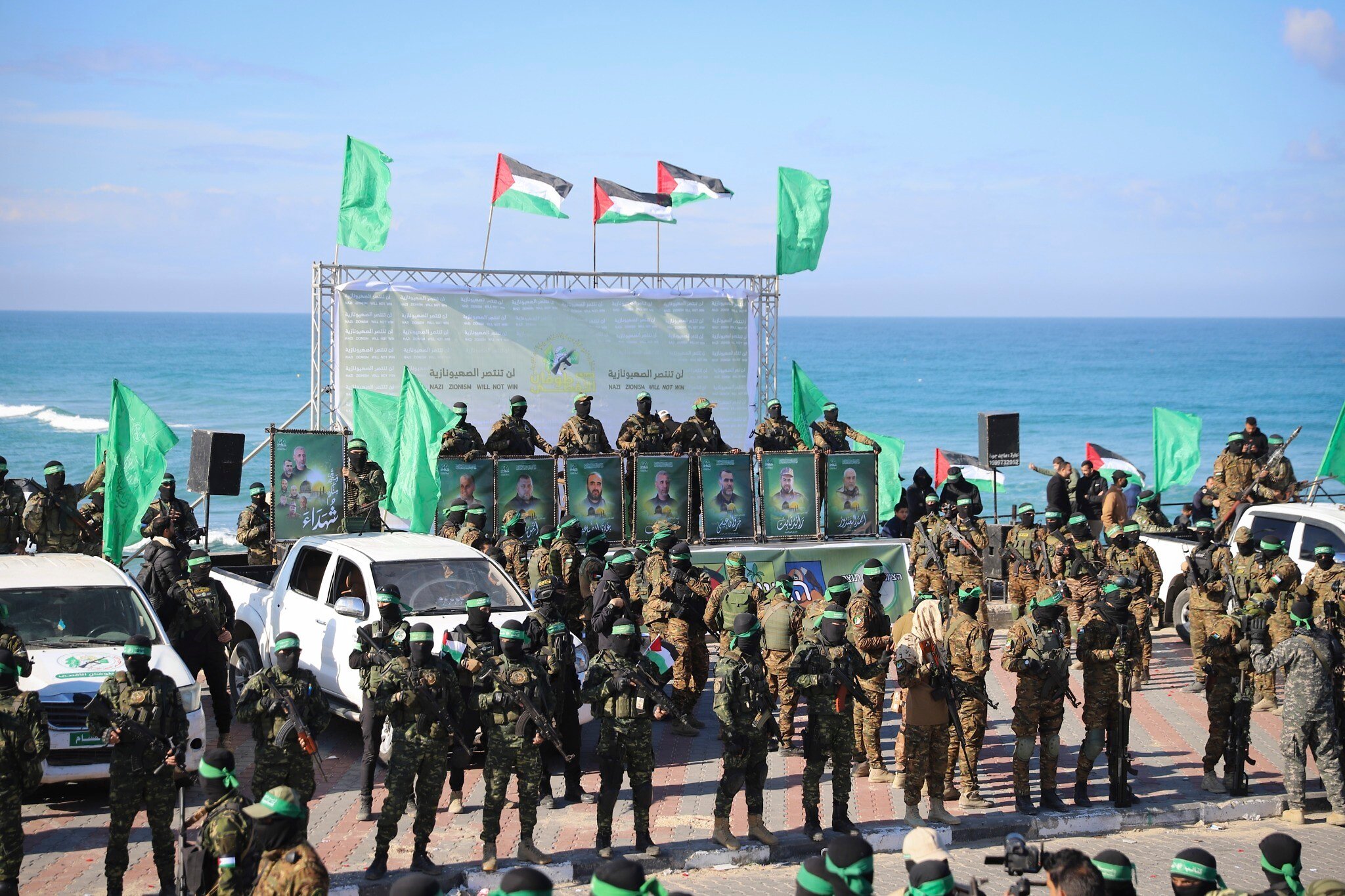
Hamas fighters deploy at the stage ahead of the handover of American-Israeli hostage Keith Siegel, 65, to the Red Cross in Gaza City, Saturday Feb.1, 2025.(AP Photo/Mohammed Hajjar)
The officer said that throughout the entire war, up until the current ceasefire that took effect in October 2025, the military prepared for rescue operations of living hostages. But he said it became “increasingly operationally complex” to carry them out.
“There were operations that were not publicized, that were already prepared and were halted at the last moment, or operations that went into action and did not achieve their objective because the hostage was not found at the location, but we continued to work on this all the time,” he added.
Hamas released 20 living hostages and returned the remains of 27 deceased captives under a ceasefire that began in October 2025. The body of the 28th and final hostage, police officer Master Sgt. Ran Gvili, was recovered by the IDF this week.
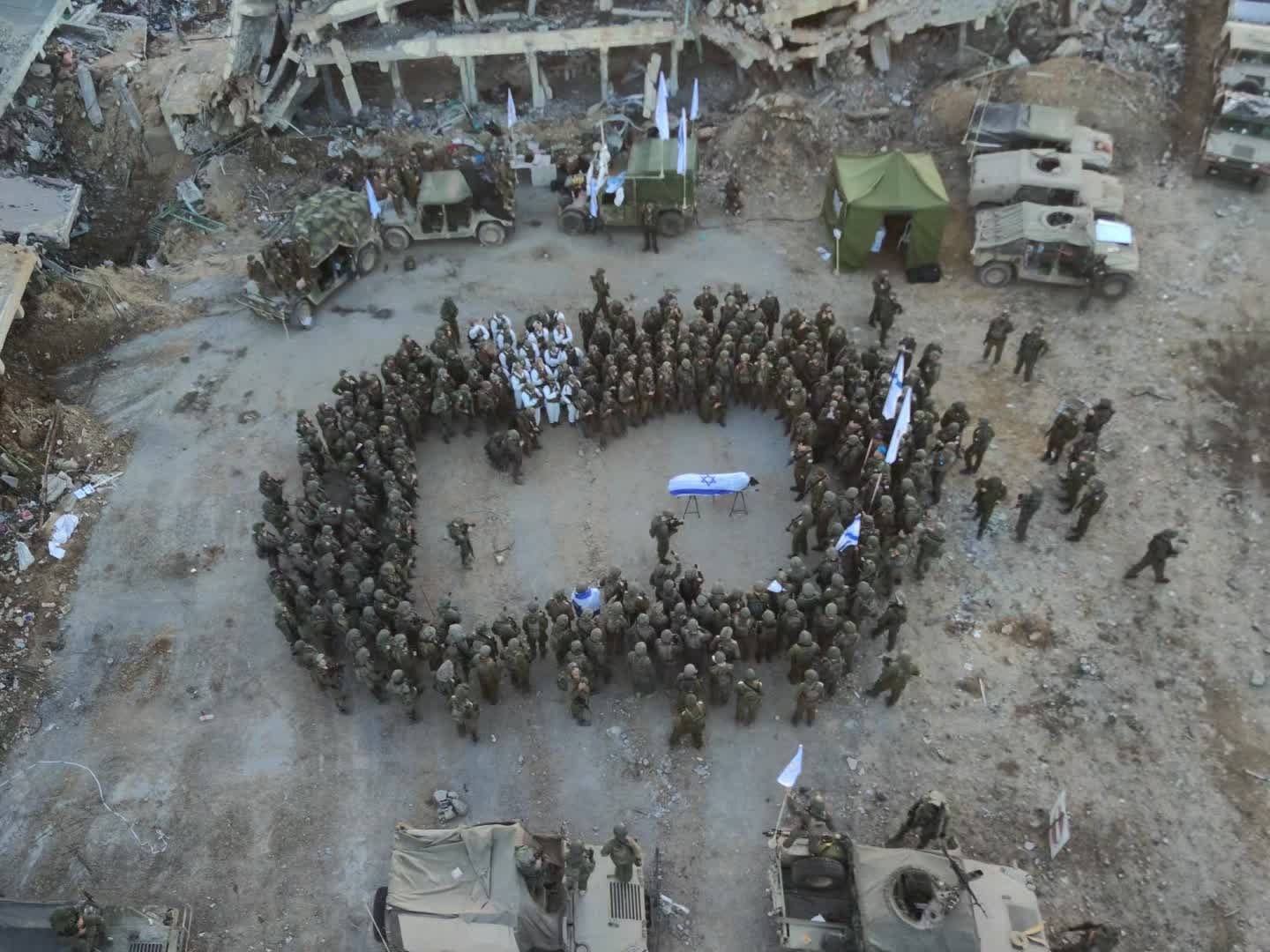
IDF troops are seen in Gaza City for a ceremony honoring slain hostage Master Sgt. Ran Gvili after his body was recovered in Gaza City, on January 26, 2026. (Israel Defense Forces)
One hostage, a dual American-Israeli citizen, was freed in May 2025 in what was seen as a gesture to the United States.
During a ceasefire between January and March 2025, Hamas freed 35 living hostages and the bodies of eight slain captives.
The terror group also freed 105 civilians during a weeklong truce in late November 2023, and four hostages were released before that in the early weeks of the war.
Eight hostages were rescued from captivity by troops alive, and the bodies of 52 were recovered, including three mistakenly killed by the Israeli military as they tried to escape their captors, and the body of a soldier who was killed in 2014.
Is accurate Israel coverage important to you?
If so, we have a request.
Every day during the past two years of war and rising global anti-Zionism and antisemitism, our journalists kept you abreast of the most important developments that merit your attention. Millions of people rely on ToI for fact-based coverage of Israel and the Jewish world.
We care about Israel – and we know you do too. So we have an ask for this new year of 2026: express your values by joining The Times of Israel Community, an exclusive group for readers like you who appreciate and financially support our work.
Already a member? Sign in to stop seeing this
You appreciate our journalism

You clearly find our careful reporting valuable, in a time when facts are often distorted and news coverage often lacks context.
Your support is essential to continue our work. We want to continue delivering the professional journalism you value, even as the demands on our newsroom have grown dramatically since October 7.
So today, please consider joining our reader support group, The Times of Israel Community. For as little as $6 a month you’ll become our partners while enjoying The Times of Israel AD-FREE, as well as accessing exclusive content available only to Times of Israel Community members.
Thank you,
David Horovitz, Founding Editor of The Times of Israel