
Why battle-tested innovation beats virtue-signaling – and keeps allies safe
I confess: I have been watching it all with a wry smile.
As a historian of the IDF’s defense innovation ecosystem, I have spent years tracing how necessity, pressure, and relentless adaptation forged Israel’s military technologies. Yet rarely have I seen the global scramble quite like this. Country after country – some openly critical of Israel’s war in Gaza, others positively sanctimonious about it – are now lining up, checkbooks in hand, eager for Israeli-made defense systems.
It is almost poetic. Or perhaps ironic is the better word.
Publicly, Israel is lectured. Privately, Israel is courted.
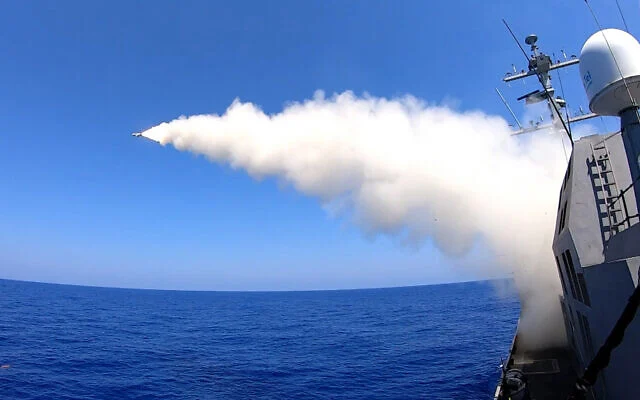
NATO countries that issue statements dripping with “concern” are quietly standardizing Israeli active protection systems on their tanks. Germany – is equipping its aircraft with Israeli missile-defense technology. Greece is buying rockets and negotiating multi-billion-dollar air-defense systems. The United Kingdom has already integrated Israeli missiles into Royal Navy frigates. And then there is the UAE, initially discreet, now increasingly confident, treating defense cooperation not as an embarrassment but as a strategic dividend of peace.
This is not hypocrisy alone. It is recognition.
Because when the world gets serious about security, it stops shopping for slogans and starts shopping for results.
And Israel delivers results.
Take the recent decision by multiple European armies to equip their Leopard 2 A8 tanks with the Trophy active protection system. This is not theoretical defense. Trophy was forged under fire, refined against real anti-tank threats, and improved in real time by soldiers whose lives depended on it. That matters. In a Europe suddenly reacquainted with the realities of high-intensity warfare, “combat-proven” is no longer a marketing phrase – it is a requirement.
This is the part that fascinates me most. Many of the same governments that hesitate to stand firmly with Israel politically are perfectly happy to rely on Israel technologically. They may debate Israel’s tactics in Gaza by day, but by night they sign contracts that quietly acknowledge a simple truth: Israel knows how to defend lives.
Germany’s embrace of Israeli aircraft protection systems is particularly telling. History makes this moment extraordinary. That Germany would now turn to Israel to protect its military aircraft speaks volumes – not only about how far relations have come, but about the trust Israel’s technology commands even among the most risk-averse defense planners.
And then there is the UAE.
Here, I offer not irony, but admiration.
While others posture, Abu Dhabi acts. The UAE did not merely normalize relations with Israel under the Abraham Accords; it understood them. It recognized that peace is not only about embassies and photo-ops, but about shared interests, shared threats, and shared capabilities. Its multi-billion-dollar investment in Israeli electronic defense systems – designed to protect both civil and military aircraft – signals strategic maturity. This is what normalization looks like when it grows up.
The UAE’s willingness to deepen defense-industrial cooperation with Israel, even amid regional criticism, reflects something rare in modern geopolitics: clarity. It understands that advanced missile threats do not care about press releases, and that laser-based countermeasures and integrated air-defense systems are not ideological statements – they are insurance policies.
This is where the Abraham Accords reveal their real power. Not sentiment. Structure. Not symbolism. Substance.
Contrast this with another courtship quietly underway in the Middle East: China’s.
Beijing offers attractive prices, fast delivery, and glossy brochures. Many countries are tempted. But defense professionals increasingly whisper the same concern: you can buy from China, but you do not really know what is inside. Systems look impressive on paper. Performance claims are generous. But battlefield credibility remains uncertain. Components are opaque. Supply chains are politically entangled. And when things go wrong, accountability dissolves into diplomatic fog.
Israeli systems, by contrast, are brutally honest. They are shaped by operational feedback loops measured not in years, but in weeks. If something fails, it is fixed – not for the next brochure, but for tomorrow’s mission. That difference is existential.
This is why Israeli drones, air-defense interceptors, electronic warfare suites, and active protection systems command premium trust. They are not designed in comfort. They are designed in context.
And that brings me back to the contradiction at the heart of today’s arms market.
While European politicians flirt with suspending contracts or issuing moral reprimands, European militaries quietly expand cooperation. Spain may cancel some deals under political pressure, but demand elsewhere surges. Serbia signs a massive modernization package. Greece accelerates negotiations. Northern Europe integrates Israeli systems as standard.
The message is unmistakable: when survival matters, ideology takes a back seat to effectiveness.
None of this surprises Israelis. Innovation in Israel has never been about prestige. It has been about survival. From missile defense to unmanned systems, Israel’s breakthroughs come from a society that understands it cannot outsource its security fantasies to anyone else. That ethos – self-reliance under pressure – is the beating heart of resilience and renewal.
Israel’s defense industry today is not merely exporting hardware. It is exporting a philosophy: adapt fast, test ruthlessly, improve constantly. This is why Israeli firms dominate niches where reliability is everything. It is also why attempts to boycott or isolate Israel in defense forums consistently fail. You can exclude booths at exhibitions. You cannot exclude reality.
Even the debate over preserving Israel’s qualitative military edge – legitimate and serious – underscores Israel’s maturity as a supplier. Deals are structured carefully. Secrecy is enforced where needed. Safeguards are debated internally, sometimes uncomfortably. This is not recklessness; it is responsibility.
What I find quietly amusing is how quickly moral outrage evaporates when budgets are approved.
Countries that hesitate to defend Israel diplomatically are perfectly content to let Israeli engineers defend their soldiers, pilots, and civilians. And perhaps that, too, is a form of acknowledgment – however unspoken.
Israel does not pretend to be a beautiful bride out of vanity. It is pursued because it works.
And as the world grows more dangerous – from Eastern Europe to the Middle East to the Indo-Pacific – that pursuit will only intensify. Israel’s technologies are not just weapons; they are stabilizers in an unstable world. They shorten wars by protecting lives. They deter aggression by raising costs. They integrate seamlessly into allied systems precisely because they were built to survive chaos.
This is innovating the future of Israel in its most sobering form. Not as a startup slogan, but as a national imperative.
The irony remains, of course. Israel will continue to be criticized in editorials even as its systems are quietly installed in arsenals across the globe. But history suggests that when the dust settles, it is not the critics who shape outcomes – it is the builders.
Israel builds.
It builds because it must. And the world, increasingly aware of its own vulnerabilities, seems more than happy to come knocking.
James Ogunleye, PhD, is a scholar, innovation strategist, and a historian of the IDF’s innovation ecosystem. He is the founder and editor of RenewingIsrael.org, and author of the title ‘Resilience & Renewal: The Future of Israel – How a Nation’s Courage, Creativity, and Faith Rebuilt the Promise of Tomorrow’. He writes at the intersection of resilience, faith, innovation, and national renewal.